
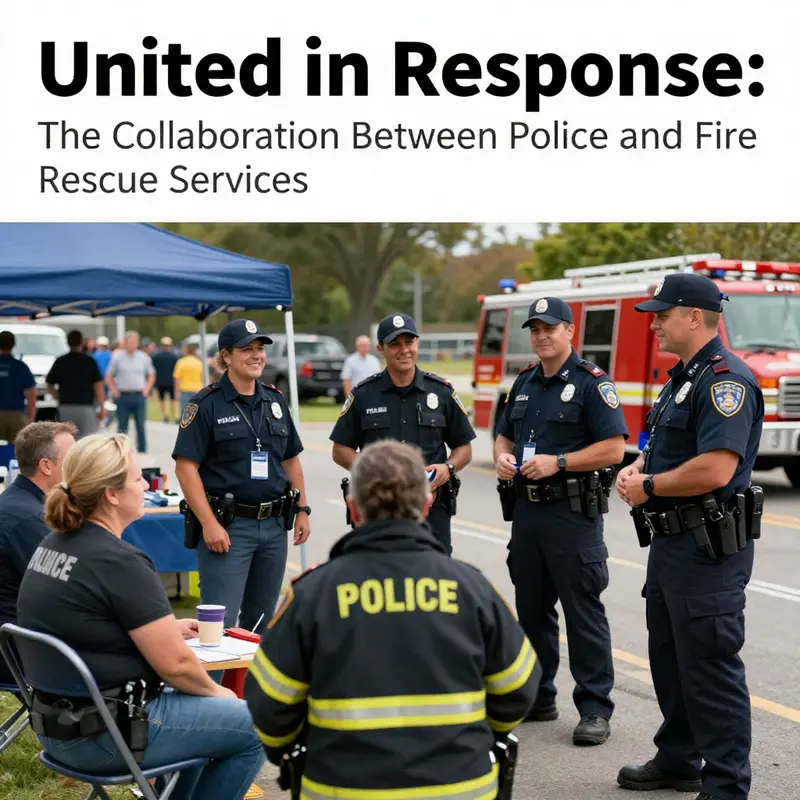
The collaboration between police and fire rescue services forms the backbone of effective emergency response in our communities. Their ability to work together ensures the safety and well-being of residents during crises, ranging from natural disasters to hazardous incidents. This article explores critical aspects of their partnership, delving into collaboration dynamics, operational protocols, joint training exercises, communication systems, and mutual aid agreements. Each chapter will highlight how these elements foster a seamless interaction between these two essential agencies, ultimately benefiting the communities they serve.
When Sirens Align: The Subtle, Steady Rhythm of Police and Fire Rescue Collaboration in Emergencies
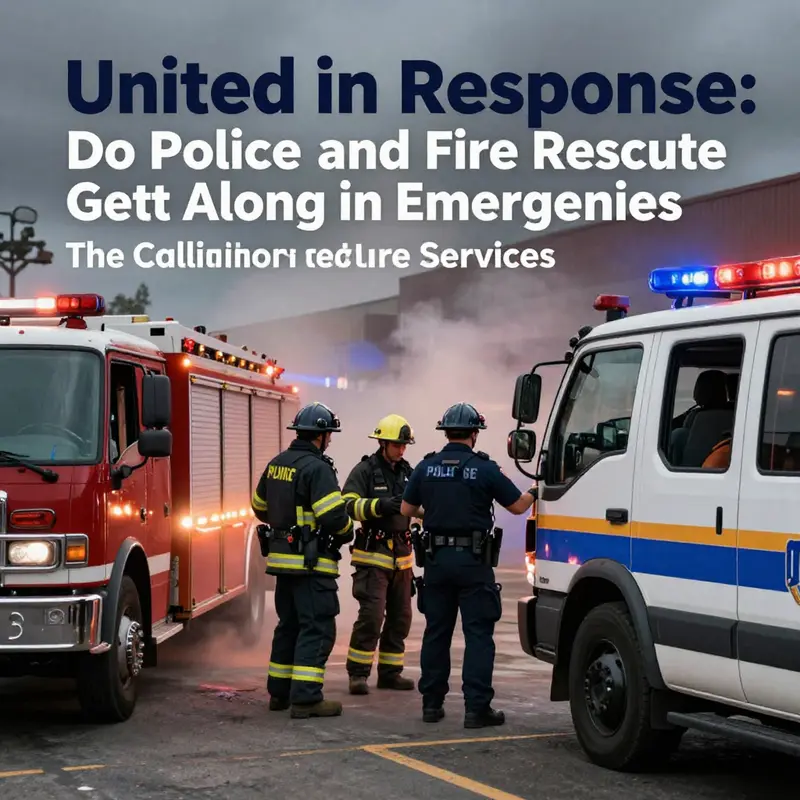
Emergencies demand more than speed; they demand coordination. Police and fire rescue services arrive with different tools, different training backgrounds, and slightly different cultures, yet they share a single, irreplaceable objective: protect people and restore safety as quickly as possible. When they align their efforts, the result is not merely a sum of parts but a cohesive response that mitigates risk, preserves life, and maintains public trust. The collaboration is built on three enduring pillars: clear roles within a unified command framework, continuous interagency training that builds trust and fluency across disciplines, and shared governance structures that reduce friction during tension-filled moments. This chapter traces how those pillars manifest in practice, why they matter, and how they shape outcomes when crises unfold in real time.\n\nIn many jurisdictions, the success of police and fire collaboration rests on a deliberate separation of duties under a common set of incident priorities. Fire personnel focus on life safety, fire suppression, hazardous materials control, and rapid rescue operations. Police personnel maintain scene security, traffic control, crowd management, and investigation when appropriate. This division, far from creating silos, becomes a powerful force when layered upon a shared language, standardized procedures, and interoperable communication systems. The efficiency of the response hinges on pre-established protocols that translate into smooth action at the moment of impact. When these protocols exist, the loud dissonance of competing agendas often becomes a tempered chorus of coordinated movements.\n\nA compelling illustration of this dynamic emerges from the South Yorkshire example, where a joint community safety department was formed by integrating personnel from both the fire service and the police. This isn’t just a coupling of staff; it is a deliberate alignment of strategic aims, resource flows, and decision-making processes. Leadership from both organizations emphasizes that integration enhances coordination and broadens the reach of public safety. The integrated approach is not merely about sharing facilities or schedules; it is about sculpting a unified approach to prevention, response, and resilience. When officers and firefighters train side by side, they learn each other’s rhythms—the way a firefighter reads a building’s hazards while a police officer tracks movement around a perimeter, or how a detective’s questions can inform a rescue plan when occupants are at risk inside a smoke-filled space. The trust that grows from such collaboration becomes an operational advantage that pays dividends in the most demanding moments.\n\nTraining breathes life into this partnership. Structured exercises—especially the three-level collaboration (3LC) framework that intentionally brings fire services, ambulance services, and police forces into a shared training arena—are not merely drills. They are opportunities to test and refine how each service communicates, coordinates, and mobilizes. The 3LC framework centers on improving inter-agency communication, streamlining response procedures, and ensuring seamless cooperation across command structures. Practically, this translates into common radio nets, standardized incident command procedures, and pre-scripted handoffs that minimize delays when time is scarce. The value of these programs extends beyond the exercise floor. They cultivate mutual respect, reduce ambiguity about roles, and reveal gaps in procedures long before a real emergency occurs. When responders hear the same terminology and share the same expectations for who leads, who supports, and how information is disseminated to the public, the likelihood of confusion during a real incident drops sharply.\n\nThe mechanics of coordination during a building fire or a large-scale incident reveal how these training gains play out on the ground. Firefighters rapidly establish a hot zone to protect occupants and suppress the flame, while police officers create a safe standoff, manage bystanders, and preserve the chain of custody for any potential evidence tied to the incident. The duo also negotiates the movement of EMS personnel and equipment, ensuring that medical teams reach casualties efficiently without impeding evacuation routes or creating new hazards. In practice, this means a disciplined, almost choreography-like flow: a secure perimeter is established while access routes are opened for emergency medical teams; information bubbles up from the scene through a unified command to the dispatch center; and incident objectives are continuously refined as new data arrives. The result is a response that feels fluent rather than forced, because each side understands the other’s priorities and constraints.\n\nThe governance structures that sustain such fluency deserve careful attention. Mutual aid agreements and formal compacts provide the legal and procedural scaffolding that makes joint operations possible across jurisdictions. National bodies such as the National Fire Protection Association and the International Association of Fire Chiefs promote interagency cooperation through standards, training resources, and policy guidance, reinforcing the expectation that police and fire agencies will operate in a coordinated fashion when emergencies demand it. In communities with integrated or joint community safety frameworks, leadership inherently models collaboration. Chiefs and commissioners regularly co-chair tasks, deconflict resource allocations, and participate in joint performance reviews that scrutinize not only outcomes but the quality of collaboration itself. This administrative alignment matters because it sets the tone for the frontline, signaling that cooperation is a mission-critical objective rather than a discretionary strategy.\n\nEven the fastest response is not immune to friction. Differences in operational culture—such as the pace of decision-making, risk tolerance, and the emphasis placed on investigative considerations—can create moments of tension. The antidote lies in pre-incident planning and a culture that treats conflict resolution as an ongoing practice rather than a rare exception. Regular joint briefings, debriefings, and after-action reviews help translate hard-earned lessons into concrete improvements. The most effective departments build a feedback loop where insights from real incidents and training exercises feed back into updated protocols, adjusted radio channels, and revised deployment patterns. This continuous improvement mindset is essential when communities face evolving threats, from rapid urban hazards to cascading emergencies that cross public-safety boundaries.\n\nA core part of maintaining trust across agencies is the visibility of the public-facing mission. When residents see police and firefighters operating in a well-organized, mutually respectful manner, confidence in public safety institutions rises. Transparency about roles, accompanied by reliably measured performance indicators—such as response times to critical calls, efficiency in evacuations, and the rate of successful rescues—helps communities understand how collaboration translates into tangible safety gains. It also motivates ongoing investment in training, equipment, and facilities that support joint operations. In this sense, collaboration is not simply a tactful arrangement; it is a public-facing commitment to readiness and accountability.\n\nTechnology and communications infrastructure play a vital role here as well. Interoperable radios, shared incident management software, and unified dashboards enable real-time information flow that transcends agency lines. The more that data is harmonized across policing and firefighting channels, the more cohesive the response becomes. When a single picture of the incident exists, commanders can allocate resources where they are most needed, reduce duplicate efforts, and accelerate critical decisions. The emphasis on communication is not purely technical—it remains deeply human. It requires listening with interpretive patience, translating jargon into practical actions, and confirming that every partner understands not only what is happening but why it matters for the life safety of those at risk.\n\nThe South Yorkshire model also reminds us that collaboration has a preventive dimension. Integrated teams focused on prevention work together to reduce incident demand, not just to respond to it. Joint community safety initiatives, attention to vulnerable populations, and proactive risk assessments can lower the number of emergencies that escalate into life-threatening situations. In this sense, collaboration is not merely a crisis instrument but a long-term public-safety strategy. It-rooted in data-driven planning, it aims to remove hazards before they ignite into emergencies, and it leverages the strengths of each agency to create safer neighborhoods. For readers who want to explore the broader transformation of firefighting and policing into more integrated professions, the innovations in transforming fire services offer insightful perspectives. Innovation Museum: Transforming Fire Services presents a vivid sense of how modern practice increasingly foregrounds cross-agency learning and shared problem-solving. \n\nThe arc of collaboration, then, is not a singular event but a sustained practice. It requires leadership that earns trust through consistency, staffing structures that support joint operations, and ongoing dialogue with the communities served. It involves recognizing that the public’s safety hinges on a shared purpose and a shared vocabulary. When police and fire rescue teams speak a common language, respect each other’s expertise, and coordinate their actions in a unified system, they do more than save lives in the moment. They build the resilience of the entire community, expanding everyone’s sense of security and reinforcing the social fabric that holds neighborhoods together in times of stress. The chapter’s evidence—from structured training programs to integrated leadership models and cross-agency prevention work—points to a clear conclusion: collaboration that is intentional, practiced, and public-facing yields safer outcomes, steadier operations under pressure, and lasting trust between responders and the people they serve.\n\nExternal resources for deeper understanding can be found in studies of joint community safety initiatives and incident-management evolutions, which illuminate how such partnerships adapt to changing threats and expanding responsibilities. For further information: https://www.southyorkshirefire.gov.uk/news/joint-community-safety-department/
Steadfast Alliance Under Pressure: How Established Protocols Align Police and Fire Rescue
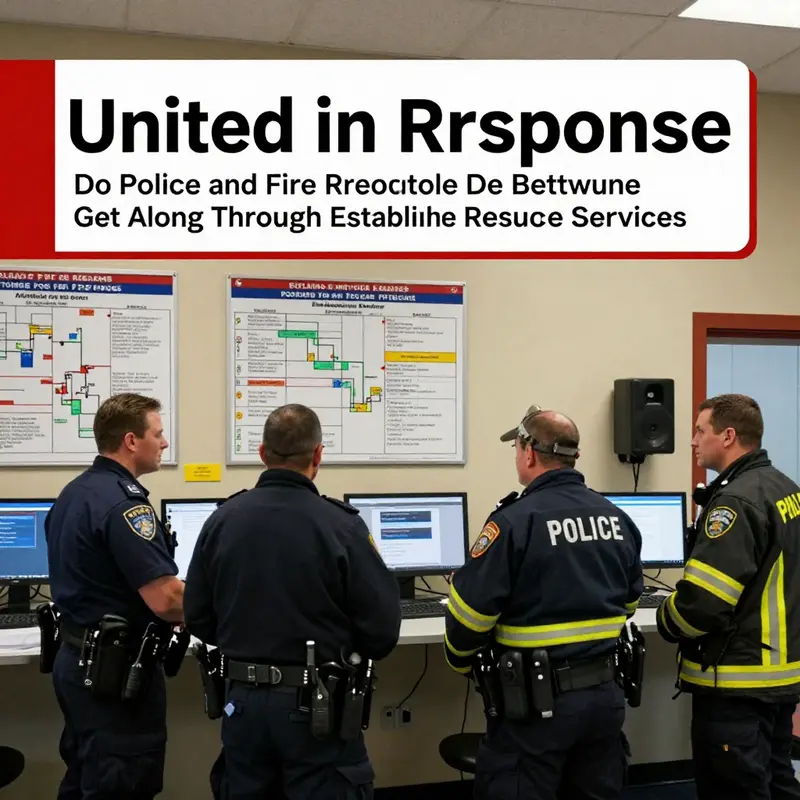
When a siren cuts through the city’s morning murmur or a hallway of smoke blocks a corridor, responders do not waste precious seconds arguing about jurisdiction. They move as a single, coordinated unit guided by the sturdy scaffolding of operational protocols. These protocols are living agreements that shape how people think, communicate, and act when seconds matter. They help diverse agencies, each with its own culture, priorities, and training, become a unified response team ready to adapt to rapidly changing threats. In practice, this translates into faster scene entry for rescuers, safer passage for civilians, and clearer leadership for frightened or injured people. At the heart of this unity is a shared command framework such as unified command or a well-structured incident command system that ensures both police and fire rescue contribute where their expertise is strongest while avoiding stepping on each other’s toes. Unified command does not erase the distinction between police work and fire rescue; it elevates the common goal of protecting life and property above departmental prerogatives. Practical protocols address questions of who is in charge, how authority is exercised across agencies, what communications channels are interoperable, and where medical care, search and rescue, and hazardous material response should be staged to prevent collisions in shared spaces. The National Incident Management System provides a universal framework to align local jargon, structures, and decision making under pressure. Training and exercises are essential to turn these protocols from abstract requirements into reliable reflexes. Interagency drills test communications, verify resource inventories, and validate the decision pathways that guide who does what, when, and how. Through repeated practice, responders learn to anticipate each other’s needs; firefighters pausing for police clearance before entering unstable spaces, and officers adjusting traffic plans to keep rescue routes open, creating a shared grammar of action that endures under stress. Mutual aid agreements formalize rapid support beyond a single department, codifying expectations for life safety, property protection, and shared assets such as equipment and communications capabilities. These agreements are living documents that adapt as technology and threats evolve, and they are reinforced by a common blueprint like NIMS so that a crisis feels familiar across jurisdictions. Ultimately, the strength of police and fire cooperation rests on discipline and trust. When responders rehearse together and share a common operating picture, the public receives a clear, confident message and a unified response. The result is a resilient public safety net that protects lives, preserves evidence, and restores calm when fear and chaos threaten to overwhelm a scene.
Bridging Lines in Crisis: Shared Training Between Fire Rescue and Police for a Unified Emergency Response
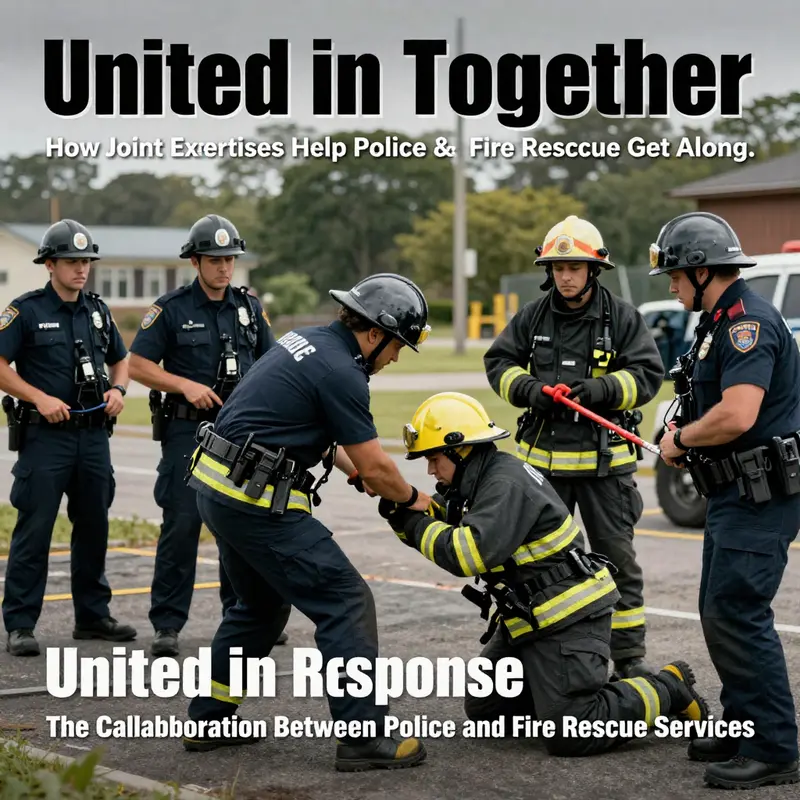
In the heat of a crisis, lines that once separate police, fire rescue, and other responders tend to blur as they surge toward a common objective: protect lives and safeguard property. The question of whether police and fire rescue get along is not a measure of personalities but of systems. It rests on shared training, a common vocabulary, and established protocols that let teams move as one. When those systems work well, response feels like a choreographed dance in which each participant knows their steps and honors the cues from others. The rehearsal ground for that cohesion is the joint training that participants across agencies undertake, long before a call pierces the sirens and alarms. These exercises imprint a working language, a visible chain of command, and a trusted rhythm that can ride out the chaos of an actual incident. They also demonstrate how much of a difference it makes when a fire captain, a police sergeant, a gas technician, and a dispatcher practice together under constraints that mirror the real world. The result is not merely better tactics; it is improved judgment under pressure, and a sense that responders share a map of priorities rather than competing maps that collide when the smoke thickens or the crowd presses in. Across the United States, professional organizations such as the NFPA and the IAFC have long urged these kinds of interagency practices, translating broad ideals into local protocols and mutual aid agreements. They codify the expectation that, when an emergency erupts, responders will converge with a unified purpose, speaking a common operational language and following a shared incident command structure. The practical payoff of such alignment emerges in the moments after a call goes out and before help is fully on scene, when miscommunications are most costly and teamwork can determine whether a threat is contained or escalates. The value of joint training is not only in the provision of technical skills. It lies in the cultivation of trust, the building of relationships that survive the heat of a fire or the pressure of a gas leak. When police and fire rescue train side by side, they begin to anticipate one another’s decisions, understand one another’s constraints, and develop the courtesy of concise, unambiguous communication. That trust translates into faster decisions, fewer duplications of effort, and a more resilient public safety net. A vivid demonstration of this ethos occurred in a recent, well-documented collaboration that foregrounds the kind of cross-functional learning that helps all responders function as a cohesive unit. The Hohhot Fire Rescue Brigade partnered with a metropolitan gas development company to stage a hands-on training session at the Special Operations Battalion No.1 of the Hohhot Fire Rescue Corps. On February 5, 2026, more than thirty gas company employees joined firefighters for an intensive, coordinated program designed not only to show equipment and capabilities but also to deepen mutual understanding about risk, response, and prevention. This initiative, described as the first practical implementation of a “coordinated publicity initiative,” has several notable layers. Firefighters led demonstrations of fire vehicles and specialized rescue apparatus, and they walked participants through the identification of household fire hazards. Gas industry experts complemented this with practical guidelines on safe gas usage and emergency response procedures, ensuring that attendees could recognize early warning signs, initiate proper shutdowns, and coordinate with responders if a leak or fire occurred. The day culminated in hands-on exercises where participants operated extinguishers and engaged in simulated responses to common early-stage fires, notably cooking oil and electrical fires. The careful sequencing of demonstrations, explanations, and practice helped ensure that participants could translate theory into action. The reported outcomes point to skill enhancement in both fire safety and emergency response, coupled with a genuine increase in trust and clearer communication pathways between the agencies. Perhaps more importantly, the exercise extended its impact beyond the immediate group. By reframing gas inspectors and meter readers as “mobile fire safety educators,” the program created a bridge to households and neighborhoods. When utility workers can pair safety checks with practical prevention guidance, communities begin to see responders as partners in everyday safety rather than as figures only summoned by danger. This approach embodies a broader principle: prevention is not a separate activity from response but a continuum in which everyday practices reduce risk and improve resilience when a crisis hits. The Inner Mongolia Daily report published on February 7, 2026, provides a formal account of this initiative, underscoring how these joint activities can strengthen interagency cooperation and community engagement. The report documents the participants, the setting, and the concrete learning outcomes, offering a useful case study for other jurisdictions seeking to replicate a similar model. This example also highlights a broader truth about police-fire coordination: well-structured training makes possible a seamless transition from prevention to response to recovery. It is one thing to drill a firefighting tactic or a police pursuit protocol in isolation; it is quite another to practice how a unified command will handle a gas incident that requires evacuation, traffic management, casualty triage, and an investigative footprint. When training explicitly includes these multi-hazard or multi-agency elements, the risk of confusion at the moment of truth drops dramatically. The practical benefits of this cross-disciplinary learning extend beyond the technical. The exercise described in Hohhot demonstrates how joint practice can produce a more resilient and adaptable workforce. Firefighters gain a better grasp of gas system operations and the peculiarities of how gas infrastructure can introduce fire hazards; gas industry professionals learn how fire scenes are organized, how extinguishment dynamics affect structural integrity, and how responders navigate complex environments safely. The shared knowledge reduces the information gaps that can otherwise stall a response or create secondary hazards. Moreover, the exercise fosters a culture in which collaboration is the default, not the exception. If police organizations adopt the same frame of training and institutional memory as fire services, the common operating picture becomes steadier and more intuitive under stress. In many jurisdictions, this alignment is reinforced by formal mutual aid agreements and standardized protocols that facilitate rapid coordination across agencies and boundaries. The day-to-day reality of public safety is rarely a neat, tidy operation; it is messy, dynamic, and characterized by competing demands. Yet joint training offers a powerful antidote to that complexity. It creates a shared mental model that helps responders anticipate not only what to do but when to do it, and who should be doing it alongside them. The ripple effects are felt in the public sphere as well. Communities benefit when responders can communicate clearly with residents, explain evacuation decisions, and direct nonessential traffic with confidence. The collaborative model also invites non-traditional partners—utility crews, emergency medical teams, and social service organizations—to participate in a structured way, broadening the scope of preparedness and expanding the safety net available to those who need it most. The broader narrative here is simple: when training is inclusive, when roles are clarified, and when the command structure is unambiguous, police and fire rescue do not merely coexist; they strengthen each other. They learn to rely on one another’s expertise and to interpret each other’s signals with minimal friction. They experience a reduction in the friction that too easily arises in high-stakes moments, and they grow more confident in the public’s eyes as the visible result of their cooperation. For readers who want a window into the evolving discourse on interagency learning, a broader look at how innovative training environments shape leadership and collaboration is instructive. A resource worth examining is the concept illustrated by a forward-looking initiative described in a piece on innovation in fire services, which can be found under the heading Innovation Museum: Transforming Fire Services. This body of work highlights how shared experiences across agencies can recalibrate expectations, accelerate decision-making, and embed a culture of continuous improvement within public safety. As these ideas circulate through different cities and countries, the core principle remains consistent: the more we train together, the more prepared we are to respond together. The consequence is a stronger, more integrated public safety system capable of protecting communities with speed, precision, and empathy. For researchers and practitioners seeking concrete examples of this approach, the Inner Mongolia Daily report on the February 2026 event offers a valuable, widely cited instance of cross-agency learning in action, illustrating how a local initiative can have wide-reaching implications for public safety culture and collaboration across the entire emergency response spectrum. Inner Mongolia Daily Report.
On the Line Together: The Invisible Architecture Keeping Police and Fire Rescue Aligned
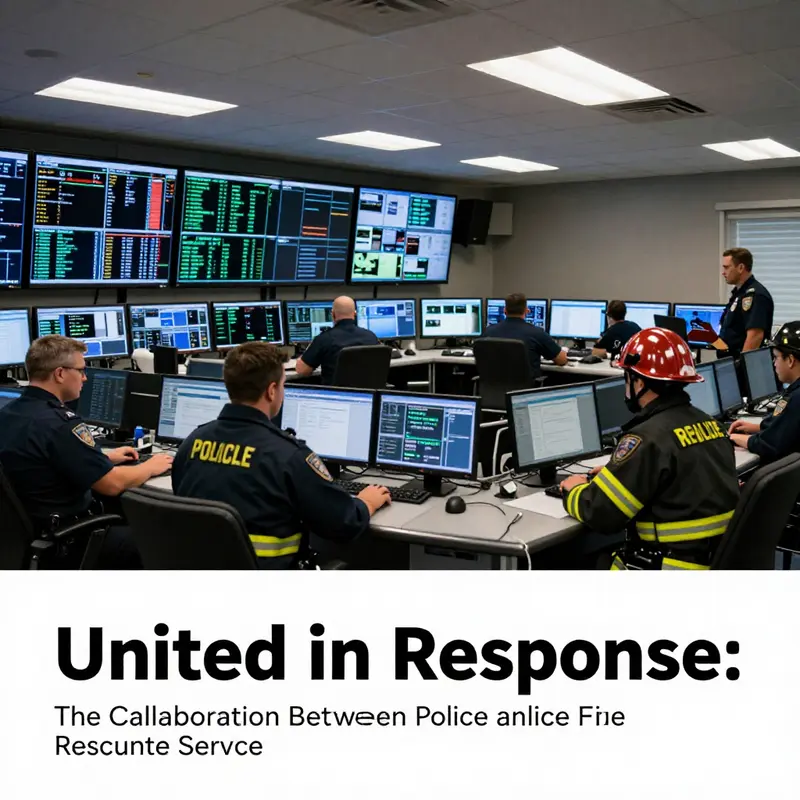
When the sirens rise and the smoke thickens, the visible heroes are not the only ones who deserve attention. Behind every coordinated response, there is an invisible architecture of communication that keeps police and fire rescue aligned long enough for courage to translate into safety. This chapter looks past the flash of gear and the drama of crisis to explore how the modern public safety ecosystem relies on a resilient, interoperable, and intelligent network. It is a story about sound, not simply loud, about connection, not only hardware, and about trust earned through shared practice as much as through shared channels.
In urban environments, the most pressing truth about police and fire collaboration is that it hinges on seamless interoperability. Firefighters focus on securing the scene, locating occupants, and suppressing the threat, while police officers manage the perimeter, safeguard access, and lead investigative threads once danger subsides. Yet the choreography between these roles is rarely improvised. It is guided by established protocols, joint training, and, above all, robust communication systems that knit disparate teams into a single, coherent force when every second matters. The value of this shared communication becomes most evident in scenarios such as a building fire with hazardous materials, a large-scale disaster, or a complex search-and-rescue operation where the landscape of danger shifts with every moment and the needs of responders change just as rapidly as the information on the incident ground.
The backbone of this coordination is not simply radios or dispatch desks; it is an ecosystem of technologies designed to speak in a common language, even when agencies come with different equipment, cultures, and rules of engagement. Digital radios, broadband data networks, and cloud-based platforms have matured into tools that provide not just voice but situational video, live maps, and rapid data exchange. The goal is real-time information sharing that informs decisions at the incident command post and translates into safer on-scene operations. In practice, this means the incident command system can pull together a unified picture: who is where, what hazards exist, what resources are en route, and what the evolving plan requires next. When communication flows without friction, the risk of misallocation, duplication of effort, or misinterpretation drops dramatically.
This evolving landscape of public safety networks has been described in contemporary analyses as a move toward resilience, scalability, and interagency collaboration. Modern systems are designed to endure the worst conditions—loss of power, infrastructure damage, cyber threats—while preserving the integrity and speed of information exchange. They are built to function across jurisdictions, ensuring that a fire department in one city can seamlessly coordinate with a nearby police agency during a mass evacuation, a neighbor’s rapid traffic detour, or a sheltering operation for vulnerable populations. The emphasis is not only on communication as a channel but on communication as a shared operational doctrine. In this sense, technology serves as a force multiplier for organizational culture, enabling both institutions to align their priorities around the same incident objectives rather than operating as separate silos that occasionally intersect.
The literature on this topic underscores a simple, powerful idea: effective communication reduces uncertainty at critical moments. When a fire unfolds in a dense urban core, time is a scarce resource and clarity is the currency. Fire crews need accurate reports on wind direction, structural integrity, and escape routes. Police teams require timely updates on crowd movements, suspicious activity near the cordon, and access restrictions for emergency personnel. Through interoperable communications, the incident commander can shepherd these inputs into a single operational picture. This unified picture informs decisions about which teams should advance or retreat, how to deploy a rescue contingent, and where to station medical support. Hytera’s overview of urban firefighting and emergency communications highlights this very principle: managing the incident effectively and maintaining operational safety hinges on robust, interconnected nets of information that are resilient under pressure. The lesson is clear—without a reliable comms backbone, the other elements of tactical coordination fray at the edges and risk breaking apart when they are needed most.
The practical realization of this architecture involves more than one technology stack or one agency’s preferred method. Agencies increasingly embrace an array of interoperable options: digital radios can exchange voice and essential metadata across devices; broadband data networks enable rapid transmission of critical documents, live video, and status updates; and cloud-based platforms support scalable, secure data sharing that can be accessed by authorized personnel from multiple agencies, even if their internal networks differ. The result is a layered continuum of communication that preserves basic voice channels while augmenting them with faster, richer data streams. It also requires careful attention to cyber hygiene and information governance, since the same channels that enable faster decisions can introduce new vulnerabilities if not properly protected. In practice, this means disciplined access controls, encryption where appropriate, and standardized protocols for what gets shared, with whom, and under what circumstances.
A striking feature of the modern interagency communications ecosystem is its emphasis on joint training and simulated exercises. Interagency drills are more than procedural rehearsals; they are laboratories for building trust, clarifying expectations, and refining the reflexes by which teams adapt to changing conditions on the ground. When police and fire participants train together, they surface questions that seldom arise in isolation: who assumes the role of incident commander in a given scenario, how are radio channels prioritized during a mass-evacuation, what is the protocol when a sudden hazard necessitates altering the incident action plan, and how do units exchange critical information while preserving civilian safety and privacy? These conversations, carried out during controlled exercises, translate into calmer, more decisive action when real emergencies strike. They also create a culture where the phrase “we’re on the same team” is not just rhetoric but a practiced reality during a crisis.
The cultural dimension is as important as the technical one. Agencies often operate with distinct hierarchies, standard operating procedures, and even jargon that can create friction at the worst moments. A well-designed communications framework helps bridge these gaps by introducing shared terms for incident priorities, response timelines, and command structures. It also supports a unified command approach that brings police and fire leaders into a single decision-making circle. In this arrangement, the person who directs the overall operation can see the contributions of both sides, appreciate constraints on each, and make choices that maximize safety for civilians and responders alike. The outcome is not the erasure of each agency’s identity but the harnessing of their strengths in a way that reduces friction and accelerates coordinated action.
In many communities, formal mutual aid agreements extend the reach of interoperable communications beyond the city’s own agencies. These agreements enable a broader network of responders to plug into a shared communications framework, with processes in place to ensure that even distant departments can participate in a crisis with a consistent protocol and a common operating picture. The practical impact is measurable: during a large-scale incident, responders from multiple jurisdictions can move and adapt as if they were part of a single system, reducing response times, avoiding duplication of efforts, and preserving critical safety margins. When such arrangements are supported by technology that prioritizes interoperability, the value multiplies. A robust, well-connected network becomes not a luxury but a fundamental requirement for effective emergency management.
Among the challenges to achieving this ideal is the reality of legacy systems and the patchwork of equipment that remains in many agencies. Modern interoperability is easier said than done when a department still relies on older radios, incompatible data protocols, or divergent privacy rules. The path forward often involves phased upgrades, standardization of interfaces, and the adoption of open, portable solutions that can bridge gaps between different vendors and platforms. The conversation about resilience must also grapple with the risk of information overload. As data streams become richer, responders need intelligent display and filtering mechanisms that prioritize what is most critical to the present decision rather than overwhelming operators with raw feeds. In practice, this requires not only clever software, but disciplined human factors design—how information is presented, how alerts are escalated, and how teams maintain situational awareness under stress.
The science of public safety communications is also evolving to recognize the value of redundancy and diversity. If one network segment falters, others must take up the burden. This redundancy can mean multiple layers of communication channels, back-up power supplies, and cross-trained personnel who can operate across platforms. It also reinforces the strategic role of leadership that can navigate uncertainty, maintain line-of-sight to the incident objectives, and coordinate resources across the entire response network. The operator on the ground, aware of a great many moving parts, needs to trust that the information flowing from dispatch, from on-scene radios, and from remote data feeds is coherent and timely. The best systems deliver that coherence by enforcing standardized procedures, maintaining clear line-of-sight into the incident command post, and fostering an culture of continuous improvement that learns from each response.
The narrative of police and fire rescue cooperation is thus not a tale of separate agencies sharing a workspace, but a story of integrated practice, shared responsibility, and a common commitment to safety. It is a story where the quiet, invisible architecture—protocols, dashboards, interoperable networks, and joint training—outweighs the dramatic moments that make headlines. It is a reminder that when the sirens wail, the first priority is not the identity of the responders in the field but the reliability of the connections that bind them to one another. In this sense, the question ‘do police and fire rescue get along?’ has an answer that extends beyond interpersonal rapport. It is a question of organizational design, technical compatibility, and enduring investment in the systems that make cooperation practical, predictable, and, most importantly, effective.
For readers who want to explore how innovation shapes these systems further, consider the discussion in Innovation Museum: Transforming Fire Services, which traces how new workflows and technologies reframe the expectations of interagency collaboration. The broader field also benefits from external reflections on how urban firefighting and emergency communications evolve toward more resilient and scalable networks. A comprehensive overview of these dynamics can be found in the Hytera resource on urban firefighting and emergency communications, which emphasizes the centrality of robust, interconnected channels in maintaining safety during complex incidents. This external perspective reinforces the sense that today’s public safety challenges demand not only courageous responders but also systems that enable courage to be exercised with clarity and precision.
Ultimately, the success of police and fire rescue collaboration rests on more than shared dispatch screens or compatible radios. It rests on a culture that treats communication as a core public-safety function, an engineering discipline, and a continuous learning process. It rests on the courage to practice together under real conditions, to test what works, and to revise what does not. It rests on leadership that values compliance with best practices as much as it values quick, decisive action. And it rests on communities that expect, and deserve, a response that is coordinated, respectful, and safe. When these conditions are met, the simple question of whether police and fire rescue get along becomes a statement about a public safety system that functions not in spite of its complexity, but because of it.
Coordinated Fronts: Mutual Aid Frameworks That Let Police and Fire Rescue Act as One
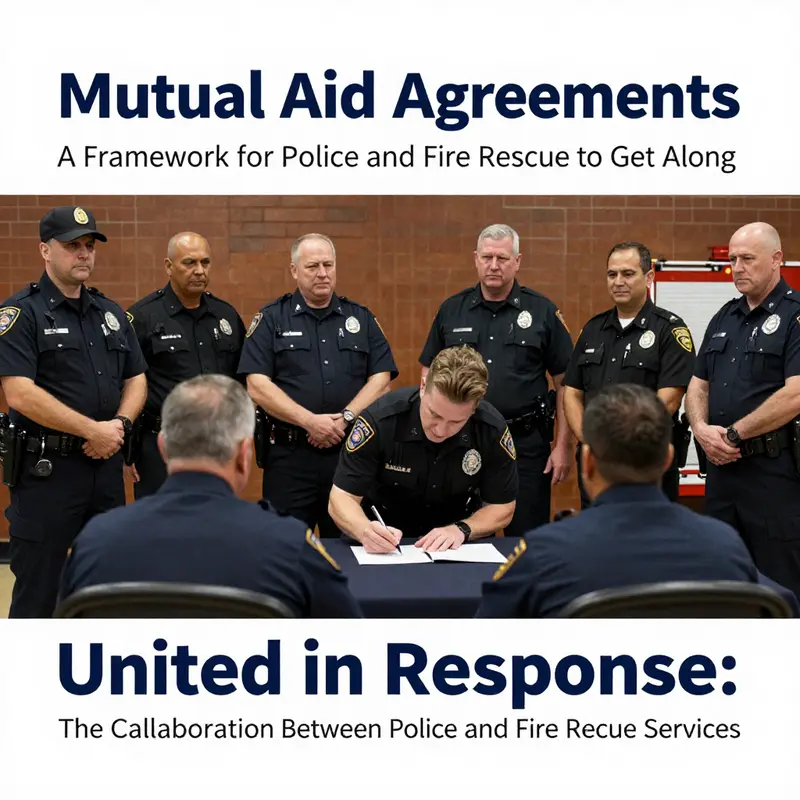
When communities think about public safety, they often picture sirens, flashing lights, and the unmistakable scent of smoke or rain-washed streets after a critical incident. Behind these vivid moments lies a quieter, more durable truth: police and fire rescue do not merely share the same cityscape; they share a mutual obligation to respond as a cohesive, integrated team. Mutual aid is more than a set of papers stapled to a file cabinet. It is a living framework that binds personnel, protocols, and practices into a single, adaptable instrument that can be deployed the moment danger appears. In practice, this means that during fires, chemical releases, collapsed structures, or mass casualty events, both agencies step into roles that complement each other, guided by pre-defined expectations and a shared sense of mission. The result is not a simplified division of labor but a seamless choreography that maximizes safety for responders and for the public they protect.
Central to this seamless choreography is standardization that travels across jurisdictions and agencies. The standardization is not about homogenizing every action to a single script; it is about building a common language so that a firefighter and a police officer can anticipate each other’s needs without verbal negotiation in the heat of the moment. The National Incident Management System (NIMS) provides this backbone. When police and fire departments operate within NIMS-compliant mutual aid agreements, they gain a common command structure, shared resource tracking, and unified information flow. This is how two agencies with different cultures, tools, and chains of command become capable of moving with one purpose. Such interoperability reduces delays, clarifies authority, and creates a safety margin for those on the ground who must make split-second decisions under stress.
Yet the backbone of mutual aid is not merely a document stored in a drawer; it is the daily discipline of joint training and rehearsals. Regular drills—ranging from tabletop exercises to full-scale simulations—test how well agencies can adapt to evolving scenarios. When cross-training is frequent, responders report higher levels of situational awareness and better anticipation of one another’s needs. The human factors here matter as much as the technical ones. Trust is built in the same spaces where complex problems are solved: in after-action reviews, in candid debriefings, and in the shared memory of a drill that hums with the cadence of synchronized movements. The Department of Homeland Security emphasizes that this kind of practice turns theoretical coordination into practical competence, reducing the risk of injury and loss of life when real emergencies occur.
A key component—already embedded in federal guidance and echoed by state and local agencies—is the mutual understanding of roles and boundaries. A well-crafted mutual aid agreement does not blur lines beyond recognition; it clarifies who takes the lead on certain tasks, how information is shared, and what resources are available for rapid deployment. For example, during large incidents that overwhelm a single jurisdiction, police may assume responsibility for perimeter control, traffic flow, and scene security, while fire service units focus on containment, suppression, and hazardous conditions. But the beauty of a robust framework is its flexibility. When a structure collapse or a hazmat situation requires a joint approach, the command system can expand or reconfigure without fracturing the response. In practice, this means that pre-defined roles can flex to accommodate the unpredictable nature of emergencies, while the underlying structure remains stable enough to guide every decision with confidence.
The resources and best practices that support these efforts are widely available. Agencies turn to federal guidance and local implementers to tailor mutual aid agreements that fit their communities. FEMA’s guidance offers templates, training modules, and practical blueprints for interagency collaboration between law enforcement and emergency services. The value of these resources lies less in a rigid blueprint and more in a tested set of tools that jurisdictions can adapt. They help ensure that when neighbors turn to each other in crisis, they do so with arrangements that are not improvised but proven, not sentimental but operationally sound. This is why mutual aid is a living process: it grows as communities identify gaps, learn from incidents, and invest in stronger training and communication channels.
Beyond the mechanics of response, it is important to consider how mutual aid shapes the public’s trust and the effectiveness of ongoing safety work. When police and fire rescue appear as a united front, they project stability in moments of fear and uncertainty. Citizens understand that the responders who arrive are not competing with each other but coordinating in real time, speaking the same language, and sharing the same objectives. This perception matters because it influences bystander cooperation, the willingness of witnesses to provide information, and the broader engagement of the community in safety initiatives. It also emphasizes the responsibility of public information officers to present a unified narrative that highlights coordinated action rather than a clash of jurisdictions. In this sense, mutual aid does more than manage an incident; it defines the culture of public service under pressure.
A contemporary dimension of these efforts lies in the exploration of innovations that support collaboration. Across districts and regions, leaders are examining how new training ecosystems and cross-agency learning environments can accelerate trust-building and operational readiness. For readers curious about how these innovations take root and scale, a thoughtful overview can be found in studies and showcases that spotlight transformative approaches to fire and police collaboration. For instance, some departments and organizations are turning toward forward-looking spaces that emphasize shared knowledge, collaborative problem-solving, and continuous improvement—an ethos that complements formal mutual aid agreements. Innovation Museum Transforming Fire Services serves as a symbol of this ongoing evolution, reminding us that cooperation thrives when ideas are legitimated, tested, and spread through practical use on the ground.
Despite the clarity of ideals and the strength of formal frameworks, real-world collaboration faces challenges. Jurisdictional boundaries can complicate resource sharing, especially when mutual aid crosses state or provincial lines. Communication technology, while vital, can still suffer from gaps in coverage or compatibility, creating delays at precisely the moments when speed matters most. Cultural differences between police and fire culture—differences in terminology, tempo, and decision-making styles—require deliberate attention. The best mutual aid agreements acknowledge these frictions and build mechanisms for rapid alignment. Pre-incident planning sessions, joint ride-alongs, and shared after-action reports can transform potential friction into mutual understanding. In addition, data-sharing concerns—privacy, chain-of-custody issues, and legal constraints—must be navigated with care so that information flows efficiently without compromising rights or investigations.
All of these elements converge in the daily practice of field operations. When a building fire erupts with occupants inside, firefighters move to evacuate or rescue, while police establish a controlled perimeter, preserve evidence if necessary, and manage corridors for incoming responders. A well-coordinated response follows a rhythm: rescue and suppression move in tandem, safety officers continuously assess risk, and a unified command system maintains situational awareness for everyone on the scene. The outcome is not merely faster or more efficient performance; it is a durable culture in which professionals expect to work together in ways that transcend their primary disciplines. This culture, in turn, radiates outward to training academies, dispatch centers, and the communities that rely on their vigilance.
In the end, mutual aid is not a single agreement but a living, ethical commitment to public safety. It is built on formal contracts and on the quiet trust that grows when teams practice together and learn from one another. It is reinforced by a shared vocabulary, a common set of protocols, and a relentless focus on reducing risk to both responders and civilians. When these elements align, police and fire rescue do more than get along; they become an integrated force capable of meeting emergencies with the calm decisiveness that communities deserve.
External resource: https://www.fema.gov/emergency-management-standards/nims
Final thoughts
Police and fire rescue services share a critical partnership that enhances the safety and security of our communities during emergencies. Through collaborative dynamics, established operational protocols, joint training exercises, effective communication systems, and mutual aid agreements, these agencies work in concert to respond to crises, ensuring that they can manage complicated situations effectively. Understanding these elements reinforces the importance of unity in emergency response, assuring residents that both police and fire rescue personnel are committed to their safety.