
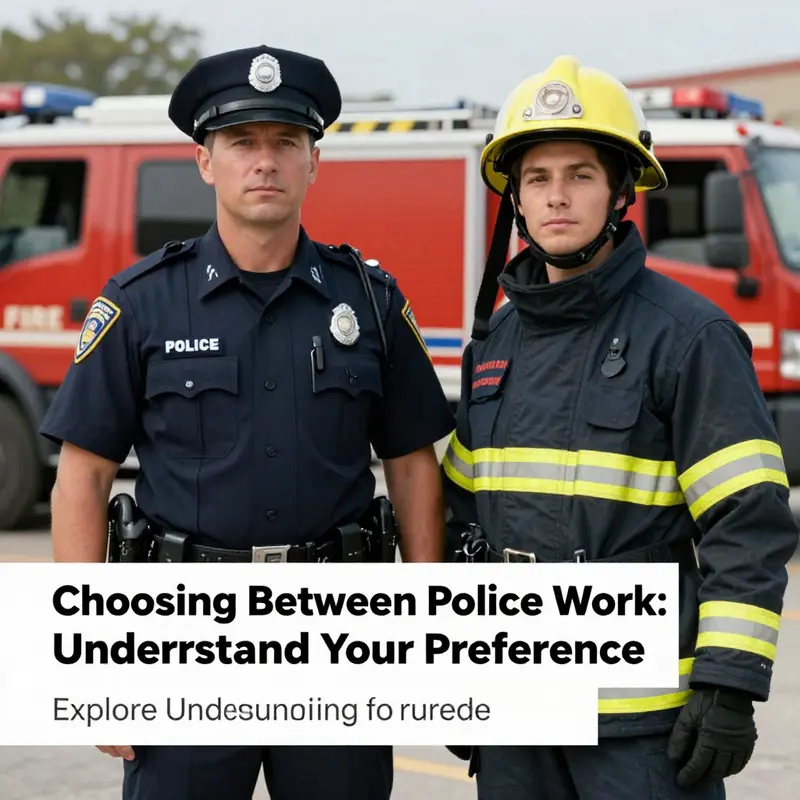
The decision between pursuing a career in police work or fire and rescue is one that resonates deeply with many individuals considering public safety roles. While both professions serve the community through critical emergency responses and law enforcement, they attract different personalities and motivations. This exploration aims to elucidate the unique contributions of each field and help you identify your preferences. The following chapters will dissect the aspects of police work and fire and rescue, including their unique roles, community impact, and connections to personal values, offering a comprehensive view that may guide aspiring professionals in their decision-making process.
Between the Badge and the Blaze: Navigating a Life in Police Work or Fire and Rescue
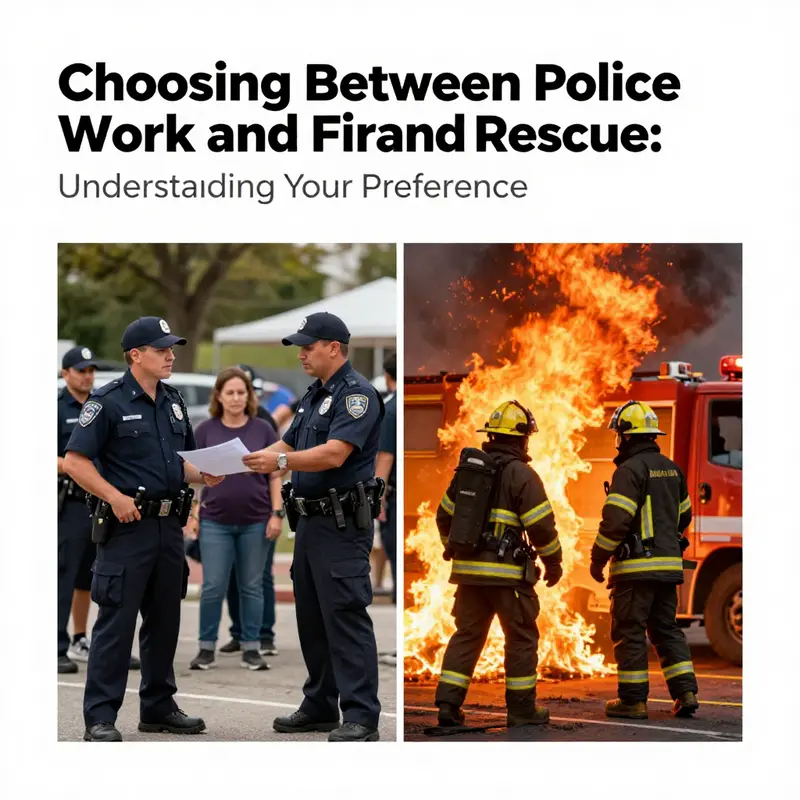
Two public safety professions stand at the threshold of community life, each offering a way to translate values into action. One path centers on keeping the peace through law, accountability, and steady engagement with the public. The other rushes toward danger to save lives, protect property, and coordinate rapid teamwork in emergencies. The choice between police work and fire and rescue is more than a career decision; it is a statement about what kind of daily life you want, what kind of risks you are willing to take, and how you want to shape your relationship with the communities you serve. In conversations about public service, it helps to start with the core missions of each field. Police work emphasizes maintaining law and order, preventing crime, and building trust with neighborhoods. It requires not only legal knowledge but a flexible, interpersonal approach to conflict, negotiation, and crisis management. Officers patrol streets, respond to calls, investigate incidents, and help people navigate the legal process. The work often demands making quick judgments that balance enforcement with de-escalation and community support. On the other hand, fire and rescue is anchored in life-saving immediacy. Firefighters and rescue personnel focus on extinguishing blazes, responding to medical emergencies, vehicle crashes, and hazardous materials incidents, and conducting search-and-rescue operations when people are trapped or in danger. This work demands exceptional physical fitness, technical proficiency with equipment, and the ability to function confidently within tightly coordinated teams under extreme pressure. The contrasts between these missions illuminate not only the skills required but the kinds of daily experiences that attract different temperaments and values.
Training and entry standards mirror the seriousness of the responsibilities involved in each path. Both fields impose rigorous prerequisites, including extensive background checks, physical fitness testing, and specialized training programs. Education in these careers ranges from academy-based instruction to college coursework, and in many jurisdictions the on-the-job components are as formative as classroom learning. Salary dynamics add another layer to the decision. In the current landscape, police officers tend to report median annual earnings around the mid-to-high sixties thousands, with regional variations that reflect cost of living, jurisdiction size, and overtime opportunities. Fire and rescue professionals, while equally essential, often report median wages that sit a bit lower on the spectrum, reflecting different compensation structures and the different risk profiles of the work. These differences are not simply numbers; they speak to the day-to-day realities of budgeting, shift patterns, and long-term financial planning for families and communities. For someone evaluating a future in these fields, it helps to map out your own priorities: is financial stability a primary goal, or are you seeking a more direct, hands-on life-and-death rhythm? The environment where you work plays a major role in answering that question.
The operational worlds of police and fire work also cultivate distinct professional cultures. Firefighters often operate in tightly knit crews that train, respond, and solve problems together. The teamwork is visible in the choreography of a fire response, where every member knows their role and supports neighbors in distress. This camaraderie can be deeply rewarding for people who value steady, predictable rhythms within a high-stakes framework. Police work, while it includes team coordination, often branches into more independent terrain. Patrols, investigations, and community liaison duties can place officers in autonomous situations where quick, principled decisions matter. Yet even here, the most demanding moments demand collective problem-solving across agencies, sharing information, and relying on a web of partnerships with detectives, investigators, and social-service teams.
Choosing between these paths is rarely about one right answer. It hinges on personal preferences and the kinds of communities you want to engage with. Individuals who thrive in close-knit, action-driven teams and who want to be hands-on in life-saving moments may feel drawn to firefighting and rescue. They may also appreciate the tangible, visible impact of their work when a life is saved or a building is stabilized. Others who enjoy autonomy, complex human interactions, and opportunities to shape policy or community safety strategies might find policing more aligned with their temperament. The decision is also shaped by values concerning public service, justice, prevention, and protection. Some people imagine themselves guiding a neighborhood toward safer outcomes through proactive policing; others picture themselves stepping into collapsing flames to pull someone to safety. The reality is that both roles can be deeply meaningful and deeply challenging, offering different kinds of influence on the very fabric of community life.
Beyond personal fit, practical considerations guide the long arc of a career. Education requirements, physical demands, and ongoing professional development are critical factors. The path to both professions typically includes rigorous entry standards and ongoing training, but the daily demands diverge in meaningful ways. The physical toll in firefighting, the need to stay prepared for sudden, physically intense rescue operations, is substantial. In policing, the endurance required for long shifts, mental acuity in rapidly evolving situations, and the ability to communicate under stress are central. Location matters too. Salary ranges shift with geography, and opportunities for advancement or specialization—such as investigations, forensics, or specialized rescue teams—can alter the financial and career trajectory in each field. Yet regardless of where you begin, the core promise remains the same: teamwork, resilience, and a continual commitment to service.
An honest reckoning with these options also invites reflection on how communities evolve in their safety needs. Public safety is not static. Innovations in training, technology, and community engagement influence how police and fire departments operate and how professionals view their long-term vocation. For readers drawn to the idea that careers can adapt and grow, there is value in exploring how the field is evolving. One notable resource highlights how training and technology are shaping the future of emergency services, offering insight into how today’s initial choices can lead to different kinds of leadership roles down the line. Within this evolving landscape, the capacity to be flexible, lifelong learners remains a shared strength across both tracks. To gain a sense of how these shifts play out in real practice, you can explore the concept of transformation within fire services through an initiative that emphasizes innovation and continuous improvement. This ongoing conversation about modernization can illuminate why people choose policing, firefighting, or a blend of both at different life stages. See the resource on Innovation Museum Transforming Fire Services for more on these themes.
Ultimately, the question—do you like more police work or fire and rescue—rests on a blend of personal temperament, community priorities, and readiness to commit to a demanding, public-facing profession. The choice is not simply about liking one element of safety work more than another; it is about a holistic alignment of your values, your lifestyle expectations, and your sense of purpose. For some, a career that emphasizes direct, immediate impact in crisis moments feels most authentic. For others, building long-term relationships with communities, preventing harm through policy and presence, or solving crimes through investigation embodies a different but equally noble form of public service. Both paths provide opportunities to grow, to serve, and to contribute to a safer world in tangible, lasting ways.
For readers who want a practical, side-by-side sense of how these careers compare, external resources offer a concise overview of responsibilities, education, and compensation. For a detailed comparison, see Firefighter vs Police Officer: Which Job Should You Choose? https://www.indeed.com/career-advice/finding-a-job/firefighter-vs-police-officer
Innovation Museum Transforming Fire Services: a look at how training and technology are reshaping fire and rescue, potentially influencing where your strengths best fit within the broader public-safety mission.
Two Paths of Public Service: Weighing Police Work Against Fire and Rescue and What Your Choice Reveals About Your Call to Serve
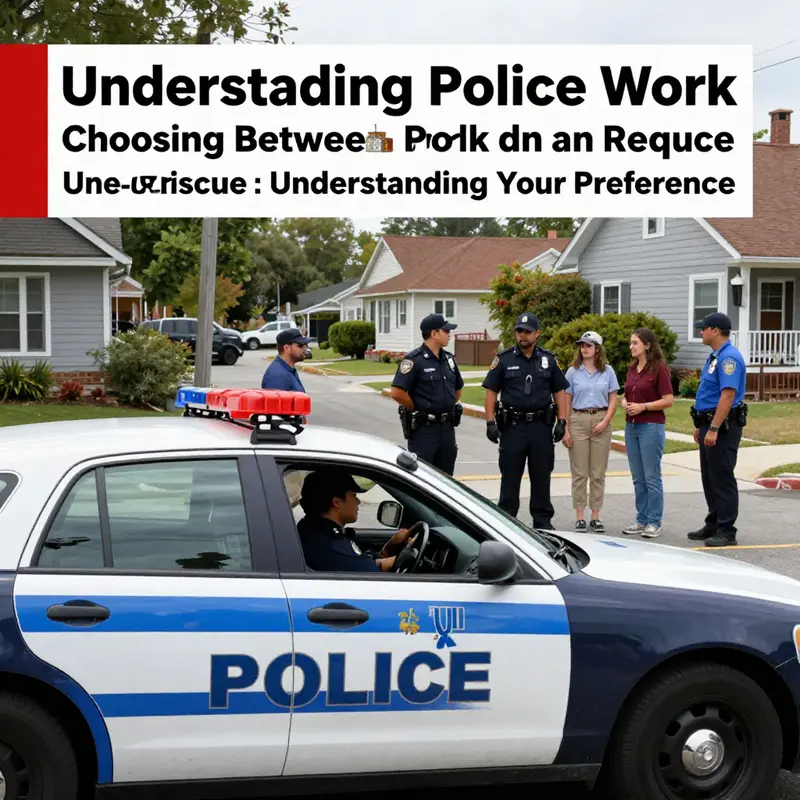
When people ask whether you like police work more or fire and rescue, they are really asking about how you picture service, risk, and the texture of daily life. The two paths share a core conviction: a commitment to community safety. Yet they diverge in pace, pace of life, and the kinds of problems you aim to solve. One path emphasizes the rule of law, social balance, and the art of prevention through presence and investigation. The other puts you on the front lines of immediate danger, where quick, coordinated action can mean the difference between life and loss. Both stand at the center of public safety because they organize resources, coordinate with other agencies, and ground themselves in a practical sense of duty. The decision between them is rarely a binary yes or no moment; it is a long conversation with your temperament, your values, and your appetite for certain kinds of impact. In both fields, you will learn that public safety is as much about people as it is about procedures, and that what sustains a career over years—whether in a cruiser or a station house—depends on trust, resilience, and the willingness to shoulder responsibility in moments that demand clarity and courage. The monetary realities, too, matter. Police work has a median salary in the upper range of the public safety spectrum, while fire and rescue tends to run a bit lower, reflecting the specialized nature of firefighting and the extraordinary physical demands it places on personnel. Training may be arduous in both fields, with rigorous prerequisites and a combination of classroom study, physical testing, and field experience. The numbers help frame the decision, but they never determine it; personal fit does. If you seek a stable, structured environment with a clear ladder of advancement, police work may feel comfortable. If you crave high-stakes action and a direct, often visceral sense of saving lives, fire and rescue can be deeply rewarding. The real task is to listen to your own values about community service, public safety, and how you want to move through the world on a daily basis. And it helps to understand not just what you will do, but how you will stay well while doing it. Both careers demand teamwork, but the kinds of teamwork diverge in meaningful ways. Police work relies on a steady collaboration with investigators, analysts, prosecutors, and community partners to weave a case, protect rights, and uphold public trust. Fire and rescue teams, by contrast, hinge on synchronized physical effort, precise communication under stress, and the ability to improvise rapidly when conditions change in an instant. If you thrive in environments that reward analytical decision making and patient building of cases, the investigative arc of policing can be profoundly fulfilling. If you are energized by muscled coordination, technical skill, and the immediacy of saving a life under pressure, firefighting and rescue work may align more closely with your instincts. The personal narrative you build through the years often reflects this initial alignment. A police officer spending a decade in patrol, investigations, and leadership roles may find satisfaction in shaping policy, mentoring recruits, or directing specialized units. A firefighter or rescue technician who moves through certifications and leadership roles can become an incident commander, a trainer, or a chief of operations, guiding teams through complex emergencies and strategic planning. Yet both tracks share a common hinge: the day-to-day reality of serving a diverse community. The patrol officer who greets a senior citizen at a doorstep and listens to concerns about neighborhood safety performs a form of public diplomacy. The firefighter who steadies a frightened child during a severe fire incident performs a different, equally vital kind of public care. The emotional terrain of either path can be demanding. The job can be physically punishing, and the mental toll of facing danger regularly can accumulate. Programs and departments increasingly emphasize mental health support, peer resilience, and ongoing training because stability over a career matters as much as the adrenaline of a single call. In this sense, the choice becomes less about one field being inherently better than the other and more about matching your capacity for stress, your appetite for risk, and your desire for day-to-day routine versus irregular but deeply consequential moments. A thoughtful approach to this decision also considers the rhythm of life you want outside work. Police work often features shifts that can be long, sometimes unpredictable, and oriented around call volume and coverage needs. Fire and rescue shares that unpredictability, but it also offers a rhythm tied to station readiness, drills, and the shared rituals of a crew whose bonds are built in hours of practice and the memory of teamwork in crisis. If a person values a strong daily structure, police work may feel more suitable. If a person wants to live in a culture of rapid response and tactile problem-solving, firefighting could offer a more visceral sense of purpose. Within both domains, entry paths and career trajectories are shaped by education, certifications, and the culture of the department. Police officers traditionally enter through academy training that blends legal instruction, scenario-based learning, and physical fitness. Fire and rescue personnel progress through fire academy, emergency medical training, technical rescue certifications, and ongoing drills that test endurance, teamwork, and leadership under pressure. The personal decision is often influenced by early exposure to each field, mentorship, and the degree to which one prefers the discipline of law and process or the immediacy of hands-on danger. It is also worth recognizing the broader social context in which these roles operate. Public safety is not only about reacting to incidents; it is about preventing harm through presence, communication, and community engagement. A patrol officer who builds trust across neighborhoods can prevent crime by shaping perceptions of safety and legitimacy. A firefighter who educates families about fire safety, conducts community drills, and advocates for safer housing conditions can reduce risk before a spark becomes a blaze. Communities benefit most when professionals in both tracks collaborate, share information, and align on strategies that address root causes of danger rather than only its manifestations. As you weigh your preference, consider a practice of imagination: picture yourself on a routine day in either role and then envision the next escalation, the call that arrives unannounced, the moment when your training meets reality. This exercise helps reveal where your mind goes when pressure mounts, what you value in the moment of truth, and how you sustain your own health over years of service. It also helps you observe how you respond to shared moments of triumph and failure—whether those moments come through a courtroom, a crisis scene, or a rescue operation. For readers who want a broader sense of how these fields intersect with larger systems, there is a continuing conversation about community preparedness and the gaps that can arise in crisis response. Public safety is an ecosystem, and understanding it requires looking beyond the individual role to the network of training, policy, and community resilience that supports every call. In that spirit, a related discussion on emergency preparedness gaps in California wildfires offers a practical reminder that the most effective responders work within well-coordinated plans. It explores how preparation, communication, and interagency cooperation can influence outcomes when danger is highest. Those who lean toward public safety as a call to leadership may find themselves drawn to roles that bridge people, policy, and practice. In contrast, those who feel most alive in the heat of action may channel their energy into teams that move as a single unit under pressure, solving problems in real time. Both paths honor the same core value: the refusal to stand by while others face risk alone. The question of which path to pursue is not a verdict on who is braver or more capable; it is a reflection of your temperament, your commitments, and your vision of what it means to serve a community. For readers gathering perspectives on the landscape of public safety, the Humane center of this journey remains not only what you do, but how you do it, with whom you stand, and how you carry yourself through the long arc of a career dedicated to protection, care, and hope. When you pause to listen to your own instincts, you sometimes hear a quiet, undeniable signal about where you belong. If that signal points toward the steady rhythm, policy-driven pace, and social trust of policing, you may find your vocation in law enforcement. If it points toward the immediate, life-affirming action of firefighting and rescue, your future may lie in the ranks of those who respond at a moment’s notice with courage, teamwork, and skill. Either way, the community you serve will be grateful for your resolve and your readiness to learn, adapt, and lead. External reference: Indeed – Firefighter vs. Police Officer: Which Job Should You Choose? https://www.indeed.com/career-advice/finding-a-job/firefighter-vs-police-officer
Bravery in Action: Why Fire and Rescue Captures Public Imagination More Than Police Work
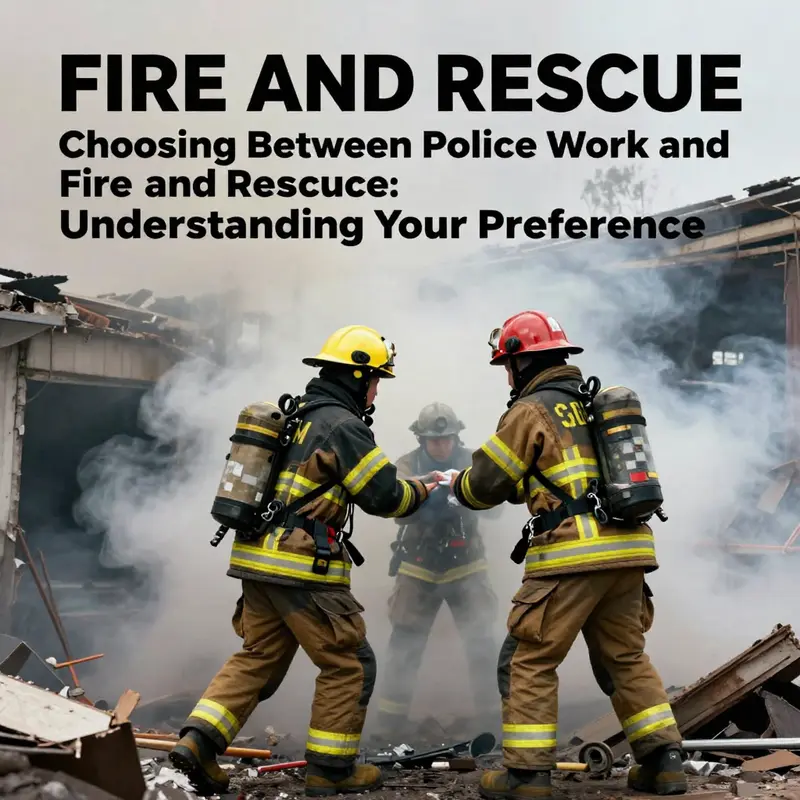
When people ask which path they would choose—police work or fire and rescue—the answer often hinges on how a community experiences danger, relief, and support in moments of crisis. This chapter treats the preference for fire and rescue not as a simple matter of adrenaline or salary, but as a complex negotiation between public perception, personal temperament, and the everyday demands of safeguarding life and property. Across many societies, firefighters occupy a role that blends immediacy with universality. They rush toward danger while others hurry away, an image that sticks in the collective memory long after the sirens have faded. A remark frequently cited in discussions of public sentiment captures this essence: while everyone else escapes from the fire, firefighters step into it—half a foot into the afterlife. Such language, whether quoted in LinkedIn discussions or echoed in social discourse, reveals a symbolic pull that goes beyond the technicalities of the job. It is an effective narrative of selflessness that resonates with a broad audience, offering a sense of reassurance in uncertain times.
That perceived heroism is only part of the dynamic. Fire and rescue work is widely seen as universally beneficial. Firefighters respond to fires, natural disasters, structural collapses, and various emergencies that affect people indiscriminately. This universality contrasts with the more nuanced and sometimes contentious public interactions associated with police work, where incidents of misconduct can ripple through communities and color public sentiment. In some online conversations, observers describe policing as burdened by bureaucracy and political pressures, creating a perception of distance between the role and the everyday lives of citizens. The public perception of firefighters as agents of rescue—visible, accessible, and consistently oriented toward saving lives—contributes to a broader societal warmth toward the fire service. While this warmth is not unassailable, it tends to shape the discourse about where one should place their professional passion when the goal is meaningful community impact.
In addition to perception, the structure of the work itself matters. Fire and rescue teams operate in high-stakes environments that require not only courage but also rapid problem-solving, physical prowess, and technical skill. The rigors of training, the camaraderie born of shared danger, and the outcome-focused nature of emergency response create a professional identity threaded with resilience. This is not to imply that police work lacks its own core of purpose or satisfaction. Law enforcement offers a distinct sense of order, legal process, and preventive strategies that contribute to community safety in important ways. Yet the immediate, visceral impact of a successful rescue mission—pulling someone from a burning building, stabilizing a life-threatening situation, providing shelter and care in the aftermath of disaster—tends to produce a lasting, emotionally charged public response. The result is a form of social capital that supports public recognition and a broader narrative of service.
From a financial perspective, the choice between these careers is shaped by compensation, job stability, and the predictability of daily life. The median salary for police work sits higher on many charts than the median wage for fire and rescue, reflecting the scalable ladders of advancement in law enforcement and the often longer pathways to specialized units. Still, the difference in pay is only one facet of the decision. Many aspiring first responders prioritize purpose, risk profile, and the chance to contribute directly to life-saving outcomes. Firefighters, with their emphasis on immediacy and physical readiness, often appeal to individuals who relish a tangible, action-forward routine. Police work, with its varied assignments—from patrols to investigations and community outreach—attracts those who prefer structural variety, formal procedures, and a pathway through a broader spectrum of public safety functions. Personal values—how one envisions service, who one hopes to help, and where one believes the most meaningful impact lies—play a decisive role in the ultimate choice.
Public recognition and policy support also color the appeal of fire and rescue. Societal narratives frequently celebrate firefighters with a sense of collective gratitude and preferential treatment in certain contexts, such as housing and health benefits in some regions. These advantages, whether framed as social contracts or cultural appreciation, reinforce the sense that fire and rescue personnel deserve prioritized consideration. This is not to gloss over the debates that accompany such recognition, including questions about resource allocation and the fairness of special accommodations. Rather, it underscores how cultural symbolism can influence career preference. A profession that appears to safeguard everyone, regardless of their social standing, often earns broad sympathy and solid backing from the public and policymakers alike. When communities see emergency responders as immediate guardians, not just as professionals who enforce rules, the advocacy for these roles grows stronger and more sustained.
The chapter’s deeper question—do you like more police work or fire and rescue—narrows to a personal ledger of values. If steadiness, structure, and a clear line of progression hold sway, police work may appeal more. If immediacy, risk-taking in service of saving lives, and a visible, universal impact resonate, fire and rescue may win the day. Yet few people operate in a vacuum, and a complete understanding of public preference requires acknowledging the interplay of media portrayals, community experiences, and the practical realities of training, deployment, and interagency collaboration. Firefighters and police officers do not operate in isolation; their work is interwoven with hospital systems, disaster relief networks, and social services. The mutual dependency of these teams amplifies the sense of purpose for each profession. In emergencies, the public often benefits from the seamless coordination among sectors, a sign that the best careers in public safety are those that harmonize individual strengths with a shared mission.
If readers take anything away from this contrast, it should be a recognition that popularity is not a simple gauge of effectiveness. Public admiration for firefighters reflects a long-standing cultural memory of rescue as a noble, protective act. It also mirrors the real-world experience of communities that have witnessed the immediate, visible consequences of a fire’s destruction and the subsequent relief brought by quick, skilled intervention. The narrative of heroism, while inspiring, must be balanced with an explicit acknowledgment of the critical work that police departments perform to maintain order, protect rights, and prevent harm. A responsible examination of career preference, therefore, considers both the emotional resonance of rescue and the disciplined, preventative, and investigative dimensions of policing.
For communities exploring how to attract and retain capable responders, the lesson is not to tilt the balance away from one profession toward the other. Rather, it is to enhance the perceived and actual value of both paths by investing in training, resources, and career development that emphasize service to all members of society. Public education about what each job entails—its risks, responsibilities, and rewards—can recalibrate expectations and reduce the misperceptions that sometimes tilt opinion toward one side. In this sense, the narrative around preference becomes a conversation about how societies design, support, and value those who stand between danger and safety. It becomes a mirror of how communities imagine protection, care, and resilience in the face of uncertainty.
Within this broader reflection, a single, simple link to a resource that foregrounds community-centered fire service can illuminate how values translate into practice. The Green Firehouse offers a perspective on sustainable, health-conscious spaces that support firefighters as they serve their communities. The chapter draws a line from public perception to practical design considerations, suggesting that a fire department’s environment can reinforce its mission in tangible ways. The discussion is not about architecture for architecture’s sake; it is about architecture as infrastructure for better outcomes—for responders, for families, and for neighbors who rely on fast, reliable emergency response. The narrative here invites readers to consider how such spaces influence morale, retention, and the quality of service, which in turn shapes public opinion and the willingness of young people to pursue fire and rescue careers. You can explore this idea further at The Green Firehouse: Creating Sustainable Spaces for Community and Health.
Finally, to broaden understanding and connect with ongoing public discourse, an external perspective on how firefighters are perceived relative to police officers offers a complementary view. The Guardian’s analysis highlights the warmth and admiration that rescuers often enjoy in the public eye, while also probing the nuances of policy, training, and accountability that frame these perceptions. This external resource reminds readers that popularity, while meaningful, sits within a larger ecosystem of governance, culture, and shared safety responsibilities. See Why Firefighters Are More Popular Than Police Officers – The Guardian (2023) for a broader context on public perception and its implications for career choice and policy development.
External resource: https://www.theguardian.com/world/2023/sep/15/firefighters-popularity-police-public-perception
From Perception to Preference: How Community Values Shape Choices Between Police Work and Fire and Rescue
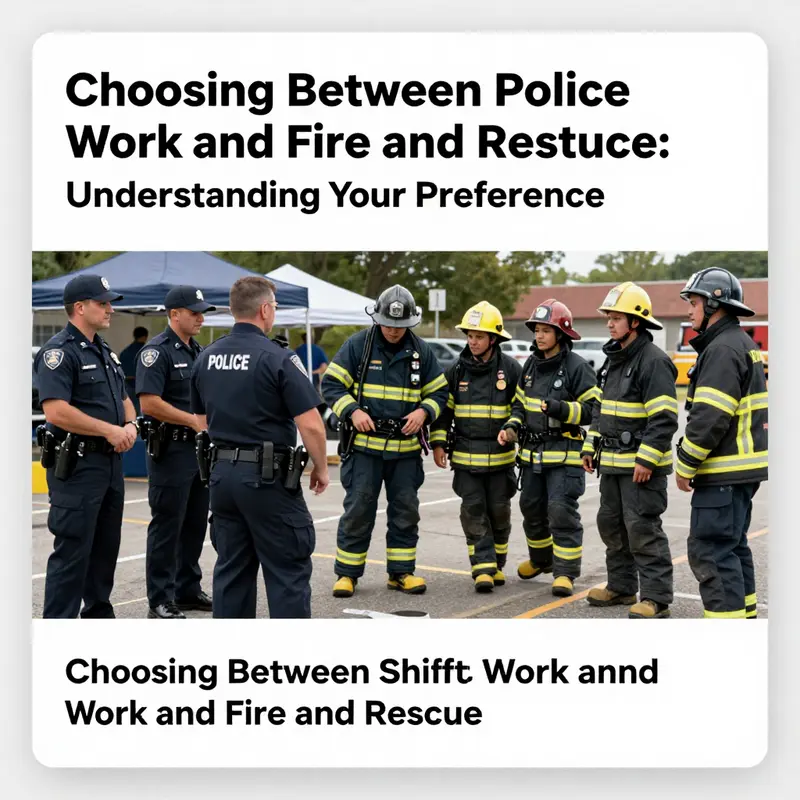
People rarely choose a career in public safety only for the thrill of a badge or the rush of a siren. They weigh community needs, personal values, and the kind of daily impact they want to have on the places they call home. The community impact of police work versus fire and rescue emerges not merely from what the two professions do, but from how people see them, trust them, and imagine themselves within those roles. When communities talk about safety, they often conjure two distinct images: patrol cars gliding along familiar streets, eyes scanning for trouble, and crews arriving in a blaze of helicopters, hoses, and coordinated teamwork to save lives and property. Those images reflect long-standing narratives that shape who is drawn to each career and why. The public’s perception of police officers as guardians of order can be at once comforting and fraught, highlighting accountability and the delicate balance between authority and civil rights. In contrast, firefighters and rescue personnel are typically celebrated as first responders who enter the worst moments—smoke-filled rooms, collapsing structures, medical crises—and emerge as symbols of courage, resilience, and technical mastery. This dichotomy helps explain not only how communities respond to emergencies but how individuals perceive themselves when they consider a path into public service. The community’s gaze matters because it feeds back into why people choose law enforcement or firefighting in the first place. If a community is seeking visible justice for wrongdoing and stronger procedural safeguards, applicants may be drawn to police work for the sense of structured authority and systematic problem-solving it provides. If, however, a community prizes immediate action, risk tolerance, and life-saving intervention, firefighting and rescue can seem like the truest outlet for public service. The consequences extend beyond the individual candidate. When communities voice trust or doubt about the institutions that keep them safe, they influence recruitment, training priorities, and how agencies communicate with residents. That dynamic, in turn, affects the performance and morale of those already in the field, creating a feedback loop where public perception and personal choice reinforce each other. The ways that people weigh these choices often hinge on shifting societal values. In recent years, debates about social justice and policing practices have caused some potential recruits to pause or reconsider a path in law enforcement. The call for accountability, transparency, and reform resonates with many who might otherwise have pursued policing as a disciplined, civic-minded career. This re-evaluation alters the talent pool and pushes some to explore firefighting and rescue, where the emphasis remains on immediate action and the technical craft of saving lives. At the same time, heightened awareness of climate-related disasters and the increasing frequency of large-scale emergencies have amplified appreciation for fire and rescue services. Communities facing more extreme weather, urban heat, and wildfire threats see these responders as essential partners in preparedness and response. In such contexts, applicants who crave high-stakes environments and tangible, fast-paced problem-solving are drawn to firefighting, while those who value steady routines and structured progression gravitate toward police work. The personal side of this career decision cannot be ignored. The psychological and physical demands of each path play a decisive role for many individuals. Firefighters often endure extended shifts and intense physical strain, with long periods of vigilance punctuated by rapid bursts of action during events. This rhythm can enhance camaraderie but also disrupt family life and long-term wellness if not managed with care. Police officers, by contrast, frequently operate within more predictable schedules but confront unpredictable incidents that test judgment, de-escalation skills, and emotional endurance. The need to balance risk, legal constraints, and community engagement shapes the daily experiences of both professions. Studies of personality and motivation illuminate how fit and fulfillment emerge from alignment between the job’s core values and the applicant’s temperament. Research suggests that candidates drawn to police work may exhibit conscientiousness, a sense of duty, and an inclination toward rule-based problem-solving. Those pursuing fire and rescue often score higher on risk tolerance and emotional resilience, along with strong teamwork and the capacity to remain calm under extreme pressure. When these trait patterns converge with place-based expectations and family histories of service, they help explain why a community might see certain neighborhoods producing more police recruits and others producing more fire and rescue recruits. Yet the narrative of public service cannot be disentangled from the public’s ongoing engagement with safety and trust. A community that emphasizes restorative justice, community policing, and youth engagement invites a different kind of police candidate—one who foregrounds communication, cultural competence, and transparent accountability. Meanwhile, communities that stress rapid response, technical skill, and interagency coordination may attract candidates who prioritize the immediacy of action and the science of rescue. Public perception thus becomes a living influence on recruitment pipelines, shaping who applies, what training emphasis seems most critical, and how departments present themselves to potential newcomers. The intersection of perception and practice also carries implications for how these careers affect the public they serve. Police work can be a field of visible accountability, with exercises in community outreach, problem-solving, and procedural justice shaping a city’s sense of safety. Fire and rescue, on the other hand, often deliver a more visceral demonstration of safety—visible heroism, rapid risk management, and direct life-saving outcomes that communities rally around. This difference in perception can influence how residents respond to safety initiatives and how they relate to public safety professionals in crisis moments. It is not merely about who is seen as a hero, but about who is trusted to protect the vulnerable, who is seen as fair, and who is capable of turning fear into safety. As communities evolve, so do recruitment narratives and training priorities. A broader conversation about modernization and leadership within emergency services can illuminate how perception translates into better outcomes. For example, technology and new leadership models can help bridge gaps in trust by promoting transparent decision-making, de-escalation training, and cross-disciplinary collaboration. A closer look at how innovation is reshaping frontline practice can be explored in [Innovation Museum: Transforming Fire Services]. Such resources remind us that the public image of these careers is not fixed; it adapts as communities demand more inclusive engagement, data-driven accountability, and resilient systems built to withstand diverse emergencies. Importantly, the community’s voice matters in fueling this evolution. When residents participate in town-hall dialogues, volunteer for public-safety education, and advocate for equitable enforcement or protection services, they help calibrate the balance between police work and fire and rescue in ways that strengthen safety without compromising civil liberties or human dignity. In this ongoing negotiation, the personal choices of potential recruits become a kind of barometer for community values, signaling where resources should go and which qualities should be cultivated in future leaders of public safety. The chapter’s results align with a broader understanding that community impact is both a mirror and a lever. It reflects who a society believes should bear responsibility for crime prevention, emergency response, and life-saving interventions, while also shaping who is drawn to these roles in the first place. When societal values tilt toward accountability and social justice, the police path may challenge recruits to grow in empathy, de-escalation, and community partnership. When resilience, swift action, and technical prowess capture the public imagination, the fire and rescue path may attract a talent pool energized by direct action and teamwork under pressure. These dynamics underscore a crucial point: choosing between police work and fire and rescue is less a simple preference and more a reflection of how communities imagine safety, trust, and service. The resulting workforce, in turn, influences how safely and justly the community experiences daily life. For readers seeking a deeper dive into the psychology and well-being impacts of these professions, a comprehensive study is available at https://www.ncbi.nlm.nih.gov/pmc/articles/PMC10736995/.
Between Badge and Fireline: How Personal Values and Career Outlook Shape Your Path in Police Work or Fire and Rescue
Choosing a public-service pathway is less about a single moment of decision and more about a sustained alignment between who you are and what the job demands. If you stand at the crossroads of police work and fire and rescue, the choice asks you to consider not only function but fidelity—fidelity to a set of values, to a daily rhythm, and to a long arc of impact in your community. The two paths share a core purpose: safeguarding others and maintaining public safety. Yet they diverge in the ways they translate that purpose into action, the kinds of risks you embrace, and the skills you hone over a career. For many, the decision will come down to how you see yourself showing up in moments of tension: as a quiet broker of laws and order, or as a frontline responder who steadies fear, protects lives, and confronts peril head-on. The broader career outlook adds another layer of clarity. The landscape is not merely about today’s roster of duties but about what the labor market signals for years to come. The Bureau of Labor Statistics projects steady demand in both fields, with growth aligned to societal needs such as crime prevention, public safety, and disaster readiness. In practical terms, this translates into a future where both police work and fire and rescue offer pathways with meaningful work, potential advancement, and opportunities to specialize or grow into leadership roles. At the same time, the financial and training dynamics differ. Police work often comes with a median salary in the range of the low to mid-sixties thousands, paired with a demanding educational and on-the-job training track that emphasizes legal knowledge, investigative acumen, and community engagement. Fire and rescue, while offering a different rhythm and set of hazards, centers on rapid response, technical firefighting skills, and resilience in high-pressure environments, with a median wage commonly reported around the low fifties. Those figures, while approximate, frame a broader truth: each path requires substantial preparation, regular training, and a willingness to learn continuously throughout a career that is as much about people as about procedures. It is also important to acknowledge that these roles do not operate in isolation. They thrive on teamwork, interagency collaboration, and a shared culture of service. The same rooms where police officers confer with prosecutors and community leaders are also spaces where firefighters coordinate with EMS colleagues, engineers, and emergency managers. The outcomes they strive for—loss prevention, crime reduction, rapid lifelines in emergencies—depend on the same currency: trust, clear communication, and practiced readiness. The personal values that guide you will help you navigate the ethical questions that inevitably arise in public safety. Those who prize structure, accountability, and the rule of law may find themselves drawn to police work because it channels their desire to uphold order and safeguard civil rights within a framework of due process. Those who are energized by action, collaboration under stress, and the immediacy of saving lives may gravitate toward fire and rescue, where the mission hinges on timely decisions and the courage to face dangerous environments. Even the choice to pursue one path over the other can reflect a deeper self-understanding of risk tolerance, patience, and the kind of mentor-mentee relationships you seek in a career. The math of the decision is rarely just about salaries. It is also about the daily experience of serving others, the scope for professional growth, and the capacity to shape your values into tangible outcomes. For instance, a police career offers a pathway through community policing models, investigative specialization, and leadership roles that steward policy and public trust. A fire-and-rescue trajectory can unfold through evolving firefighting tactics, incident command, EMS integration, and opportunities to influence how fire services engage with vulnerable populations or adapt to climate-driven hazards. Both tracks demand physical fitness, mental resilience, and robust emotional health. They challenge you to maintain composure in crisis, to communicate with clarity under pressure, and to make decisions when there is little room for error. They also require humility: recognizing when procedures must adapt to a community’s unique needs, when collaboration with a diverse team is essential, and when public trust hinges on transparent, ethical conduct. The personal decision to favor police work or fire and rescue is rarely about a single feature—such as adrenaline or notoriety—but about a constellation of influences that shape daily life. How do you respond to ambiguity? Do you prefer a career with a more predictable structure and a legal framework that guides action, or do you thrive in environments where you can see immediate, tangible outcomes of your efforts? Do you value community steadiness and preventive approaches, or do you seek the front-line, door-to-door urgency of life-saving response? These questions matter because they forecast not only your satisfaction but your longevity in a demanding field. A thoughtful alignment of values with job duties can foster durability—an essential ingredient as the work becomes more complex in an era of evolving threats and resource constraints. The research landscape suggests that the job market remains robust for both paths, while the day-to-day experiences diverge in meaningful ways. Police officers and detectives face a spectrum of responsibilities that range from patrol and incident response to crime investigation and collaboration with the judicial system. Firefighters and EMTs navigate a cadence that blends fire suppression, rescue operations, medical care, and, increasingly, disaster preparedness and community education. The capacity to adapt—whether to new legislation, new firefighting technology, or new community needs—will often determine long-term satisfaction more than any singular moment of heroism. For those who want to explore how leadership evolves within these fields, it is useful to consider the role of technology and training in shaping contemporary practice. The way leaders make decisions, manage teams, and communicate risks is continually evolving as new tools become available, from incident command software to advanced rescue techniques. To understand how this evolution connects to personal values, consider the question of leadership style and accountability. The next chapter will explore how these leadership dynamics play into everyday work and how professionals balance duty with compassion, ethics, and community trust. Meanwhile, those leaning toward fire and rescue can reflect on a practical truth: the daily path will often require you to be a co-pilot in a highly interdependent system, guiding a crew through danger while also supporting families and neighborhoods under stress. Those who gravitate toward police work may discover that the job demands not only courage but also patience, diplomacy, and a steady hand in the face of controversy. It is here, in the space between action and restraint, that personal values crystallize into vocation. In weighing the path forward, consider how you want to contribute to your community over the long arc of your career. Do you imagine yourself shaping policy, building trust, and guiding lawful outcomes? Or do you envision yourself on a rapid-response team where every second counts and the priority is saving lives, protecting homes, and reducing harm in the moment? A stable career path can emerge from a clear alignment of daily duties with inner convictions, and it is that alignment that sustains motivation through the inevitable challenges of service. For those who want to see how the broader field is evolving, a closer look at leadership, technology, and community engagement can illuminate the road ahead. The internal conversation you have with yourself—about risk, reward, and your capacity to bear heavy responsibilities—becomes a compass for choosing a path that will feel authentic year after year. If you are drawn to the nuanced balance of law, order, and public trust, police work may fit your essential self. If you crave the immediacy of response, the physics of movement through danger, and the direct impact of saving lives, fire and rescue may resonate more deeply. Either choice offers a profound avenue to serve others and to contribute to the safety and resilience of your community. For readers seeking to understand how these trajectories can intertwine with leadership and evolving practice, consider the broader discussion of how technology reshapes public safety leadership, which offers a lens on what comes next for anyone stepping into this field. Impact of technology on fire department leadership. To ground the career outlook in a national frame, the external resource on the U.S. Bureau of Labor Statistics provides a comprehensive overview of growth projections and requirements for police and detectives and related protective-service roles. External reference: U.S. Bureau of Labor Statistics – Police and Detectives.
Final thoughts
In choosing between police work and fire and rescue, individuals must consider their personal motivations, values, and preferred engagement with the community. Each profession offers unique opportunities to serve and protect the public, aligning with different personal attributes and societal needs. Whether leaning towards the structured environment of law enforcement or the dynamic, life-saving nature of fire and rescue, this journey necessitates introspection and a clear understanding of one’s aspirations. Ultimately, both fields contribute significantly to community safety, and recognizing what resonates most with you will guide you towards a fulfilling and impactful career.