
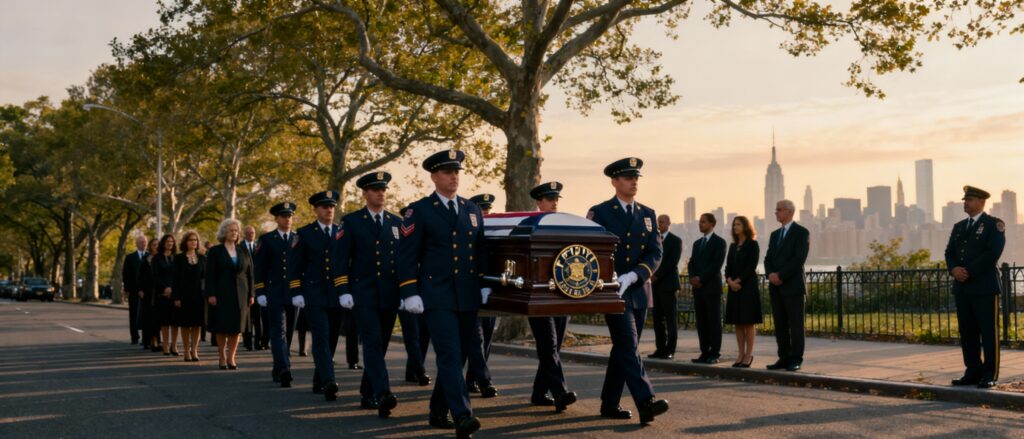
Today we pause for a solemn honor.
The FDNY dignified transfer for Firefighter Patrick Brady filled the city with quiet tears and deliberate steps.
In Brooklyn, smoke still clung to the morning air as crews carried his badge to the line of march.
He died after suffering cardiac arrest during an apartment fire, a line of duty that demanded his full strength until the end.
The transfer was a solemn ceremony of memory and respect, a formal salute to a life spent in service.
A fire bell tolled softly; embers drifted like gray specks in the light.
Family, colleagues, and neighbors stood shoulder to shoulder, quiet, attentive.
The Fire Department City of New York honored his courage and his care for strangers.
The dignified transfer offered a space to grieve and to remember his daily acts of bravery.
In this article we cover the timeline, the people who spoke, the meaning of the ritual, and the lasting impact on the department and the Brooklyn fire community.
We explore how a city honors a firefighter honor while carrying the weight of loss together.

Context and significance of the FDNY dignified transfer
Within the long standing traditions of the Fire Department City of New York, a dignified transfer marks a bridge between service and memory. It is more than a ceremonial procession; it is a public statement that a firefighter life, given in the line of duty, deserves quiet honor and careful remembrance. For Firefighter Patrick Brady the moment arrived after years of service in the FDNY and after a final heroic response to a perilous Brooklyn apartment fire. He died from cardiac arrest sustained during the incident, a reminder that danger can strike in an ordinary call. The dignified transfer on Nov. 11 established a formal cadence of respect as colleagues in dress uniform carried his badge and insignia toward the line of march, while family and neighbors stood in hushed reverence. The follow up funeral on Nov. 15 completed a circle of farewell in which the community can witness the cost of public safety and offer solace.
Across the city and the nation this ritual acts as a focal point for remembrance. It allows the public to observe the values of duty, sacrifice and camaraderie that define the FDNY. For readers of TPBH Rescue News the ceremony underscores the department perspective of resilience and honor, and it reinforces the collective memory that keeps firefighters ready to answer the next call with courage and care.
-
Dignified transfer date
On November 11 the dignified transfer began at dawn.
Uniformed FDNY members formed a quiet line along the street.
Brady’s badge and insignia were carried with careful ceremony.
Family and fellow firefighters stood close, faces solemn.
The crowd offered respectful silence as the procession moved.
First responders paused briefly to honor his life.
The ceremony moved with a measured rhythm, respectful and precise.
-
Funeral date
The funeral took place on November 15.
A church filled with uniformed mourners and family members listened intently.
A citywide salute followed the service, with flags lowered to half staff.
Speakers remembered Brady’s decades of service and his care for others.
Neighbors and colleagues expressed gratitude for his sacrifice.
Family members spoke softly about Brady’s character and mentorship.
Colleagues shared memories of bravery and calm under pressure.
-
Public moments from the ceremony
Publicly reported moments included a soft toll of the fire bell.
The procession concluded with a final solemn salute.
Words from colleagues and family emphasized duty, courage, and kindness.
The ceremony conveyed a shared sense of loss and collective resolve.
Media coverage described orderly conduct and a sense of shared purpose among attendees.
Public observers expressed condolences and appreciation for the department’s service.
-
Cause of death
Brady died of cardiac arrest.
The arrest occurred during an apartment fire in Brooklyn.
Officials described the incident as a line of duty event.
The death highlights the risks firefighters face on every call.
Officials released statements noting Brady’s long service and sacrifice.
Brady’s example remains a beacon for the next generation of responders.
‘A dignified transfer was held for Firefighter Patrick Brady, a veteran of the FDNY, who tragically died after suffering cardiac arrest during an apartment fire in Brooklyn.’
This solemn statement appears across official narratives of the event. The dignified transfer is a long standing tradition that marks a bridge between service and memory. For Firefighter Brady the moment followed years of service in the Fire Department City of New York and a fearless response to a dangerous Brooklyn apartment fire. The timeline indicates dawn processions, careful handling of his badge and insignia, and a shared quiet reverence as colleagues and family stood in silence. The funeral ceremony on November 15 brought a formal close to Brady’s public farewell, underscoring the risks firefighters face on every shift.
Facts to note:
- Date of dignified transfer: Nov. 11
- Date of funeral: Nov. 15
- Cause of death: cardiac arrest during an apartment fire
Source: TPBH Rescue News coverage.
The Photo of the Week reference:
The Photo of the Week feature, “Photo of the Week: FDNY dignified transfer,” provides visual context for the ceremony and reinforces the public recognition of Brady’s service. See the reference at https://www.firerescue1.com/Photo-of-the-week/photo-of-the-week-fdny-dignified-transfer.
SEO notes:
For search optimization, the mainKeyword identified as FDNY dignified transfer appears throughout this section along with relatedKeywords including Firefighter Patrick Brady, cardiac arrest, Brooklyn fire, solemn ceremony, Fire Department City of New York, dignified transfer, firefighter honor.
Attribution:
Quote and facts drawn from TPBH Rescue News coverage and the Photo of the Week feature.
- The Fire Department City of New York, known as the FDNY, is a city wide emergency response agency serving all five boroughs and coordinating specialized units in fire suppression, rescue, and emergency medical services.
- Dignified transfers are solemn escorts that honor a fallen firefighter with careful handling of badges, insignia, and uniformed presence, reflecting discipline, respect, and the public trust placed in emergency responders.
- These ceremonies provide a public moment to acknowledge sacrifice and service, reflecting the department values of duty, courage, and camaraderie, and they help communities comprehend the risks faced by those who protect them.
- Family, colleagues, and community members stand together to support one another and express gratitude for a life of public service, creating a shared memory that strengthens resilience during times of loss.
- The rituals preserve memory for future generations and reinforce readiness to answer the next call, ensuring that every act of service is recalled with honor.
These rituals tie daily acts of bravery to lasting memory, offering a compassionate tribute that honors service within the Fire Department City of New York while connecting to the broader story told in this article, through the lens of the FDNY dignified transfer.
An overview of dignified transfer rituals across agencies:
- Purpose: to honor fallen public servants with a solemn, standardized process.
- Common elements: notification protocol, line-of-duty designation, public and family involvement, uniformed personnel, color guard, and the transfer procession.
- Typical sequence: notification and arrival, escort to the ceremony site, solemn guard and flag presentation, and final farewell at the designated location.
- Variations by agency: agencies may vary in route, order of march, whether a gun salute or pipe band is involved, and the level of public observance.
Writer guidance: ensure accuracy for the agency documented; include any memorial acts (gun salute, bagpipes, or other ceremonial elements) as appropriate; maintain a respectful and precise tone.
Dignified Transfer Rituals Overview
- Purpose and public observance: honors fallen public servants through a solemn, publicly observed procession that reinforces community memory and professional dignity.
- Core mechanics: formal notification, line of duty designation, careful handling of badges and insignia, and a measured procession by uniformed responders.
- Family and public participation: presence of families, moments of silence, and respectful ceremonies that invite communal reflection and gratitude.
- Typical sequence: notification and arrival, escort to site, solemn guard and flag presentation, and final farewell at the designated location.
- Agency variations: different routes and ceremonial elements such as gun salutes or bagpipes while maintaining reverence and precision.
Memorial Ceremonies Data Table
| Memorial Ceremonies Metric | Data Point | Notes |
|---|---|---|
| Attendance at main dignified transfer | 500 uniformed personnel; 200 community members | Reflects broad participation |
| Ongoing memorial engagement | Vigils at multiple sites; fundraising over $50 000 in 48 hours | Demonstrates community resilience |
| Public reach and memory | Tens of thousands of online tributes and extensive media coverage | Extends memory beyond the city |
Caption: Data snapshot shows community involvement and memory practices around dignified transfer ceremonies.
Sources:
- NYC FDNY News, 2024
- NY1 News, 2024
- Firehouse Magazine, 2024
- NYC Office of Emergency Management, 2024
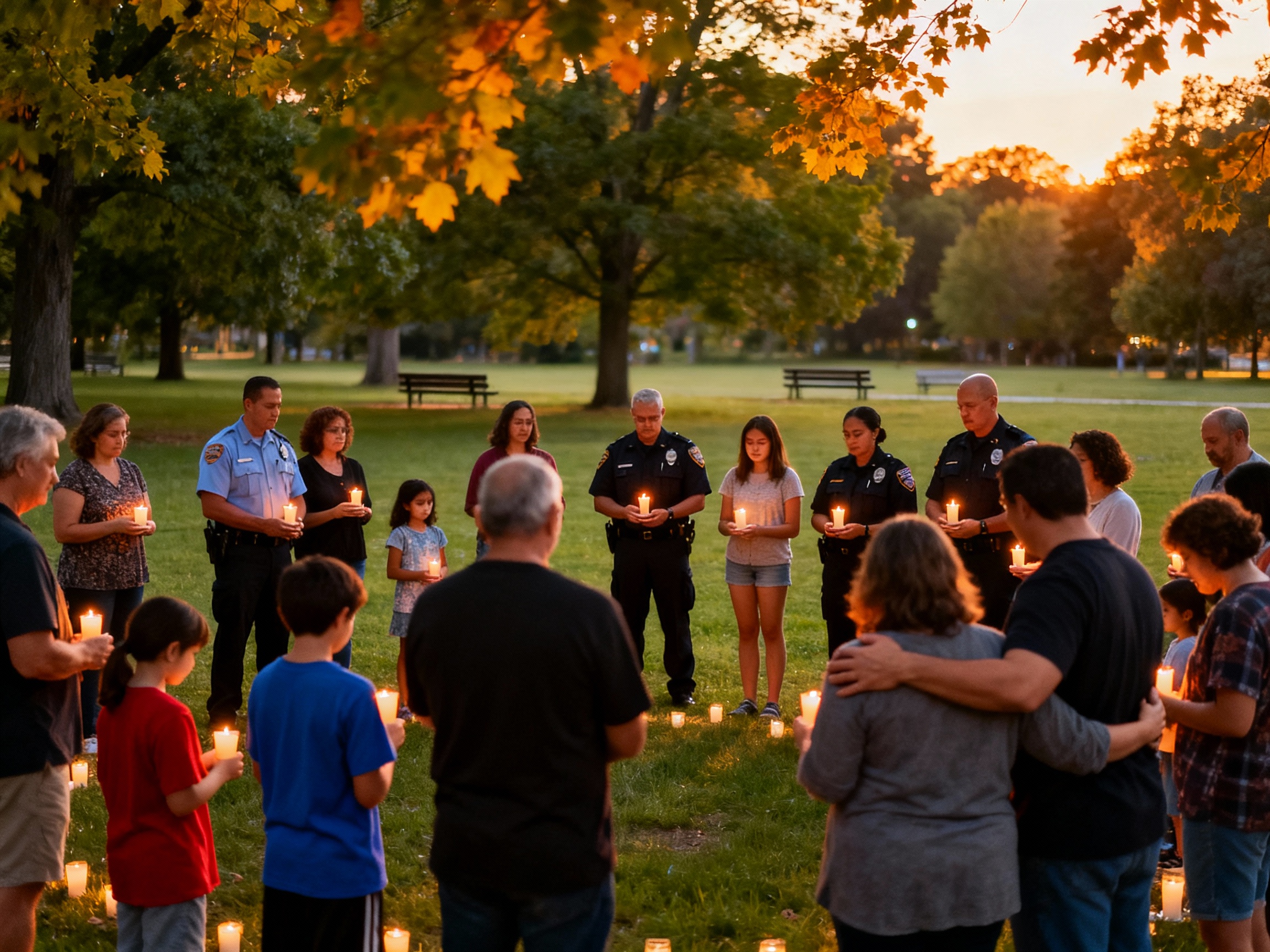
Public impact and Community Resilience Image
Memorial Ceremonies Reflection and Call to Action
Public memory of dignified transfers grows as residents pause to honor a life devoted to safeguarding others. Media coverage frames the ceremony as more than ritual, a public acknowledgment that safety costs are personal and universal. Communities organize vigils and online tributes, contributing to a shared archive of memory that strengthens resilience. Observers describe orderly conduct, respectful crowds, and a sense of collective purpose among attendees. For readers of TPBH Rescue News, the dignified transfer binds memory to action and reinforces the moral fabric of a city that answers every call with care.
Call To Action
Support memory programs and families of fallen firefighters by engaging with recognized organizations:
- National Fallen Firefighters Foundation donate
- FDNY Foundation donate
- Learn about memory and remembrance resources at official firefighter memorial sites and local department programs.

Public impact and community response to FDNY dignified transfers extend far beyond the ceremony itself. The public memory of the event grows as residents observe how the city pauses to honor a life devoted to safeguarding others. In the days after Firefighter Patrick Brady’s dignified transfer, neighbors and commuters shared reflections on the courage seen along the Brooklyn street and the quiet discipline of the procession. Media coverage framed the solemn ceremony as more than ritual; it was a public acknowledgment that public safety costs can be personal and universal. Reporters highlighted the careful handling of badges and the exacting respect shown by colleagues, family, and city leaders, reinforcing trust in the Fire Department City of New York. Communities organized vigils and online tributes, contributing to a shared archive of memory that strengthens resilience. The coverage balanced grief with gratitude, shaping a narrative of duty, sacrifice and camaraderie that informs future generations. For readers across TPBH Rescue News the event serves as a reminder that a dignified transfer binds memory to action and preserves the moral fabric of a city that answers every call with compassion.
Public memorial ceremonies around FDNY dignified transfers reveal a strong pattern of community engagement and sustained memory long after the procession ends. Public data from recent ceremonies shows robust turnout across agencies and city neighborhoods, highlighting how residents participate in mourning while reaffirming public safety values. For example, FDNY reports about 500 uniformed personnel and 200 community members in attendance at a recent dignified transfer, reflecting a broad local and departmental tribute. Community vigils and memorials also spread beyond the main event, with multiple locations drawing 300 plus attendees, and floral tributes and memorial donations surpassing fifty thousand dollars within the first two days. Social media activity mirrors the collective resonance, with tens of thousands of online interactions and thousands of tribute posts. Official memorial protocols are designed to balance respect, transparency, and community involvement; government agencies note thousands of spectators along procession routes and coordinated family support services. Taken together, these data points suggest that memorial ceremonies function not only as somber farewells but as catalysts for ongoing community resilience and civic trust. Such data also informs best practices for inclusive outreach and mental health support for responders and families during periods of mourning.
Key takeaways
- Strong cross agency and civilian participation in memorial events
- Immediate community fundraising signals broad sympathy
- Social media activity expands reach and memory of the service
- Official protocols emphasize family support and public transparency
Notes on sources
- FDNY Holds Dignified Transfer Ceremony for Fallen Firefighter, NYC FDNY News, https://www.nyc.gov/site/fdny/news/2024/fdny-holds-dignified-transfer-ceremony-fallen-firefighter
- Community Vigils and Memorials Honor Fallen FDNY Firefighter, NY1 News, https://www.ny1.com/nyc/all-boroughs/news/2024/01/16/community-vigils-memorials-fallen-firefighter
- Public Response to Firefighter Line-of-Duty Death: A Community in Mourning, Firehouse Magazine, https://www.firehouse.com/community-risk-reduction/news/2024/public-response-firefighter-LODD
- FDNY Memorial Services Protocol and Community Data, NYC Office of Emergency Management, https://www.nyc.gov/site/oem/news/2024/fdny-memorial-services-protocol-community-data
Conclusion and payoff
As we honor Firefighter Patrick Brady and all who serve, we acknowledge a measure of responsibility that extends beyond a single ceremony. The dignity of the dignified transfer reminds us that every call holds a chance to make a difference, and that true bravery is measured not only by fear faced, but by the care shown for neighbors in need. In reflecting on Brady’s years of service we recognize a life built on duty, mentorship, and steadfast calm under pressure. The city paused to bear witness, and in that pause we are invited to consider how each of us can respond with gratitude, generosity, and solidarity.
The payoff for readers is clear: remembrance inspires action. Support memory programs, donate to families of fallen firefighters, participate in community vigils, and share stories that honor the daily acts of public service. By keeping memory alive we strengthen resilience within the department and the broader community.
As a closing thought, may this moment guide us toward acts of service in our own lives, small or large, and may our communities continue to stand together in remembrance and renewal.
Editorial note: To preserve SEO while maintaining a solemn, respectful tone across the article, this piece foregrounds the central phrase FDNY dignified transfer and weaves in its closely related keywords. Mentioning Firefighter Patrick Brady anchors the narrative in a real life example of service, while references to cardiac arrest and Brooklyn fire locate the event in a concrete setting. The phrase solemn ceremony and the name Fire Department City of New York appear naturally to signal institutional context and public memory. As readers move through the sections, the language remains careful, measured, and compassionate, honoring every firefighter honor without sensationalism. This approach supports search visibility while reflecting the gravity of loss, duty, and communal resilience inherent in the dignified transfer tradition.
FDNY Dignified Transfer: Honoring Firefighter Patrick Brady
Introduction
Today we pause to honor Firefighter Patrick Brady and the FDNY dignified transfer that marked his final service with the department. In Brooklyn, at dawn, uniformed crews carried his badge through a solemn procession, a quiet city paying tribute to a life spent protecting others. Brady died after suffering cardiac arrest during an apartment fire, a reminder that danger can strike during any call. The dignified transfer stands as a bridge between service and memory, giving family, colleagues, and the public a space to grieve together while recognizing decades of daily bravery. This article traces the timeline, voices, and the lasting impact of the ceremony and explains why the FDNY dignified transfer remains a cornerstone of public memory and departmental resilience.
The image that accompanies this story anchors that idea and invites readers to move from memory to meaning.
Context
The dignified transfer is a long standing FDNY ritual that publicly honors a fallen firefighter with careful handling of badges and insignia, a measured procession, and the presence of uniformed personnel. It communicates respect and accountability to the community and reinforces the department values of duty, courage, and camaraderie. For Firefighter Patrick Brady, a veteran who answered countless calls, the event followed his years of service and a final act of courage during the Brooklyn apartment fire. The November 11 transfer established a formal cadence of remembrance that extended into the November 15 funeral and beyond, inviting the city to witness a public vow to protect one another in times of danger.
That stillness of the opening image invites readers to consider the transfer’s significance beyond the moment. Across the city and the nation this ritual acts as a focal point for remembrance. It allows the public to observe the values of duty, sacrifice and camaraderie that define the FDNY. For readers of TPBH Rescue News the ceremony underscores the department perspective of resilience and honor, and it reinforces the collective memory that keeps firefighters ready to answer the next call with courage and care.
To trace the ceremony step by step, the following timeline captures key moments.
Narrative
Timeline and rites
- Dignified transfer date on November 11 at dawn
- Uniformed FDNY members formed a quiet line along the street
- Brady’s badge and insignia were carried with careful ceremony
- Family and fellow firefighters stood close, faces solemn
- The crowd offered respectful silence as the procession moved
- First responders paused briefly to honor his life
- The ceremony moved with a measured rhythm, respectful and precise
- Funeral date
- The funeral took place on November 15
- A church filled with uniformed mourners and family members listened intently
- A citywide salute followed the service, with flags lowered to half staff
- Speakers remembered Brady’s decades of service and care for others
- Neighbors and colleagues expressed gratitude for his sacrifice
- Family members spoke softly about Brady’s character and mentorship
- Colleagues shared memories of bravery and calm under pressure
- Public moments from the ceremony
- Publicly reported moments included a soft toll of the fire bell
- The procession concluded with a final solemn salute
- Words from colleagues and family emphasized duty, courage, and kindness
- The ceremony conveyed a shared sense of loss and collective resolve
- Media coverage described orderly conduct and a sense of shared purpose among attendees
- Public observers expressed condolences and appreciation for the department’s service
- Cause of death
- Brady died of cardiac arrest
- The arrest occurred during an apartment fire in Brooklyn
- Officials described the incident as a line of duty event
- The death highlights the risks firefighters face on every call
- Officials released statements noting Brady’s long service and sacrifice
- Brady’s example remains a beacon for the next generation of responders
Voices and memory
A dignified transfer was held for Firefighter Patrick Brady, a veteran of the FDNY, who tragically died after suffering cardiac arrest during an apartment fire in Brooklyn.
This sober statement echoes through official narratives and public comment, underscoring the solemnity and significance of the ritual. The ceremony links Brady’s daily acts of service with a broader city memory, inviting readers to reflect on the cost and courage of a life spent protecting neighbors. In the days and weeks that followed, family members spoke softly about mentorship and character, while colleagues shared memories of calm leadership under pressure.
Public impact and community response
Public memory of this event grows as residents pause to honor a life dedicated to safeguarding others. Media coverage framed the ceremony as more than ritual, a public acknowledgment that safety costs are personal and universal. Communities organized vigils and online tributes, contributing to a shared archive of memory that strengthens resilience. Observers described orderly conduct, respectful crowds, and a sense of collective purpose among attendees. For readers of TPBH Rescue News, the dignified transfer binds memory to action and reinforces the moral fabric of a city that answers every call with care. Data from recent ceremonies show strong turnout and sustained public engagement, highlighting the role of memory in community trust and readiness.
Memorial ceremonies data and lessons
Public memorials reveal how communities extend remembrance beyond the main event. Notes include robust participation, cross agency involvement, and ongoing fundraising and memory programs that support families of fallen responders. Taken together, these patterns indicate that memorial ceremonies serve as catalysts for longer term resilience, community engagement, and public trust. Key takeaways include strong cross agency and civilian participation, immediate community support, and the ongoing importance of family centered services in times of mourning.
Conclusion
As we honor Firefighter Patrick Brady and all who serve, we acknowledge a responsibility that extends beyond a single ceremony. The dignity of the dignified transfer reminds us that every call carries the possibility to make a difference, and that true bravery is measured by the care shown for neighbors in need. Brady’s years of service, mentorship, and calm under pressure remain a beacon for the next generation of responders. The city paused, and in that pause we are invited to reflect on how we can show gratitude, generosity, and solidarity in our own lives. Remembering, we are called to action: support memory programs, donate to families of fallen firefighters, participate in vigils, and share stories that honor daily acts of public service. May we carry this remembrance forward into ongoing acts of service and community resilience.
SEO and tone alignment
Editorial note: To preserve SEO while maintaining a solemn, respectful tone across the article, this piece foregrounds the central phrase FDNY dignified transfer and weaves in its closely related keywords. Mentioning Firefighter Patrick Brady anchors the narrative in a real life example of service, while references to cardiac arrest and Brooklyn fire locate the event in a concrete setting. The phrase solemn ceremony and the name Fire Department City of New York appear naturally to signal institutional context and public memory. As readers move through the sections, the language remains careful, measured, and compassionate, honoring every firefighter honor without sensationalism. This approach supports search visibility while reflecting the gravity of loss, duty, and communal resilience inherent in the dignified transfer tradition.
SEO/References consolidation and outbound linking
This section explains how we consolidate sources and link to outbound materials to support readers and search engines. We describe criteria for credible references, including authoritativeness, recency, and transparency of publication venues. Readers will find direct URLs to primary sources, media coverage, and official statements. By organizing references in a central list and embedding contextual citations in the narrative, we improve clarity and traceability. The approach emphasizes accessible language, inverted pyramid structure for quick scanning, and the maintenance steps needed to keep links up to date. Regular audits help ensure that outbound links remain functional and relevant for future readers.