
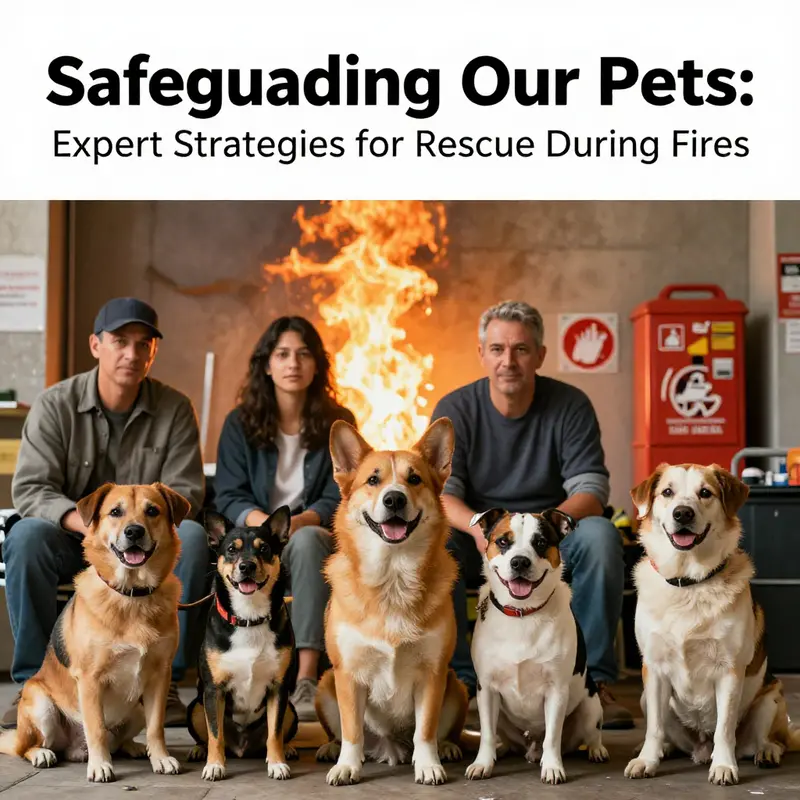
Fire emergencies pose a significant threat not only to human lives but also to our beloved pets. Understanding how to efficiently rescue pets during such disasters is imperative. This article delves into crucial steps for prevention, immediate actions during a fire, and the role of firefighting professionals in pet rescue. Furthermore, it addresses common mistakes to avoid in a crisis and the protocols for reuniting pets with their owners post-incident. By fostering awareness and preparedness, we can increase the chances of safe outcomes for our furry companions in the face of fire calamities.
Guardians at the Threshold: Prevention as the Primary Rescue for Pets in Fire
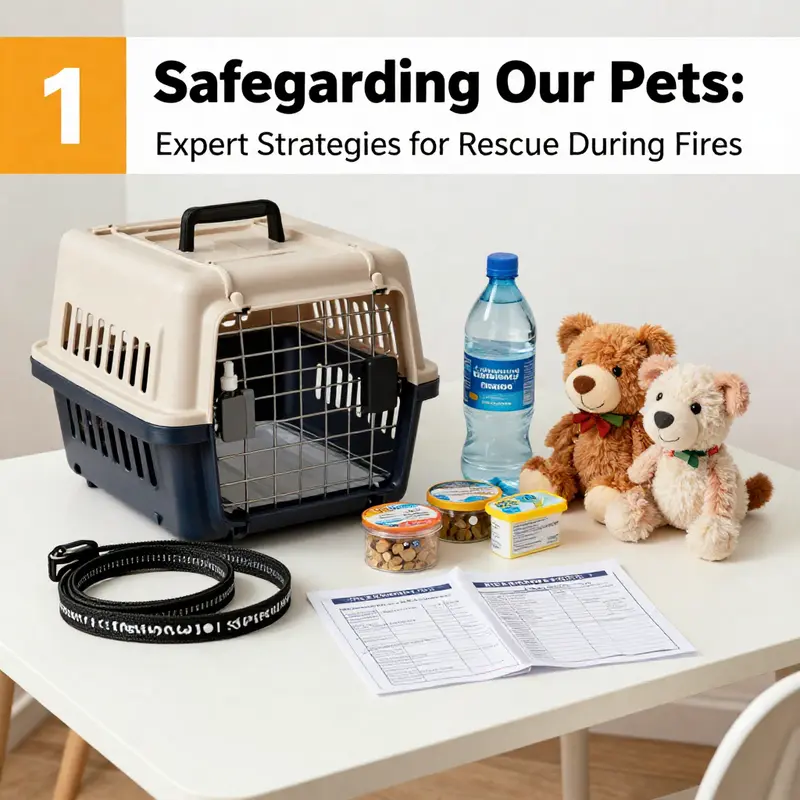
When the siren wails and smoke crawls through the home, the instinct to rush for a beloved animal is powerful. Yet the most reliable form of rescue begins long before flames are visible. Prevention is not a tedious precaution; it is the central strategy that shapes every outcome for both people and pets. In the best emergency responses, lives are saved because households have practiced, prepared, and prioritized safety before fire arrives. This chapter threads together concrete steps for preparation, weaving in real-world insights from large urban responses where prevention has become a cornerstone of animal welfare in emergencies. The aim is not to complicate the task of escaping a perilous situation but to simplify it: to treat preparation as a quiet, steady practice that reduces chaos in the moment and boosts the chances that every family member—human or animal—emerges safely. The emphasis is practical, actionable, and integrative, so the plan fits naturally into everyday life rather than feeling like a separate drill that fragments the household routine. In this frame, the act of rescue becomes less about heroic improvisation and more about consistent, well-considered steps taken long before a fire starts. A well-exercised routine multiplies safety, lowers stress, and increases the likelihood that a frightened pet will follow a calm, predictable path to safety rather than disappearing into a hidden corner when panic takes hold. The heart of prevention rests on three pillars: readiness of a pet-specific emergency kit, a clearly mapped escape plan with a designated safe zone, and systems that keep pet identification current and accessible. These three threads weave together with training, drills, and a culture of readiness that extends beyond the home to communities and responders who share responsibility for safety. The narrative here follows a lived logic: you set up the kit, you define the route, you practice the behavior of calm compliance from your pet, and you maintain the plan as a living, updating protocol. In doing so, you reduce the probability that you must make a risky return into a burning building and increase the probability that everyone, including four-legged family members, exits together and unscathed. The value of microchips and ID tags cannot be overstated. They are not just administrative details; they are lifelines that bridge the moment when a door swings open and an anxious animal makes a break for safety. Past incidents in major urban centers have shown that when identification is clear and accessible, reunifications occur more quickly, and the stress on households is dramatically lower. In a notable case from a large metropolitan incident, microchip data and door-number records helped responders reconnect many pets with their families, even when visual confirmation proved challenging in dense smoke. This is not merely about reunion; it is about preserving bonds at a moment when every second matters. Preparation is also about the psychological and physical environment you cultivate at home. A designated pet safe zone should be a room with minimal flammable clutter and an easy exit to the outside or to a pre-arranged gathering point. It should feel like a refuge, not a trap, with a familiar blanket or toy that provides reassurance and reduces stress. The idea is to create an environment where your pet recognizes cues and moves toward safety in a way that is intuitive rather than alarming. Smoke detectors play a central role in preventing fires from turning into disasters that claim pets as collateral damage. Place detectors near sleeping areas and along escape routes, ensuring they are powered with reliable back-up options. Regular testing becomes a habit, not a quarterly reminder you ignore. A monthly check, including fresh batteries when needed, can translate to precious minutes saved during an actual emergency. The plan should also account for a pet-specific evacuation route. This is not a generalized family plan but a route that your pet can follow when frightened. The route should be practiced with the whole family, using a leash or carrier to minimize the chance of panic-inspired escapes. The goal is for your pet to move with less resistance and with you close by to guide them, rather than to chase them through smoke-filled corridors. Small details make a big difference. Having a familiar blanket or toy in the carrier or safe zone is more than comfort; it creates a sense of continuity in a disruptive moment and helps your pet stay calmer as you move toward safety. In parallel, ensure every pet has up-to-date identification. Microchips are invaluable, but tags and current contact information make it easier for responders and strangers to reach you if you are temporarily separated from your pet. In the context of large fires and complex buildings, these identifiers can be the difference between a rapid reunion and a prolonged search. The practical steps—kit, zone, detector, route, microchip—are not discrete tasks but an integrated system. The emergency kit should be a compact, ready-to-go bundle placed in an obvious location near the exit. Include food and water for at least three days, medications and medical records, IDs, a photo for quick recognition, and a familiar object that comforts the animal during loud noises or confusion. The kit is a living document; it should be updated with any changes in medications, weight, or feeding schedules. While the kit represents a personal precaution, the broader architecture of prevention lies in the habit of predictable responses. Pet training, even if limited, is a powerful asset. Teaching simple commands like “come” or “follow” creates a bridge in emergencies between human intent and animal action. It is not about forcing an obedience routine but about building trust and reducing the cognitive load on your pet when fear spikes. A well-trained pet will respond to cues more reliably, especially when you are wearing mask smoke or coughing from exposure. Training should be gentle, consistent, and reinforced with positive associations. Because surprise drills have their place in preparation, they should be conducted with care and safety in mind. You can simulate realistic scenarios at home—such as retrieving pets from bedrooms or bathrooms—without exposing anyone to actual danger. The point of surprise drills is to improve reaction time, not to induce stress or harm. This is where NFPA guidance becomes a helpful companion. The NFPA resources offer targeted, practical checklists and education for pet owners preparing for home fires. They reinforce a mindset of ongoing readiness and provide a framework for family involvement that keeps the focus on safety, not fear. A practical nudge toward broader readiness lies in linking personal preparation to community resilience. When households share best practices, neighborhoods become safer because more families evacuate calmly and more pets are identified quickly. A small, consistent habit—monthly drills, updated microchip data, a ready-to-go kit—is enough to transform a difficult moment into a controlled sequence of actions. The real-world implications of prevention extend beyond the home and into how cities and emergency services think about animal welfare. In places where cross-agency protocols are established, pet safety becomes part of the standard response. Firefighters may engage in door-knocking protocols, listen for animal sounds, and use thermal imaging to locate hidden animals, rather than relying on guesswork or repeated searches that endanger everyone. The narrative of prevention is reinforced by examples from urban incidents in recent years, where careful preparation reduced losses and improved reunifications. For example, in a dense urban incident, residents who had microchips and up-to-date ID tags were more quickly identified, and responders could coordinate with families to confirm ownership while animals were treated on site. These stories underscore the practical value of prevention: it keeps animals from becoming victims of the chaos, it smooths the procedural flow for responders, and it protects the mental and emotional well-being of the human families involved. A lasting takeaway is that prevention is not a static checklist but a dynamic, lifelong habit. It requires periodic review, especially after changes in pets, moves to new homes, or updates to contact information. Monthly practice, annual reviews of the emergency route, and periodic checks of detectors create a resilient system that becomes second nature. This approach aligns with the broader ethic of safety: those who prepare reduce risk, and those who train reduce fear. It is also worth noting the value of public guidance and community resources. The NFPA resources mentioned here offer a gateway to deeper planning, including home fire safety tailored for households with pets. Returning to the core idea, prevention is the most critical step because it shapes every possible outcome. If a family has a reliable plan, a well-prepared kit, and a practiced routine, the chances of a successful rescue multiply. If not, the path to safety becomes narrow, and the time to react becomes limited. In such moments, the small things—the leash ready by the door, the carrier sized for the smallest pet, the familiar blanket waiting in the safe zone—become lifelines. The story of prevention is, at its heart, a story of care: the care we invest now for the sake of tomorrow. By treating every family member with intentional preparation, we preserve the bonds that define a home. We give pets the best possible chance to stay with us in the minutes that matter most. For readers seeking a broader sense of how communities address preparedness gaps during wildfires and similar crises, consider exploring Emergency preparedness gaps in California wildfires, which discusses challenges and practical solutions that can be adapted to personal household planning. This wider frame helps tether individual routines to a larger system of safety. And for a broader, up-to-date look at how modern fire services are equipping themselves to protect pets during emergencies, the external resource provides an official overview of pet oxygen masks used on fire engines, illustrating how technology and training converge to save lives. External resource: official resource on pet oxygen masks for firefighting. https://www.londonfire.gov.uk/news/smokey-paws-pet-face-masks-launch/
Life First, Then Rescue: The Human-Centric Path to Saving Pets in Fire
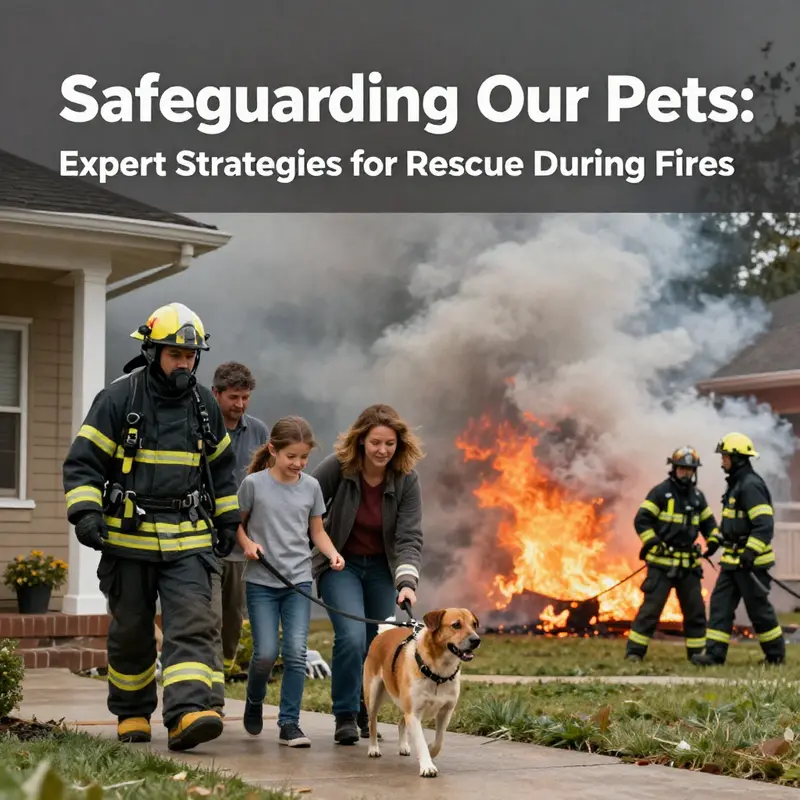
When a fire erupts, the first breath you take can determine whether you and everyone you love—including your pets—live to tell the tale. The reality of high heat, blistering flames, and choking smoke is that human safety must guide every action in those critical minutes. This is not a simple preference but a working principle that many fire services around the world now place at the center of their operations: life first, then rescue, and only when it is safe to do so. The rationale is stark and sobering. Smoke inhalation kills far more people than flames do, and a rushed attempt to reach a pet can trap you in a collapsing stairwell, seal you behind a door, or create a new hazard that endangers responders who are already working under extreme pressure. In practical terms, this means your immediate response to a fire should be to evacuate yourself, your family, and your pets via the safest route available, using a low stance to breathe cleaner air near the floor, and to avoid elevators which can strand people as elevators fail or become smoke-logged. It also means recognizing when the threat is such that you cannot risk a pet rescue in the moment and instead focus on getting everyone out together, calling for help, and leaving the rest to trained professionals who assess structural integrity before they search for animals.
The discipline of “life first” is not a purge of empathy; it is a disciplined approach to maximize the odds that both humans and animals survive. Firefighters operate under a triage-like calculus: prioritize human lives, contain the fire, and protect property. Rescuing pets is understood as part of the mission only when it does not compromise the safety of people or the stability of the building. This distinction matters because it translates into predictable, repeatable outcomes that emergency services can optimize. If you can escape quickly, you should. If you are trapped or blocked by smoke and heat, you retreat to a room with a window, seal gaps with wet towels, and signal for help while you inform responders about any pets inside, along with their location and basic needs. In such moments, improvisation can be deadly; trained responders rely on established plans and prior knowledge, and this is why preparation and communication before a fire ever happens are so essential.
What often separates a survivable scenario from a lethal one is the clarity with which a household can convey information to responders, including whether a pet is present, where it is likely to be found, and whether it has medical needs. If you cannot evacuate immediately, you should still do what you can to prevent chaos. Close doors behind you to slow the spread of heat and smoke, signal your location by waving a cloth or flashlight at a window, and stay low. These steps do not guarantee a pet’s rescue in the moment, but they can dramatically increase the chance that responders will locate your animal once the danger has been mitigated and the structure deemed safe enough for entry. In places where fire services have integrated animal rescue into their standard operating procedures, responders often begin by gathering information from occupants and prioritizing routes of approach that minimize risk to both people and animals. Even when a rescue is possible, it will still hinge on the health and safety of the human participants who are risking their own lives to save others.
The practical reality is that modern rescue work benefits from the interplay between preparedness and response. If you have prepared in advance, you provide responders with a map of your home’s layout and your pet’s likely location, reducing the time spent searching and the exposure of everyone to danger. A well-choreographed evacuation plan, a clearly labeled pet carrier or harness, and a microchip record that can be accessed by responders all contribute to a smoother, safer process. In the absence of such preparation, even the most skilled responders can struggle to locate a frightened animal in smoke-filled rooms, creating delays that can be fatal for both humans and pets. This is why the emphasis on prevention—creating a pet emergency kit, practicing recall commands, and designating a safe room with a ready exit—cannot be overstated. It remains the most reliable defense against the chaos of a fire and the unpredictable behavior that pets often exhibit when stressed.
When a fire is actively burning, the emphasis remains firmly on human egress. This does not imply that pets are ignored or abandoned to their fate. Instead, it reflects a trained understanding of how quickly conditions can deteriorate and how important it is to keep lines of communication open with the responders who will eventually search for and aid animals when it is safe to do so. In several real-world scenarios, responders have coordinated with families to identify likely pet locations, enabling more efficient searches that proceed only after the scene is stabilized. For example, when teams arrive and assess a building’s stability, they may call out to occupants to provide as much detail as possible about pet location and any special medical needs. The knowledge that a cat or a dog may be waiting behind a closed door can shape the approach of a rescue, guiding the use of built-in systems such as controlled ventilation, and the careful deployment of search dogs and detection equipment that aid in locating animals behind walls, in cupboards, or in other concealed spaces.
A growing part of the rescue toolbox in many cities is the use of technology and protective equipment designed to mitigate the unique risks that animals face in smoke-filled environments. Rescue teams increasingly rely on thermal imaging cameras to detect movement and sources of heat through smoke while keeping human rescuers out of harm’s way. They may also use decoupled, portable physiological supports for animals found in such conditions, providing oxygen or airway support as soon as an animal is located, before the animal is moved to a safer area. The goal is to restore breathing and reduce the harm caused by inhalation of toxic fumes, all without compromising the safety of the people performing the rescue. This dual focus—protecting human life and extending emergency care to animals when possible—reflects an evolving philosophy in emergency services: compassion can be part of the mission, but never at the expense of human safety or structural integrity. In practice, this means that even when an animal rescue is plausible, responders will not proceed if there is any reasonable risk to human life. The calculus is continually refined by training, protocols, and the explicit understanding that every second counts in an active fire.
The reality of the fire environment also underscores the value of clear, pre-established plans. A household that practices its pet evacuation route monthly develops a rhythm that reduces panic during an actual emergency. Pets learn to respond to recall commands, to go to a designated space, and to stay there until given a cue. This simple conditioning can determine whether a pet is even present and ready to be carried to safety or whether a bystander must instead signal responders with precise information about where the animal is likely to be found. In some regions, cross-agency cooperation between animal welfare organizations and fire services has helped standardize these practices, syncing home preparation with field rescue operations. The cumulative effect is modest but meaningful: fewer moments spent on second-guessing, faster communication with responders, and a higher probability that both people and pets exit a burning building together.
The humanitarian thread that runs through all of this is the quiet, persistent truth that preparation is the best rescue tool. A well-stocked pet emergency kit, the presence of a familiar blanket to comfort a frightened animal, a windowed safe zone designed with an exit path in mind, and an up-to-date microchip and ID tag system create a bridge from disaster to reunification. The more people take responsibility for their own planning, the more capable responders become at focusing on the most urgent tasks: ensuring human safety, suppressing flames, and then, if and when the situation allows, locating and treating pets with the same respect and care that they offer to human survivors. It is not a matter of choosing between people and animals but of orchestrating a coordinated response where both can be protected without compromising the core mission of keeping people safe.
In this context, it is worth recognizing the value of shared knowledge from prior incidents. Stories from the Hong Kong macro-fire events, for instance, illustrate how digital records and microchip data can facilitate rapid reunification and help responders coordinate with owners to verify identification once a pet is retrieved. Those examples reinforce the broader lesson: preparation reduces the need for dangerous improvisation, and a calm, practiced family can move through danger with a higher likelihood of exiting together. To extend this sense of shared learning beyond the walls of one home, households can engage with resources that discuss evacuation failures and best practices for vulnerable populations, such as the article linked here: left-behind-the-tragic-failures-of-fire-evacuations-in-senior-care-facilities. This reference, while focused on a different demographic, underscores a universal truth: preparedness, reporting, and rapid communication save lives across contexts, and the same principles that help seniors evacuate can bolster a family’s pet safety plan.
The bottom line for this chapter is simple. When the sirens sound, your best move is to move yourself and your family to safety first. If you can do so without delaying your own exit, you should inform responders about the pet’s presence, location, and any medical needs. The rescue of animals, while deeply meaningful, is a secondary aim that becomes a practical possibility only when it does not threaten human life or the structural integrity of the building. In the best-case scenario, responders locate and treat animals with care, possibly providing supportive oxygen or gentle cleaning, and the pets are reunited with their families after the smoke clears. In every case, the preparation you undertake before an emergency is what makes the difference between a successful evacuation and a tragedy. Keeping your pet safe starts long before the alarm sounds: it begins with a plan, a practiced routine, and a shared commitment to act with clarity under pressure.
For readers seeking a broader view of how professional services are evolving to protect both people and animals in fires, the real-world work of fire departments in major cities offers a compelling blueprint. Of particular note is the ongoing development of dedicated equipment and protocols that extend life-saving care to pets found in smoky environments, designed to be deployed without compromising the safety of human responders. This is not anecdote or rhetoric; it is a measurable improvement in how emergencies are managed, and it points toward a future in which animal welfare is embedded in every stage of the response. For those who want a concrete example of this advancement, see the London fire service pages that detail their pet-oxygen equipment and field tests, which illuminate how responders adapt the tools of rescue to the needs of small animals in crisis. You can explore the broader context of this work here: https://www.london-fire.gov.uk/news/smokey-paws-pet-face-masks-launch/
In sum, a fire demands respect for its power and humility about what we can and cannot control in a split second. By prioritizing human safety, maintaining calm, and leaning on preparation rather than impulse, you place yourself in the strongest possible position to protect the animals you love. The rescue of pets, when it happens, becomes a testament to how communities can blend courage with prudence. It is a reminder that we are all part of a larger chain of care: from the quiet routine of daily life, through the flashing moment of danger, to the careful reunification that follows a long night of ash and smoke. This is the ethos that guides every resonant story of rescue and serves as a practical, humane blueprint for families who wish to keep both people and pets safe when fire arrives suddenly and loudly.
null
null
Never Endanger Yourself: The Essential Rules for Safe Pet Rescue During a Fire
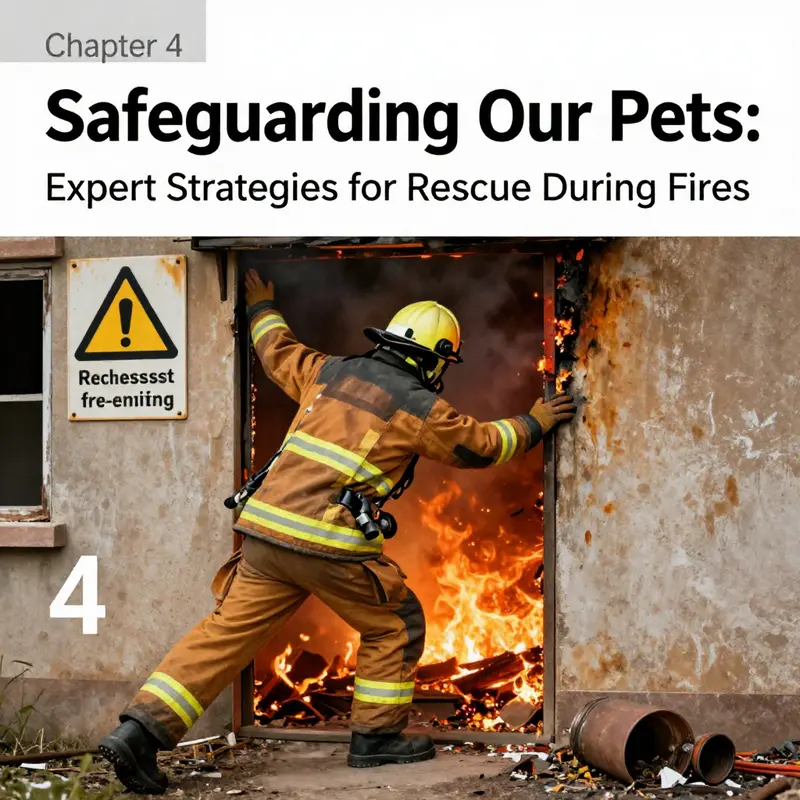
The impulse to rush back into a smoky room to save a beloved pet is powerful, but the chorus of advice from seasoned responders is clear and unwavering: your first duty is to yourself and to all the people around you. A fire sculpts danger with heat, smoke, and the unpredictable collapse of structures, and the quickest way to rescue a frightened animal is to ensure you can walk out of danger yourself. The human instinct to shield a pet can easily become a trap if it is not tempered by clear, practiced, and disciplined steps. In the broader arc of saving lives, the most reliable path starts with prevention, continues through disciplined evacuation, and finally relies on the trained hands of firefighters when they reach the scene. Yet even as professionals work to reach trapped animals, the rules for what not to do remain profoundly simple and universal, guiding families through the chaos of an actual fire with clarity and courage.
The first and most immutable rule is to avoid the elevator. Elevators are convenient in ordinary life, but during a fire they become engines of risk. A car’s cage of doors can fail, the car can become trapped between floors, and the shaft can fill with heat and smoke that surges toward you as soon as a door opens. In a high rise or a building with multiple stories, the stairs become your lifeline. The stairwell is not a luxury; it is a carefully engineered escape artery. You should move with purpose, keep to the plan you practiced, and never rely on chance when seconds matter. The moment you hesitate at a landing, you amplify every risk around you. Your pet will feel your pace and your breathing, and that anxious energy can set off a chain reaction of panic in them. Prepared households reduce this risk by marathon-prepared routines: carrying a carrier or leash, guiding pets calmly to the exit, and avoiding sudden movements that could trigger a flight reflex in a frightened animal.
Next comes the hard, unromantic truth about fighting fires yourself. A tiny flame in a kitchen can feel like a dramatic moment to observe, but the vast majority of fires that claim lives do so in ways that overwhelm untrained responders well before a blaze is tamed. Unless the fire is extremely small and you have the right training and equipment in a controlled environment, attempting to extinguish flames while the room fills with smoke is perilous. The best evidence from real incidents shows how quickly conditions deteriorate and how easily a caregiver can become a casualty themselves. The aim is to escape with everyone, not to confront the fire head on. This is not surrender but strategic prioritization; the act of leaving is a deliberate decision that opens the path to rescue professionals who can tackle the hazard without compromising your safety.
Staying calm is the mental discipline that underpins every prudent decision in the heat of the moment. Panic narrows perception, slows reaction time, and robs you of the cognitive flexibility needed to navigate a rapidly changing environment. When alarms blare and the smoke thickens, the mind can blur the line between a heroic impulse and a reckless misjudgment. A calm, practiced approach helps you follow the evacuation route you trained for, speak in clear short commands to children and pets, and maintain your own breathing technique so you can move steadily toward safety. The difference between a successful exit and a life-threatening delay often rests on the ability to keep the mind steady while the body obeys a rehearsed plan.
The most sobering instruction of all is the decree not to go back once you are outside. A recurring tragedy is the return attempt—an act born of love but transformed into a fatal decision. When you step back into a building, you encounter hazards that may be invisible or newly formed in the moment. Structural instability, sudden flareups, and pocketed fire can trap you in seconds. The rule here is simple but brutal in its honesty: once you have exited, you stay outside. If a pet is inside and you cannot reach it safely from outside, do not attempt a last-minute dash back in. Firefighters train for these scenarios daily; they may already be coordinating a rescue plan and can descend with specialized gear, thermal imaging, and patience. The goal is to increase the chance that you and your loved ones reach a safe, stable zone where professionals can operate rather than placing yourself on a timer that ends in tragedy.
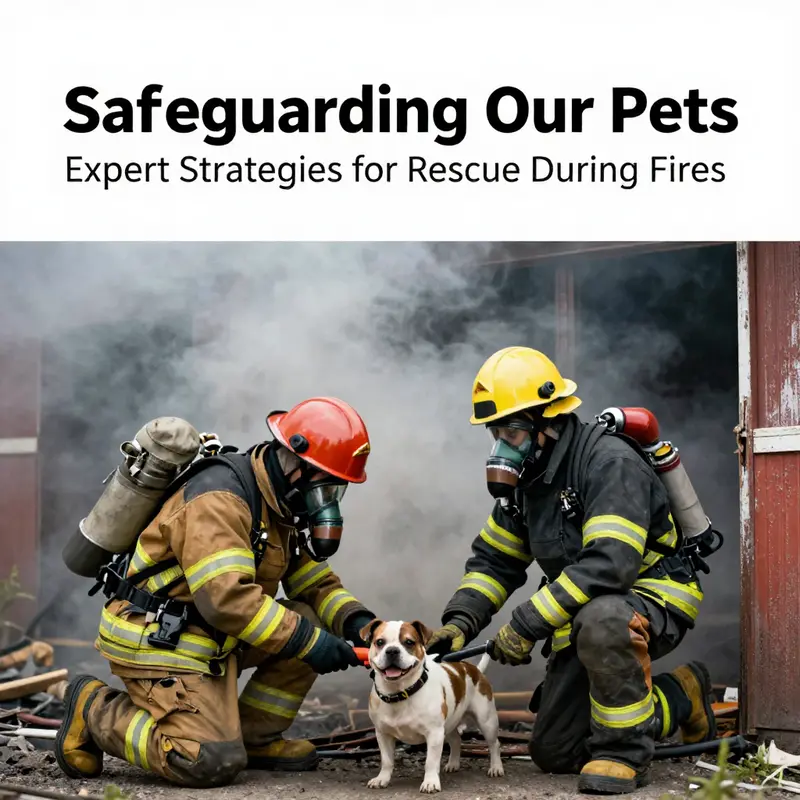
Finally, a daredevil impulse to rescue pets from inside a burning building is among the most dangerous acts you can commit. The time it takes to locate a pet, the uncertain understanding of the animal, and the unpredictable spread of heat and smoke can trap you in a matter of moments. Fire scenes are unforgiving, and the priority remains human safety. That does not mean pets are abandoned or forgotten. It means that rescue of animals becomes a coordinated effort carried out by trained teams only when it is safe to do so. The evidence from major urban responses shows that organized approaches to animal rescue are most effective when they occur after establishing human safety first. In practice, this principle has guided emergency services across megacities where animals have been saved using door knocking, careful patient tracing, and the use of technology that can reach an animal in distress without exposing a rescuer to harm. The realities of those operations are stunning: teams can locate, stabilize, and identify animals even after they have been separated from owners, and survivors can be reunited through efficient postincident processes.
Looking beyond the moment of risk, there is a moral and practical symmetry between avoiding danger and preparing for it. Prevention begins long before a fire starts. A pet emergency kit that fits the pet’s size and needs is not a luxury but a cornerstone of safety. A designated pet safe zone helps you contain the animal in a predictable space that has a clear exit path rather than a tangle of clutter that can slow you down in a panic. Smoke detectors near sleeping areas and in hallways provide early warning, and regular testing ensures that the device will perform when the house is filled with smoke. Training your pet to respond to a call or a cue can make a dramatic difference in how quickly you can guide it toward safety. A microchip and up-to-date ID tags ensure that if separation does occur, reunification is more efficient and less stressful for both pet and owner. These preventative steps may seem routine, yet their impact in the detritus of a real fire is measured in lives saved and in the quiet relief of a family that runs toward safety together.
There is also a clear arc of professional rescue that supports these family-centered strategies. In the urban environments where rescue operations have integrated animal welfare into the emergency response system, dogs and cats have been saved through coordinated efforts that blend human safety with animal care. In one dense urban framework, responders used door-knocking protocols, listened for animal sounds inside sealed cages, and leveraged thermal imaging to locate hidden pets. Once extracted, pets received immediate attention—oxygen, decontamination, and rapid identification via chips or owner data—before being returned to care facilities or reunified with their families. These practices show that rescuers do not improvise in the moment; they rely on a framework of training and devices designed to protect both people and animals without compromising safety.
The integration of technology into rescue work has grown in surprising ways. In a city flyover of a large urban fire, the adoption of specialized pet oxygen masks represents a shift toward ensuring that animals breathe clean air as soon as they are out of the smoke zone. The example from London, where a fleet of fire engines carries FDA-grade silicone masks that attach to portable oxygen, demonstrates how a single device can meaningfully shorten a pet’s exposure to smoke. In a real test, a cat in a Paddington home was saved within five minutes thanks to this tool. The broader aim is to save lives without forcing human rescuers to take unnecessary risks, keeping the team intact so they can continue to perform critical tasks while ensuring animals are not left to suffer the consequences of smoke inhalation.
If you want to learn from the wider body of emergency response experience, consider how prevention and disciplined action on the home front intersect with public safety outcomes. For broader lessons on evacuation challenges and how families can improve safety, see the piece on California wildfire evacuation failures. This connection between home preparedness and urban response underscores a shared truth: safe pet rescue begins with you, and the safest rescue is one that avoids danger in the first place. The practical upshot is a household culture that treats an emergency as a collective test of calm, planning, and teamwork rather than a scene of impulse and heroic improvisation. It is this culture that transforms a frightening event into a series of deliberate steps that maximize the chances that every member of the family, including the four legged ones, can escape and be cared for in the hours that follow.
For readers who want a forward-looking perspective on how the rescue community is evolving, there is a growing emphasis on preparedness, cross-agency collaboration, and technology-enabled care for animals. The experience of responders who work in dense urban settings demonstrates that animals are part of the family and must be treated with the same respect and urgency as any human life. The most compelling takeaway is that rescue is not a solitary act but a coordinated effort that begins long before a fire and continues long after the flames are tamed. Practically, this means keeping a pet close to exit routes, ensuring the pet is comfortable with a carrier or harness, and rehearsing family drills that include every member, human and animal. It means knowing when to call for help and when to let trained teams take the lead. It means honoring the truth that a life saved is a life defended and that your devotion to your pet is a powerful element of a larger safety ecosystem that can keep both people and animals safer in the most dangerous circumstances.
External resources can illuminate the path from principle to practice. For an example of ongoing innovation in pet rescue gear and the operational insights behind rapid animal extraction, see the Smokey Paws initiative on London Fire Brigade’s site. It is a reminder that progress in rescuing pets from fires rests on a combination of new tools, better training, and the stubborn, hopeful belief that every life matters enough to plan for it. As you read this, remember that the rules you follow in the moment of crisis are shaped by the planning you do long before alarms sound. In practice, that planning translates into calmer minds, faster exits, and a better chance that you will meet your pet again outside in the light after the smoke has cleared. For families who want to anchor these ideas in real-world action, the next steps lie in building a comprehensive plan, practicing it with your pets, and keeping the lines open with local emergency services so you can navigate a fire with courage, not improvisation. And when you face the urge to race back inside, recall the discipline of the escape: exit first, breathe, and let the professionals do what they are trained to do. In that balance lies the safest possible outcome for you, your loved ones, and the animals you cherish.
Reunification and Recovery for Pets After a Fire
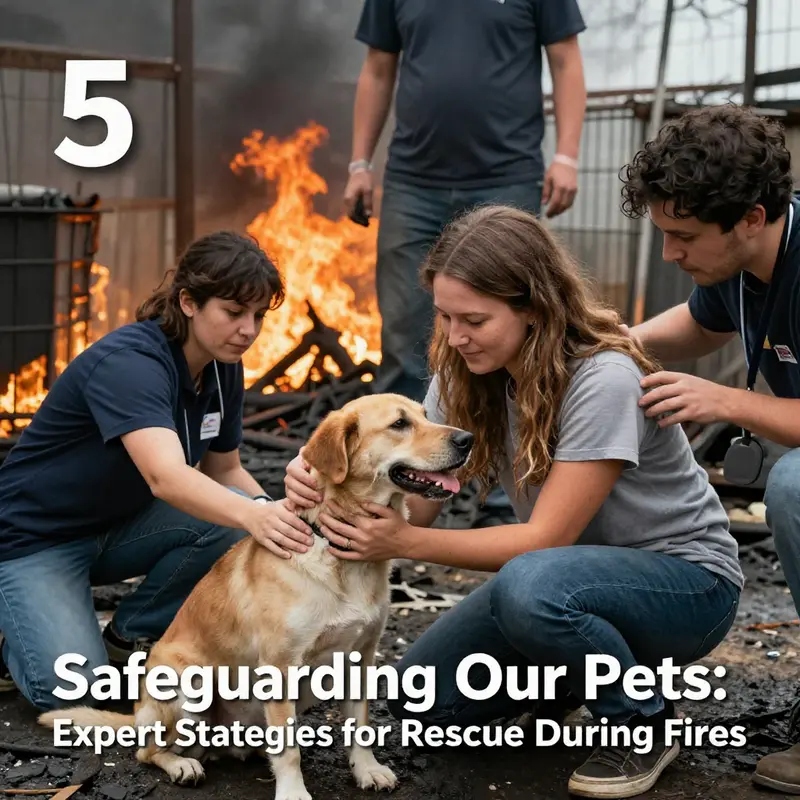
From the moment the flames are controlled, the work of reuniting pets with their families begins. Reunification is built on preparation, clear procedures, and compassionate care that helps animals feel safe again and families reconnect with their companions. This chapter outlines the practical steps that increase the chances of a homecoming after a fire and explains how shelters, veterinarians, and communities work together to support both physical recovery and emotional healing.
When a disaster disrupts a household, many pets become disoriented or frightened. They may hide, move toward blocked exits, or wander into unstable spaces. The path back to a family is not automatic; it depends on reliable identification and a coordinated search. Central to this is microchips, tiny devices that link a pet to an owner through a registration database. The American Veterinary Medical Association and other authorities emphasize that microchips dramatically improve the odds that a lost pet will be returned. In numbers often cited by rescue and veterinary groups, dogs with microchips are reunited at roughly 52 percent, compared with about 21 percent for dogs without. Cats show a similar pattern, with microchip pets returning at about 38 percent versus 17 percent for unmicrochipped cats. These statistics reflect more than numbers; they represent the possibility of a doorstep reunion after difficult weeks.
But a chip is only useful if the owner information is current and accessible. In a disaster the records behind the chip must be up to date in a national or regional registry, and shelters must be able to reach the listed contact. To maximize reunifications, families should have an emergency pet plan. The plan is simple in theory: keep an ID tag with current contact details, maintain a recent photo, and store copies of medical records and a short note describing the pet’s distinguishing features or microchip number in a readily accessible place. When responders arrive with a frightened animal, this information helps staff confirm identity and begin the path to reunification even before a chip is scanned.
A well executed plan also includes the family’s broader evacuation preparation. A disaster kit tailored to pets should include leashes or carriers, a few days worth of food and water, medications, copies of veterinary records, and a familiar blanket or toy. These supports help a pet stay calm in a shelter and speed the match with the right owner once a pet is scanned and the registry is checked. The emotional aspect matters as well; pets may experience stress after a fire, so gradual reintroduction to home life, steady routines, and a familiar scent can ease the transition back to normalcy.
Temporary shelters and reunification centers play a crucial role. They are more than holding spaces: they are hubs for medical screening, microchip scanning, and owner outreach. Staff and volunteers emphasize gentle handling, clear communication, and timely verification of ownership across databases. When a match is confirmed, the focus shifts to reuniting the pet with the family and supporting the owner through the process of recovery at home.
What families should bring to a reunification center is practical and hopeful. Bring proof of ownership such as a recent photo, a record of the microchip number, and copies of veterinary records. Share any distinctive features that may help staff confirm identity. It may take time to verify ownership across multiple databases, so patience and cooperation with shelter staff are important. The goal is accurate verification, not speed at the expense of a wrong match.
Communities also help by spreading information about found pets through local networks, clinics, and voluntary groups. Even when the reunion comes after a long wait, emotional support for both the owner and the animal remains essential. A trusted person present during the initial weeks at home can ease anxiety and reduce regression, supporting a return to regular meals, walks, and play.
In the broader emergency response landscape, the reunification and recovery of pets after a fire illustrate the value of preparedness and coordination. When microchips are linked to up-to-date records, when households maintain clear evacuation plans, and when shelters operate with a shared mission to reunite, the chances of a successful return rise for every family. The journey from rescue to home is a continuum that begins with preparation and ends with the quiet relief of a pet curled up in a familiar chair, a different but steady heartbeat in a safe room.
For ongoing guidance, families should keep their microchip registries current, review their emergency pet plan regularly, and engage with local veterinary and rescue partners who can help implement best practices in the weeks and months after a disaster.
Final thoughts
Pet safety during fire emergencies is not just a personal responsibility; it is a communal obligation that requires awareness, preparation, and strategic action. By implementing preventative measures, prioritizing human safety, understanding rescue protocols, avoiding common pitfalls, and ensuring smooth reunification processes, we can safeguard our beloved pets. As we work together—residents, firefighters, and community leaders—towards greater preparedness and effective rescue operations, we solidify the bond between humans and animals in our shared pursuit of safety.