
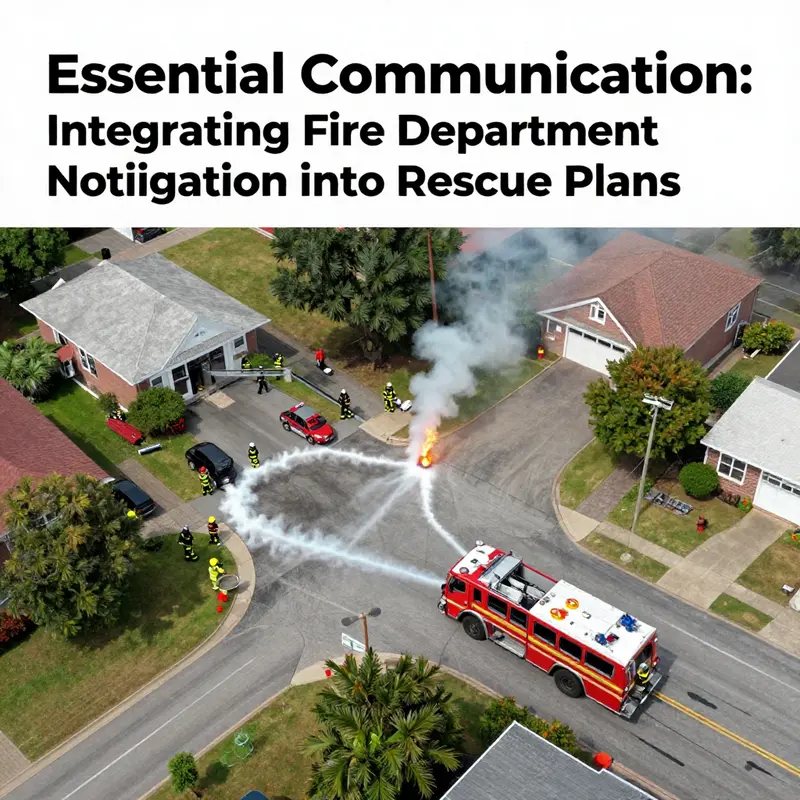
The effectiveness of any community rescue plan hinges on seamless coordination that includes informing emergency responders, particularly the fire department. In today’s world, where emergencies can arise unexpectedly, it is essential to establish protocols that ensure timely notification of relevant authorities. This article delves into the profound importance of involving fire departments in rescue plans, bolstered by legal frameworks. Furthermore, we will explore methods for effective coordination between rescue teams and firefighters. Finally, best practices for incorporating the necessary communication will be outlined, fostering an environment of preparedness that protects lives and property.
Opening the Lines: Why Every Rescue Plan Must Involve the Fire Department for Rapid, Coordinated Action
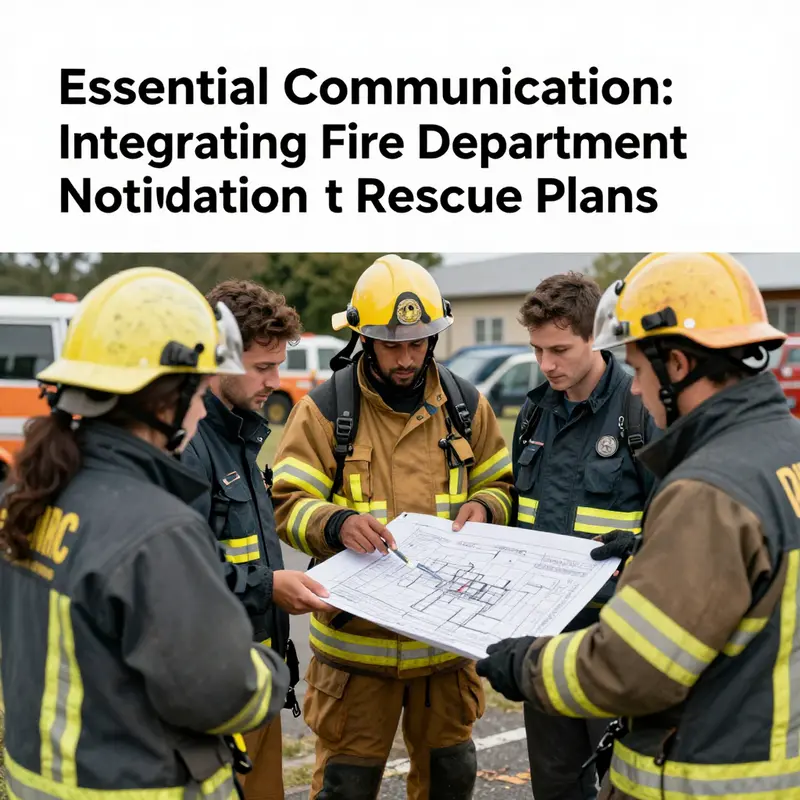
In any rescue scenario, a plan is only as good as the speed and clarity with which it engages the people who actually fight the flames and manage the scene. A rescue plan that excludes the fire department from its core decision-making loop is not merely incomplete; it can be dangerously counterproductive. From the perspectives embedded in regional planning documents across China, informing the fire department at the outset is not a courtesy or a formality. It is a foundational requirement that accelerates response, aligns resources, and unifies command. This is not just a moral argument about save-the-day heroics; it is a practical, legally grounded strategy that enables responders to bring their specialized expertise to bear at the earliest possible moment. The evidence from official guidelines shows this explicitly: when a fire reaches Level III or higher, city-level command systems activate, and those activations depend on rapid communication channels that include the fire department as a primary partner. In other words, the rescue plan is built to be interoperable with fire services from the start, not added as an afterthought once the fire alarms have already sounded and the clock has started ticking.
That integration begins with information sharing. Several plans in the West Lake District and similar jurisdictions require immediate oral reporting to the fire brigade when an incident occurs. A local street office, a town or district authority, and the fire brigade must communicate promptly to ensure the first minutes of action are synchronized. This is not a bureaucratic ritual; it is a practical mechanism to ensure that the earliest response is not delayed by the bureaucratic bottlenecks that often accompany large incidents. Early reporting sets in motion a cascade of decisions: which hydrants are available and their pressures, which access routes can be used by large equipment, and which entrances are most suitable for rapid ingress and egress. When those initial bits of information are shared instantly, the fire department is capable of mobilizing with full awareness of the evolving scene rather than improvising on the fly. The initial notification acts as a trigger for the kind of resource deployment that makes the difference between a contained incident and a rapidly escalating one.
Beyond the immediacy of notification, the fire department contributes a depth of tactical knowledge that is often not present in rescue teams arriving from outside the immediate area. Fire departments accumulate granular, location-specific intelligence over years of patrols, drills, and actual incidents. They know which buildings have unusual construction features, which corridors run to dead ends, and where chokepoints typically appear during a response. They understand hydrant layouts, domestic and industrial water sources, and the complexities of shared utility corridors that can complicate access during a firefighting operation. They also carry first-hand information about neighborhoods’ evacuation dynamics, how crowds might respond under stress, and how smoke and heat will behave in a given layout. This is the kind of situational awareness that makes it possible to design rescue strategies that are not only feasible under pressure but also safer for both victims and responders. The integration of fire department knowledge into pre-incident planning yields a more accurate map of risk, a more credible set of response options, and more reliable mutual aid arrangements when additional resources are needed.
To translate awareness into action, rescue plans must establish formal coordination mechanisms that function under unified command. The relevance of this coordination is underscored by national and regional standards that stress integrated action among different emergency forces. The idea is not to blur lines of authority but to align them under clear communication channels so that each agency knows when to step in, what its responsibilities are, and how its actions affect the broader response. In practice, this means defining pre-set channels, decision criteria, and escalation tiers that all parties understand before an incident occurs. A mechanism that has gained attention in major cities—such as Tianjin—illustrates how such coordination can take shape: a standing framework for joint command, shared incident maps, and standardized reporting formats that facilitate rapid, accurate situational assessment. These mechanisms enable responders to move from parallel actions to truly synchronized operations, which is essential when every second counts and conflicting actions can slow rather than accelerate progress.
The practical benefits of including the fire department in rescue planning extend well beyond the immediate scene. When the fire department enters the planning table early, planning teams gain access to its technical capabilities, from specialized equipment to disciplined safety protocols. Fire teams bring a disciplined approach to risk assessment, scene safety, and PPE usage that complements clinical or technical rescue expertise. This convergence reduces the likelihood of miscommunication and conflicting strategies. It also helps ensure that protective measures for civilians, bystanders, and responders are built into the plan from the outset. For example, early consultation with fire leaders can reveal potential hazards related to building collapse, hazardous materials, or confined spaces that might not be apparent to teams without direct fire service insights. In turn, rescue planners can adapt training, drills, and on-site procedures to address these risks before they appear in a live incident, increasing the odds that a real response will proceed without preventable injuries or delays.
A robust rescue plan that includes the fire department also strengthens compliance with broader emergency management standards. National policies increasingly emphasize seamless collaboration among diverse emergency forces as a cornerstone of public safety. The 14th Five-Year Plan for National Fire Safety, for instance, highlights the necessity of integrating professional and social emergency forces into a cohesive system. This emphasis on coordinated action is not merely aspirational; it is operationally prescriptive. Plans that align with these standards show a higher likelihood of receiving timely support, streamlined funding, and shared accountability when incidents occur. The practical implication for local planners is to embed the fire department as a core stakeholder in both risk assessment and resource allocation. When the plan holds joint exercises and rehearsals that include fire personnel, the resulting familiarity translates into a more efficient deployment during real events. The aim is not to centralize authority away from fire services but to create a more predictable, resilient system in which all actors operate under a common framework.
The logic of sharing information with the fire department also encompasses proactive risk communication about infrastructure-related vulnerabilities that might impede firefighting or rescue operations. The Fire Law recognizes that road construction, power outages, water supply disruptions, or broken communications lines can undermine firefighting operations. In those scenarios, responsible units are required to notify the local fire rescue agency in advance. This is a formal acknowledgment that prevention and preparedness extend beyond the immediate crisis and into the maintenance of core operational capabilities. By letting fire services know about planned disruptions or evolving hazards, the rescue plan reduces the likelihood of cascading failures when a crisis hits. It creates an opportunity for redundancy planning, alternative access routes, and contingency staffing that keep response times from deteriorating in the face of structural or service interruptions. It also signals a cultural commitment to mutual accountability; agencies recognize their interdependence and assume responsibility for maintaining the integrity of the overall emergency response network.
In this sense, informing the fire department becomes a strategic act that improves both planning accuracy and field execution. When planners and responders share a common, up-to-date picture of the scene, decisions about entry points, stairwells, elevator usage, and ventilation strategies become more reliable. The fire department’s involvement helps identify hydrant locations and water supply constraints early, reducing the guesswork that often slows mitigation in the first crucial minutes. The preparedness gained from their participation makes it easier to align medical teams, search-and-rescue specialists, and structural engineers who may be needed for complex incidents such as structural collapses or hazardous material releases. The result is not a single, monolithic plan but a coordinated, stepwise approach in which each agency contributes its strengths to a unified objective: saving lives and minimizing harm.
In my view, the most compelling argument for including the fire department in rescue planning lies in the way it improves operational tempo without sacrificing safety. Early, informed engagement ensures that the initial response is guided by a shared mental model. There is less time wasted on clarifying roles, fewer miscommunications about what resources are available, and more time devoted to executing a coherent strategy. The fire department’s expertise in rapid scene assessment—identifying entry points, prioritizing search sectors, and controlling flashover risks—complements the analytical capability of planning teams, which may be more focused on logistics, communications infrastructure, or medical prioritization. When these two perspectives converge, the overall plan becomes more robust: it acknowledges what is feasible in the first few minutes and anticipates what may be needed in the hours that follow. The upshot is a rescue operation that evolves smoothly from alarm to stabilization to post-incident recovery, rather than a sequence of disjointed steps that left responders improvising under pressure.
For teams aiming to institutionalize this collaboration, one practical step is the explicit inclusion of the fire department’s leadership within the planning cycle. This is where the previously cited content from the field manuals of Chinese cities becomes more than a regulatory footnote. It is a blueprint for real-world integration that can translate into better design of drills, more precise operational checklists, and stronger mutual trust between agencies. The concept of joint planning is not about diluting authority; it is about ensuring that everyone involved in a response shares a reliable, timely feed of information, a clear chain of command, and a common objective. It is about recognizing that rescue work is not solely a matter of brute force or medical intervention but a disciplined orchestration of people, places, and procedures that must move with precision and responsiveness.
To emphasize the connective tissue between technology, leadership, and operational excellence, consider the broader implications of integrating fire department leadership into rescue planning. The intersection of technology with leadership in fire services is a fruitful area for improving decision speed, data sharing, and incident visualization. When planners and responders leverage shared dashboards, real-time weather, traffic, and occupancy data, the initial response becomes a rehearsal before the incident even unfolds. The leadership role in this context is to shape a culture where information sharing is standard practice, where the fire department’s insights are treated as a necessary input rather than an optional addendum, and where mutual accountability is built into the fabric of the plan. For readers who want to explore this dimension further, the piece on Impact of technology on fire department leadership offers a thoughtful exploration of how digital capability translates into frontline effectiveness and strategic coherence.
Ultimately, the compelling takeaway from the synthesis of these sources is clear: informing the fire department is not merely a step in a checklist. It is a strategic decision that shapes the capability, speed, and safety of a rescue operation. It anchors the plan in reality, aligns diverse contingencies, and enables a unified, rapid, and flexible response to a wide range of emergencies. The practice aligns with national policy imperatives and local requirements alike, reinforcing a resilient public safety architecture that can adapt to evolving threats, from structural fires to complex multi-hazard incidents. When a rescue plan opens the line of communication with the fire department from the first moment, it sets a tone in which every participant is ready to contribute, every risk is acknowledged, and every second is spent pursuing the objective of saving lives and safeguarding communities. For practitioners crafting or revising plans, the message is simple and bold: include the fire department from the outset, and you improve not only the odds of a favorable outcome but the reliability of the system as a whole.
External reference for broader policy context: 14th Five-Year Plan for National Fire Safety. https://www.gov.cn/zhengce/content/2025-11/28/content_6798377.htm
Clear Lines, Quick Response: Embedding Fire Department Notification in the Rescue Plan
In any serious rescue operation, the clock starts not when responders arrive on scene, but long before, when planners lay the groundwork for how a response will unfold. A rescue plan that truly guards lives and minimizes damage must treat notification of the fire department as a core, non-negotiable element rather than a courtesy or afterthought. This is not merely a procedural nicety. It is a strategic choice that aligns legal obligation with operational reality, and it recognizes the fire department as a critical partner in every stage of emergency management. The logic is simple but powerful: when lines of communication are clear, responders can move with purpose, pre-position equipment, secure access routes, and anticipate hazards that could impede suppression and rescue efforts. The practical upshot is not only faster response, but a higher likelihood that response will be coordinated, safe, and effective for those at imminent risk.
The legal architecture that supports this approach is both explicit and ambitious. In China, the Fire Protection Law anchors the expectation that fire protection plans be woven into urban and rural planning processes. Article 8, in particular, creates a mandate for local authorities to integrate fire protection within the broader planning framework. This is more than paperwork; it is a signal that the fire department’s role extends into the very design of community safety. When a rescue plan is drafted, it carries with it the obligation to engage the fire department early, to share pertinent information, and to build a shared understanding of what resources will be needed, when, and how they will be mobilized. Such formal integration ensures that information flows in a timely, predictable manner, reducing the gaps that can complicate on-scene decision-making. The result is a plan that does not presume the fire department will be a responsive afterthought but rather a collaborator from the outset, guiding risk assessment, resource allocation, and the sequencing of actions.
Beyond national statutes, the international view of emergency response strengthens the case for mandatory notification. Fire departments are recognized as essential components of multi-agency teams that address not just fires but the wide spectrum of emergencies — from urban rescues to hazardous materials incidents and large-scale disasters. The breadth of their responsibilities makes their involvement in rescue planning a practical necessity. When planners construct a plan that anticipates joint operations, they harmonize protocols, align communications, and predefine points of contact. This shared framework permits rapid activation of coordination centers and mutual-aid arrangements, so that when a real incident occurs, there is less confusion about who to tell, what information to share, and how to synchronize actions. The consequence is a more resilient system, able to adapt when conditions shift suddenly.
At the same time, the universal variability of fire service structures worldwide invites a grounded, context-sensitive approach. In some regions, local fire departments are embedded within municipal agencies; in others, regional or even national entities oversee firefighting resources. Yet across these differences, the core expectation remains consistent: informing the fire department promptly and accurately about an incident enables a faster, more organized response. The emphasis moves from whether notification is permissible to when and how it should happen to maximize effectiveness. When a rescue plan specifies the exact moment to contact the fire department, and the precise information that will be transmitted, it eliminates ambiguity. This clarity helps protect responders and civilians alike, ensuring that life-saving actions begin earlier rather than later and that the operation proceeds with aligned aims and a shared situational picture.
To translate this legal and conceptual backdrop into a robust rescue plan, planners must embed specific, actionable procedures into the planning documents. The plan should designate who bears responsibility for notifying the fire department, what information should be relayed, and through which channels. Location data, incident type, known or suspected hazards, access routes, water supply status, and any ongoing infrastructure issues — such as road works, power outages, or water cuts — are all critical details that shape the tactical options available to responders. The inclusion of proactive notification, as required by regulations, is also essential. If infrastructure conditions could affect firefighting operations, the plan should mandate communication with the local fire rescue agency before work begins or when conditions evolve. This forward-looking requirement helps to prevent last-minute setbacks that could escalate danger or complicate rescue efforts.
In the Chinese context, the expectation that notification is immediate and ongoing is reinforced by explicit reporting provisions in district and city-level plans. Immediate oral reporting to the fire brigade following an incident, for example, is a standard in several regional plans. This is not a ceremonial step; it is the channel through which the incident command gains a shared understanding of the incident scale, resource needs, and potential contingencies. The fire brigade then becomes part of the incident command structure from the initiation of the response, enabling a more cohesive deployment of teams, equipment, and support services. The mutual benefits of such a setup are obvious: responders are not working in isolation, plans are tested against real-world constraints, and the overall risk to civilians and responders is reduced.
To operationalize these norms, a rescue plan should articulate one or more pathways for notification that are resilient under pressure. A simple, reliable mechanism might involve a direct line of contact to a designated liaison within the fire department, paired with a structured information template that ensures the essential data are captured consistently. The plan could specify the sequence of communication, enabling a handoff that preserves situational awareness as the incident evolves. It should also address data-sharing considerations, ensuring that information is shared securely and efficiently, without compromising privacy or critical operational details. When information flows smoothly, from the first call to the arrival of units on scene, there is a compounding effect: pre-incident planning becomes real-time advantage, and mutual trust between agencies grows, creating a feedback loop of continual improvement.
This integrated approach also invites a broader view of knowledge exchange and professional development. As the field advances, practitioners are often reminded that learning does not stop with the drafting of a plan. The ongoing refinement of rescue plans depends on the constant exchange of insights among agencies, drills that test notification protocols under realistic conditions, and the assimilation of lessons from past incidents. The evolution of fire service governance, training, and knowledge-sharing ecosystems is visible in contemporary discourse about transforming fire services. See Innovation Museum: Transforming Fire Services for a compact snapshot of how ideas about coordination and readiness are being reimagined in practice. This reference reinforces the idea that rescue planning is not a static artifact but a living practice that benefits from a culture of continuous learning and cross-agency collaboration. Innovation Museum: Transforming Fire Services
As planners, we must also acknowledge the human and logistical challenges inherent in any notification process. Communication barriers, language differences, and time-zone constraints can complicate even the best-designed procedures. To mitigate these risks, the plan should explicitly authorize redundancy in notification channels. It should provide backup contact points, alternative communication methods, and clear escalation protocols if initial contacts are unresponsive. In addition, drills should test these contingencies so that the team remains prepared when real incidents strain the system. The goal is not to create rigidity but to cultivate a dependable rhythm of information sharing that endures under stress. The more predictable the notification pattern, the easier it becomes to coordinate, anticipate, and respond with speed and composure.
A vital dimension of this work is the alignment of notification with broader risk-management practices. Rescue plans that treat notifying the fire department as a mere compliance step miss the opportunity to elevate risk awareness and prevention. Proactive notification about potential hazards, anticipated disruptions to firefighting capabilities, and evolving incident dynamics allows pre-emptive actions such as traffic management, temporary closures, or the pre-staging of equipment and personnel. This proactive posture reduces the likelihood of cascading failures and fosters a safer, more controlled environment for responders and the public alike. It also aligns with the spirit of the Fire Protection Law and its vision of integrated, anticipatory safety planning, where information is a resource to be managed with care and foresight rather than a formality to be checked off.
In the end, the argument for including fire department notification in rescue plans rests on a simple truth: when information flows reliably between agencies, people live longer and suffer less. The legal framework provides the spine; international standards supply the rationale; practical planning translates that into real-world readiness. The resulting rescue plan is more than a document. It becomes a living agreement among partners who share a common purpose and a shared duty to act decisively and in concert when danger arises. By embedding clear notification practices, guiding principles, and robust, tested procedures into the core of the plan, communities gain not only a faster answer to emergencies but a safer, more resilient future. External reference for deeper exploration into multi-agency emergency response planning can be found here: https://www.sciencedirect.com/science/article/pii/S2352171620300946.
When Every Second Counts: Embedding Fire Department Notification into Rescue Plans for Cohesive Emergency Response
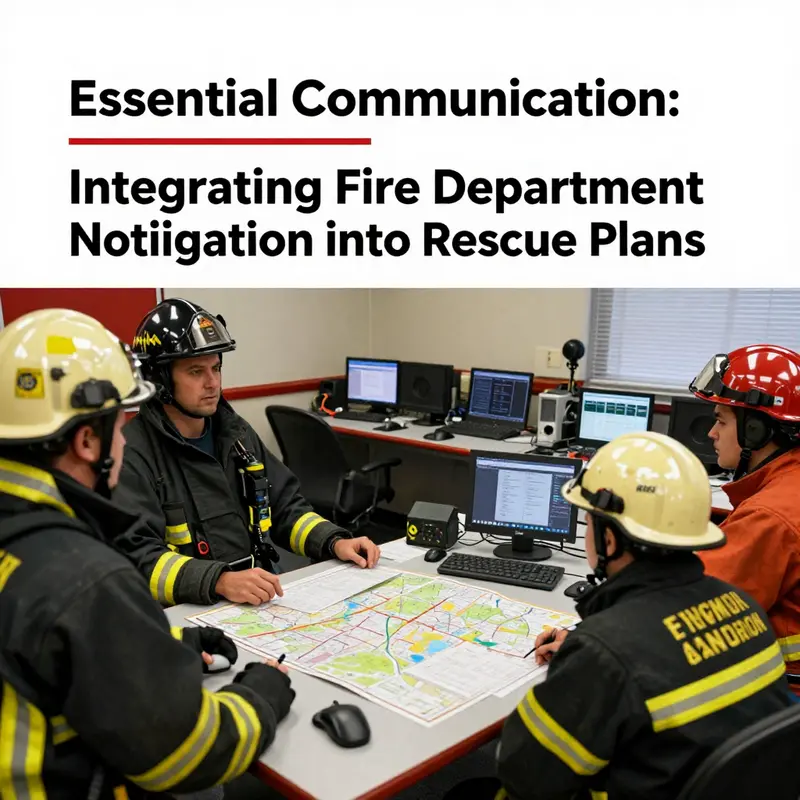
Informing the fire department as part of a rescue plan is not a courtesy or a line item to be checked off. It is a core, strategic act that shapes the speed, accuracy, and effectiveness of every emergency response. On a practical level, fire departments are often the first on scene for fires, toxic spills, structural collapses, and many other incidents that threaten life and property. Their role as the initial power in the response network means that a rescue plan must anticipate their needs, align with their operating principles, and build shared decision making from the very start. In jurisdictions around the world, the imperative to notify and engage the fire service early is echoed in both statutory guidance and best practice, and it is grounded in the simple reality that coordination saves seconds, reduces confusion, and limits risk to rescuers and the public alike. A rescue plan that treats the fire department as a partner rather than a spectator becomes a living instrument, capable of adapting to shifting conditions while preserving a coherent command structure during chaotic moments.
The mechanics of this partnership rest on a common frame of reference. Modern emergency management emphasizes a unified command and a shared operating picture, where the incident command system provides structure for communication, resource allocation, and tactical decision making. When the rescue plan explicitly includes notification channels to the fire department, it creates a predictable flow of information that supports rapid assessment, hazard identification, and the allocation of firefighters, apparatus, and specialized teams. This alignment is not abstract theorizing. It translates into tangible benefits: pre-alerts that position engines at hazard zones, pre-arranged access routes cleared for responders, and the timely dispatch of fire suppression and EMS assets in a synchronized tempo. In many places, these principles are codified within national or regional response frameworks, which stress that fire departments operate within an integrated ecosystem rather than as isolated responders. The result is a more resilient community where every agency understands its role and how to intersect with others without delay.
From a planning perspective, the most effective rescue plans embed fire department notification into the earliest phases of risk assessment. This means asking not only what might go wrong, but who must be alerted to what, and when. It also means designing the plan with mutual aid in mind. Local fire departments frequently rely on mutual aid agreements to bridge gaps in coverage during large incidents or multi-jurisdictional events. A well-structured rescue plan recognizes these relationships and builds them into the decision-making framework. It creates a pre-arranged cascade of communications that can be activated at the first sign of trouble, balancing autonomy with coordination. The beauty of this approach lies in its simplicity: a straightforward set of triggers, a reliable reporting format, and a shared language that helps diverse responders converge on a single objective—saving lives while protecting property.
A central content of the rescue plan is the information that needs to be communicated to the fire department. Pre-incident planning should establish what details are routinely shared and what may be updated as the situation unfolds. At a minimum, the plan should include the exact location and nature of the incident, the current occupancy type and potential hazards inside structures, access points and points of egress for both entry and evacuation, and the status of critical infrastructure such as water supply, power lines, and gas lines. It should also provide a clear description of any known or suspected hazardous materials, the presence of vulnerable populations, and any special environmental considerations such as weather conditions that could affect firefighting operations. The goal is not to overwhelm the fire department with data, but to furnish a precise, actionable snapshot that supports immediate on-scene decision making. In many cases, this means standardizing the information package so that, regardless of who is responding, the arriving team has a consistent mental model of the scene and its risks.
The timing of notification is as important as the content. Proactive notification should occur when risk factors are detected that could impede firefighting or complicate rescue efforts. For example, if road construction, power outages, water shortages, or communication line interruptions could affect the ability to respond, responsible units should inform the local fire rescue agency in advance. This is not a mere courtesy; it is a formalized requirement in many systems because it enables pre-positioning of resources, adjustment of staging areas, and the rapid deployment of contingencies. In practice, this means planners must anticipate scenarios where delays could cascade into life-threatening outcomes and build notification triggers into the planning tools that guide responders from the outset. The logical corollary is a plan that remains dynamic: notification thresholds can be revisited as infrastructure or weather conditions evolve, and the incident command can adjust the flow of information to maintain a tight, real-time link with the fire department.
Beyond the technicalities of timing and data, effective coordination requires shared processes and language. A rescue plan that succeeds in informing the fire department must harmonize standard operating procedures, radio protocols, and decision-sharing mechanisms. It should specify who is responsible for initiating contact, what contact methods will be used, and how information will be conveyed during handoffs between agencies. It should also define the cadence of updates—how frequently the fire department should receive situation reports, resource status, and evolving hazard assessments. This synchronized approach reduces the risk of miscommunication, which can occur when agencies use different terminology or escalate differently in the heat of a response. When the rescue plan includes joint training exercises and tabletop drills that involve the fire department, it creates muscle memory for real incidents. These exercises test the interoperability of communications equipment, validate the clarity of information sharing, and surface gaps in procedures before they become fatal delays on an actual scene.
Cooperation with fire services does not end at the scene. After-action reviews and learning loops are essential components of a mature rescue plan. When the fire department is actively engaged from the planning stage, questions about the effectiveness of information sharing, the reliability of notifications, and the adequacy of resource allocations can be addressed more quickly and honestly. Lessons learned from exercises and real events can be fed back into the plan, refining notification thresholds, updating contact lists, and improving the sequence of incident command handoffs. In this sense, informing the fire department is not only about reducing response times; it is about fostering a culture of continuous improvement in which every response informs the next, and every plan becomes more robust because it has learned from experience.
A related, pragmatic consideration concerns the accessibility and reach of notification channels. In densely populated or geographically dispersed regions, the firefighting network may include volunteer units, rural fire districts, or cross-border collaborators. The rescue plan should specify how information is transmitted to these diverse partners, including fallback methods if a primary channel fails. This ensures that, regardless of the scale of an emergency, all relevant fire responders have timely access to the same situational picture. A robust plan will also address language and cultural differences that could impede communication, ensuring that critical alerts and instructions are understood by all parties involved. In short, effective coordination is a human and technical undertaking, blending clear protocols with reliable technology and a shared commitment to public safety.
To illustrate how these concepts translate into practice, consider the broader ecosystem in which fire departments operate. Fire services are often integrated into national or regional emergency management structures, supported by federal or state agencies that provide training, research, and guidance. This support helps authorities design rescue plans that are technically sound and operationally feasible. For instance, the National Response Framework and similar guidance emphasize the Emergency Support Function that specifically coordinates firefighting and public safety activities as part of a larger incident response. A rescue plan that aligns with this framework enables a smoother, more coherent incident command and facilitates access to mutual aid and specialized capabilities as needed. The broader point is that informing the fire department is not a standalone act; it is a foundational element of a harmonized system designed to maximize the speed, precision, and resilience of the entire response.
In practical terms, the rescue plan should not be written in isolation from the fire department. It should emerge from joint planning sessions, where representatives from the rescue team, fire prevention and suppression units, EMS, and other stakeholders contribute perspectives on how information should flow, what constitutes a critical alert, and how to manage competing priorities during a crisis. When this collaborative process occurs, the plan becomes a shared contract that binds agencies to a common purpose and a predictable way of operating. It also aligns with broader public health and safety objectives, ensuring that the response is not merely reactive but proactive, with fire department notification acting as a bridge between prevention, preparedness, and response. In this sense, the rescue plan evolves into a living document that reflects evolving risks, new capabilities, and the ongoing commitment of a community to protect life and property.
For readers seeking a broader lens on the role of the fire department in emergency management, the following resource offers a wide-ranging overview of how fire services fit into contemporary public safety systems: Fire Department – an overview | ScienceDirect Topics. This external perspective complements the practical guidance embedded in rescue planning by situating fire department coordination within a framework that considers training, equipment, health and safety, and leadership in firefighting organizations. At the same time, practitioners can benefit from the concrete examples in the internal discourse surrounding preparedness gaps and collaborative practice. For instance, communities facing persistent challenges in wildfire response or urban-rural coordination can draw from documented experiences and reflect on how early fire department notification might alter outcomes. The synthesis of theory and practice strengthens the argument that informing the fire department is not an optional addendum but a core design principle of effective rescue planning.
The journey toward truly integrated rescue plans also invites attention to the social and ethical dimensions of all-hazard response. When information flows promptly to the fire department, the public is better protected, and responders can operate with greater situational awareness and trust in one another. This trust is built not only through formal agreements and drills but through everyday professional respect for the expertise that fire departments bring—rapid assessment, tactical decision making under pressure, and a deep understanding of how fire behaves in different environments. A plan that certifies and reinforces this partnership sends a clear message: the aim is not to duplicate effort, but to coordinate so every action supports the whole. In this sense, informing the fire department becomes a moral imperative as much as a logistical one, ensuring that every rescue plan honors the shared goal of saving lives while minimizing harm to responders and the community.
As planners and responders continue to adapt in a world of evolving threats, the principle endures: inform early, communicate clearly, and align actions across agencies. The rescue plan that treats fire department notification as a first-class element becomes a more effective instrument, capable of guiding complex operations with confidence. It supports a culture where preparation, transparency, and accountability are integral to every intervention. In the end, the success of a rescue hinges on the seamless collaboration between those who plan and those who respond. When notification to the fire department is enshrined in the planning process, communities gain not just faster responses, but a stronger shield of resilience that holds firm when danger looms.
Internal link note: For a focused discussion of practical preparedness gaps in wildfire contexts, see the resource that examines gaps in emergency readiness and how coordination with fire services can be improved in high-stakes environments: Emergency preparedness gaps in California wildfires.
External resource: Fire Department – an overview | ScienceDirect Topics, to provide a broader, professional context on how fire services operate within national emergency management frameworks and why early notification is a critical driver of effective response.
Coordination on the Front Lines: Embedding Fire Department Notification into Rescue Plans for Real-World Readiness
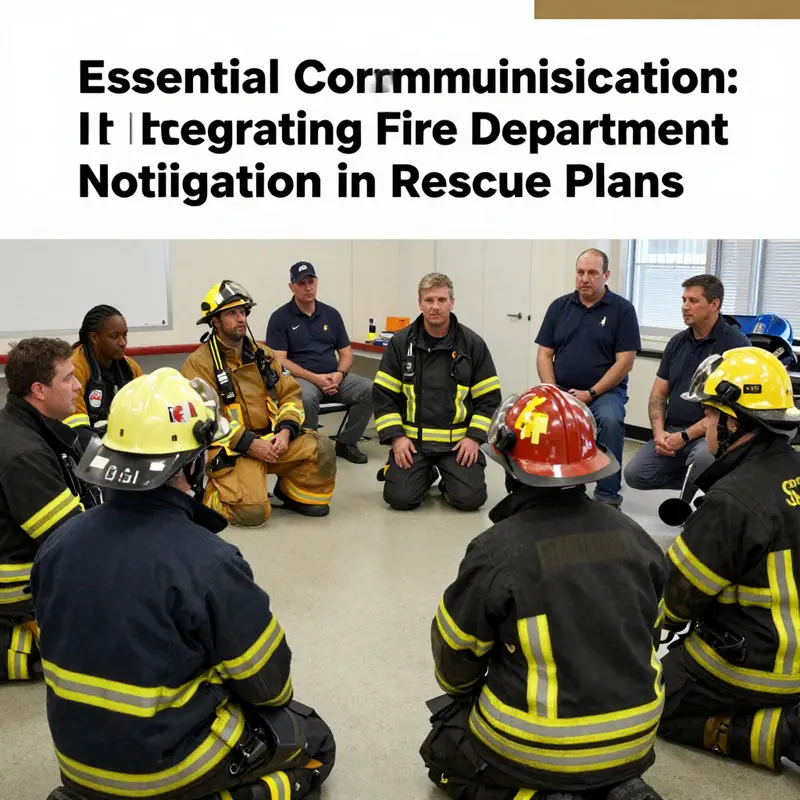
A rescue plan that omits informing the fire department is incomplete and potentially perilous. Across disciplines and regions, the smallest act of notification—declaring that a fire or other emergency has been detected and that the fire department is being alerted—often defines the boundary between chaos and coordinated action. The literature and practice captured in the researched materials show a clear pattern: informing the fire department is not a peripheral step but a central, legally grounded requirement that shapes timing, resource deployment, and the very architecture of an effective response. In the Chinese guidance cited, for example, fires classified as Level III or higher trigger activation of the city-level fire accident emergency command system, a structure that presumes and necessitates rapid communication with the fire service. In other words, the plan does not merely suggest a call; it institutionalizes it as a core mechanism of control, coordination, and safety. This recognition carries practical weight: the fire department is a fixed point of reference around which other responders—emergency medical teams, police, public works, and local governance—organize their actions. When the question arises whether a rescue plan can include informing the fire department, the answer is not only yes but essential. The plan must define how and when notice is given, what information accompanies it, and how that notice shapes subsequent decisions. The legal language embedded in public safety law, such as the Fire Law in the People’s Republic of China, provides a formal backdrop to this operational imperative. It explicitly notes that interruptions to infrastructure—road work, power outages, water cuts, or communication failures—can impede firefighting. In anticipation of such risks, responsible units are required to notify the local fire rescue agency in advance. This is not a courtesy; it is a duty designed to preserve access, ensure suppression feasibility, and protect the public and responders alike. Taken together, these strands from policy, precedent, and practice converge on a single insight: informing the fire department is a foundational action, and a rescue plan without a robust notification protocol is at risk of underperforming when lives and property are on the line.
To translate this principle into a usable, durable plan, it helps to anchor the discussion in a few interconnected design choices that consistently appear in high-functioning protocols. First, establish clear communication channels that are both dedicated and interoperable. Fire departments require channels that minimize confusion during the stress of an incident. Whether through radio frequencies, secure data streams, or digital messaging ecosystems, the goal is a shared information spine. When incident commanders, medical teams, law enforcement, and field crews operate on the same channel, the exchange of status, hazards, resource availability, and evolving tactical plans becomes a single, traceable thread rather than a collage of disjointed notes. The aim here is not to codify every possible message but to ensure that critical information—identity of the incident, location, access routes, hazards, and necessary extinguishing or rescue methods—reaches the fire department with speed and clarity.
Second, integrate regular, joint training that tests both the mechanics and the culture of notification. Exercises should put responders from multiple agencies into simulated scenarios that demand rapid notification to the fire service and then dynamic cross-agency coordination. These drills reveal gaps in communication hardware and software, reveal ambiguities in roles, and fortify professional relationships that pay dividends during real events. The value of such training is repeatedly underscored in professional standards. The National Fire Protection Association (NFPA) emphasizes interoperable communications as a cornerstone of effective emergency response. In particular, the NFPA’s Incident Management System advocates for a common operating picture and unified command structures where information is centralized and transparent. When a rescue plan routinely rehearses notifying the fire department and synchronizes this with the wider incident command, it also hardens the plan against routine breakdowns: misrouted messages, incompatible radios, and delays caused by ambiguity about who should report what and to whom.
Third, give attention to the procedural texture of notification. A robust plan specifies what information the fire department must receive at the moment of notification and what constitutes sufficient follow-up as events unfold. Early notices should convey the nature of the danger, the suspected spread of fire, potential fuel sources, critical infrastructure impacted, and estimated on-scene conditions. As the operation proceeds, the plan should call for ongoing updates that reflect position changes, evolving risk, and any shifts in priorities. The goal is not to flood the fire department with data but to supply actionable intelligence in a form that can be quickly integrated into on-scene decision-making. This is where the concept of a unified command and a single operating picture, highlighted by NFPA standards, becomes practical rather than theoretical. When the fire department is brought into the loop with timely, structured information, it is easier to coordinate suppression, rescue, medical care, and evacuation, all while preserving the safety of responders and the public.
A fourth consideration concerns information governance and public-facing communications. Rescue plans must recognize that notifying the fire department interacts with how the incident is perceived by the public and by the media. There should be a clear, pre-agreed approach to what gets released, who speaks to the press, and how warnings and instructions are conveyed through public alert systems. A well-designed plan links the fire department to these public alert mechanisms, ensuring that safety instructions reach the right audiences quickly and accurately. It also assigns a single point of contact for media inquiries to maintain consistency and avoid mixed messages. This is not a distraction from tactical priorities; it is a protective measure that helps keep the public informed, reduces rumor-driven chaos, and supports the credibility of the responding agencies.
In thinking about large-scale operations—whether international deployments, urban disaster responses, or complex, multi-jurisdictional incidents—the model expands to emphasize cross-agency preparedness and continual evaluation. A framework such as the United Nations Security Management System underscores the need for annual reviews and implementation of fire safety and communication plans across diverse environments, with explicit coordination with local fire services. While this may seem far from a typical city rescue scenario, the underlying logic holds: resilience in fire department notification is built through sustained governance, recurring testing, and a willingness to adapt to changing landscapes of risk and technology. The inclusion of a formalized notification process, when embedded in policy and practice, becomes a durable feature of organizational readiness rather than an ad hoc response to a single event.
To translate these principles into concrete, implementable steps, a rescue plan should start with design commitments rather than improvised actions. It should define who makes the initial call to the fire department, what triggers that call, and what minimum information must accompany it. It should outline the exact channels to be used for notification and the process for escalating the incident within the fire service hierarchy if initial information proves incomplete or uncertain. It should specify documentation practices that allow all parties to reconstruct the sequence of notifications, the information exchanged, and the tactical decisions that followed. In this sense, informing the fire department is not merely about getting a response; it is about ensuring that the response is informed, timely, and coordinated from the first moments of an incident through the totality of the operation. The Chinese documentation cited makes this explicit at the policy level, and NFPA guidance translates it into universal practice that can be adapted to different regulatory environments.
The practical implications for field teams are straightforward. Training, equipment readiness, and standard operating procedures must be aligned with the notification protocol. Incident commanders should consider notification as a line-item in the initial action plan, not as a late-stage afterthought. Practitioners should also recognize that the fire department’s involvement can reveal critical insights about building layouts, fire behavior, and potential hazards that are not immediately obvious to non-fire personnel. Early involvement of the fire service can accelerate the identification of safe ingress and egress routes, the establishment of water access points, and the implementation of rescue maneuvers that protect both civilians and responders. In many respects, the fire department serves as a memory bank of practical fire-ground knowledge—an extensive repository of past experiences that, when activated early, enhances decision quality and reduces the risk of missteps under pressure. The discipline of early notification, then, becomes a force multiplier for all responders, especially when cross-checked with interoperable communications and a shared operating picture.
Finally, the cultural dimension should not be overlooked. A rescue plan that values timely notification to the fire department also reinforces a culture of mutual trust and professional respect among agencies. It signals to firefighters that their expertise is sought, that their safety needs are prioritized, and that their arrival is anticipated within a coordinated, pre-agreed framework. That cultural alignment is as important as any technical standard because it shapes how quickly information is exchanged, how decisions are made jointly, and how smoothly operations proceed when seconds count. The result is a more resilient, more capable response system—one in which informing the fire department is a deliberate, well-practiced, and legally grounded act that integrates seamlessly with the broader mission of safeguarding lives and property.
External reference: For a broader understanding of interoperable communications and incident management systems, see the NFPA Incident Management System guidelines. https://www.nfpa.org/News-and-Research/Publications/Code-Update/2023/Incident-Management-System.
Internal reference: A useful perspective on the evolving role of knowledge infrastructure in fire services can be explored in the chapter on transformation of fire services, which discusses how innovations in information sharing support rapid decision-making. Innovation Museum Transforming Fire Services.
Final thoughts
Incorporating fire department notification into rescue plans is not merely a recommendation but a fundamental necessity governed by regulations and best practices. Engaging firefighters ensures that resources are deployed efficiently and effectively, vital for protecting lives during emergencies. As we have explored, the legal foundation for this communication is robust, making it imperative for community leaders, educators, and citizens to engage in proactive planning. By embedding these practices into the fabric of emergency response, communities can significantly enhance their resilience and readiness for any crisis.