
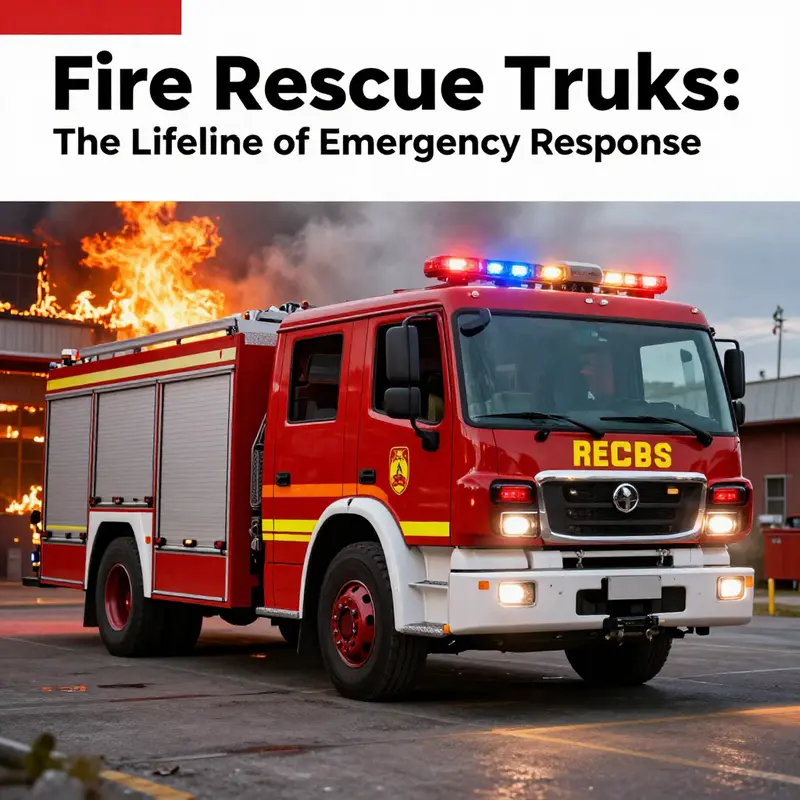
Fire rescue trucks are indispensable vehicles that provide essential support in firefighting and emergency rescue situations. Equipped with specialized tools and technology, these trucks are designed for quick response and effective action during critical incidents. Understanding the different types of fire rescue trucks, the advanced equipment they carry, and their operational roles reveals their significance in safeguarding communities. This article delves into various aspects of fire rescue trucks, including their safety standards and future innovations, providing a comprehensive perspective on their functionality and importance.
The Armory on Wheels: Understanding the Many Forms of Fire Rescue Trucks and Their Lifesaving Mission
External reference for further technical context is provided by the NFPA’s Fire Apparatus standards, which remain a benchmark for design, testing, and operation across the global firefighting community: https://www.nfpa.org/About-NFPA/Our-Work/Standards-and-Guidelines/Fire-Apparatus-Standard
null
null
Beyond the Siren: The Operational Roles of Fire Rescue Trucks and What They Really Do
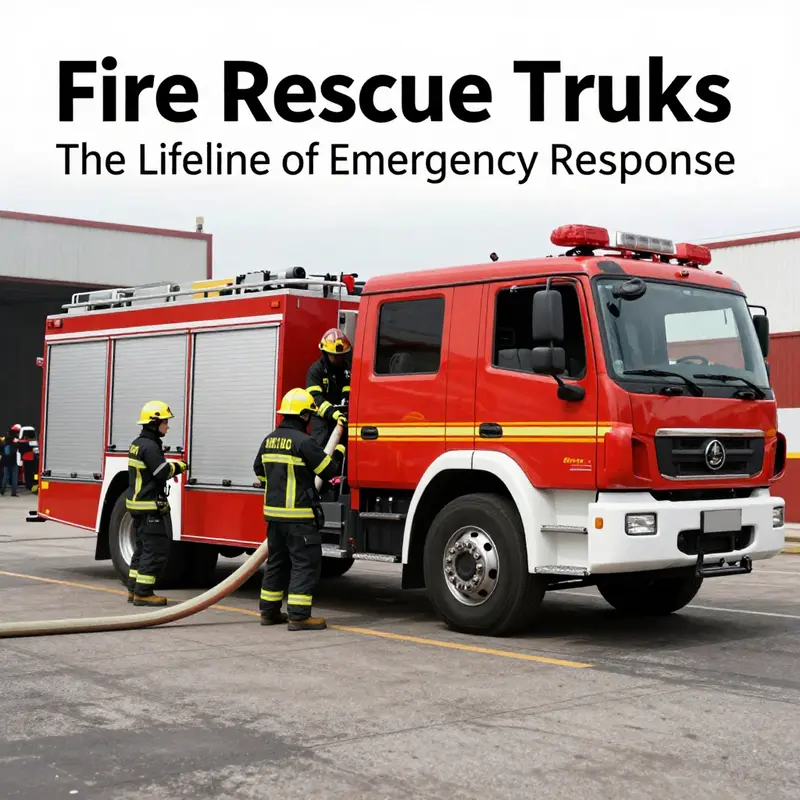
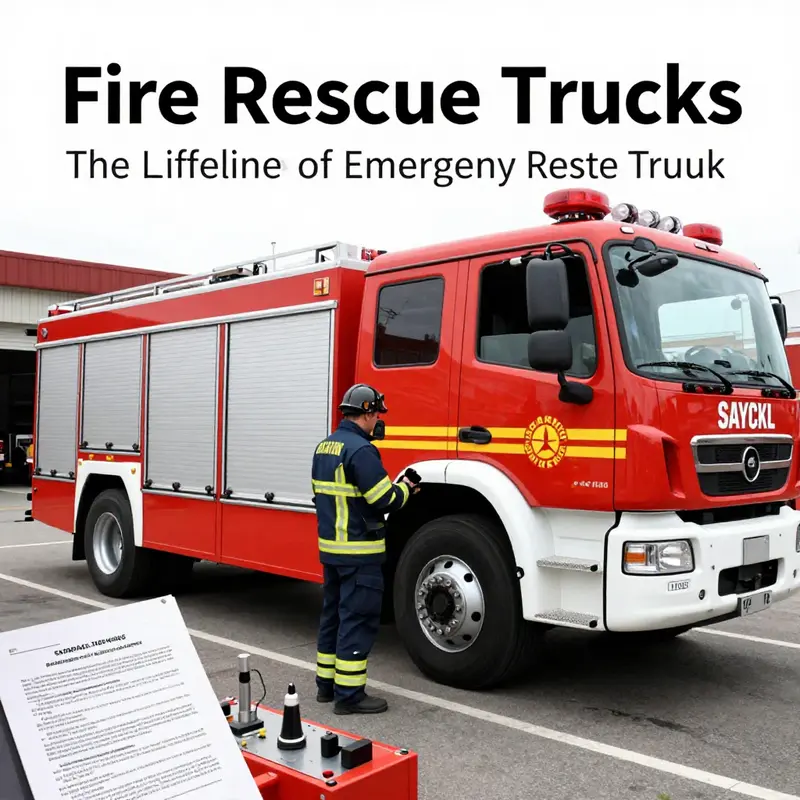
Fire rescue trucks are not mere modes of transport; they are mobile workshops, high-reaching platforms, and first responders fused into one rolling instrument of public safety. When a building fights to contain heat and smoke, when a life hangs in the balance on a stairwell or a rooftop, these vehicles become the visible edge of rescue intelligence. The term fire engine, or fire apparatus, often masks the breadth of their mission: they are designed to deliver water, reach upper floors, support forcible entry, illuminate obstacles, and sustain coordination among crews. In dense urban fabric, where stairs and corridors transform into narrow channels of risk, the rescue truck’s role grows disproportionally with the complexity of the incident. They are, in effect, life guardians on wheels, engineered with a precise calculation of reach, power, and visibility.
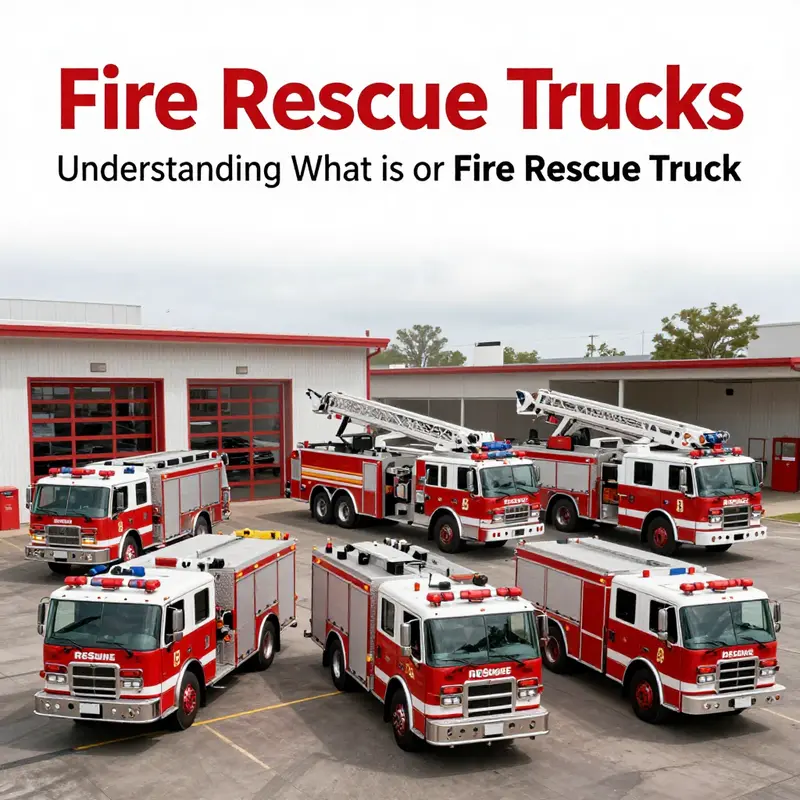
Operationally, there are several archetypes, each with a home in the arc of a typical response. Pumpers or water tankers form the backbone of suppression, carrying water and the pumps that propel it through hoses to the fire scene. Aerial ladders or platform trucks extend a vertical reach that makes upper floors accessible, enabling retrospective rescue and direct attack from above. Rescue vehicles, sometimes grouped under ‘special duty’ fleets, carry the heavy hydraulic shears, cutters, and stabilization tools that pry open crushed metal, stabilize a vehicle, or extricate trapped occupants. Smoke removal units ride a different wind, pushing air through buildings to clear smoke and toxins, which can drastically improve visibility for firefighters and reduce the likelihood of smoke inhalation for occupants awaiting rescue. Taken together, these vehicles compose a spectrum of capability: each platform complements the others, forming a coordinated response that a single truck could never match alone.
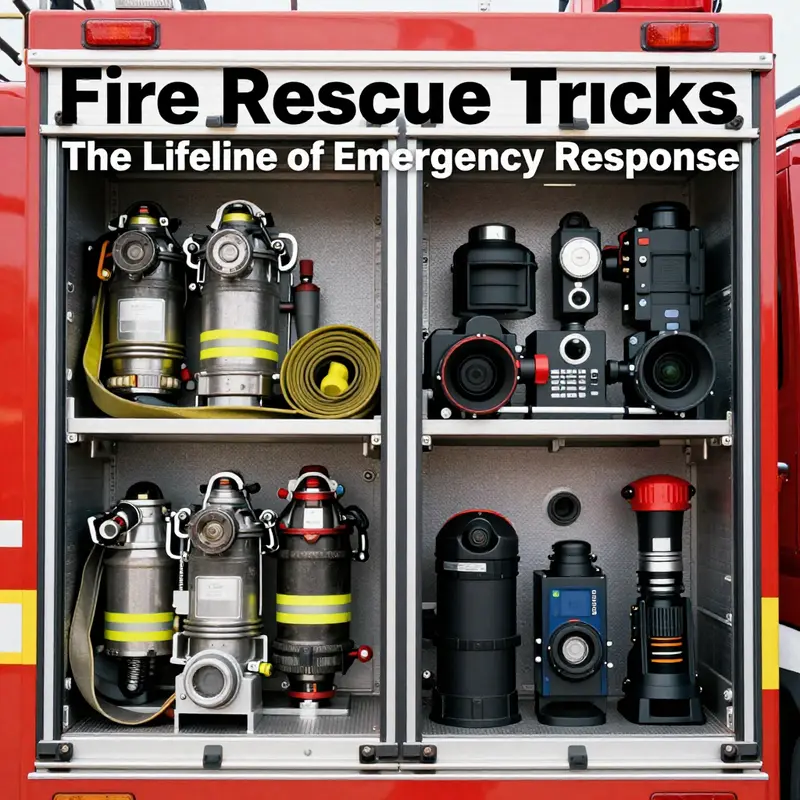
Inside the cab and within the equipment bays lie the capabilities that define the operator’s craft. Telescopic ladders or articulating platforms can tower well over 100 feet, enough to extend above many urban canopies and deliver a rescue from a balcony or roof hatch. Onboard water tanks and pumps ensure a firefighting foothold even when a hydrant is distant or overwhelmed, supporting a scene while other units lay the longest hoses or lay a secondary supply line. Roof ventilation tools—fans and blowers, ducts and through-structure vents—help to pull heat out of a burn depth, creating cooler, clearer paths for firefighters to advance and for trapped people to seek safer routes. Forcible entry tools—saws, rams, spreaders—act as the bridge between locked doors and the flight to safety for those inside, especially when doors or shutters stand as stubborn barriers between danger and escape. High-intensity lighting slices through smoke-choked air, revealing stairwells, corners, and victims; thermal imaging cameras cut through the gloom, translating heat into images that guide decision-making and locate people who cannot call out. These pieces of equipment do not merely perform tasks; they shape the tempo and order of a multifaceted rescue operation, allowing crews to see, reach, and act with confidence.
Yet the operational promise comes with constraints. The same size that enables reach and power can hinder maneuverability. A large turning radius complicates placement in narrow city streets, and the vehicle’s breadth and weight may challenge access in tight plazas or crowded corridors. This is especially true in densely built neighborhoods or historic districts where street plans anticipate smaller vehicles rather than tall platforms. For this reason, the choreography of a response often begins long before the sirens arrive: preplanning, mapping of elevational risks, and drills that rehearse how to position a ladder truck on a slope, around a bend, or near a hydrant that is some distance away. The skill set required blends driving precision with a seasoned sense of timing, as operators must coordinate with ground crews, supply units, and incident commanders who are orchestrating the overall strategy. In practice, success hinges on the teamwork between the driver, the aerial operator, and the crew climbing to the platform, a collaboration that converts the truck from a machine into a controlled instrument of rescue.
From the broad perspective of public safety infrastructure, fire rescue trucks are designed to perform tasks that extend beyond simple extinguishment. They are deployed in disasters, hazardous-material incidents, and structural collapses where every second counts and the terrain denies easy access. The ability to swing from a rescue to a collapse scenario, or to switch from ventilating a smoke-filled interior to bolstering a crew as they search, is what makes the platform an essential asset in the urban safety toolkit. The design standards that govern these vehicles emphasize reliability, redundancy, and rapid deployability. The NFPA Fire Apparatus Standard, for example, outlines performance expectations and configuration principles that help ensure a truck is ready for the most demanding situations. While manufacturers and fire departments adapt vehicle form to local needs—urban density, climate, water supply, and crew size—the core purpose remains consistent: to extend reach, to multiply the hands on the scene, and to preserve life when every moment matters. For anyone involved in planning or procurement, understanding this balance is crucial: the vehicle must deliver both mechanical reliability and operational flexibility across a spectrum of emergencies.
Operationally, the synergy among equipment should be described less as a list and more as a workflow. The engine with an onboard pump provides the water supply, but it is the aerial platform that delivers the frontal position for the attack and the rescue, while the rescue tools unlock doors and secure the environment for the rest of the team. Smoke removal units do more than clear air; they transform the morale and safety of both victims and responders by improving visibility and reducing heat buildup. The identification of target rooms, stairwells, and egress paths is a constant negotiation among commanders, engineers, and the ladder crew, who must anticipate where occupants are most likely to be found and how to reach them without compromising the structure. In this sense, the truck acts as a fulcrum around which the whole incident pivots—balancing suppression, search and rescue, ventilation, and entry with the imperative to preserve structural integrity and minimize secondary hazards.
Highlighting the human dimension, the vehicle’s value emerges not just in its tech, but in how it shapes strategy under friction. When smoke swirls and heat radiates through a hallway, the thermal camera can reveal softer targets such as a person behind the door, or a hidden exit behind a wall, guiding a precise cut or slide to safety. Roof fans may create a cross-breeze that channels superheated gases away from a stairwell, enabling a team to descend or ascend with greater confidence. The sense of control that the platform provides helps reduce panic in occupants who may be waiting to be found. In this way, a fire rescue truck becomes more than a mechanical asset; it is a synchronized platform for decision making, a moving command post that travels with the scene and adapts as conditions evolve. The reality is that the truck does not replace the vital instincts and courage of the firefighters, but it amplifies them, turning intrepid human skill into scalable, repeatable outcomes across countless incidents.
To connect this operational portrait with the broader landscape of global fire services, consider the path of modernization and customization. A growing emphasis on adaptable fleets—ranging from compact urban units to towering, multi-purpose platforms—reflects differences in terrain, building stock, and available water sources. This is where the concept of regionalized, customized fire trucks enters the conversation: fleets that translate universal capabilities into locally sustainable solutions. This is where the conversation about customized fleets becomes especially relevant for developing contexts, where the balance between reliability, cost, and capability shapes every procurement choice. See for instance the broader discourse on comprehensive custom fire trucks that address diverse firefighting needs in developing countries, which highlights a design philosophy that centers on reliability, cost-effectiveness, and robust support. Comprehensive custom fire trucks for developing countries. This reference underscores that the platform’s intent—reach, power, and rescue capability—remains constant, even as form and configuration adapt to different urban ecologies and fiscal realities.
Even as the craft evolves, the essential truths endure. The firefighter who operates from the platform must be proficient in climbing, rigging, and hydraulic manipulation, yet also adept at decision-making under pressure. Training emphasizes not only the mechanical steps of extending the ladder or aligning the platform but also the judgment calls about where to place the vehicle, how to stage a rescue, and when to evacuate a room that cannot be entered safely. The community’s safety depends on such expertise, embedded in the policies, maintenance regimes, and ongoing education surrounding these specialized trucks. The chapter on the operational roles of fire rescue trucks thus threads a simple truth through complex practice: their value lies in a carefully orchestrated blend of engineering, tactics, and human skill, all tuned to the unpredictable cadence of a real emergency.
External resource: https://www.nfpa.org/About-NFPA/Our-Work/Standards-and-Guidelines/Fire-Apparatus-Standard
null
null
Beyond the Siren: How Tomorrow’s Fire Rescue Trucks Redefine the Life-Saving Vehicle
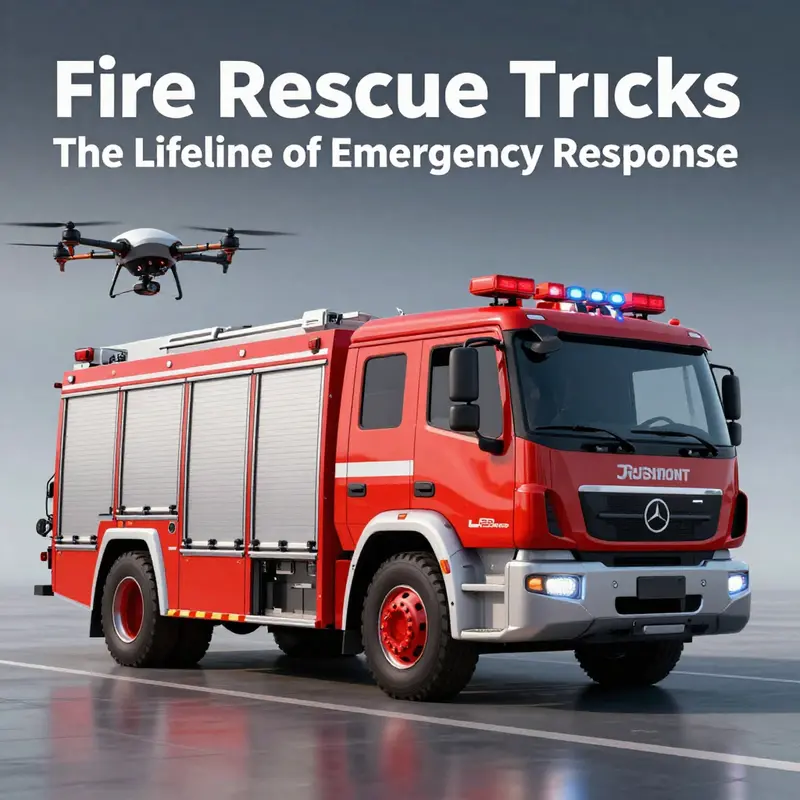
Fire rescue trucks are not merely means of getting firefighters to a scene. They are multi-purpose platforms built to endure extreme conditions, deliver critical tools, and sustain life under pressure. In many ways, they embody the core promise of public safety: urgency paired with reliability. Yet as cities densify, as climates shift toward more extreme weather events, and as the range of emergencies broadens, the fire rescue truck must evolve from a single-function tool into a flexible, intelligent system. This chapter traces how future trends are reshaping what a fire rescue truck is, how it operates, and how it fits into a broader emergency response ecosystem.
At the heart of this evolution lies electrification. Electric and hybrid powertrains promise quieter operation, reduced emissions, and improved energy efficiency—benefits that matter in dense urban environments where noise and air quality can impede operations. An electric chassis can cut noise during approach and on patrol, letting crews assess a scene with less disruption and preserving the safety of bystanders and residents. Electric propulsion also enables new load management strategies; batteries can act as a buffer for high-demand equipment like large water pumps, thermal imaging devices, and power-hungry lighting. But electrification is not a simple swap. Weight distribution, battery cooling, and the need for rapid, reliable charging infrastructure challenge designers. A modern mission may include long urban responses where frequent starts and stops tax a system differently than a long highway drive would. The industry is wrestling with these realities by blending batteries with advanced thermal management, regenerative systems, and scalable energy storage. In practice, this means fleets will often deploy hybrid configurations or fully electric options where mission profiles, geography, and budget permit.
A second pillar is intelligence, both in the vehicle and in the field. Integrating artificial intelligence and automation reshapes planning, maintenance, and on-scene decision making. AI can optimize rostering by predicting fatigue risk and ensuring crews are matched to tasks with the right training and protection. It can also monitor equipment health in real time, flagging worn hoses, degraded pumps, or failing generators before a breakdown interrupts a response. On the scene, smart systems coordinate hoses, ladders, and aerial devices with incident command, reducing the cognitive load on firefighters as they work under pressure. These capabilities extend into data-driven planning: with a steady stream of operational data, departments can simulate different response scenarios, identify bottlenecks, and align staffing, apparatus, and hydrant access to anticipated needs. The result is not a distant technology dream but a practical upgrade path that makes every emergency response more precise and safer for all involved.
Modularity and customization form the third axis of future readiness. Fire rescue trucks are already highly specialized, with pumpers, aerial ladders, and rescue units each serving distinct roles. The next generation increases this versatility through modular components that can be reconfigured in the field or during maintenance cycles. A single chassis can be adapted to different mission demands—industrial fires, hazardous materials incidents, or technical rescues—by swapping out compartments, adding or removing specialized equipment, or reassigning power and water capacities. This approach supports rapid re-tasking in the face of shifting risk landscapes, including floods, urban fires, and disaster response scenarios. Engineers achieve this flexibility with advanced materials, standardized interfaces, and robust yet lighter-weight structures. The aim is a fleet that can migrate from one type of operation to another without requiring a complete vehicle replacement. In developing countries and resource-constrained environments, this same modular ethos translates into cost-effective, scalable solutions that can grow with local needs, enabling responders to upgrade capabilities in a stepwise, affordable manner. For readers exploring the comprehensive approach to adaptable fire trucks servicing diverse rescue needs, see the discussion linked in this chapter about comprehensive customizable fire trucks for developing countries meeting diverse rescue needs efficiently.
Together, electrification, AI-powered systems, and modular design redefine the capabilities and boundaries of what a fire rescue truck can do. Once limited to pumping water, reaching upper floors, and carrying basic tools, today’s and tomorrow’s vehicles are capable of integrated incident management, high-visibility rescue operations, and proactive maintenance that keeps the fleet ready for action. The modernization also extends to energy efficiency and sustainability. Departments are increasingly evaluating environmental impact alongside response performance. Electric powertrains align with broader public health goals by reducing emissions and improving air quality around emergency scenes and within urban stations. The longer-term objective is a resilient public-safety infrastructure that can endure the pressures of climate change while maintaining rapid, reliable service during the most demanding events.
To envision the complete picture, it helps to anchor the discussion in how standards and disciplined design practices guide innovation. Standards bodies and international guidelines shape the minimum performance thresholds for pumping capacity, water supply, ladder reach, and protective equipment. They also encourage interoperability among different units and across jurisdictions, a factor that becomes crucial as mutual aid responses expand during major incidents. Fire rescue trucks do not operate in a vacuum; they are parts of an integrated system that includes dispatch centers, water supply networks, and incident command teams. When future designs align with established standards while adopting the best of emerging technologies, agencies can realize a more cohesive, safer, and more effective response. This alignment is not just about compliance; it is about ensuring that new capabilities fit into existing operational workflows, training programs, and maintenance regimes so that the benefits are tangible when every second counts.
A practical implication of these trends is the growing relevance of accessible, scalable solutions for developing regions. Innovations in modular design, cost-efficient materials, and shared technology platforms offer pathways to equip communities with capable rescue fleets without prohibitive upfront costs. The idea of adaptable fire trucks that can be reconfigured as needs evolve resonates with public safety leaders who must balance immediate pressures with future risk. The emphasis on modularity also dovetails with sustainable development goals by promoting longer vehicle lifespans, easier repair, and simpler upgrades—factors that reduce lifecycle costs and environmental footprint over time. The broader lesson is that a fire rescue truck’s value is now measured not only by its pump’s output or its ladder’s height, but also by its flexibility, its ability to learn from data, and its readiness to adapt to a changing world.
The narrative of the future fire truck also invites reflection on the human element. As machines become more capable, the role of the crew evolves from solely performing tasks to managing complex systems. Training will increasingly emphasize data literacy, system integration, and rapid decision making in dynamic scenes. Firefighters will rely on real-time information pipelines that blend vehicle telemetry, building information, and environmental conditions with the intuition and experience that only people bring. In this sense, tomorrow’s fire rescue truck is less a solitary instrument and more a platform for collaboration—between human teams, intelligent devices, and the built environment around them. The vehicle becomes a moving node in a network of safety, capable of facilitating faster rescue, safer operation, and smarter planning for the communities it serves.
For those who want to explore a deeper, asset-level view of today’s and tomorrow’s rescue tools, a forward-looking overview on modular and customizable solutions in developing contexts provides a practical lens. This resource captures how modular components, adaptable layouts, and scalable energy solutions translate into real-world benefits and constraints. comprehensive customizable fire trucks for developing countries meeting diverse rescue needs efficiently.
As this chapter closes on a note of evolving capability, it is worth acknowledging a foundational anchor: standards and evidence-based design remain essential to translating innovation into safe, reliable service. The future of fire rescue trucks rests on a balanced triad—technological advancement, disciplined practice, and the flexibility to respond to a world that grows more complex with every season. By pursuing electrification where appropriate, embedding intelligent systems that support crew safety and efficiency, and embracing modularity to match diverse missions and budgets, fire departments can extend the life and impact of their fleets. The result is not merely a more capable vehicle, but a more resilient public safety system—ready to protect lives, safeguard communities, and adapt as needs change tomorrow and beyond. External guidance from established standards bodies remains a critical compass, guiding design choices toward safe, interoperable, and durable solutions for years to come. https://www.nfpa.org/About-NFPA/Our-Work/Standards-and-Guidelines/Fire-Apparatus-Standard
Final thoughts
In summary, fire rescue trucks play an essential role in emergency response, equipped with advanced technology and designed to tackle diverse situations. The various types of fire rescue trucks, their equipment, and operational capabilities highlight the critical nature of their functions. Safety standards ensure that these vehicles meet rigorous performance expectations, while ongoing innovations promise to enhance their effectiveness in the future. As communities continue to evolve, so too will the capabilities of fire rescue trucks, underscoring their position as vital assets in public safety.