
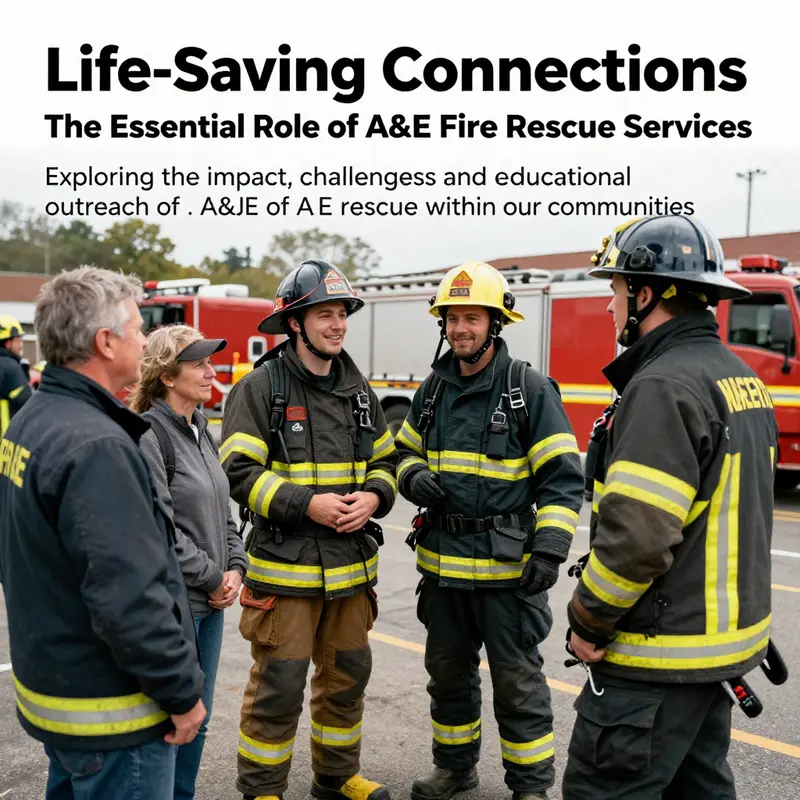
Accident & Emergency (A&E) fire rescue services play a vital role in urban landscapes, not only responding to emergencies but also enhancing community safety. As urban areas grow and evolve, the need for efficient and effective fire rescue services has become increasingly prominent. In this article, we will examine the multifaceted impact of these units within urban settings, explore the unique challenges they face and their innovative responses, and highlight the crucial role they play in educating the community on safety matters. Each chapter delves into the nuances of A&E fire rescue, aiming to reinforce the importance of these services in safeguarding lives and fostering a culture of safety.
Urban Lifelines: The Integrated Power of A&E Fire Rescue in the Modern City
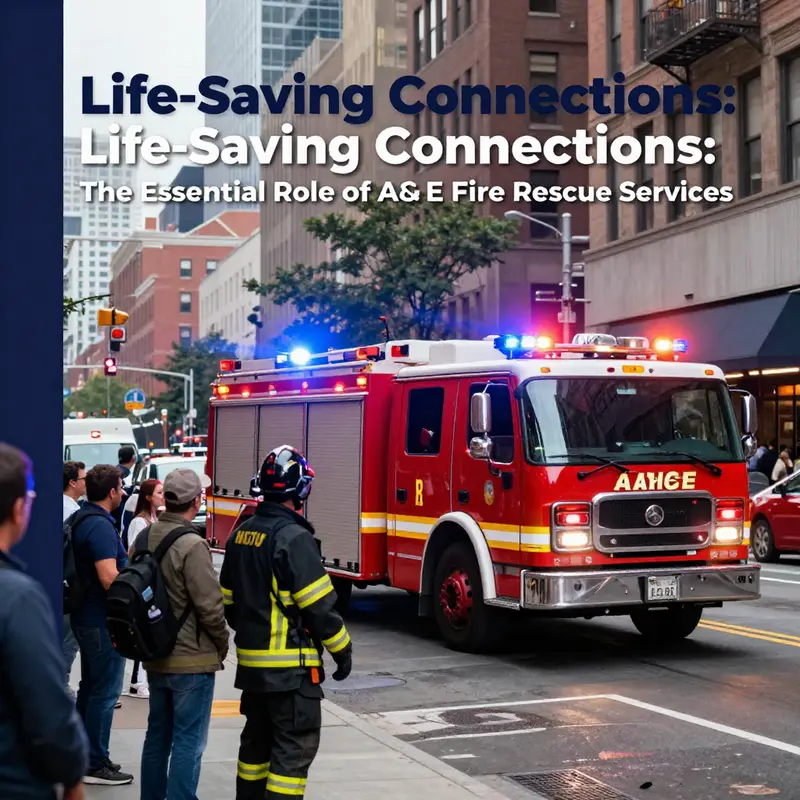
In the sleepless spine of a modern city, Accident & Emergency Fire Rescue services form the quiet architecture of safety. They are not merely a response to fires or collapses, but a continuous thread that links prevention, rapid intervention, and post-crisis recovery. In dense urban spaces, where streets snake through high-rise canyons and every minute counts, the fire rescue network operates as a living system. It coordinates medical triage, ensures rapid access for those in peril, and protects the vulnerable from secondary hazards that follow initial disasters. The urban environment intensifies risk in ways that demand not just bravery but disciplined, interdependent action. When a fire breaks out in a crowded apartment block, when a roadway shatters under a multi-vehicle crash, or when hazardous materials release into a street market, the A&E component stands at the crossroads of life-saving care and structural safety. The aim is not only to reach people quickly but to stabilize them in time for definitive treatment and to preserve the integrity of the surrounding environment so that other lives are not endangered in the process. This is the backbone of urban resilience, a field where the cadence of every shift, the layout of a response plan, and the choreography between agencies determine whether a city can recover rapidly after a crisis or suffer a cascade of avoidable injuries and losses.
The impact of these services extends beyond immediate rescue. In the urban ecosystem, their presence reduces both mortality and morbidity by shortening the time between injury and first medical intervention. Rapid dispatch, expert on-scene assessment, and seamless handoffs to hospital teams translate into better outcomes for patients with burns, trauma, or life-threatening conditions. In sprawling metropolises, where traffic congestion and vertical architecture can delay access, the reach and efficiency of A&E fire rescue teams become pivotal. They navigate not only streets but also complex spaces—underground corridors, stairwells, and the interiors of high-rise buildings—where every decision has ramifications for survival. Their work therefore intertwines with urban planning and public health, shaping how cities are designed and governed to minimize risk and maximize mobility for critical services at the moment of need.
This interconnectedness is most visible in the way rescue units operate as a cohesive system. The formalized, agency-based response network brings together fire, police, and medical specialists into a unified command. In practice, this means joint assessment rooms at the scene, shared radio frequencies, synchronized triage protocols, and pre-planned routes that keep ambulances and fire rigs moving even as crowds disperse. A city that nurtures this level of coordination benefits not only the people who are rescued but the broader community that depends on rapid, orderly crisis management. It reduces panic, preserves business continuity, and sustains trust in public institutions during and after emergencies. The social dimension is essential: the rescue service is not a sole actor but a facilitator of community resilience. It provides immediate life-saving intervention, then helps survivors, and later supports families and responders as the emotional and logistical challenges of recovery unfold. The result is more than a crisis response; it is a mechanism for social repair and continuity in the wake of disruption.
Directing this complex choreography is never a matter of improvisation. In urban settings, there is a repository of knowledge that guides action even under pressure. One of the most consequential elements is the hierarchical approach to rescue operations, which places a premium on rescuer safety, scene safety, and casualty rescue in that order. This sequence—first ensure that rescuers are protected, then secure the scene, then extract and treat victims—frames every decision and keeps outcomes from worsening due to avoidable risk. The discipline is not proprietary to any single nation. It resonates in Canada, Singapore, and other jurisdictions that have codified rescue protocols in formal guidelines. Confined-space rescues illustrate the point starkly. They reveal how procedures must evolve with context: self-rescue, non-entry rescue, and entry rescue each carry increasing complexity and risk, demanding precise pre-entry planning and robust communication between teams. In such operations, the emphasis on safety is not a luxury but the foundation that makes possible any further action. In urban life, where a single misstep can unleash a chain of problems, this safety-first doctrine becomes a durable shield for communities and a guarantee of operational effectiveness.
The urban rescue mission also carries a profound social duty that extends beyond the immediate scene. After the sirens fade, survivors will grapple with physical injuries, emotional trauma, and upheaval in their daily routines. Rescuers, meanwhile, may bear the weight of witnessing and handling harrowing moments. A well-structured A&E fire rescue system recognizes this human dimension as integral to its mandate. It supports the psychological well-being of those affected and acknowledges that resilience is built through a network of care that reaches from the earliest moments of a crisis to the longer term process of rebuilding. The post-disaster phase involves not only medical care for the injured but also practical help for families, guidance for damaged neighborhoods, and continuity for essential services that communities rely on to return to normal life as soon as possible. In this sense, urban A&E fire rescue serves as a bridge between the immediacy of emergency response and the longer arc of recovery, a bridge that is strongest when its supports—command structures, interagency partnerships, and sustained community engagement—are built to last rather than to bend at the first tremor.
A crucial element of this robust support system is the way resources are managed and deployed under pressure. The synergy among fire, police, and medical teams depends on pre-established protocols that allocate assets where they are most likely to save lives. In densely populated cities, the challenge is magnified by the physics of movement: crowded streets, multi-story structures, and the need to adapt to changing weather and light conditions. The result is a dynamic allocation problem in real time, where decision-makers must weigh the immediate needs of the people at the scene against the longer-term requirements of the city’s hospitals, which must absorb a surge of admissions without compromising care for those already in the queue. The capacity to mobilize specialized teams quickly—such as hazardous materials squads, technical rescuers, or high-angle specialists—can determine not just how fast a scene is secured but how many lives can be preserved in moments of intense risk. This is why ongoing training, drills, and cross-agency exercises are not luxuries; they are the essential means by which urban centers convert potential chaos into predictable, managed action.
The preparedness mindset is reinforced by attention to infrastructure and urban design. Buildings, transport networks, and public spaces are increasingly conceived with emergency access as a core criterion. Fire lanes that remain unobstructed, elevator systems that survive power outages, and clear signage that assists both residents and responders—all contribute to the effectiveness of the rescue mission. Even the very layout of neighborhoods matters. In some cities, street networks are optimized for rapid ambulance routing, while others invest in urban canopies of lighting and sensors that help responders locate incidents more quickly. This integration evidences a broader commitment: public safety is not the sole province of paid public servants but a shared responsibility that spans planners, policymakers, clinicians, business leaders, and ordinary citizens. The more a city aligns its urban design with emergency response needs, the more resilient it becomes when a crisis arises.
When the public engages with urban spaces in novel ways—sometimes inadvertently—city safety ecosystems face new tests. A recent incident in a bustling city highlighted how a popular mobile, location-based activity drew youths toward restricted or hazardous spaces. In the confusion of a busy urban environment, such pursuits can become vectors for risk, pulling people into tunnels, stairwells, or service corridors that are not meant for leisure or crowds. In such moments, the A&E fire rescue system demonstrates its core value: the ability to respond to unanticipated scenarios with speed and care while enacting safeguards to prevent further harm. The hospital setting itself can become both a danger zone and a target for rescue, as A&E departments that are overwhelmed by ordinary demand must avoid becoming arenas for diversion or distraction. Officials often issue advisories to curb nonessential access to critical care areas, underscoring the hospital’s central mission: to deliver timely, unimpeded care to those in need. The broader lesson for cities is clear. Public safety relies on disciplined behavior by residents and visitors alike, and it depends on a rescue architecture that can adapt when normal patterns of movement break down. A robust system recognizes when to relax its guard and when to tighten it, and it maintains readiness to protect life even as curiosity or novelty pulls people toward risk.
If one were to trace the lines of accountability that bind this urban rescue web, the thread would tighten around shared governance. The most effective models integrate police, fire, and medical leadership into a common operating picture. They establish mutual-aid arrangements that extend beyond municipal boundaries, allowing neighboring jurisdictions to lend resources during mass-casualty events or major urban fires. The coordination is not merely about speed; it is about ensuring that care remains continuous from the first 911 call to the moment a patient is stabilized, transported, and admitted. In such a system, data flows matter as much as ambulances. Real-time information about incident location, patient status, and hospital capacity informs decisions that can determine whether a patient breathes again, or if an intervention can be delivered before a problem becomes irreversible. This data-driven approach, when paired with frontline experience, yields a responsive culture that learns from each incident and strengthens future responses.
A compact way to grasp this integrated model is to imagine the rescue operation as a three-layered shield. The first layer is scene safety and risk control; the second is casualty rescue and immediate medical care; the third is hospital-based treatment and onward recovery. Each layer relies on specialized teams and shared protocols, but they are connected by a single chain of command that keeps everything moving smoothly. This is not a theoretical ideal; it is the standard that urban centers strive to uphold through training, investment, and community engagement. When these layers work in concert, the city gains a credible, reliable safety net that can withstand the most testing events, from structural collapses to multi-vehicle pileups, from large gatherings to sudden hazardous releases. The resilience that follows is a function of coordination as much as courage, and it is the product of years of disciplined practice that translate into faster, safer outcomes for those who need help most.
For readers curious about how such integrative thinking translates into real-world innovations, a deeper dive into the evolving culture of fire services offers a revealing glimpse. A succinct synthesis of this integrated approach is also explored in Innovation Museum Transforming Fire Services. This exploration highlights how modern institutions are reconfiguring their spaces, training, and workflows to better support rapid decision-making, cross-disciplinary collaboration, and the humane handling of crisis aftershocks. The chapter on innovation underscores the idea that resilience in urban safety is not about hardening a single institution but about weaving a network that can adapt to new risks and new kinds of emergencies. It is in that adaptability that cities find the capacity to recover quickly and to safeguard not just the living but the social fabric that keeps communities together through fear and loss. To connect theory with practice, consider that the same principles that govern a high-stakes rescue on a city street also guide the way hospitals plan for surge capacity, how schools train for emergencies, and how neighborhoods organize mutual aid in the aftermath of disaster.
In sum, the A&E fire rescue services that operate in urban settings embody a sustained commitment to life, safety, and human dignity. They are the publicly funded infrastructure that enables cities to function when ordinary routines are interrupted. They are also the moral center of a community’s response to harm, guiding not only the technical tasks of extraction and treatment but the compassionate tasks of support and reassurance. When vehicles roll, when hoses unfurl, when paramedics stabilize, and when the public watches with a mix of awe and relief, what happens is more than a rescue. It is the ongoing demonstration that urban life can be safeguarded through disciplined interagency cooperation, thoughtful planning, and a shared belief that protecting life is a collective responsibility. The city that nurtures this belief—through policy, education, and continuous improvement—becomes a place where crisis does not erase human connection but rather reveals its enduring strength.
External resource: https://www.sciencedirect.com/topics/engineering/rescue-service
null
null
Guardians at the Gate: How A&E Fire Rescue Turns Everyday Encounters into Safer Communities
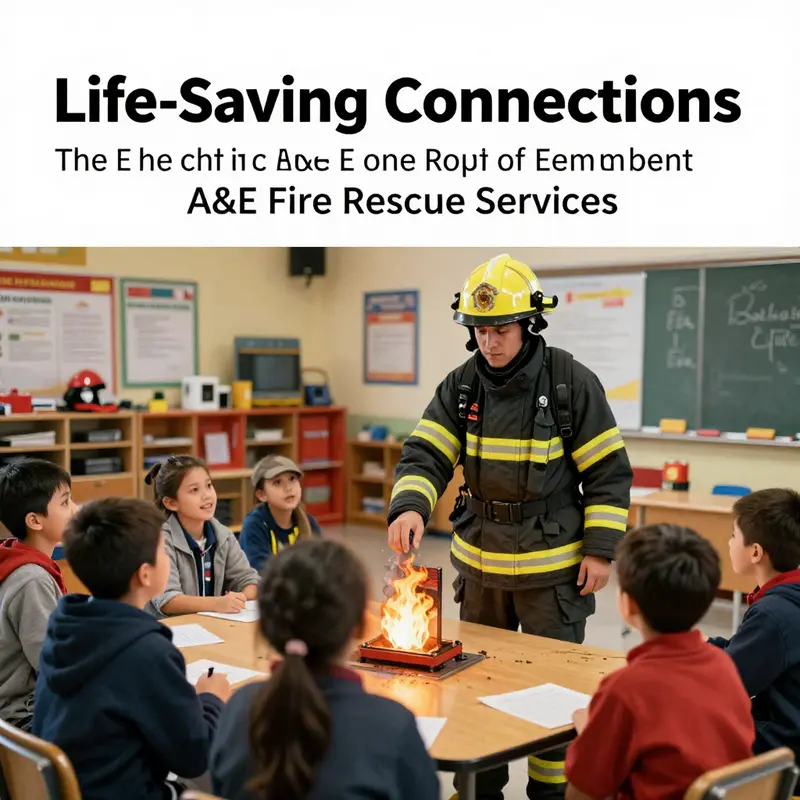
The role of A&E Fire Rescue in contemporary safety education extends far beyond responding to flames and smoke. It sits at the intersection of immediate emergency care and long-term community resilience, transforming everyday encounters into teachable moments that can prevent chaos before it starts. In this sense, A&E Fire Rescue acts not only as a rapid-response force but as a steady civic partner, weaving practical safety literacy into daily life. The contemporary narrative around public safety is no longer confined to the sirens and the fire station. It demands patient, incremental education—an approach that anticipates emergencies by equipping people with the tools to recognize risk, to act swiftly when danger arises, and to navigate the clutter of modern hazards with calm efficiency. This is precisely the kind of work demonstrated by the War Wolf Emergency Rescue Center in Yibin’s Sanjiang New District, a model that translates high-stakes training into community-wide competence. When observers consider what makes a neighborhood safer, they often concentrate on infrastructure or response times. Yet the real difference emerges when residents internalize a prevention-first mindset and recognize how to apply lifesaving skills in authentic, sometimes harrowing, conditions. The Guangming Community drill, conducted on Bai Shawan Street, illustrates this transformation in action. It was more than a routine exercise; it became a living curriculum in which every participant could see the relevance to their own family, street, and routine. The emphasis on a combined prevention and firefighting approach is telling. It acknowledges that fires rarely present themselves as discrete events that only involve a fire; instead, the risk is embedded in everyday activities—cooking, heating, electrical use, and even the simple act of moving through a crowded space. By foregrounding real-life case studies from recent fires, instructors framed safety as a practical, not theoretical, discipline. This shift matters because it invites residents to think of prevention as a shared responsibility. A key component of that education is the full spectrum of lifesaving skills that modern communities increasingly expect laypeople to master. CPR and AED training, for instance, empowers bystanders to take decisive action in the critical minutes before professional responders arrive. The use of professional manikins under expert guidance ensures that this education remains faithful to the realities of resuscitation, even as it demystifies the procedure. When a cardiac incident occurs in a public setting, time is the dominant variable; the ventilations and compressions delivered by a trained bystander can double or triple the chance of survival. This is not just a procedural benefit. It cultivates public confidence. People who know what to do in the initial moments of a medical emergency are less likely to freeze, and more likely to act in a way that preserves life and dignity. The training also centers on the use and placement of AEDs, devices designed to restore rhythm in shocked hearts. The moment a trained bystander attaches an AED and follows the device’s prompts can be the difference between a recoverable event and a tragedy. The value of such education lies not merely in technique but in attitude: a community that expects and enables quick, competent action is one that supports patients at the outset of their most vulnerable hours. First aid skills extend beyond cardiac care. The Heimlich maneuver, wound dressing, and bleeding control equip residents to stabilize a broad range of emergencies. In the hands of an informed public, a simple airway obstruction can be resolved long before professional responders arrive, reducing the risk of deterioration and buying precious minutes for medical teams to prepare for advanced care. The practical demonstrations of these techniques are essential. They translate abstract knowledge into repeatable muscle memory. When a participant practices the maneuver on a life-like mannequin, the sequence—recognize, act, monitor—becomes intuitive. The same logic applies to wound care, where proper dressing and bleeding control can preserve life and minimize complications. Equally vital is the fire safety component of these programs. The “lift, pull, grip, press” method for handling handheld dry powder extinguishers offers a straightforward, action-oriented framework that participants can recall under stress. In a controlled setting, instructors guide learners through the mechanics of aiming a flame extinguishing spray at a benign oil fire, turning worry into confident, procedural action. The objective is not to create professional firefighters but to cultivate a public capable of making informed, rapid decisions in the earliest moments of a fire. The training sessions also introduce participants to the realities of evacuation in smoky or disorienting environments. The inflatable escape house, a carefully constructed simulation of a smoke-filled, low-visibility space, provides a powerful medium for experiential learning. The effect is twofold: it reveals the sensory and cognitive challenges of evacuating under pressure, and it demonstrates which strategies reliably yield safer outcomes. Trainees experience the combination of loud heat, reduced visibility, and the pressure of crowds, and then practice orderly, calm movement toward safety. Such immersive drills are not mere theatrical exercises; they are a vital form of risk education that translates into measurable improvements in real emergencies. When communities engage in these exercises, they begin to see emergency care as a continuum rather than a sequence of isolated events. Fire safety, medical response, and crowd management become part of a unified safety culture. The lessons extend to the hospital’s daily operations as well. A&E departments, by their nature, are busy, data-dense environments where attention is divided among patients, families, and the rapid pace of care. A hospital that embraces community safety education reinforces the idea that health outcomes depend on coordinated action between professionals and laypeople. In this sense, the role of A&E Fire Rescue extends beyond the gate of the emergency department. It becomes a bridge builder, connecting the public to essential skills and a shared sense of responsibility for safety. The public health dimension here cannot be overstated. Hospitals have long recognized that prevention reduces demand and strains on acute services. The engagement of A&E Fire Rescue teams in community education helps to reduce non-critical traffic into the emergency department, while simultaneously elevating the norm that safety is everyone’s business. When a resident knows how to respond to an airway obstruction, how to stop bleeding, or how to evacuate safely, the likelihood of a chaotic, high-stakes situation is diminished. Education, in this sense, acts as a form of social infrastructure, strengthening the resilience of the entire system. There is also a broader narrative at play: the need to adapt safety education to changing landscapes. In recent times, public spaces and digital culture have created new types of risk. The incident at a major hospital where players of a popular location-based game were drawn into the A&E environment underscores how entertainment and urgent care can collide in unpredictable ways. The hospital’s decision to restrict access to the emergency department for non-essential purposes was a pragmatic, safety-driven response to a complex problem. It highlighted a truth that educators and responders have long understood: risk is not static. It migrates with culture, technology, and social behavior. A&E Fire Rescue programs have begun to reflect that reality by expanding their reach beyond traditional drills to incorporate scenario-based education that accounts for modern distractions and hazards. The broader message is clear. Safety isn’t a one-off event; it’s an ongoing practice that must be woven into the fabric of daily life. To do this, educators need to tell compelling, relevant stories. Real-life case studies from recent fires, as used in Guangming Community sessions, serve precisely that function. They connect the abstract concept of risk to concrete, imaginable consequences. They also provide a reference point for people who may never have encountered a fire before, helping to demystify the response and reduce fear. The role of a community safety educator thus includes storytelling, not merely instruction. In telling a story of a past incident—what happened, what was learned, what could be done differently—trainers give residents a map for future action. That storytelling, tied to hands-on practice, strengthens behavioral change in ways that lectures cannot. The consequence is a more confident, capable populace, less likely to panic and more likely to act in ways that preserve life. From a governance perspective, this model emphasizes collaboration and shared accountability. Fire services, health systems, schools, workplaces, and community groups all have a stake in safety. The A&E Fire Rescue mission becomes a cross-sector alliance that aligns training with public health goals. In practice, this means recurring community sessions, interagency drills, and accessible resources that people can cite when needed. It also means maintaining a flexible curriculum that evolves with new risks and new technologies. The digital era, with its rapid spread of information—both accurate and misinformed—puts a premium on trusted, evidence-based education. Training programs anchored in real-world exercises provide a counterweight to rumor and panic. They anchor safety in demonstrable competencies rather than fear or bravado. The lessons from Guangming Community in Bai Shawan Street emphasize the human element of safety. It is not enough to know how to perform CPR or use an AED; it is essential to understand when to act, how to communicate under stress, and how to coordinate with others who may be equally anxious. Evacuation drills teach people to listen to the instructions of authorities, to follow the clearly marked paths to safety, and to do so without crowding or panic. The exercises are also inclusive in design, recognizing that safety literacy must reach all segments of the community. They include people with varying physical abilities, languages, and experience with emergency services. This inclusivity matters because emergencies affect everyone. By layering access, instruction, and practice, A&E Fire Rescue ensures that risk reduction becomes a universal capability, not a privilege for the few. The result is a neighborhood that is more coherent in crisis and more generous in support. It is the sense of collective stewardship that makes the most enduring difference. As the public learns to expect safety as a lifelong practice, hospitals and fire services find a corresponding shift in trust. People come to see emergency services not simply as responders but as partners who help them live safer, more prepared lives. This relationship, in turn, improves outcomes when emergencies do occur. The patient who arrives to an emergency department with a bystander who has just learned CPR or the family that can evacuate calmly because they practiced together—they embody the integrated safety culture that A&E Fire Rescue seeks to cultivate. The internal knowledge transfer—from the fire station to the street, from the classroom to the living room, from the drill to the everyday activity—becomes the backbone of community resilience. In this ecosystem, even the most routine public engagement—like a health fair, a school safety day, or a neighborhood drill—takes on significance. Each encounter is an opportunity to reinforce lifesaving habits and to remind people that safety is a shared craft. The ongoing partnership between hospitals and fire-rescue organizations is essential to sustain this culture. It requires commitment to regular programming, continuous evaluation, and a willingness to adapt based on feedback and evolving risk profiles. In practice, that means listening to community concerns, tailoring exercises to address those concerns, and ensuring that the content remains relevant to the realities of daily life. It also means acknowledging that not everyone will become an expert, but everyone can become a capable participant in a safer community. The chapter’s exploration of these themes underscores a simple but powerful idea: community safety is inseparable from education. When a fire rescue team takes the time to teach, practice, and partner with residents, it builds a durable safety quotient that persists beyond any single incident. The story of Guangming Community’s training resonates as a blueprint for how A&E Fire Rescue can magnify its impact. By emphasizing prevention, by weaving together CPR, first aid, and evacuation into a single, cohesive program, and by employing immersive simulations that reveal the realities of danger, such initiatives make safety more tangible and more attainable. The public, equipped with practical skills and a clearer sense of what to do in a crisis, becomes an enduring ally to emergency services. For those interested in following the evolution of these efforts, consider the broader landscape of innovation in fire-rescue education. New approaches deployed across different communities increasingly leverage museum-like, experiential learning to convey safety lessons in memorable ways. See the concept of the Innovation Museum Transforming Fire Services for a forward-looking example of how institutions reimagine safety education to respond to changing risks and cultures. This evolving model, showcased at Innovation Museum Transforming Fire Services, points toward a future in which learning about safety is as engaging as it is essential. In summary, A&E Fire Rescue’s educational role reflects a holistic view of public safety. It recognizes that the most effective defense against catastrophe is built on ordinary people who are confident, competent, and connected to their communities. The approach—grounded in real-life case studies, hands-on skills, immersive drills, and inclusive, ongoing engagement—offers a practical blueprint for reducing risk and enhancing resilience. It shows that safety is not an outcome delivered solely by professionals but a shared obligation, shaped by every neighborhood, street, and living room where people practice calm, capable action before danger fully unfolds. External resource: https://www.sohu.com/a/902816743_120535
Final thoughts
In summation, the significance of A&E fire rescue services extends far beyond immediate emergency response; these units are integral to the health and safety of urban communities. Through their tireless efforts, they not only address crises but also contribute to public safety education, equipping citizens with vital knowledge. As we confront urban challenges, the synergy between community involvement and fire rescue services remains essential for fostering a culture of safety and preparedness. It is imperative to support and engage with these services, ensuring that they can continue to operate at their best for our collective well-being.