
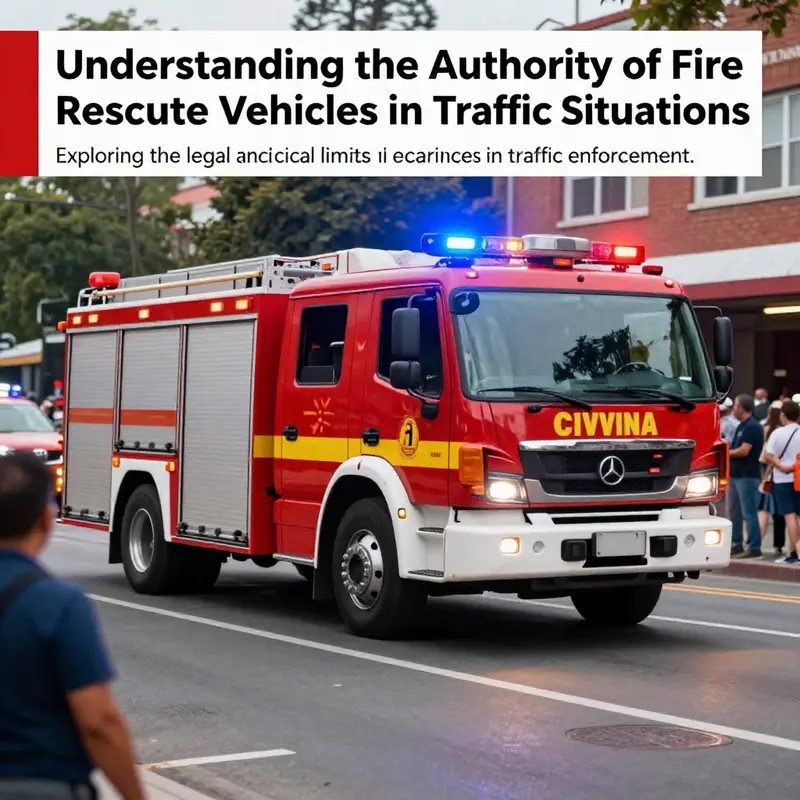
The role of fire rescue vehicles in emergency situations is crucial for public safety, but there is often confusion regarding their authority in traffic enforcement. While these vehicles are essential responders during emergencies, it is important to understand that they do not possess the legal power to pull over vehicles or enforce traffic laws. This article addresses three key areas: the legal authority of fire rescue vehicles, emergency response protocols related to traffic laws, and how they ensure public safety during critical situations. Each of these chapters aims to clarify misconceptions and promote compliance, ensuring a safer community for all.
When Fire Trucks Don’t Stop, It’s About Safety First: Understanding Why Fire Rescue Can’t Pull You Over
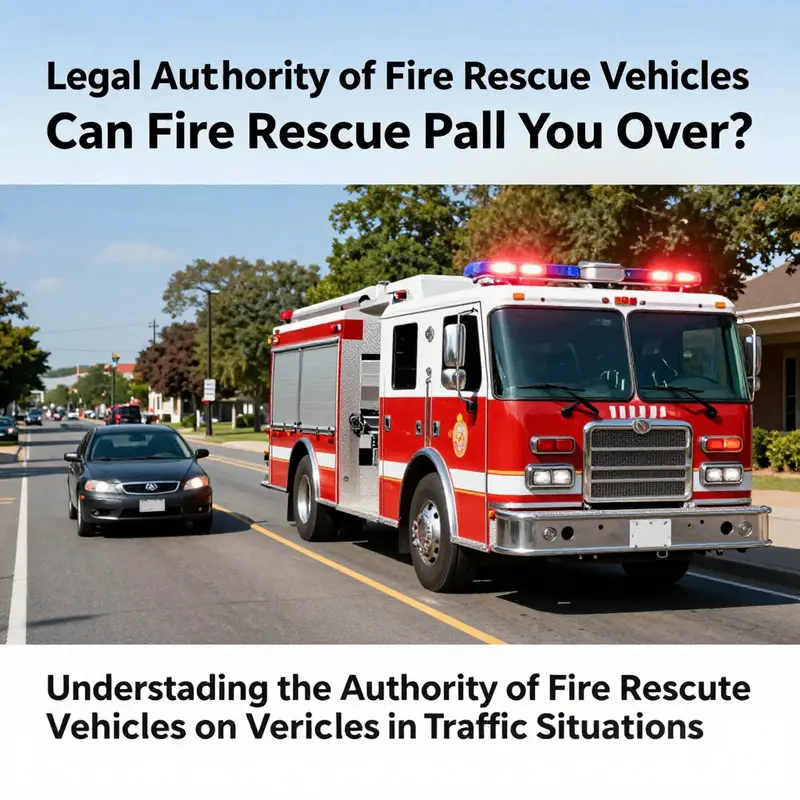
A simple question travels quickly through streets and conversations alike: can a fire rescue pull you over? The straightforward answer in most jurisdictions is no. Fire rescue vehicles are built for emergencies, not for enforcing traffic laws. They carry lights, sirens, and the badge of readiness to respond, but their legal remit stops far short of issuing tickets or stopping civilian drivers. The distinction matters for pedestrians and drivers who are unsure how to respond when an emergency vehicle appears in their wake. It also matters for the reputation and trust of emergency responders who, in the heat of a crisis, may be asked to perform tasks that sit outside their formal authority. In practice, this means that a fire engine can navigate traffic with extraordinary priority and safety protocols, yet it does not assume the power to police the road by pulling people over. The responsibility for traffic enforcement remains squarely with police officers and other sworn law enforcement personnel. This separation is not merely a legal nicety; it is a framework designed to preserve the integrity of traffic laws while ensuring rapid, safe responses to fires, medical emergencies, and other critical incidents.
To understand why that division exists, it helps to consider what a fire rescue vehicle does and how it operates on a busy road. When a fire engine or an EMS unit activates its lights and sirens, other road users are urged to yield and to clear the path. This is about safety and efficiency during response times. The urgency of a true emergency—where seconds can determine outcomes for people in danger—requires a vehicle to move faster and more directly than normal traffic might permit. But speed and right-of-way do not translate into authority to stop or discipline other drivers. The moral and legal gravity of a traffic stop lies with trained law enforcement officers who possess the legal framework to issue citations, make arrests, and manage a roadway incident with the full weight of the state’s traffic laws behind them. Fire departments, meanwhile, focus on the immediate public safety objective: protecting lives and property, preventing the spread of fire, providing emergency medical assistance, and coordinating with other public safety agencies to manage a scene safely.
This divide also helps prevent confusion on the street. Imagine a scenario in which a fire crew stops a vehicle for a violation. If that action became commonplace, drivers could be left unsure whether the stop was a safety precaution or a legal enforcement action. The clarity about roles reduces the risk of misinterpretation and potential conflict at high-stakes moments. It also reinforces the importance of accountability. Law enforcement officers carry formal authority to enforce the law, and their actions are subject to review and oversight. Fire department personnel, by contrast, operate under a different set of protocols focused on rapid response, scene safety, and coordination with police when necessary. The boundaries are not about distrust of our firefighters and EMS—far from it. They reflect a designed division of labor that keeps the public safer by ensuring the right tool is used for the right purpose at the right time.
The practical implications for drivers are straightforward yet worth reiterating. If a fire rescue vehicle needs to approach or pass a traffic site, it will use its lights and siren to alert others. Drivers should yield by moving to the right and stopping if it is safe and appropriate to do so. The objective is not to be cited or controlled but to create space for the emergency responders to operate without delay. Once the emergency scene has moved past and the responders have stabilized the situation, ordinary driving rules resume. The vehicle that began as an emergency response is not empowered to transfer its authority into traffic enforcement. The people who can issue tickets, raise compliance concerns, or enforce violations continue to be the sworn officers whose duty it is to uphold traffic laws beyond the immediate crisis.
This boundary does not imply that fire departments are disengaged from traffic safety. On the contrary, their role often intersects with law enforcement in meaningful ways. Fire marshals or investigators in some jurisdictions may possess limited law enforcement powers for specific fire-related duties, such as enforcing fire codes or investigating causes of fires. In large-scale incidents—like widespread wildfires or multi-agency emergencies—fire personnel coordinate closely with police and other agencies to manage traffic control, evacuation routes, and crowd management. In those contexts, the coordination is crucial, and the cooperation between agencies is designed to prevent chaos rather than to execute enforcement actions in the field. Even then, the enforcement function remains with sworn police officers, while fire department personnel contribute expertise, situational awareness, and on-the-ground safety management.
Different states reflect this general framework with their own refinements. In New York State, for example, fire vehicles operate with emergency lights and sirens under specific statutory authority, yet they are not granted the power to conduct traffic stops or issue tickets. The state’s approach underscores a consistent principle: emergency vehicles may travel with enhanced privileges to save lives and protect property, but the act of stopping someone for a violation is not within the ordinary scope of their powers. This separation helps ensure that traffic enforcement remains predictable and transparent, while emergency responders relentlessly pursue rescue and safety objectives. For residents and visitors, this distinction can be subtle in the moment but is critical for understanding what to expect when an emergency vehicle passes or arrives at a scene.
The broader takeaway is simple: fire rescue can pull you over only in the sense that the scene can be controlled through safety measures and cooperation with police, not through independent enforcement actions. If you are pulled aside by someone who claims to be from a fire department in order to issue a ticket, that claim should be treated with healthy skepticism and a careful verification process. It is not a routine practice for fire personnel to enforce traffic laws. If you ever find yourself unsure, you can rely on the principle that lawful enforcement is the prerogative of sworn officers from the police or, where applicable, other recognized law enforcement bodies. The safety of all involved in an emergency—residents, responders, and bystanders alike—depends on that clear separation of roles being observed in the field.
The topic, however, invites more than a binary yes-or-no answer. It invites us to reflect on how emergency response is designed to operate within the fabric of traffic systems. It invites us to consider how drivers should respond to the presence of an emergency vehicle, how responders coordinate with each other during a scene, and how communities can strengthen public understanding of the roles that different agencies play when seconds count. In those reflections, we also find opportunities to connect with broader resources on public safety, community resilience, and the ongoing evolution of firefighting and emergency medicine. A broader, community-centered view can illuminate why the public’s cooperation is essential at every encounter with emergency responders. It can also highlight how public safety messaging, when clear and consistent, supports faster responses and safer outcomes for people in danger.
The takeaway for readers is practical and memorable. When you hear a siren and see flashing lights, prepare to yield and give space. Do not accelerate to pass through red lights or crosswalks just to avoid delaying a responder. If you are asked to pull over by what you believe is a fire department unit, ensure that you are looking for the identifiable insignia and the formal channels through which authorities operate. If an individual insists on a nonstandard form of enforcement, pause and seek verification from a nearby police agency or by contacting emergency dispatch. And if you want a deeper sense of how fire services relate to the broader stewardship of public spaces, consider exploring examples of community-focused fire service concepts that frame safety as a shared responsibility rather than a one-way command. For a broader look at how fire services engage with community and health, see the Green Firehouse concept documented online: the-green-firehouse-creating-sustainable-spaces-for-community-and-health.
In short, fire rescue vehicles do not pull you over. They help you safely reach an emergency response, and their authority ends where police authority begins. The separation keeps the roads clear for those who are trained and empowered to enforce traffic laws, while fire and rescue teams concentrate their energies on saving lives and protecting property. This clarity is not a bureaucratic footnote but a practical guidepost for how we all should act when danger approaches and how we should cooperate with those who rush to help. When we understand and respect these boundaries, we contribute to safer roads and more effective emergency responses, which is the ultimate aim of all who serve on the front lines of fire and rescue.
As you move through this topic, you might wonder how these principles play out in various jurisdictions or during multi-agency responses. The core concept remains constant: the emergency vehicle’s role is rescue and safety, not law enforcement. The public’s role is to respond with calm and compliance, to yield promptly to life-saving movements, and to cooperate with responders so they can do their jobs without unnecessary obstacles. In that spirit, the law is designed to empower the right people to perform their duties, while fostering a shared sense of responsibility that helps every community navigate danger more effectively. The question of authority becomes less about who can stop whom and more about how we all behave in the presence of those who carry out urgent missions to protect us.
For readers seeking authoritative statutory context, the New York example offers a concise illustration of the typical statutory distinction: fire vehicles can operate with emergency privileges, but they do not have independent traffic enforcement powers. This pattern is common in many states, even as the exact language and scope vary. When in doubt, local police departments and state transportation authorities publish guidance on how to respond to emergency vehicles and what to expect during incidents. Those resources are designed to reduce confusion and to promote public safety by clarifying roles and responsibilities in high-pressure, fast-moving situations. In the meantime, the practical rule remains the same: yield, slow down, and allow responders to do their critical work, then continue with your journey once it is safe to do so.
If you are curious about the broader landscape of emergency vehicle operations and how communities balance rapid response with lawful traffic management, you can follow through with related conversations on public safety and emergency planning resources. These discussions emphasize not only the mechanics of how emergency responders move through traffic but also how communities build trust and resilience around such essential services. The most important outcome is a shared understanding that the safety of every road user, including those who respond to crises, depends on predictable rules and respectful behavior on every street.
External resources can provide authoritative context and updates when laws shift or when agencies release new guidance on traffic safety during emergencies. For those who want to explore a formal statutory perspective, see the New York law cited in this discussion: https://www.nysenate.gov/legislation/laws/CRV/115-a. This resource helps ground the general takeaway in concrete legal language while reminding readers that enforcement authority remains with police and other sworn officers, even as emergency vehicles navigate roads with special privileges when responding to calls. In the end, the practical, day-to-day takeaway for drivers is simple and repeatable: when a fire rescue unit approaches, yield and proceed with caution; do not attempt to stop or detain the responders; and if you ever doubt the legitimacy of a request to pull over, verify through official channels rather than acting on a rumors or uncertain claims. That approach keeps everyone safer on the road and supports the emergency teams as they work to protect life and property.
For readers who want a broader, community-oriented lens on safety and emergency responsiveness, the topic also invites a look at how public safety institutions partner with neighborhoods to reinforce protective standards. The internal link to community-focused fire service concepts offers a way to explore how these partnerships shape everyday behavior, resilience planning, and trust between residents and responders. See the discussion linked here: the-green-firehouse-creating-sustainable-spaces-for-community-and-health. This connection helps illustrate that the question of authority is not simply a legal matter but part of a much larger conversation about how communities stay safer together.
Why Fire Engines Won’t Write Tickets: Navigating Traffic Law, Emergency Response, and the Real Power on the Road
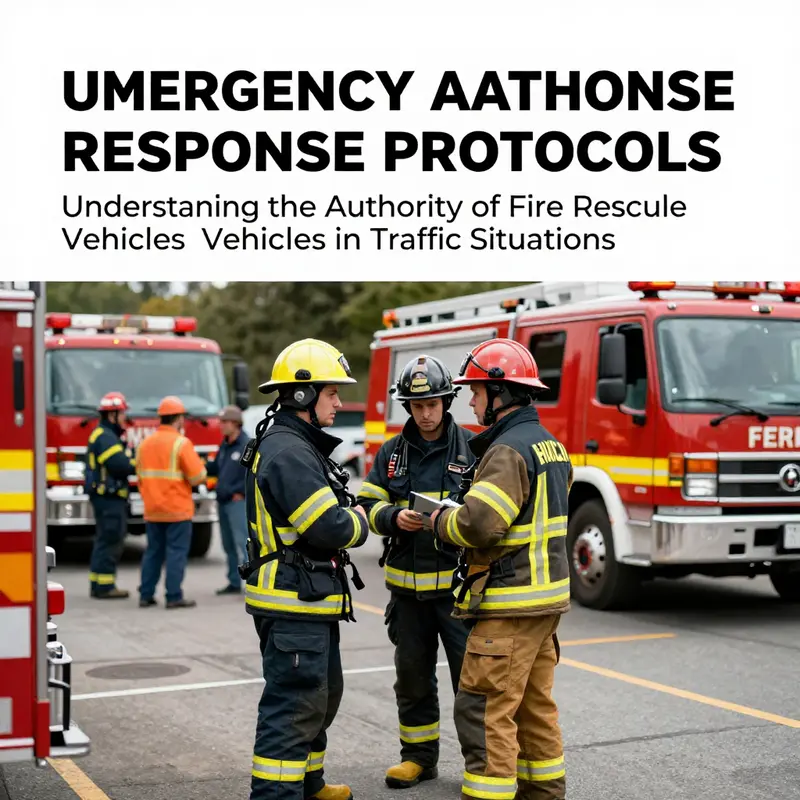
When the wail of a siren slices through the daily hum of traffic and a fire engine roars past, the impulse to look for a police badge on its side can seem almost inevitable. People often ask if a fire rescue vehicle has the power to pull someone over, to issue a ticket, to enforce traffic rules on its own. The quick answer is simple: in most legal systems, they do not. Fire trucks and other emergency vehicles are part of the public safety apparatus designed to respond to fires, medical emergencies, and disasters, not to police the roads or administer citations. The actual enforcement of traffic laws—the authority to stop a vehicle, require a driver to pull over, or issue a violation notice—resides with authorized law enforcement officers, typically police, sheriff, or other sworn officials. Yet this straightforward distinction can feel murky in the heat of an emergency, where every decision matters for safety, speed, and the protection of life and property. Understanding how emergency vehicles interact with traffic laws helps drivers respond calmly and correctly when the sirens approach and can prevent missteps that might create delays or danger for everyone involved.
The core distinction rests on roles and powers. Fire rescue units are trained to move quickly and with urgency, to reach scenes, provide emergency medical care, suppress fires, and safeguard bystanders. They may need to navigate through traffic with lights flashing and sirens sounding, but their authority to stop a driver, to detain them, or to issue a citation is not part of their job description. Police officers, by contrast, carry the power of enforcement. They can initiate traffic stops, evaluate compliance with regulations, and apply penalties when rules are violated. This separation of duties matters because it shapes drivers’ expectations and responses in real time. If a fire engine is behind you, you should anticipate a need to move aside and permit the vehicle to pass, but you should not expect to be pulled over or sanctioned by the fire crew for any infraction you may be committing at that moment.
Across different legal landscapes, the specifics can differ, yet the overarching principle remains consistent: emergency vehicles may require special handling from other road users, but the authority to enforce traffic laws sits with sworn officers. In the United States, for example, state statutes grant emergency vehicles—police cars, fire apparatus, and ambulances—the privilege to use audible warnings and visual signals, and they may proceed through traffic in ways that other drivers cannot. The guidance to drivers is clear: yield, move to a safe position, and allow the emergency vehicle to complete its task with minimal obstruction. The aim is not to punish but to safeguard the life that may be at risk and to ensure that responders can reach the scene without delay. In practice, this means creating space, avoiding aggressive moves, and obeying safety temperatures rather than treating the situation as one where normal driving rules are suspended entirely.
A useful way to think about this dynamic is to imagine two parallel missions on a single corridor: one is the mission of the emergency response, the other is the continuing mission of safe, orderly traffic. Fire rescue teams are trained to balance speed with caution. They use their lights and sirens to signal urgency, but they are also trained to navigate with an eye toward what is safe for other road users. When a fire engine is approaching, it may make strategic decisions about its route, sometimes altering its path to minimize risk to pedestrians and motorists. In some jurisdictions, the job of directing traffic at an incident may fall to the responding crew, particularly if police resources are stretched or if an accident scene is being managed in collaboration with fire and EMS personnel. Even in those cases, the authority to issue fines or to arrest for traffic violations rests with police officers or other designated law enforcement personnel who are on the scene or available nearby. The distinction is important: you are not receiving a ticket from the firefighter directing traffic; you are simply being asked to yield and to maintain safe passage as a matter of public safety.
Legal frameworks in different countries illuminate how this separation is codified and how it plays out on the road. In a massive, highly regulated framework like the People’s Republic of China, for instance, Chapter Five of the Road Traffic Safety Law establishes a clear hierarchy for emergency operations. Article 53 makes explicit that police cars, fire vehicles, ambulances, and other emergency units may use sirens and warning lights when engaged in emergency tasks. More crucially, it states that, in the interest of safety, these vehicles may operate without being constrained by their normal driving directions, paths, speeds, or signals. The practical upshot when you are driving is that you must yield to the emergency vehicle, creating a clear and unobstructed lane for the responders to perform their duties. The wording underscores the principle that emergency response takes precedence over ordinary traffic flow, and the public is obligated to make that space.
These provisions are not just theoretical. They are reflected in everyday practice as well. When a fire engine roars up behind or alongside you, the prudent driver does not debate the legality of the maneuver in that moment. Instead, the driver recognizes the imperative: slow down or stop as appropriate, and move aside as safely as possible to clear a path. In urban environments, this often translates into pulling over to the right shoulder, stopping at the edge of the road, or yielding through an intersection if a red light is present and the vehicle cannot be cleared immediately. If you are at a corner where the cross-traffic is heavy, you may need to pause briefly, then proceed only after you have verified the path is clear and the emergency vehicle has passed. In parallel, intelligent transportation systems—deployments that link traffic signals, sensors, and control centers—are increasingly designed to coordinate emergency vehicle preemption. They can enable a green-light corridor or modify signal timings to shorten red lights along the path of an approaching unit, thus accelerating response times without compromising safety. These technologies do not absolve motorists from critical safety duties; they amplify the ability of responders to reach people in need more quickly.
The practical consequences of these rules become most apparent at intersections and along busy corridors. The moment an emergency vehicle activates its siren and warning lights, the universal expectation is to yield. In many places, drivers are taught to steer to the right and stop, forming a corridor that allows the responders to move without interference. But the mechanics of yielding can be more nuanced than a single instruction. If you are already in the intersection when the emergency vehicle arrives, you are generally expected to clear the intersection as safely as possible and not to linger there to facilitate a left turn or a staggered pass. If you are in a lane that cannot safely exit the road without crossing into oncoming lanes or obstructing cross-traffic, the safest course may be to come to a controlled stop and wait for the emergency vehicle to pass. The chain of decisions at such moments hinges on the solver’s ability to balance speed with safety, the geometry of the intersection, and the presence or absence of bystander risk. This is why professionals emphasize calm, deliberate action rather than reflexive movement.
The conversation about emergency vehicle priority often extends beyond single moments on a road. It intersects with broader questions about how cities design and operate their transport networks to support rapid responses. In the United States, for example, the rise of preemption technologies and dedicated lanes for emergency vehicles illustrates a broader policy vision: the road system should accommodate urgent responders without compromising the safety of everyday drivers. The goal is not to punish motorists but to reduce the time it takes for help to arrive, particularly in life-threatening scenes such as major fires, cardiac events, or severe traffic collisions. At the same time, the rules acknowledge that the same road that fast-tracks responders must still be navigable for everyone else, underscoring the need for drivers to maintain situational awareness and to act predictably under pressure. When this balance works, it reduces the probability of collisions and helps protect both the public and emergency personnel.
One reason the public sometimes feels uncertain about who can pull whom over lies in the real-world overlap between traffic control at a scene and law enforcement’s enforcement functions. Fire rescue teams are trained to manage traffic flow at incident sites as part of their broader life-safety mandate. In many jurisdictions, this includes basic traffic direction, establishing a safe perimeter, and coordinating with police to manage access to the scene. The firefighter who steps into the roadway to guide a convoy or to hold back pedestrians is not a traffic enforcer; they are a first responder ensuring that the critical work can be conducted unhindered. The officer on scene, when present, remains the authority to stop and cite, if necessary. The public safety protocol, therefore, is a partnership: the fire crew can control the immediate traffic environment to protect life and property, while police officers retain the statutory power to sanction behavior that flagrantly endangers others or obstructs essential operations.
Amid this legal and practical framework, the role of technology becomes increasingly central. Modern cities deploy a suite of smart systems that give emergency responders additional tools to reach people in danger faster. The use of adaptive traffic signals can reduce delays for approaching units, the deployment of vehicle-to-infrastructure communications can help prioritize the path, and real-time data analytics can forecast traffic patterns to anticipate choke points before they develop. Yet technology is a companion, not a substitute, for the basic legal obligations of ordinary drivers. When you hear the siren or see the flashing lights, your first obligation remains to yield and to create a clear path. If you are unsure about the exact rule in your city, you can recall the general guideline that emergency vehicles should be given the right of way, and you should avoid making sudden or unpredictable moves that risk compromising safety for yourself or others around you.
The moral of the story is straightforward: fire rescue vehicles are not tollpaying enforcers on the street. They are specialized responders whose legitimate aim is to reach people in danger as quickly and safely as possible. Their authority to pull you over does not exist in the typical sense; they do not carry the job of issuing tickets or enforcing everyday traffic rules. Their power to influence traffic flow comes from the critical safety need to minimize delays and to widen the path for life-saving interventions. Drivers who understand this distinction—and who practice patient, predictable, and courteous driving in the presence of emergency vehicles—contribute to a safer road environment for everyone involved. Knowing that fire rescue cannot pull you over helps demystify the scene, reduces the impulse to react aggressively, and aligns public behavior with the shared goal of protecting life and property under stress.
For readers seeking a broader lens on how different jurisdictions codify these interactions, consider the way emergency response and traffic law intersect in national regulations. In our discussion here, we have drawn from a diverse set of sources that illustrate the consistent pattern across cultures: emergency responders enjoy priority in critical moments, but the enforcement powers—ticketing, detaining, or prosecuting for traffic violations—belong to sworn officers. The public must respond with calm, yielding actions that preserve maneuverability for responders while preserving one’s own safety and the safety of other travelers. This shared understanding is essential for reducing delays in emergencies, preventing secondary incidents, and supporting the health and security of communities during crises. If you ever find yourself unsure about how to react, remember that the safest, simplest course is to slow, move to the side, and wait until the emergency vehicle has passed, then continue with caution as roads become clear again.
As a final point of practical guidance, consider this: if you are encountering an emergency scene where traffic must be controlled, and you are uncertain about who exactly has authority to direct you, assume that any official directing traffic is acting in a duty-bound capacity for scene safety. Do not argue, do not escalate the situation, and do not improvise a response that could endanger yourself or others. In the long run, the most reliable bet is to comply with directions that promote safety, yield to the path of the responders, and preserve the integrity of the incident scene. For a related discussion on how communities handle emergency planning and road safety in real-world contexts, you can read about emergency preparedness gaps in California wildfires. This resource offers a broader look at how planning, infrastructure, and public awareness intersect with the reliability of emergency response across complex terrain and dense populations. Emergency preparedness gaps in California wildfires.
The conversation also invites us to reflect on the cross-border and cross-system perspectives that shape our understanding of emergency response. While the public’s direct experience may center on a single incident in one city, the underlying principles reflect a shared responsibility: to enable responders to do their jobs with the least possible friction, while maintaining strict safety for all road users. The interplay of law, custom, and technology continues to evolve as cities grow and as the demands on emergency services become more complex. Yet the essence does not change. Fire rescue vehicles are not ticketing agents; their job is to reach those in need. Traffic laws are not suspended for them; rather, they are applied with a practical sense of priority that prioritizes life and safety while still preserving the rule of law. If you take away one message, let it be this: when you hear the siren, yield with dignity, stay composed, and remember that the engine’s path is not a path to a penalty but a route toward saving someone’s life.
External resource: https://www.gov.cn/zhengce/content/2011-08/29/content_19354.htm
Public Safety in Motion: Why Fire Rescue Can’t Pull You Over—and How Their Presence Shapes Traffic Safety
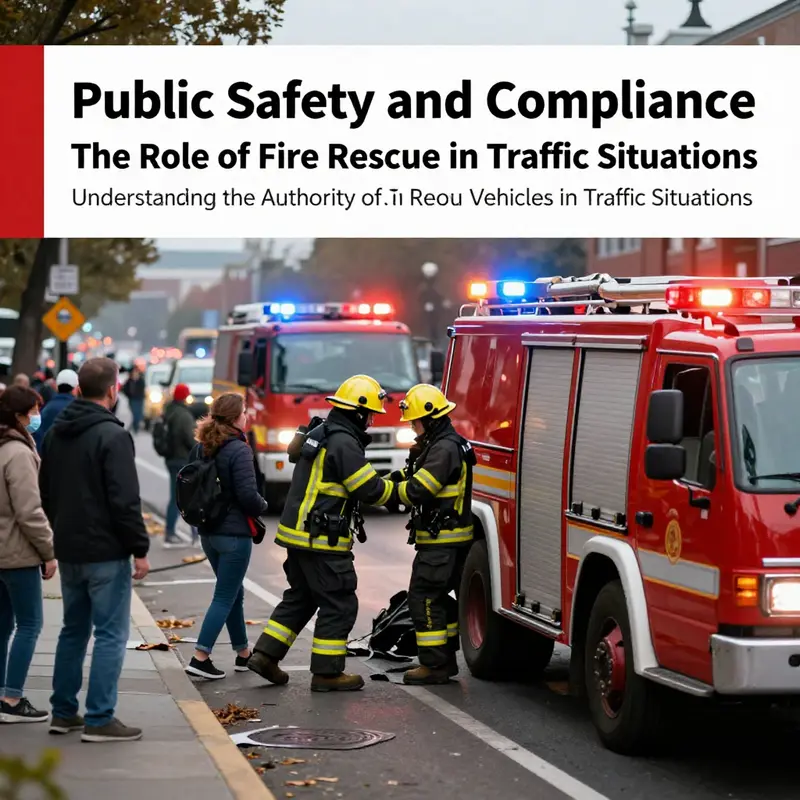
When people ask whether a fire rescue vehicle can pull them over, the answer is straightforward in most jurisdictions: no. Fire engines, ladder trucks, and EMS units are not empowered to stop a driver or issue traffic citations the way police officers do. Their authority is grounded in emergency response and scene safety, not traffic enforcement. Yet this distinction matters a great deal for how we experience traffic on crowded roads, how responders coordinate on scene, and how public safety unfolds along the edges of an incident. The difference between pulling someone over and pulling a scene into safe management is subtle but consequential. It becomes clearer when we examine what fire rescue teams are there to do, how they work with law enforcement, and how they contribute to overall traffic safety even as they refrain from handing out fines. In the daily rhythm of roads and highways, fire rescue personnel are often the first to arrive at crashes, stalled vehicles, or hazardous material incidents. Their presence alone signals that a disruption has become a multi-agency event, demanding quick hazard assessment, rapid patient care, and careful control of people and vehicles around the danger zone. They bring a set of specialized skills that extend far beyond extinguishing flames. Extrication technology and technique, the ability to assess structural stability after a collision, and the capacity to administer emergency medical care to severely injured patients are all core competencies that help preserve life and reduce harm on the spot. The same teams that lift a patient from a wrecked vehicle or stabilize a ruptured gas line also have to negotiate traffic in a way that keeps responders safe while they perform those tasks. In other words, they do not stop drivers; they guide them through a scene so that the stop itself does not create another danger. This dual role—being both a responder and a traffic safety partner—places fire rescue at the intersection of public safety and traffic management, where the goal is not punishment but protection and orderly, predictable movement through danger. On this front, the difference between a ticket and a careful conveyance of people through a hazardous area is a matter of professional training, legal authority, and clear procedural boundaries. Fire rescue can coordinate with police to ensure that drivers slow down, follow directions, and yield to the right-of-way when an emergency is active. The enforcement power lays with law enforcement; the safety power overlays the scene through control measures, hazard mitigation, and patient care. If you watch a crash unfold and notice a blaze of red and blue lights plus a far more measured command of space, you are witnessing a choreography built on discipline, not on penalties. The objective is proportionate control: enough intrusion to keep people out of harm’s way, but not so much that traffic collapses into gridlock or panic. It is a balancing act that requires trust between agencies and a shared understanding of each partner’s role. That trust does not emerge by accident. It grows through training, joint exercises, and a constant calibration of protocols that ensure a smooth, predictable response when seconds count. In many jurisdictions, fire departments routinely participate in joint exercises with police and highway patrol units to simulate the complex dynamics of a modern traffic crash. These drills cover multi-vehicle collisions, fuel spills, rollover scenarios, pedestrian involvement, and the challenges of coordinating medical triage with traffic control. The aim is to rehearse the moment when multiple teams converge, synchronize their communications, and decide who takes responsibility for hazard suppression, who manages patient transport, and who directs nearby motorists to the safest routes around the incident. The result is faster, safer, and more predictable incident management. When a driver encounters a scene, the first instinct should be to slow and yield. Yet the reason for slowing is not to escape a ticket but to give responders the space they need to work and to reduce the risk of secondary crashes. Fire rescue teams may set up perimeters, deploy warning devices, and establish safe lanes for EMS ambulances and fire trucks to operate. They also implement emergency power and lighting solutions to maintain visibility and protect bystanders, which can prevent further harm in the minutes immediately following an incident. These steps require the relay of information across agencies—who is on scene, what hazards exist, where vehicles should be directed, where medevac routes lie, and how long the scene will remain active. In many places, this is formalized through incident command systems and safety officer roles that ensure a uniform language and shared situational awareness. The goal is not to punish but to safeguard and to preserve life. The driving public benefits when this system works. Even if you never see a law enforcement stop, you will still experience the positive externalities of professional fire rescue operations: fewer secondary crashes, quicker stabilization of victims, and faster, safer clearances of the scene so traffic can resume without compounding risk. A subtle but powerful element of this safety net is public education and proactive prevention, which fire rescue agencies carry into communities through outreach and training. They promote seatbelt use, discourage distracted driving, and teach families how to handle flammable materials in vehicles. By engaging with the public outside of emergencies, they build a culture of safety that complements enforcement. The promotion of responsible driving is not the sole province of police outreach. Fire rescue personnel, through collaboration with law enforcement and transportation authorities, help shape general compliance with traffic and emergency response protocols. This work has real-world effects. When drivers understand what to expect at the scene of a crash or a fire—who is in charge, what directions to follow, and why certain lanes must be blocked—they are more likely to cooperate calmly and promptly. The coordination among agencies helps reduce confusion, which in turn reduces the likelihood of additional injuries or rescues that could be complicated by chaotic behavior on the roadway. The operational reality is that fire rescue teams do not stop vehicles to impose penalties. They stop hazards, they secure scenes, and they shepherd traffic in a way that protects the public while ensuring responders can do their job. This distinction is crucial because a misperception about authority can lead to unnecessary worry or a sense of impunity about road safety. The truth is simpler and more constructive: fire rescue can and do play a central role in traffic incident management by mitigating risks, ensuring patient care, and supporting law enforcement in creating a safe corridor for relief to reach those in peril. Their training, their equipment, and their decision-making frameworks are all geared toward reducing the human toll of road incidents, not toward issuing citations. For many communities, the most visible measure of this collaboration is the frequent presence of joint responses that look and feel like a single, united operation. A scene may include police cars at the front, fire apparatus on the flanks, and EMS units ready to transport, all coordinated under a single command line. In that environment, drivers who might otherwise feel compelled to push ahead through an amber light learn quickly to slow down and wait for directions. The couple of seconds saved by a cautious approach can translate into lives saved, less structural damage, and fewer injuries. This is not rhetoric; it is a practical consequence of standardized procedures and real-world practice. The standards guiding these procedures are codified by national and international organizations to ensure consistency across regions. For instance, NFPA 1670: Standard for Technical Rescues provides comprehensive guidance on how technical rescue operations—including vehicle extrications—should be conducted. The document outlines the requirements for the capabilities, equipment, and training necessary to perform complex rescues safely and effectively. Compliance with such standards helps maintain high levels of professionalism and accountability within fire rescue services, and it creates a common language that enables agencies to work together when every second counts. When communities invest in standardized training and joint exercises, they set a foundation for faster, safer, and more predictable responses to traffic incidents. They also foster a broader culture of public safety, one that extends beyond the firehouse into classrooms, driver education programs, and public forums where people learn how to share the road with emergency crews. The public-facing aspect of fire rescue work—education, prevention, and preparedness—often receives less attention than the dramatic moments of a blaze or an extractive rescue, yet it is arguably the core of long-term safety. In this sense, the role of fire rescue in traffic situations is not a contradiction to enforcement but a complement to it: enforcement provides accountability to the rules of the road, while rescue provides protection when those rules are tested by hazard and time. A well-coordinated system relies on both, with each agency understanding where its duties begin and end and where overlap can yield the greatest benefit. If you want a sense of how this kind of integration evolves, turn to sources that highlight ongoing collaboration and innovation in public safety. For example, ongoing efforts showcased in mission-oriented institutions emphasize how public safety is enhanced when fire rescue units, police departments, and transportation authorities share situational awareness, pooled resources, and joint drills. The outcome is not mere operational efficiency; it is a more resilient community that can respond quickly to disasters of many kinds, while still protecting civil liberties and ensuring fair treatment under the law. The practical implications for drivers are straightforward: slow down when you see flashing lights, follow directions from trained personnel, and stay out of the way of first responders. If you are ever unsure about what to do, err on the side of caution and give the scene wide berth. The rules of the road remain in force, but so do the rules of safety that govern road works, emergency responses, and the complex choreography of a multi-agency incident. The public, in effect, benefits from both the legal framework that governs enforcement and the professional standards that govern rescue. This is the essence of a modern, multi-agency approach to traffic incidents: it honors the authority of the police to issue penalties while recognizing the indispensable value of fire rescue for hazard mitigation, medical care, and scene integrity. The longer view shows that the most significant gains come not from more tickets but from better coordination, clearer communication, and a shared commitment to preventing harm. That is the heart of public safety in motion. In this spirit, the field continues to evolve through research, training, and public engagement. The mention of focused training and community outreach underscores a shift toward prevention and preparedness as much as response. Programs that promote seatbelt use, discourage distracted driving, and explain safe handling of flammable materials in vehicles are evidence of a broader strategy to reduce risk on the road. And while such programs are not performed to produce citations, they do rebuild trust and reinforce the sense that safety is a shared responsibility among drivers, responders, and local authorities. The final takeaway is both simple and profound: fire rescue cannot pull you over because their mandate is to save lives and protect the scene, not to police the road. Yet their work—whether in the moment of a crash or in the hours of outreach that follow—improves traffic safety in tangible ways. They reduce the likelihood of secondary accidents, they speed up patient care, and they help ensure that the road to recovery after a derailment or a fire remains open rather than blocked by fear or confusion. In other words, your compliance in the presence of fire rescue is not a concession to punishment but a disciplined response that prioritizes safety and preserves the opportunity for a swift, coordinated resolution. For readers seeking to understand the full landscape of these roles, it helps to explore how innovation, standards, and collaboration shape everyday practice. The example of an organization that actively shares ideas about transforming fire services—not only through new tools but through new ways of thinking about public safety—offers a helpful lens. See more about this ongoing evolution in innovation and learning at Innovation Museum: Transforming Fire Services. The chapter of public safety that matters most here is not the spectacle of an emergency but the quiet reliability of trained professionals who know how to manage risk, protect life, and restore order without turning a moment of crisis into a courtroom scene. And while the enforcement powers rest with police, the safety outcomes rely on the complementary strengths of fire rescue, EMS, and transportation authorities acting as a unified crew on a shared stage. For official standards guiding these operations, refer to NFPA 1670: Standard for Technical Rescues, which provides the groundwork for consistent practice across regions. External resource: https://www.nfpa.org/Code-Updates/NFPA-1670
Final thoughts
In conclusion, while fire rescue vehicles are indispensable in emergencies, they do not have the authority to enforce traffic laws or pull over vehicles. Understanding this distinction is crucial for community residents, educators, and emergency personnel who play a role in public safety. By obeying traffic laws and yielding to emergency responders, we can ensure a safer environment for both the public and emergency services. Awareness and cooperation remain key components in fostering a respectful and responsive community.