
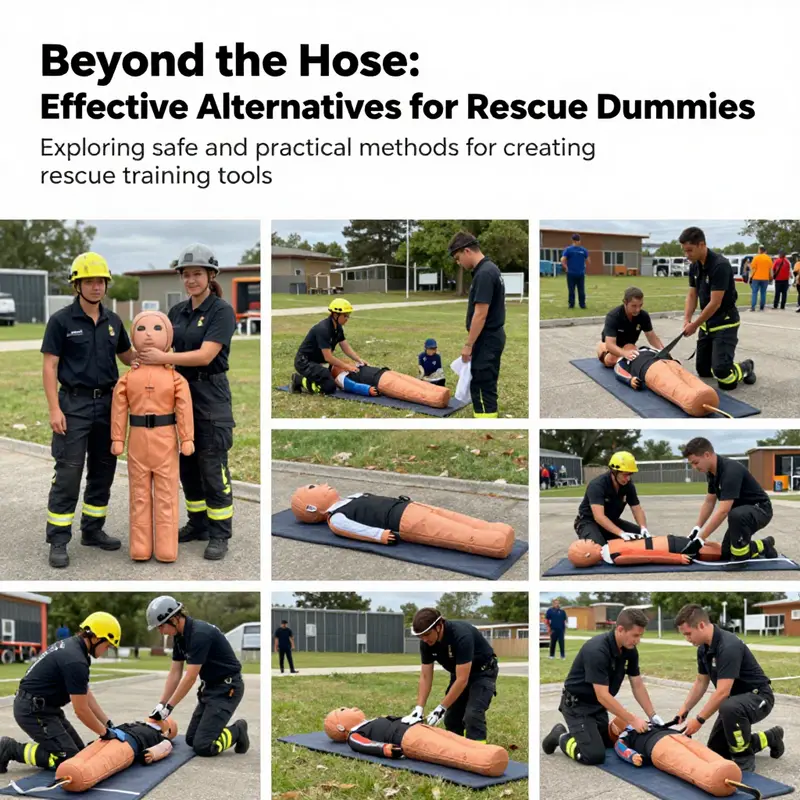
The ability to conduct effective rescue operations hinges on the establishment of realistic training scenarios. While creativity may suggest repurposing fire hoses to craft rescue dummies, this approach is riddled with complications and safety concerns. Fire hoses, designed for high-pressure water delivery, lack the necessary flexibility and weight distribution required for a training tool intended for human simulation. This article sheds light on safer, more practical alternatives to training dummies, critical for ensuring the preparedness of proper rescue personnel. Each chapter presents a detailed discourse, beginning with the implications of using fire hoses, followed by insights into effective dummy design, innovative DIY options, and the role of certified training equipment. As we navigate these areas, we aim to foster an understanding of the best practices that can lead to more effective training outcomes and enhanced community safety.
Beyond the Hose: Innovative Alternatives for a Safer, More Realistic Rescue Dummy
When teams look to repurpose equipment in austere training environments, the impulse to extract value from what is readily at hand can be strong. Fire hose, with its rugged texture and familiar heft, can seem like an obvious backbone for a rescue training dummy. Yet the core finding from practical experimentation is clear: using the hose itself as the primary structure is neither ideal nor advisable for repeated, realistic drills. The material is designed to withstand high-pressure water flow, not repetitive dragging, bending, or the nuanced weight distribution of a human body. Under stress, the hose can kink, deform, or fatigue in ways that misrepresent a victim’s shape and movement. Training outcomes can be compromised when form and handling are unpredictable. Still, this limitation does not end the conversation about how to create a durable, affordable, and believable training surrogate. It simply redirects the effort toward smart, design-led alternatives that preserve the hose’s strengths while compensating for its weaknesses. The goal is to maintain accessibility and cost-effectiveness while elevating realism and safety across drills, debriefs, and rescue simulations.
A practical way to honor the hose’s availability while boosting performance is to build a rigid internal skeleton that provides a stable core. Engineers and trainers alike have found that a lightweight yet sturdy frame—constructed from flexible conduit, such as PVC or metal tubing—wrapped with pipe insulation and fastened with zip ties or clamps, creates a convincing silhouette without sacrificing resilience. The insulated conduit becomes the durable core that resists collapse when dragged or struck during a drill. It prevents the shape from collapsing into an amorphous mass and makes the dummy easier to handle, lift, and reposition between scenarios. The surrounding hose can then wrap around this backbone, preserving the familiar exterior texture while reducing the likelihood of deformity after repeated use.
This approach is not merely about maintaining form; it is also about predictable handling. A rigid core changes how a trainer can manipulate the model when simulating life-saving operations, from patient gravity and limb reach to the way responders must pull or carry the figure through confined spaces. When the core is stable, the outer hose becomes a more authentic veneer rather than a liability. The resulting product behaves more like a lifelike torso and limb assembly, which in turn improves the transfer of practiced techniques from the training hall to the field. It also makes transport and storage simpler, since the skeleton can be stabilized and secured in a compact configuration. In short, the rigid internal skeleton leverages the hose as a durable skin rather than allowing it to carry the full burden of structural integrity.
A second pillar of durable, high-functioning hose-based dummies is reinforcement with heavy-duty fasteners. Duct tape has its virtues, but it tends to degrade under sustained physical strain and repeated flexing. In high-use environments, such as live-fire drills or complex urban search-and-rescue simulations, a more robust fastening system is warranted. Cable ties, though common, can fail if misused or over-torqued. Carriage bolts and corresponding hardware provide a steadier, long-lasting connection between the skeleton and the hose skin, ensuring that joints stay aligned and joints do not creep apart after multiple cycles of practice. The emphasis here is not on making the dummy immovable but on preserving its geometry through durable connections. By combining a reinforced skeleton with a tightly hooded hose cover, trainers can replicate accurate dimensions and mass distribution while reducing the maintenance burden associated with frequent repairs. The net effect is a training tool that remains reliable under the repeated stress of drills, extrication practice, and scenario-based exercises.
The third strand of a more capable construction is modularity. Realistic training must accommodate a range of victim sizes and injury scenarios, and modular components expand that versatility without forcing a wholly new build each time. Removable limbs and interchangeable torso sections can be attached to the reinforced skeleton with quick-release fittings or simple fasteners. These components can be made from lightweight foam or durable plastic, enabling different training configurations—smaller or larger body forms, various limb positions, or targeted weight distributions to simulate different victim profiles. Trainers can swap parts between sessions to represent children, adults, or heavier figures, all without compromising the underlying hose skin. The modular design also aids maintenance: damaged components can be replaced individually rather than reconstructing an entire model. The result is a flexible, long-lived training asset that adapts to evolving curricula and drill objectives while keeping the core benefits of the hose-based approach.
The overarching insight from these methods is that the hose remains a valuable canvas, but its value is maximized when paired with a deliberate, engineered framework. The hose can still serve as the exterior in a way that students recognize, but the underlying geometry, weight distribution, and durability are secured by deliberate design choices. This synthesis—skin plus skeleton, reinforced joints, and modular add-ons—produces a more faithful training surrogate that invites trainees to perform as they would with a real person, while offering the safety and repeatability required for repeated practice. It also aligns with a broader safety philosophy: treat training tools as evolving assets subject to refinement, rather than as one-off makeshifts that scrape by on the virtue of proximity to actual equipment. The result is not only a more convincing model but a safer one, where failure modes are anticipated, and maintenance cycles are predictable.
For teams embarking on this path, a pragmatic starting point is to map out the exact training objectives and the environments in which the dummy will operate. If the drills emphasize drag tasks across uneven ground, the skeleton must resist torsional stress and maintain limb alignment under load. If maneuvering through confined spaces is the focus, the overall silhouette and weight distribution must support a realistic pivot point and balance. The modular components should be sized to accommodate a range of participants and scenarios without requiring a separate build for each. This planning mindset helps ensure that the investment in a more sophisticated dummy pays dividends across the full training calendar, rather than vanishing after a few sessions.
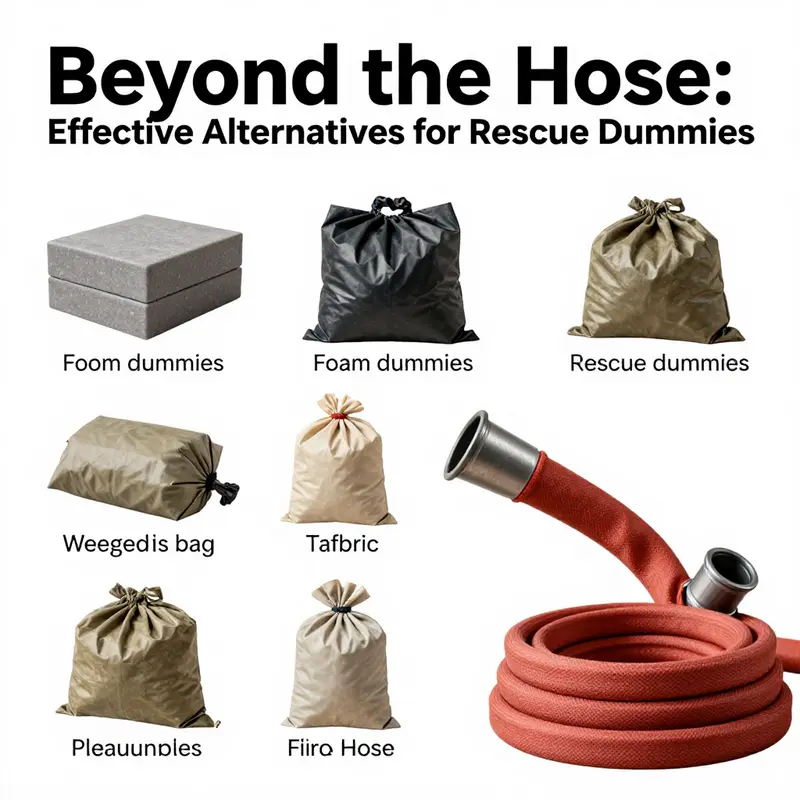
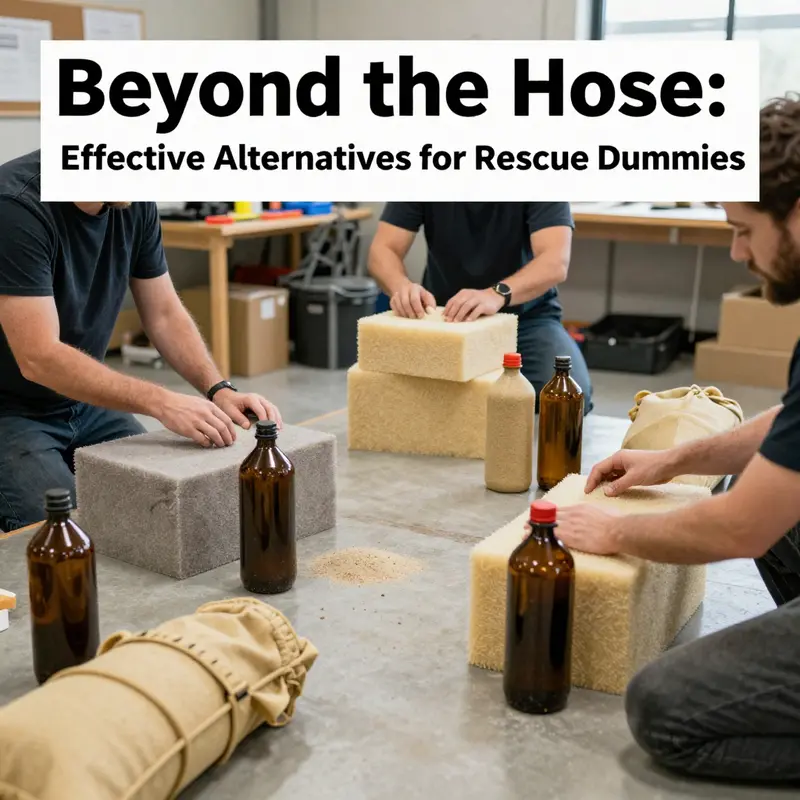
Beyond the core construction, it is important to acknowledge simple, safe, low-cost alternatives for educational demonstrations or community workshops where access to high-grade materials is limited. Foam blocks can be stacked or shaped to approximate a victim’s form, providing a lightweight, forgiving platform for basic rescue techniques. Plastic bottles filled with sand or water can add mass and stability, allowing learners to practice lifting and moving motions with a predictable center of gravity. Fabric sacks—soft, pliable bags filled with padding or old textiles—offer a quick, tangible placeholder for demonstrations of patient handling and simple extrication sequences. These DIY options keep engagement high while avoiding the safety concerns that accompany inadequate or improvised designs. They also enable educators to illustrate core concepts—weight distribution, grip placement, and drag tactics—without the complexities of a full-scale, professional dummy.
A note on standards and safety remains central. While these design innovations expand what is possible with a readily available hose, they do not substitute for certified equipment when hands-on rescue training enters the high-stakes realm. Safe practice requires alignment with organizational guidelines and industry best practices, and a readiness to retire or replace wear-prone components before performance degrades. When a team uses a hose-based model, it should be treated as a training surrogate that complements certified mannequins and purpose-built dummies, not a complete replacement for the specialized gear designed for actual rescue work. This balanced approach preserves the integrity of training outcomes while maximizing resource efficiency and learning opportunities.
For readers seeking a concise primer that situates these ideas within a broader framework of resourceful project development, a broader primer is available on the hello-world page. It offers a snapshot of how simple materials can be repurposed into functional training aids without sacrificing safety or efficacy, and it reinforces the idea that innovation in rescue training often begins with a thoughtful examination of material properties and end-use goals. In that spirit, the strategies outlined here—rigid internal skeletons, reinforced fasteners, and modular components—are not a rejection of the hose as a training element but a disciplined reimagining of how to exploit its strengths while mitigating its weaknesses. By designing around the hose’s durable skin and imposing a robust internal logic, trainers can deliver more realistic, safer, and more durable practice opportunities that stand up to repeated use over time. And by pairing these core concepts with accessible DIY alternatives for demonstrations, educators can extend the reach of essential rescue training to communities that might otherwise go without.
As the chapter closes, the emphasis returns to purpose: a training dummy should help students see themselves in action, anticipate resistance, and rehearse precise, controlled movements under conditions that resemble reality. The fire hose remains a recognizable and practical material, but its role is transformed through careful engineering, thoughtful reinforcement, and strategic modularity. In that transformation lies a stronger, safer, and more effective path to practice—one that respects the hose’s origins while elevating the training outcomes it supports. External safety and efficacy standards will guide the ongoing refinement, ensuring that every practice session brings responders closer to the real-world outcomes they strive to achieve. For further safety standards, consider NFPA guidelines available at https://www.nfpa.org/.
null
null
Designing Realistic Rescue Dummies: Principles for Safe, Effective Training
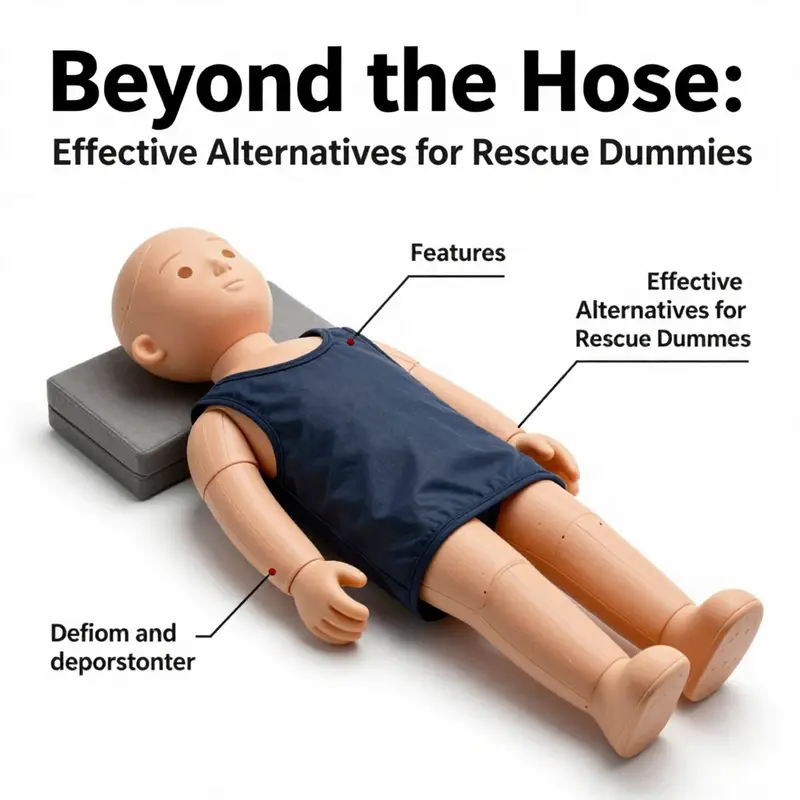
Realistic rescue dummies succeed when form, materials, sensing, and safety standards work as a cohesive system. This chapter outlines core design principles: believable anatomy and weight distribution; durable, water-ready shells; integrated sensing that translates physical action into actionable feedback; and an ecosystem that supports scenario-based training with reliable, repeatable results. We discuss why a simple hose surrogate fails and how modern manikins balance tactile realism with robust safety margins. The aim is to use design choices that preserve weight, balance and surface behavior under load while enabling objective measurement through accelerometers, pressure sensors and position data. Finally, we note that professional equipment validated to standards is essential for hands-on drills, but thoughtful design thinking can guide safer, more effective practice and continuous improvement in technique and decision making. The chapter closes with a call to view dummies as integrated training partners rather than static props, capable of revealing technique flaws, guiding debriefs, and scaling across departments and environments.
Safe Hands, Safer Tools: Reframing DIY Rescue Training in a World Beyond Fire-Hose Dummies
The impulse to DIY safety training is not inherently dangerous; it can be a powerful bridge to engagement, especially in schools and community centers where budgets are tight and curiosity is high. The core message, however, should be clear: do not let aspiration outrun safety. The practical route is to lean into proven, purpose-built training aids that simulate critical conditions—weight distribution, drag, balance, and reach—without exposing participants to unnecessary risk. In this light, several established DIY options exist that align with real-world training needs while preserving core safety principles. One compelling option is the DIY throw-rope device, sometimes called a throw bag or rescue projectile. It embodies a simple principle: rescue from a distance is often safer and more effective than close-quarters maneuvers in challenging environments. The materials are deliberately modest: a plastic bottle, a length of strong rope, duct tape, and, if desired, a small weight to enhance aerodynamics. The construction is straightforward: cut the bottle, thread the rope through the neck, secure the rope with a knot inside the bottle, seal the opening with tape, and optionally add a weight at the base. The training use is to practice throwing over a target, such as a tree branch or a marked dummy. The aim is not to replicate a person in distress exactly but to practice accuracy, timing, and the physics of a safe, indirect rescue. This method emphasizes the ethical principle that tools, when used properly, can remove risk from the rescuer while still teaching the essential reflexes of a correct rescue sequence. Real-world applications of this approach are not merely theoretical. The Yi Fund’s Child Safety Program has integrated flood-rescue training camps in China, where children learn to build and deploy throw ropes during simulated flood scenarios. The program’s success highlights how a well-designed, low-risk tool can foster practical safety habits early in life. See the broader discussion of this practice in flood-rescue programs: Yi Fund Flood Rescue Training. This references an important principle: indirect rescue is a powerful teaching tool, especially for younger learners who benefit from concrete, repeatable actions rather than high-force drills. It also underscores the value of community-based learning, where students can see the immediate relevance of their attempts and receive feedback in a controlled setting. For educators seeking a broader context on how training spaces are evolving, the exploration of dedicated innovation venues can be enlightening. The internal resource on fire-service training spaces offers a longer view of how tools, layouts, and curricula converge to make practice both safer and more realistic. Consider the broader context in which training spaces are evolving: Innovation Museum: Transforming Fire Services. This reference helps situate DIY options within a wider ecosystem that values safety, adaptability, and ongoing learning. See more here: Innovation Museum: Transforming Fire Services.
A second DIY option centers on essential knot-tying skills. Learning to tie reliable knots—such as the bowline, figure-eight, and prusik—creates a transferable safety toolkit. The materials are simple: a length of rope and a practice board. The training approach pairs step-by-step demonstrations with hands-on repetition, turning technique into muscle memory. The educational payoff is substantial: precise knot-tying under time pressure strengthens hand-eye coordination, problem-solving, and a calm, methodical approach to emergencies. When students practice knots, they internalize the principle that effective rescue relies on dependable systems rather than brute force. Real-world examples from safety education initiatives in various provinces show how knot-tying workshops can become a staple of school safety curricula, reinforcing the idea that small, disciplined skills accumulate into greater resilience. A practical reminder emerges from these activities: mastery of core techniques, not massaging into a single dramatic object, often yields safer and more effective training outcomes. A well-timed knot can save lives, stabilize a load, or secure a line with confidence, especially when other variables—slippery surfaces, water, or heat—introduce uncertainty.
In parallel with rope skills, another DIY possibility invites learners to engage in team-based construction that mirrors real-world defense against flood scenarios. The DIY sandbag flood barrier is not about creating a durable wall at home; it is a structured exercise in teamwork, load distribution, and spatial reasoning. Old pillowcases or burlap bags are filled with dry sand or other dry materials, then handed down a line, layered, and arranged to form a makeshift barrier. The exercise culminates in a controlled test of the barrier, where water is directed against the structure to observe its stability and the points where leakage might occur. The value of this activity lies in its ability to teach coordination, sequencing, and collective problem-solving under pressure. It also introduces learners to basic physics principles, such as how mass, friction, and geometry contribute to the integrity of a barrier. In many schools, this kind of exercise is paired with reflective discussions on real flood risks in communities, translating classroom activities into civic preparedness. The practical lesson is clear: safety rests on planning, teamwork, and the aim to create robust, repeatable methods rather than improvised, ad hoc solutions.
Another accessible option is the DIY protective face mask, a makeshift respirator that offers temporary protection in smoky or dusty environments. The construction is simple: layer a clean cotton towel, dampen it to improve filtration, and secure it around the head with elastic bands or strings. The mask’s effectiveness increases when it remains moist, which can help filter out particles in the short term. This exercise is not a substitute for professional respiratory protection in hazardous environments, but it does offer a tangible demonstration of how airflow and filtration can be manipulated with readily available materials. It also prompts discussions about the limits of improvised PPE, reinforcing the principle that training tools should be scaled to risk and context. The takeaway for learners is not to rely on DIY PPE in high-risk scenarios but to appreciate how simple materials can illustrate protective concepts and cultivate a disciplined habit of evaluating risk before acting.
Perhaps the most direct DIY tool for simulation is a rescue training dummy crafted from everyday textiles and padding. The approach is to assemble a large sack filled with soft padding made from old clothing or towels, fashion a head shape with a rolled bag or a soft ball, and attach handles for dragging. This type of dummy supports practice with lifting, carrying, and partner-compatible movements without placing learners in real danger. It also invites educators to tailor the dummy’s weight and dimensions to match the scenario, whether it is a hospital corridor evacuation drill or a hillside rescue sequence. The central caution remains: safety protocols must guide these activities, and supervision should be consistent to prevent overexertion or misuse of improvised equipment. Even when the goal is realism, the emphasis must be on controlled, predictable, and repeatable practice. The underlying message is that a well-chosen, purpose-built training aid—whether simple or sophisticated—can outperform an improvised surrogate in achieving reliable skill transfer.
Together, these DIY options illustrate a shared philosophy: effective rescue training hinges on safety-first design, repeated practice, and clear learning outcomes. They also highlight the importance of aligning tools with the demands of the task. When learners rehearse throws, knots, barriers, or lifts, they are not merely performing a ritual. They are internalizing crucial decision-making processes: when to use a throw rather than a direct grab, how to secure a line or load, and how to cooperate with teammates to distribute effort. This approach reduces the risk of injury while preserving the authenticity of the drill. It also respects the reality that many educational settings cannot access certified equipment or professional-grade mannequins. By reimagining what counts as a “rescue dummy,” educators can still deliver meaningful, standards-aligned training that yields measurable confidence and competence.
A final consideration ties these activities to broader safety standards and professional expectations. While DIY tools can bridge gaps in access and budget, they must be integrated thoughtfully into curricula and drills. Clear safety briefings, defined roles for participants, and explicit limits on the complexity of tasks help keep sessions productive and safe. Instructors should model proper technique, provide timely feedback, and ensure that all equipment used—whether DIY or commercial—meets essential safety checks. Certification, where possible, remains a best practice, both to validate skills and to reinforce the credibility of the training program. The overarching objective is not to replace certified tools but to complement them with accessible, engaging, and pedagogically sound practices that communities can sustain over time. By doing so, safety education becomes less about one-off demonstrations and more about a continuous, experiential journey toward readiness.
For readers seeking a broader sense of how these concepts fit into a larger safety landscape, the internal resource on transforming training spaces provides context about evolving curricula and infrastructure. Innovation in training environments often mirrors real-world evolution: modular, adaptable tools that accommodate diverse ages and abilities, coupled with robust safety frameworks. This perspective helps readers appreciate that DIY options are not a stopgap but a strategic component of a comprehensive safety education program. If you want to explore this broader trajectory, consider looking into Innovation Museum: Transforming Fire Services. And for an external, real-world reference that demonstrates the impact of practical, low-cost training tools in a flood-resilience context, explore the Yi Fund’s flood-rescue training materials: Yi Fund Flood Rescue Training.
Certified Tools, Safer Drills: How Standards Shape Real-World Rescue Training
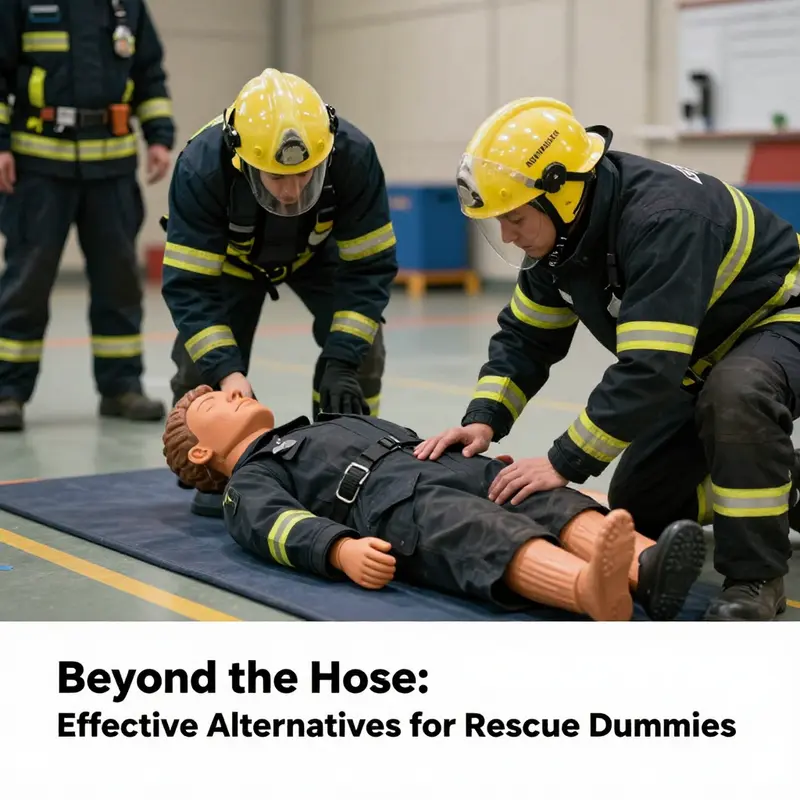
The impulse to repurpose everyday materials for training is tempting, especially when faced with limited budgets, time, or access to specialized gear. Yet the idea of fashioning a rescue dummy from a fire hose highlights a fundamental truth about rescue training: tools shape outcomes as much as technique does. Fire hoses, by design, prioritize delivering high-pressure water with resilience. They are heavy, rigid, and built to perform under extreme conditions that rarely resemble the cadence of a drill floor or a real rescue scene. When a trainee practices with a hose that does not mimic human anatomy in freely bending, shifting, and yielding to force, the resulting muscle memory can become a liability rather than a bridge to competence. The same hose that withstands water pressure can, in practice, create awkward leverage, unbalanced loads, and false cues about how a victim moves, reacts, or disperses weight. Training that relies on improvised substitutes risks teaching forms that fail under the very stresses responders face in emergencies. In short, the quest for a low-cost, quick substitute can produce an illusion of realism that erodes rather than enhances preparedness.
This is not a rejection of ingenuity; it is a call for disciplined realism. The effectiveness of rescue training rests on both technique and equipment that faithfully reproduce the conditions responders encounter in the field. Certified training equipment embodies a deliberate intersection of physics, ergonomics, and safety. It is designed to simulate a variety of body sizes, weights, and positions while offering predictable behavior under manipulation. A properly engineered training dummy, for instance, can be tuned to reflect different victim profiles, control points, and drag or lift resistances. Its internal structure may include foam cores, layered fabrics, and balanced mass distribution that together mimic how a human body responds to assist, carry, or extract. By contrast, a repurposed hose may behave unpredictably when gripped, rotated, or pulled through a doorway, creating false resistances or misrepresenting how techniques transfer from the drill to a live scenario.
The rationale for certified equipment extends beyond fidelity. It encompasses safety, accountability, and repeatable performance. Certification marks indicate that a tool has undergone standardized testing under defined conditions. This is not a decorative badge; it is a record of that tool’s capacity to withstand repeated use, its compatibility with common rescue protocols, and its alignment with ergonomic limits that prevent unintended strain or injury to trainees. When instructors plan drills, they rely on predictable weight, balance, and response characteristics to build safe sequences, troubleshoot errors, and calibrate cues. Certification provides a baseline that reduces guesswork and variability between drills, shifts, and instructors. It also ensures traceability: if a particular piece of equipment is ever questioned or recalled, certification records make it possible to verify its provenance, test history, and suitability for certain training objectives. In a field where seconds count and errors can cascade, that level of confidence is invaluable.
Industry and standards bodies, including international and national organizations, specify requirements that cover materials, construction, durability, and safety features. ISO’s family of standards for training devices, for example, outlines criteria that help ensure simulators and dummies behave consistently across settings. In the United States, broader safety certifications from recognized laboratories reinforce that equipment remains within tolerances that keep both mentors and students free from harm during repeated use. The combination of these standards creates a shared language for educators and responders. It allows departments to compare equipment across vendors, to plan multiagency exercises that feel cohesive for participants from different services, and to justify investments to stakeholders who demand measurable outcomes.
Evidence underscores the practical value of this approach. A study conducted by the National Institute of Standards and Technology (NIST) emphasizes that standardized, certified training tools significantly improve responder performance and reduce errors during live incidents. The findings align with a broader understanding in safety science: when training tools converge with real-world demands, the likelihood that learned techniques transfer to the field increases. The lesson is not simply that better gear exists; it is that the alignment between gear and drill conditions shapes how well a responder can reproduce the required force, timing, and decision-making under stress. For readers seeking a deeper dive into the research, a detailed source is available that analyzes the impact of certified training equipment on rescue operations, highlighting how standardization translates into better outcomes in actual missions.
Nevertheless, the practical reality remains that not every training scenario requires a commercial or certified dummy from the outset. Communities, schools, and small departments sometimes design introductory demonstrations or safety talks that illustrate concepts without committing to full-scale, certified systems. In such contexts, a few safer, low-risk DIY options can convey essential ideas without promoting unsafe practices. Foam blocks, lightweight and versatile, can be stacked or arranged to approximate the silhouette of a victim for basic handling practice or to illustrate how different lifting strategies affect balance. Plastic bottles filled with sand or water can provide variable weight to simulate a person of different sizes, offering a tangible sense of how mass distribution influences movement and control. Fabric sacks, simple and pliable, can serve as placeholders for a victim in quick drills that emphasize communication, positioning, and team coordination. The key is to use these improvisations as educational tools within a carefully designed syllabus that prioritizes safety, clearly communicates limitations, and reinforces the call to transition to certified equipment as soon as feasible.
For formal training programs, a deliberate procurement path is essential. This path starts with a needs assessment that considers the typical scenarios trainees will encounter, the age and fitness range of participants, and the specific rescue techniques to be practiced, from airway management and drag procedures to disentanglement and extraction under load. With those criteria in hand, educators can map a training arc that integrates certified dummies and simulated victims at appropriate stages. Early drills can employ safer DIY props to introduce core concepts and safe handling, gradually advancing to more realistic, certified tools that provide precise resistance, weight matching, and predictable localization of contact points. Instructors should also design drills to minimize fatigue and repetitive strain, using adjustable scenarios that reflect real shifts in incident dynamics, such as variable victim sizes, different surface conditions, and changing access routes. When conducted with certified equipment, these drills promote a more authentic sense of the time pressure, decision points, and teamwork demanded in real rescues, while maintaining rigorous safety discipline.
An informed approach to training does not stop at equipment. It embraces a holistic ecosystem that includes instructor preparation, standardized evaluation rubrics, and ongoing quality assurance. Instructors who implement certified tools build the credibility of their programs and establish a framework for scalable training across departments and agencies. Evaluation rubrics, aligned with the same standards that guide equipment certification, enable objective assessment of technique, timing, and communication. This alignment makes it possible to quantify improvements in performance, identify stubborn gaps, and justify investment in newer tools or updated curricula as research and field demands evolve. The ultimate aim is not to showcase novelty but to foster a culture of safety, reliability, and continuous improvement that stands up to the stresses of an actual rescue operation.
For agencies seeking a pathway to augment their training offerings, the conversation often turns to innovation that does not compromise safety. A valuable resource for understanding how new ideas meet established standards can be found in discussions of modernization within fire service institutions. One insightful gateway to these conversations is the Innovation Museum that explores how knowledge, technology, and practice come together to transform rescue services. This resource highlights how even as departments adopt advanced tools and techniques, they do so within a framework that preserves safety and accountability. See more about this broader context at Innovation Museum: Transforming Fire Services.
As this chapter moves toward a practical horizon, it is important to recognize that the choice between improvised props and certified equipment is rarely binary. The best programs balance accessibility with safety, using low-risk demonstrations to cultivate curiosity and foundational skills, while reserving certified devices for the core training that builds transferable competence. This balance ensures that when a real call comes in, responders are not surprised by the equipment they rely on; they are prepared to apply what they have learned with confidence, precision, and prudence. In the long run, the distinction between a makeshift dummy and a certified training tool is more than cosmetic. It is the difference between drills that illuminate proper technique under controlled conditions and drills that mislead, teach bad habits, or risk injury. The emphasis on certified equipment, supported by standards and empirical research, anchors training in reliability, traceability, and transferable performance, which are indispensable when lives may depend on every move a rescuer makes.
For those who want to explore the broader landscape of how standardization informs practice, this discussion points toward a deeper commitment to safety, quality, and continuous improvement. The conversation does not end with the decision to purchase or build a specific dummy; it extends to how training programs are designed, how drills are evaluated, and how the organization communicates its safety philosophy to staff, volunteers, and the community. The shift from improvisation to certified practice is a shift toward reproducible excellence. It is a decision that acknowledges the limits of what can be turned into a quick demonstration and the immense value of what can be reliably taught and repeated under strict safety guidelines.
External resource for further reading: NIST Study on Certified Training Equipment.
Final thoughts
In summary, while the notion of using fire hoses to create rescue dummies may tempt resourcefulness, significant safety and practicality concerns remain. It is vital for educators, emergency personnel, and community members to explore dedicated training equipment that ensures effective preparation for real-life rescue scenarios. Innovative DIY alternatives provide valuable options for simulation while maintaining safety, further proving that well-designed rescue training tools can be accessible and practical. The emphasis on certified equipment serves to enhance the proficiency and readiness of all personnel involved in emergency response. As actors in community safety, let us prioritize effective training methods that uphold operational integrity and ensure the highest safety standards.