
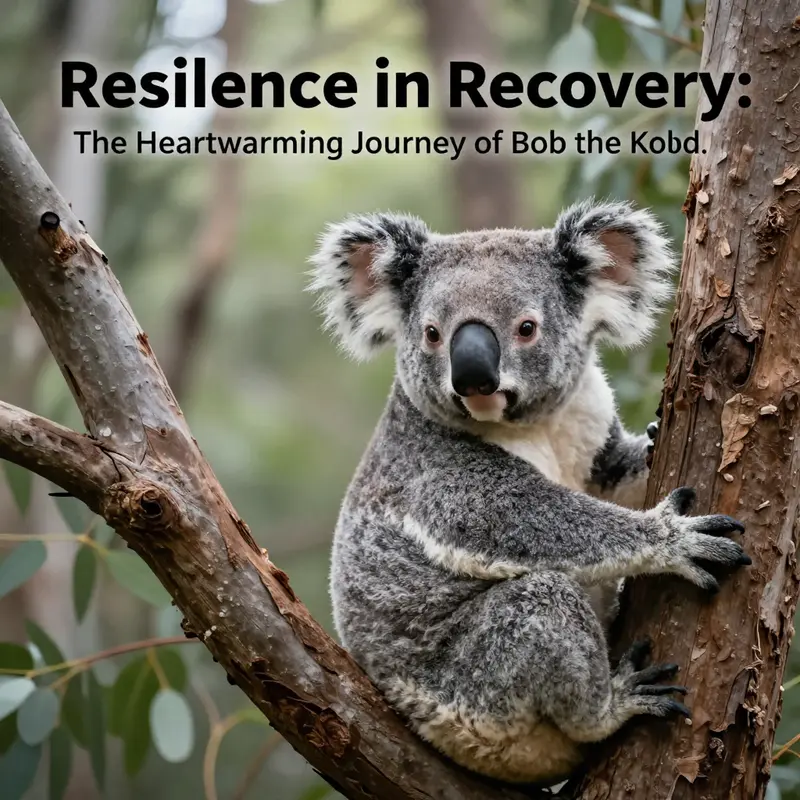
The story of Bob the koala, a survivor of Australia’s devastating bushfires, resonates deeply within our communities, highlighting the resilience of wildlife in the face of adversity. Bob’s journey from rescue to recovery, alongside his companion Sam, serves as an enduring symbol of hope and compassion, even in the darkest times. The subsequent chapters delve into the importance of rehabilitation for koalas affected by bushfires, the broader ramifications of these natural disasters on koala populations, and the ongoing conservation efforts that continue to support these imperiled creatures. Together, these chapters illuminate the path taken by koalas like Bob and emphasize the vital role humans play in their recovery.
Bob’s Quiet Resolve: From Fire’s Reach to a Global Beacon of Hope
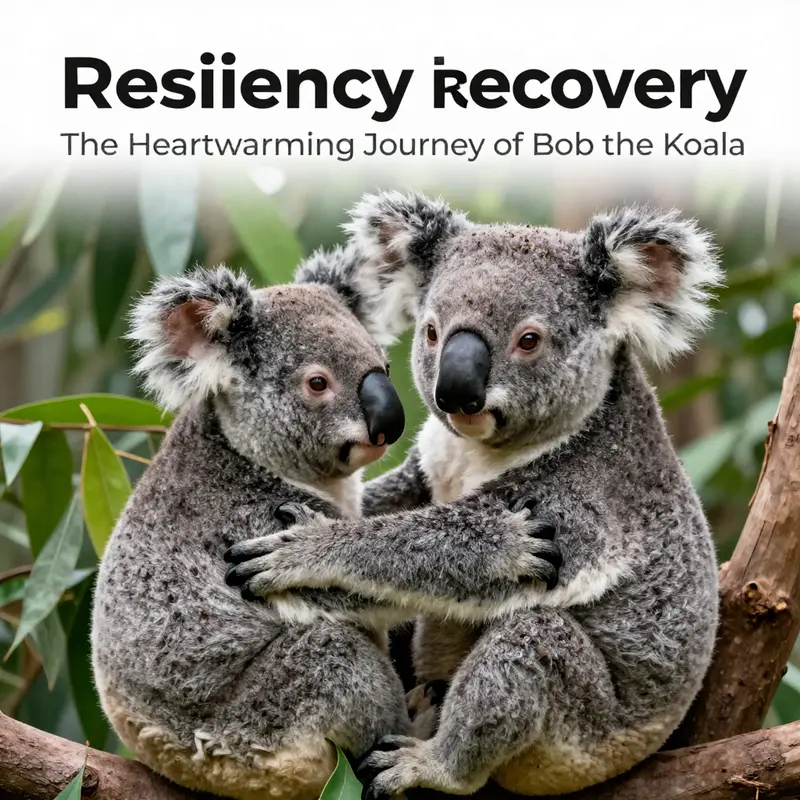
When the bushfires ripped across vast swathes of Australia, leaving behind blackened horizons where life once thrived, the story of Bob the koala began not as a tale of loss but as a testament to resilience. In February 2009, as the smoke lingered and communities counted the costs, Bob emerged from the ashes not as a solitary survivor but as part of a broader chorus of creatures struggling to find a future in landscapes that had suddenly become unfamiliar and hostile. The early photographs of Bob and the other survivors carried a power beyond their immediate sorrow: they offered a tangible image of endurance, a living reminder that even in the face of catastrophe, recovery is possible through care, patience, and a readiness to stand beside those who cannot speak for themselves. The koala’s journey, rescued and mended at a wildlife center near Melbourne, would come to symbolize more than a single act of rescue; it would become a focal point for a wider conversation about habitat loss, wildlife welfare, and the human responsibility to nurture the places where koalas live and breed.\n\nBob’s entry into care was abrupt and urgent. Found in a landscape scorched by flames, the koala was dehydrated and visibly wounded. Koalas, with their specialized lives in eucalyptus groves, are particularly vulnerable when their home is scorched or fragmented. The immediate response at the wildlife center was not just to stabilize him but to begin a careful, species-appropriate rehabilitation. Burns and dehydration in koalas require a measured blend of medical attention and environmental comfort. Caregivers provided fluids and pain management, and they set about re-establishing a routine that mirrored the animal’s natural needs. In this critical window, the role of eucalyptus leaves extended beyond nutrition; they offered a sensory bridge to safety. The scent and texture of the leaves—so familiar in the koala’s world—helped to ground Bob as he navigated the disorienting aftereffects of trauma. It’s a small but meaningful reminder that healing for wildlife often hinges on the availability of elements that belong to their normal lives and environments, even within the controlled confines of a rehabilitation facility.\n\nThe resilience of Bob can be more precisely understood in the concrete rhythms of recovery. While the full medical file remains outside the public gaze, the arc of his care illustrates a few enduring truths about wildlife rescue after fires. First, early, comprehensive hydration sets the stage for recovery. Dehydration compounds the damage of burns and makes secondary infections more likely. Second, pain management and wound care are essential to keep an animal from expending precious energy on distress signals rather than on healing. Third, environmental comfort matters as much as medicine. For koalas, rest, warmth, and a familiar diet reduce stress and speed the rebuilding of strength. The care team recognized that Bob’s recovery would be incremental rather than instantaneous, and they prepared for a process that could take weeks or even months, during which time the koala’s body slowly returned to a state where movement and feeding could occur with confidence.\n\nWithin this clinical frame, another layer of healing emerged: companionship. In the weeks that followed, Bob formed a bond with Sam, a fellow survivor who had also sustained burns. The two shared a space that allowed them not only to recover physically but to reassemble a sense of safety that had been ripped away by flames. The most poignant moment—captured in a photograph and shared around the world—shows Bob placing his paw around Sam as she regained strength. The gesture, quiet yet unmistakably intimate, spoke to a universal need for connection in times of suffering. It was more than a moment of sympathy; it was an unspoken affirmation that recovery is possible through mutual support, that resilience can be contagious, and that healing often occurs in the company of others who understand what it means to endure a shared crisis.\n\nThat image—Bob’s paw around Sam—became a touchstone for people who felt overwhelmed by the broader calamities of bushfires across eastern Australia. In an era when news could feel relentless and impersonal, the kindness captured in that moment offered a counter-narrative: one of care, continuity, and the possibility of renewal. The photograph traveled across borders and oceans, turning a local wildlife rescue into a symbol of hope for communities grappling with grief, fear, and the long road toward recovery. It was a reminder that even when the landscape has burned, the impulse to help and to heal can ignite anew in the public imagination, translating into action and support for wildlife rescue organizations, habitat restoration, and long-term conservation planning.\n\nThe emotional resonance of Bob’s story lies in its simplicity and its immediacy. People who watched the coverage could place themselves in the koala’s world—feeling the sting of heat, sensing the dryness of the air, and recognizing the vulnerability of a creature that relies so completely on a living, leafy canopy for both food and shelter. Yet the tale also offered a counterpoint to fear: a narrative in which a creature’s survival is not solely a matter of genetic luck but a product of human skill, compassion, and a landscape that can, with effort, provide safe passage from danger to safety. The Melbourne wildlife center, like many such facilities, operates at the intersection of veterinary science and wildlife ecology, where treatment protocols are tailored to the species’ anatomical and behavioral traits. In koalas, whose lungs and skin are highly responsive to heat and dehydration, every hour of careful care matters. The work is both a science and an art—the art of observing subtle shifts in a koala’s posture, the rhythm of its breathing, and the first hesitant movements toward feeding and exploration after a period of rest.\n\nBob’s story also underscores a broader ethical and environmental duty. The bushfires of 2009 did more than scorch hectares; they exposed the fragility of habitats and the precarious conditions in which many animals live, breed, and shelter. Koalas, with their dependence on eucalyptus forests, have become emblems of this fragility. The path from rescue to release—when and if an animal can return to a natural habitat—depends on a mosaic of factors: the restoration of food trees, the protection of corridors that allow movement between feeding grounds, and the stabilization of ecosystems long enough for populations to rebound. In Bob’s case, the symbolism did not end with recovery in captivity. It extended into a public insistence that healing requires more than compassionate care in a wildlife center; it calls for sustained investment in landscapes that can sustain koalas beyond the immediate aftermath of a disaster. The community rallies around this message, recognizing that the survival of species like the koala hinges on proactive habitat preservation, responsible land management, and the integration of wildlife needs into emergency planning and climate resilience efforts.\n\nWithin the narrative of Bob and the companion Sam, a thread emerges about communication and storytelling. The way their rescue and recovery were framed in media and shared with audiences around the world helped demystify wildlife rehabilitation and showed that compassion can translate into real-world support. News coverage, while sometimes focusing on dramatic moments, also carried practical implications: it highlighted the importance of trained responders, the availability of rehabilitation centers, and the need for long-term strategies to safeguard the environments where koalas live. The human element—the willingness of volunteers, veterinarians, and supporters to invest time and resources—became inseparable from the animal’s recovery. In this sense, Bob’s journey was as much about people as it was about a single koala’s perseverance. It demonstrated how a community’s response to wildlife in distress can become a catalyst for broader awareness and action that outlives the headlines and lingers in policy discussions, community planning, and everyday acts of stewardship.\n\nThe story’s lasting power also lies in its capacity to connect multiple audiences to a shared, tangible outcome: safer habitats for koalas and a public that understands why protecting those habitats matters. As fires continue to threaten ecosystems around the world, Bob’s example endures as a reminder that relief and renewal are possible when science, compassion, and local action align. Rehabilitation centers rely on a framework of interdisciplinary care—veterinary medicine, ecological insight, and social support—that together creates a pathway from trauma to recovery. This pathway is not a straight line but a continuum of adjustments, from treating wounds and alleviating dehydration to gradually reintroducing dietary habits, encouraging physical activity, and identifying signs that an animal is ready to face a renewed environment. In koalas, where much of a rescue’s success depends on the ability to reconnect with native food sources and shelter, the work has real geopolitical and ecological dimensions. It requires coordination across wildlife agencies, landowners, and conservation groups to ensure that burned landscapes do not remain barren corridors but instead become functional habitats again through reforestation, pest management, and long-term monitoring.\n\nIf readers seek a primer on how rescue narratives are constructed and sustained, there is a simple starting point that links these themes to the larger fabric of wildlife care. The basic idea is to recognize that every rescued animal embodies a broader ecosystem story—the way it moves through recovery, the way it interacts with conspecifics, and the way its life intersects with human communities. By exploring these threads, one can appreciate how a single photograph of Bob and Sam can become a portal to discussions about climate resilience, habitat connectivity, and the social conditions that allow rescue efforts to flourish. For those who want a concise orientation to these stories, the resource titled Hello World offers an accessible entry point that sparks curiosity about the step-by-step process of beginning a rescue narrative and supporting it with informed care. See Hello World for a primer that can deepen understanding of how rescue stories are framed and shared with the public.\n\nThe broader climate context around Bob’s rescue is not accidental to the tale. Bushfires have long exposed the vulnerabilities of wildlife and the fragility of landscapes shaped by climate variability. The 2009 fires burned more than two million acres, a stark illustration of how quickly ecological memory can be disrupted. Yet, amid the ash and loss, Bob’s recovery signaled a possibility for renewal. It suggested that where there is expertise and empathy, wounds can mend, and habitats can begin the slow process of restoration. The koala, whose life depends so intimately on the integrity of eucalyptus forests, becomes a symbol not just of individual survival but of an entire community’s commitment to coexisting with the Earth’s dynamic and demanding climate. As the years since the fires have unfolded, the story has continued to inform conservationists, policymakers, and everyday citizens about the need to safeguard critical habitats, to invest in wildlife corridors, and to recognize the power of rescue work to galvanize communities toward long-term sustainable action.\n\nThe narrative of Bob and the companion Sam thus operates on multiple planes. It is a medical case study in miniature, a poignant human-interest photograph, a cultural symbol that travels across borders, and a catalyst for ongoing environmental advocacy. It invites readers to reflect on their own relationships with the natural world and to consider how acts of care—whether in a wildlife center, a rehabilitation garden, or a community’s land-management plan—contribute to the stubborn reality that life can endure, even when the ground beneath has burned. In that sense, Bob’s story is not simply about a koala’s survival; it is about the resilience of ecosystems and the resilience of the human spirit that chooses to protect them. It invites optimism grounded in action, a recognition that healing is a process that requires patience, resources, and a willingness to stand with other species at moments when they are most vulnerable.\n\nAs the fire season receded from public attention and the ashes settled into memory, the lessons from Bob’s experience remained. They echoed in habitat restoration projects, in campaigns to safeguard remaining eucalyptus groves, and in the daily work of caretakers who monitor the long-term health of rescued koalas. The image of Bob with his paw around Sam lingered as a quiet emblem of the possibilities that arise when communities refuse to abandon the vulnerable and instead choose to invest in recovery. It is a reminder that hope is not a passive emotion but an active practice—one that includes listening to wildlife needs, supporting wildlife responders, and ensuring that future generations inherit landscapes where koalas can climb, feed, and thrive. For readers who want to learn more about the historical coverage of these events and to explore broader narratives about wildlife rescue in crisis, BBC News provides a detailed account that situates Bob’s story within the wider chronology of the bushfires and their aftermath: https://www.bbc.com/news/world-australia-14367569.
Emberlight: The Recovery Odyssey of Bob and Sam
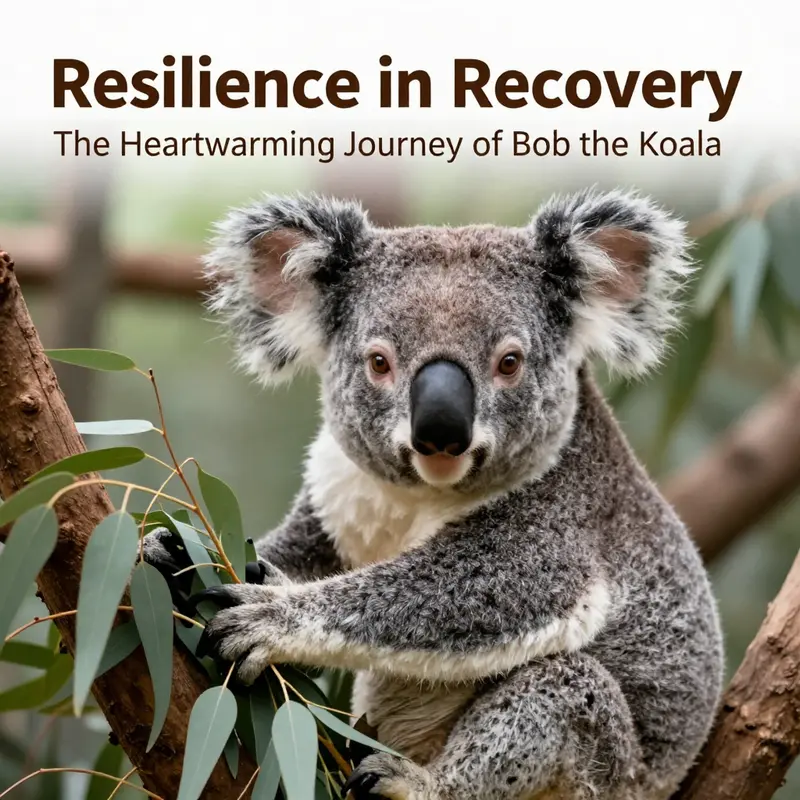
In the wake of the 2009 Melbourne bushfires, two koalas named Bob and Sam found themselves in a wildlife rehabilitation center and became symbols of the quiet resilience that follows disaster. Bob, a male koala with burn injuries to his paws, and Sam, a female whose skin bore the scars of heat, began a long road of care that stretched beyond the walls of the hospital enclosure. Under the patient guidance of veterinarians, carers, and volunteers, staff stabilized wounds, managed nutrition, and crafted an environment designed to reduce stress while encouraging gentle activity. As weeks turned into months, their gradual recovery offered a window into the complexities of post-fire rehabilitation: the delicate balance of medical treatment with behavioral enrichment, the challenge of reintroducing natural behaviors, and the stubborn, instinctive trust that koalas carry for carers. A profound moment emerged when Bob and Sam formed a tentative companionship, with Bob offering a protective paw around Sam in a gesture that spoke more loudly than any clinical note. Photographs capturing that moment circulated widely, reminding communities that injury does not erase tenderness, and that care can restore not only physical health but a sense of safety and belonging. The broader response from the public and conservation professionals framed rehabilitation as a holistic practice—one that must consider habitat, food availability, and ongoing welfare monitoring—so that rescued animals have a genuine chance to thrive in a changed landscape. In the years that followed, rehabilitation centers refined their practices, sharing lessons about wound management, nutrition, stress reduction, and the importance of quiet, predictable routines. The Bob-and-Sam story became a touchstone for policymakers and the public alike, illustrating how compassionate care, when coupled with science-backed practices, can contribute to more resilient wildlife populations in the face of increasing fire frequency and habitat loss. The chapter closes not with a definitive end but with a forward-looking note: the knowledge that each rescued life carries the potential to illuminate how humans might live more harmoniously with fire-prone ecosystems, to protect critical habitats, and to support wildlife through the long arc of recovery. For readers seeking formal data on outcomes, ongoing research continues to track post-fire recovery alongside habitat restoration, with the aim of guiding future rescue operations and preservation strategies. The memory of Bob and Sam endures as a reminder that healing is a collaborative process—between patient animals, caring humans, and the landscapes they inhabit—and that even in the embers, there is a spark that can lead toward a safer, more hopeful horizon.
null
null
After the Flame: The Ongoing Conservation Journey of Koalas Rescued from Fire, with Bob as a Beacon
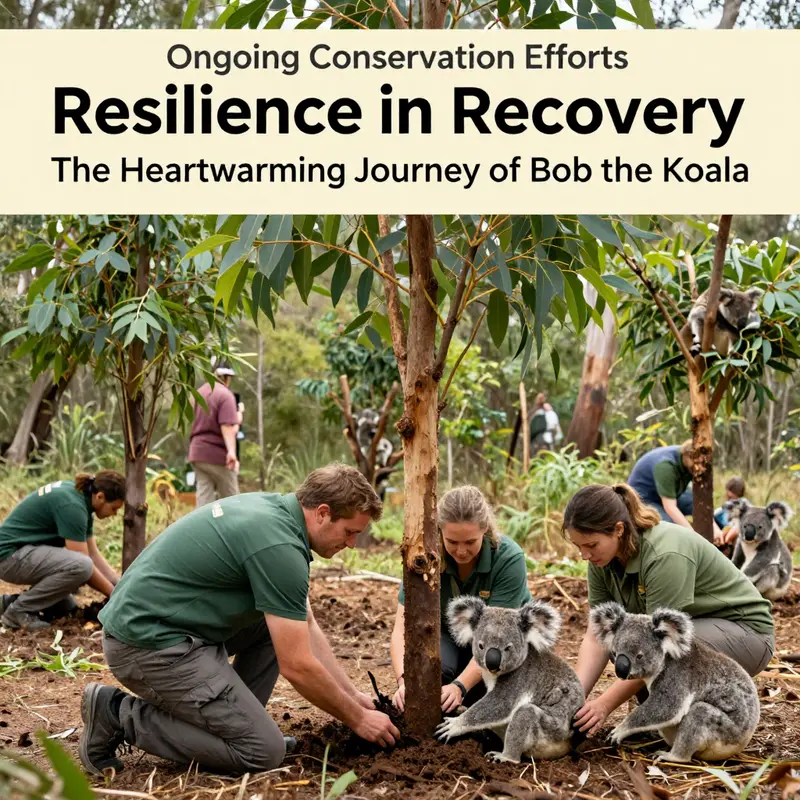
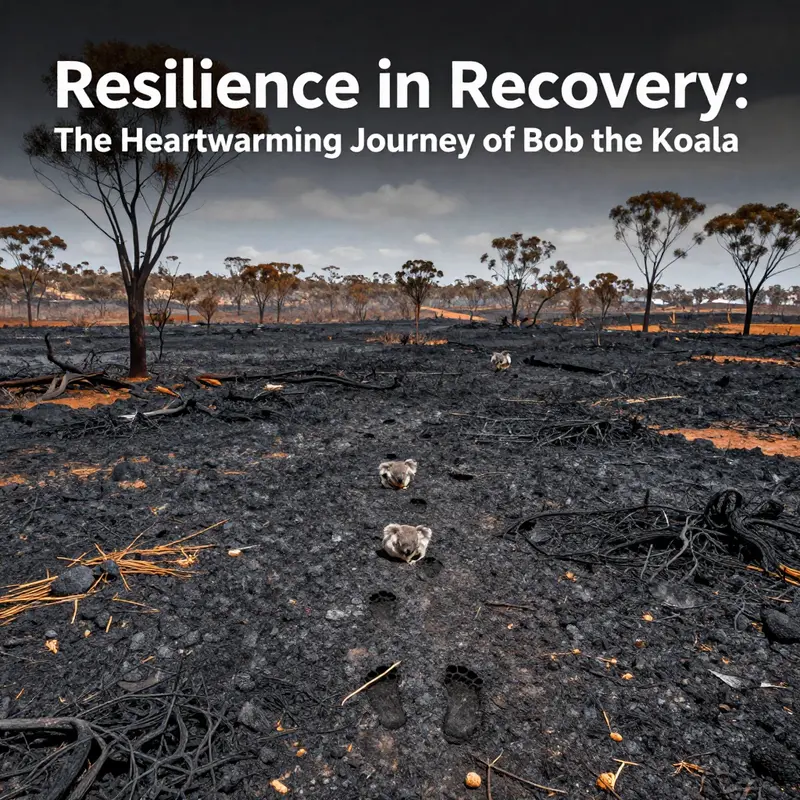
The image of a koala named Bob, rescued from the scorched edges of a major bushfire and found clinging to life in the smoky aftermath, became a quiet emblem of resilience for a country scarred by climate-driven infernos. Bob’s recovery, and his gentle gesture of wrapping a paw around Sam, another burned koala at a wildlife center near Melbourne, did more than tug at heartstrings. It reframed how people understood the long arc of wildlife rescue—from the urgent triage of the moment to the painstaking, decades-long work of real recovery. In the years since that scene circulated in headlines and on social media, the story has remained a touchstone for ongoing conservation efforts. It reminds us that saving a life in the moment is only the first page in a longer, more demanding chapter: restoring habitat, defending corridors that knit broken landscapes back together, and pursuing medical and ecological research that can lift survival rates for generations of koalas to come. The broader thread running through this chapter is not simply Bob’s survival, but the continuity of care that begins at the moment of rescue and extends into ecosystems that can absorb and shelter survivors long after the flames have moved on.
When bushfires burn across vast swaths of eucalyptus forest, koalas face a double peril: immediate danger from heat and flames, and slower, stubborn threats that linger after the fire passes. Dehydration, burns, smoke inhalation, and thermal injury are the kinds of injuries wildlife responders confront with koalas. The swift response of emergency services, wildlife rescuers, veterinarians, and volunteers is paramount, but it is only the opening act. The koalas that survive the initial crisis must then navigate weeks and months, sometimes years, of rehabilitation in care facilities that understand the species’ unique needs. Bob’s own path—from a state of severe dehydration and burn injuries to a guarded release back into protected habitat—highlights both the fragility and the enduring vitality of koala populations under pressure. These are not isolated triumphs of individual animals; they are the touchpoints that catalyze sustained programs in medical treatment, habitat protection, and policy change aimed at reducing future losses.
The immediate rescue phase is built on a network of rapid communication, mobile clinics, and the specialized knowledge that wildlife professionals bring to the field. In Bob’s case, as in thousands of similar rescues, the goal is to stabilize, rehydrate, and manage wounds with care that respects the physiology of koalas. Koalas carry a high risk of secondary infections if burns are not treated to prevent bacterial invasion, and timing matters: the sooner a koala can be stabilized, the better the chances of recovery. Yet this triage is only the first hurdle. The human community’s empathy—reflected in donations, volunteer labor, and advocacy—fuels the entire system, enabling centers to stock medicines, maintain facilities that can withstand the heat of a harsh season, and transport animals to places where they can recover in safety.Bob’s behavior toward Sam—an offering of companionship in a shared space of recovery—serves as a small but telling signal about what rehabilitation aims to restore: social and psychological comfort as much as physical healing. For koalas, whose lives are deeply entwined with arboreal habitats, the opportunity to form bonds in care settings can be an important indicator of well-being even as they grow stronger. The scene also underscores a broader truth: the emotional dimension of wildlife rescue matters. It helps people understand that the animals we save are not isolated incidents in a news cycle; they are members of ecosystems, with needs that extend beyond the explicit injuries of fire and flame.
While the precise long-term health trajectory for Bob and many individuals is not always fully charted in public summaries, the emphasis in ongoing conservation practice remains clear. It focuses on durability—systems that can endure fires’ brutality and climate volatility, not merely episodic responses when a particular animal’s life is saved. Organizations such as WIRES and the Australian Koala Foundation have become coordinating anchors in this expanded mission. They work to blend immediate rescue operations with sustained habitat support. Their approach often includes mobile veterinary clinics that can reach fire-hit regions, as well as the creation of fire-ready shelters designed to withstand another ember storm or heat wave. The objective is to move from crisis response to resilience-building, ensuring survivors have access to food, safe water sources, and habitats that can sustain them as the landscape reclaims its balance after damage occurs. This philosophy of resilience is, in many ways, Bob’s enduring message: a single rescue demonstrates what is possible when expertise, compassion, and long-term planning converge.
Rehabilitation is increasingly framed as a gateway to ecosystem restoration. The focus shifts from individual wellness to ecosystem wellness, acknowledging that koalas do not live in isolation but within a network of trees, food sources, and stable microclimates. The reforestation of native eucalyptus species in fire-affected areas is a central strategy. It is not merely about putting trees back into the ground; it is about reinstating the canopy structure that koalas depend on for nutrition and shelter. The restoration process must consider the timing of leaf flush, the nutritional quality of regrowth, and the presence of other species that share habitat with koalas. In practical terms, this translates into planting schemes that mimic the natural age distribution of forests, creating staggered regrowth so that koalas can move through different successional stages as their population numbers rebound. It also means creating or reconnecting wildlife corridors that allow koalas to traverse fragmented landscapes in search of mates and food, a lifeline against the threats posed by bulldozed tracts and isolated groves. The hope is to move koalas from fragile pockets of refuge to resilient networks of habitat that can sustain them even as future fires become more likely in a warming climate.
A crucial component of this longer-term effort involves policy and land-use governance. The chapter of Bob’s story that matters most to policy-makers is the recognition that recovering a single charismatic animal cannot substitute for protecting a whole suite of ecological processes. Stronger land-use policies that prevent deforestation in high-priority koala regions, more stringent protections for remaining eucalyptus forests, and incentives for landowners to maintain habitat on their properties are the kinds of measures that translate rescue into lasting outcomes. When communities see koalas thriving after a bushfire, it offers a tangible argument for investment in habitat protection, fire-smart land management, and cross-jurisdictional planning. The goal is not simply to shield koalas from danger but to nurture landscapes that can absorb shock and support diverse wildlife in the long term. In this sense, Bob’s rescue becomes a case study of how wildlife conservation can evolve from a reactive discipline into a proactive, collaborative enterprise.
Equally important is the scientific dimension that underpins practical action. Research into disease management, particularly regarding koala retrovirus (KoRV) and chlamydia, is advancing in ways that could alter the odds for wild populations. Trials of vaccination strategies, while still in development, reflect a broader commitment to integrating health science with habitat conservation. The logic is straightforward: healthier koala populations are better equipped to recover from injuries and to reproduce successfully, thereby increasing genetic diversity and resilience. But vaccination research must be paired with habitat improvements. Without sufficient, safe habitat, even a healthy population can struggle to thrive if food trees are sparse, if water sources are seasonal, or if corridors remain blocked by development. Thus, science and habitat work in tandem, each strengthening the other. Bob’s story, though primarily a tale of survival, is thus also a reminder of the layered nature of conservation work: rescue, rehabilitation, disease management, and habitat restoration grow together to form a durable system that outlasts any single event.
Community involvement remains a quiet multiplier in this work. Local volunteers who assist at rehabilitation centers, schools that educate children about koalas and their habitats, and donors who fund field projects all contribute to a shared sense of responsibility. The emotional resonance of Bob’s rescue helps galvanize public support, but it is the steady, practical actions—the maintenance of rescue and veterinary networks, the planting of thousands of eucalyptus saplings, the careful mapping of wildlife corridors—that actually move populations toward recovery. When people engage in these activities, they participate in a continuum that begins with rescue but extends far beyond the flames. The resilience of koalas depends not only on the skill of veterinarians or the generosity of donors but also on the cultural commitment of communities to coexist with a landscape that remains embattled by climate trends and human pressures alike.
In reflecting on Bob’s legacy, it is essential to recognize that the koala’s future is inseparable from the future of the forests that sustain it. Each rescued koala contributes a data point to a growing understanding of how koalas use habitat after a fire, how long it takes for food trees to recover, and what structural features of the landscape best support movement and foraging. This knowledge informs the design of protected areas and the reinforcement of ecological networks that link remnants of forest across agricultural or urban matrices. It also shapes how responders plan for the next fire season, emphasizing redundancy in emergency capacity, the importance of cross-border collaboration, and the need for adaptable strategies that can respond to varying fire regimes. Bob’s tale thus serves as a banner for continuous improvement in conservation practice—an invitation to communities, scientists, and policymakers to commit to a longer, steadier pace of action rather than a one-off rescue impulse.
As we look ahead, the hope is not that there will be more sensational rescues like Bob, but that there will be fewer koalas left in vulnerable condition in the first place. This requires a blend of courage in the field and prudence in planning. It demands investment in habitat, research, and public education, all of which reinforce one another. The koalas’ survival hinges on our willingness to sustain care for landscapes over the long term, to monitor disease dynamics as they unfold in changing environments, and to support political and social systems that value conservation as a cornerstone of regional resilience. Bob’s life, in this light, becomes a living argument for the ongoing work that follows a rescue: the transformation of a single, frightened creature into a catalyst for a broader, more hopeful stewardship of the Australian bush. The narrative invites every reader to see that protecting koalas requires not only immediate rescue capacity but a sustained, collective commitment to heal, connect, and preserve the forests that give koalas a reason to survive—and to dream again in the shade of a restored canopy.
External resource: https://australiankoalafoundation.org
Final thoughts
The journey of Bob and Sam the koalas transcends their individual stories, reflecting the broader narrative of wildlife recovery and resilience in the face of disaster. Each chapter of their story sheds light on the challenges posed by bushfires and the tireless efforts made by individuals and organizations dedicated to conservation. It serves as a reminder that even in the aftermath of devastating events, hope can thrive with compassion and action. By advocating for wildlife rehabilitation and supporting conservation efforts, we can all contribute to a future where koalas and other wildlife can flourish once more.