
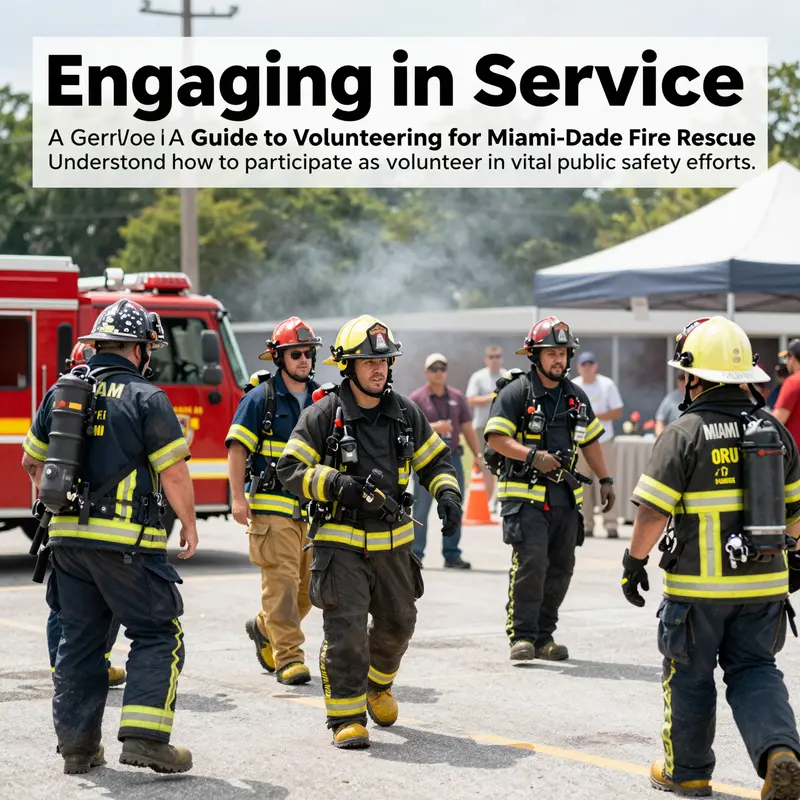
Volunteering for Miami-Dade Fire Rescue offers a unique opportunity to contribute to community safety while gaining invaluable experience. With the backdrop of emergency preparedness and public service, potential volunteers play a critical role in supporting fire rescue operations. This comprehensive guide outlines eligibility requirements, the application process, training steps, and specific responsibilities of volunteers, ensuring a thorough understanding for interested individuals, educators, or those in emergency response roles. By embracing this chance to serve, volunteers not only enhance their own skills but also strengthen their local community’s resilience.
From Eligibility to Action: Navigating Real Volunteer Opportunities with Miami-Dade Fire Rescue
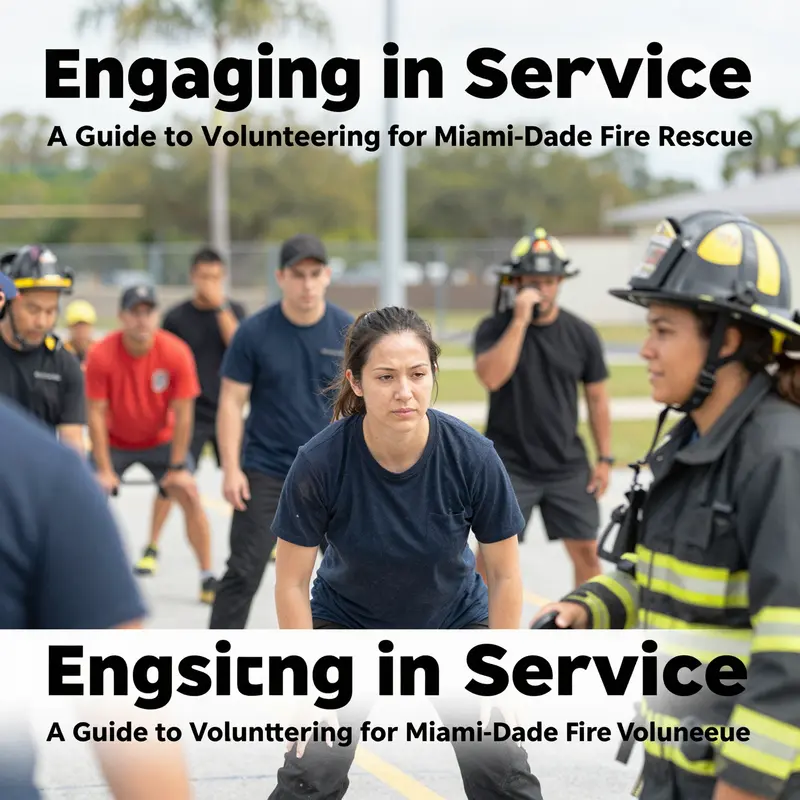
Volunteering for a city’s fire rescue department can feel like stepping into a future built around courage, service, and communal safety. Yet the path isn’t always a straightforward application to a single, universally defined program. In Miami-Dade County, the contrast between perception and structure matters. The Miami-Dade Fire Rescue Department (MDFR) operates as a professional, paid agency, and its career personnel are employees, not volunteers. That reality can surprise someone who imagines a traditional volunteer fire department where citizens don turnout gear and respond to calls alongside full-time firefighters. Still, service is far from absent. Community involvement remains active through auxiliary avenues and non-uniformed volunteer opportunities that support the department’s mission in meaningful, essential ways. Understanding the difference between these avenues is the first step toward translating a desire to help into concrete, aligned service. If you’re drawn to public safety, you deserve a clear map to where your efforts will fit—and where you can grow, contribute, and learn while strengthening the community you call home.
The most direct truth to keep in mind is that MDFR’s formal, on-call firefighter or emergency responder roles are staffed by career personnel. Volunteers do not serve as firefighters or paramedics in relief of immediate emergency response. However, this does not close the door on volunteering altogether. The Miami-Dade County Fire Rescue Auxiliary represents a non-uniformed, structured pathway for involvement. This auxiliary group complements the department by handling administrative tasks, assisting with public education outreach, and providing event support. They help extend the department’s reach, share safety knowledge with residents, and stand beside responders in moments of community need, all while operating under supervision and within established guidelines. If your calling is to serve, the Auxiliary can offer a substantive and well-defined entry point that respects the department’s professional standards while leveraging your strengths in organization, communication, and community engagement. To make sense of what’s possible, it helps to map out the eligibility landscape, the application routes, and the training that turn interest into reliable service.
Eligibility often feels like the most crucial hurdle to overcome. In the MDFR ecosystem, there are baseline expectations that align with public service and public safety culture. The Auxiliary requires volunteers to be at least 18 years old, to be a U.S. citizen or legal resident, and to pass a background check. These prerequisites reflect the department’s commitment to safety, accountability, and public trust. While some formal volunteer pathways tied to firefighting duties may have additional licensing or credential requirements, the auxiliary framework focuses on reliability, communication, and regular participation rather than on-the-ground emergency response. A strong applicant appreciates risk awareness, the ability to collaborate with uniformed staff, and a readiness to learn. The emphasis on training is non-negotiable. Volunteers are expected to attend training sessions, participate in drills as required, and meet ongoing participation commitments that ensure they remain competent and connected to the department’s evolving needs.
When you’re ready to explore options, the practical starting point is the official MDFR channel for volunteer involvement. The department maintains a Volunteer and Auxiliary information hub that explains how citizens can engage, what roles are available, and what the process looks like. The application pathway is designed to be accessible, with a formal process you can follow step by step. While the navigation may vary over time, the core elements are stable: an online or in-person submission, a review phase, an orientation, and a training program tailored to the auxiliary context. The key is to begin with accurate, current information and to recognize that your first destination might be a place of learning and community outreach rather than a direct line to an emergency scene. As you read through eligibility notes, training outlines, and role descriptions, you’ll begin to see how your skills can contribute to the department’s public education mission and to the safety of neighborhoods across the county.
The application journey itself is not a mystery process so much as a structured onboarding that mirrors professional standards. Start by visiting the official MDFR website and locating the Volunteer or Auxiliary section—these pages outline how to initiate contact, which forms to download, and how to submit your interest. In many instances, the process involves downloading and completing a Volunteer Application Form, then submitting it online or in person, depending on current procedures. The steps are designed to be straightforward, but they also require careful attention: accuracy in your personal information, a clear demonstration of your commitment to regular training, and honest disclosure in the background check portion. The intent is to ensure that every volunteer or auxiliary member aligns with the department’s expectations for safety, reliability, and teamwork. If you’re unsure about any step, reaching out to the MDFR Volunteer Program via the published contact channels—phone or email—can clarify submission details and timelines. The department’s open invitation to community members to participate is a reminder that public service matures through conversation and proactive engagement as much as through formal paperwork.
Selection and training for auxiliary involvement occur after the initial eligibility screen. Applicants who meet the criteria are typically invited to an interview, and successful candidates move into an Orientation and Training Program. The curriculum is designed to build foundational knowledge in fire safety, emergency response basics, and the culture of teamwork that underpins all of public safety work. While you won’t be trained to fight fires or respond to medical emergencies as a volunteer, you will gain skills that are transferable to many contexts. First aid and CPR certification can be part of the training mix, and you will learn how to operate effectively in a team, how to communicate under pressure, and how to manage the logistics of large events or community outreach campaigns. The emphasis on physical fitness in this context serves to ensure you can participate fully in the activities you undertake, including drills and event setups that require stamina and mobility. The culmination of training sees volunteers placed with a fire station or a support unit where they can contribute their talents, knowledge, and energy in a way that complements the department’s operations. The hands-on experience you gain in this phase often opens doors to broader opportunities within the community services ecosystem, and it can be a meaningful way to grow your own capabilities while staying connected to the fire rescue world.
Duties and responsibilities for auxiliary volunteers reflect the department’s needs and your personal strengths. Non-emergency support tasks form the core of the volunteer experience. This can include assisting with public education initiatives—school visits, safety fairs, and community seminars—where you translate technical safety concepts into relatable, practical guidance for residents. Administrative duties at the station, event coordination, and logistical support for outreach programs are other essential functions. In some instances, auxiliary volunteers may assist during large community events or large-scale public safety campaigns, providing on-site support under supervision. The satellite nature of these roles means you can bring your own background—whether it’s in communications, education, logistics, or graphic design—and apply it in service to neighbors who benefit from better safety awareness and preparedness. Importantly, while auxiliary volunteers support many facets of the department’s mission, they do so without superseding the authority or responsibilities of uniformed personnel. The relationship is one of collaboration and shared purpose, grounded in professional standards and the discipline that public safety requires.
A practical view of the timeline helps many applicants plan their year. After submitting the application, there’s typically a period of eligibility verification, interviews, and scheduling for orientation. Training sessions are structured to fit around volunteers’ personal obligations, with a steady cadence that ensures new team members integrate smoothly without overwhelming their existing commitments. The end goal is not a one-off service but a sustainable pattern of involvement. Regular participation isn’t merely a rule; it’s a pathway to deeper knowledge, stronger community ties, and the personal satisfaction that comes from making a real difference in neighbors’ lives. If you crave a direct sense of contribution—the kind that comes from standing with others at community events, or that comes from guiding families through safety etiquette at a local festival—the Auxiliary route offers a clear, credible avenue to achieve that.
An important reality to keep in mind is that volunteering with MDFR in this auxiliary capacity does not place you in the same category as a sworn firefighter or a career responder. You won’t respond to emergency calls as a firefighter or paramedic. Instead, you’ll be part of a structured support system that expands the department’s reach into education, prevention, and community engagement. This distinction is not a barrier to meaningful service; it is a recognition of the different but equally valuable kinds of contributions public safety depends on. The public education and outreach components of auxiliary work can be deeply impactful. When you speak to students about fire safety, demonstrate at safety fairs, or help coordinate a community drill, you’re reinforcing prevention before crisis. Those early investments in preparedness can translate into fewer emergencies and better outcomes for families across the county. And if your energy lies in administration, event planning, or communications, you’ll find opportunities to apply your skills in ways that strengthen the department’s connection to the people it serves.
For readers who want a concise, concrete sense of how to begin, there is a straightforward path. Start by reviewing the official Volunteer and Auxiliary information on the MDFR site, confirm the current requirements, and identify which role aligns with your talents and schedule. When you submit an application, you’ll embark on a process that blends accountability with opportunity. The department recognizes that volunteers come from diverse backgrounds and bring varied strengths to the table. It is this diversity of skill sets that makes community outreach more effective, more inclusive, and more resonant with the residents who rely on the program for safety education. If you’re curious about the spirit of volunteerism and you want a gentle but meaningful onboarding into the world of public safety, consider beginning with a small, achievable commitment—perhaps a few hours a month at a safety event or in a school visit—and grow your involvement from there. A few interactions can yield powerful results: stronger community bonds, heightened awareness of risk factors, and a more confident public poised to respond to emergencies with proper knowledge.
To connect the idea of eligibility and opportunity with a tangible first step, you can explore a short primer on starting volunteer conversations and self-presentation, such as a concise read titled Hello World. It offers a beginner-friendly perspective on stepping into service and laying a foundation for future growth within public safety contexts. You can find it here: Hello World. This kind of exploration can help you articulate your interests to the MDFR Volunteer Program and to the Auxiliary leadership, ensuring your initial conversations are focused and productive. As you move from interest to action, keep in mind the core message: you are joining a disciplined, professional ecosystem that values community welfare, accountability, and teamwork. Your contribution—whether in outreach, logistics, or education—will be measured not only by hours served but by how effectively you help raise safety awareness and preparedness throughout the county.
For those who want to take the next step, imagine your year mapped out in a way that respects both your life and the department’s mission. The application process, interviews, and training will be your framework. The experience will be collaborative, involving seasoned staff, fellow volunteers, and the many community members you will touch through outreach activities. You will learn to translate fire safety concepts into practical guidance that resonates with families, schools, and neighborhood groups. You will become part of a network of volunteers who understand the value of consistency, reliability, and clear communication. You will also gain exposure to emergency operations environments in a supervised context, which can inform future career decisions should you decide to pursue further public safety opportunities through formal channels.
In sum, the path to volunteer service with Miami-Dade Fire Rescue is not a single lane but a network of options designed to fit different levels of commitment and interest. The formal firefighting and emergency response track remains a paid professional pathway. Yet the Auxiliary offers a robust, respected, and impactful route for adults who want to contribute to safety education, community engagement, and department support. By aligning your expectations with the realities of these programs, you can set a course for meaningful service that honors both your personal goals and the needs of your neighbors. The process—eligibility, application, training, and placement—remains consistent in structure, even as the roles you pursue flex to accommodate the department’s current priorities and the strength of your own capabilities. If you’re prepared to invest time, energy, and a spirit of service, there is a place for you in Miami-Dade County’s public-safety ecosystem. And if you want to see a concise primer that compels you to start a conversation about volunteering, that small step can be the catalyst you need to begin your own story of service with the community you care about.
External resource for further verification and current details on MDFR volunteer and auxiliary opportunities: https://www.miamidade.gov/firerescue/volunteer
From Call to Community: Navigating the Volunteer Journey with Miami-Dade Fire Rescue
Volunteering for Miami-Dade Fire Rescue begins not with a badge or a timetable, but with a shared commitment to public service and a readiness to serve one another in times of both calm and crisis. The city’s emergency response ecosystem thrives on the steady cadence of volunteers who support education, logistics, and readiness. This chapter explores how that journey unfolds, weaving together eligibility, the application process, training, and the meaningful daily work that underpins the department’s broader mission. It is a path that invites a steady, conscientious pace rather than a rush toward adrenaline, yet it remains a conduit to profoundly tangible impact in neighborhoods across Miami-Dade.
The first step into this world is knowing the baseline expectations. Eligibility is designed to ensure that volunteers share the department’s values and can meet the practical demands of consistent participation. Individuals must be at least eighteen years old, a basic threshold that aligns with the seriousness of the responsibilities and the maturity needed to navigate sensitive community education events and non-emergency support tasks. A valid Florida driver’s license is required, a practical acknowledgment that volunteers will sometimes move equipment, materials, or informational resources between stations, schools, and outreach venues. A background check, including fingerprinting, guarantees the safety of the public and the integrity of the program. Physical fitness standards come into play too; you may be asked to complete a physical ability test to demonstrate that you can contribute effectively in a team environment and stay resilient during drills and community events. Beyond the paperwork and tests, a genuine ability to commit to regular training and dependable on-call availability is essential. The department is looking for volunteers who understand that service is a regular, reliable commitment, not a one-off moment of participation.
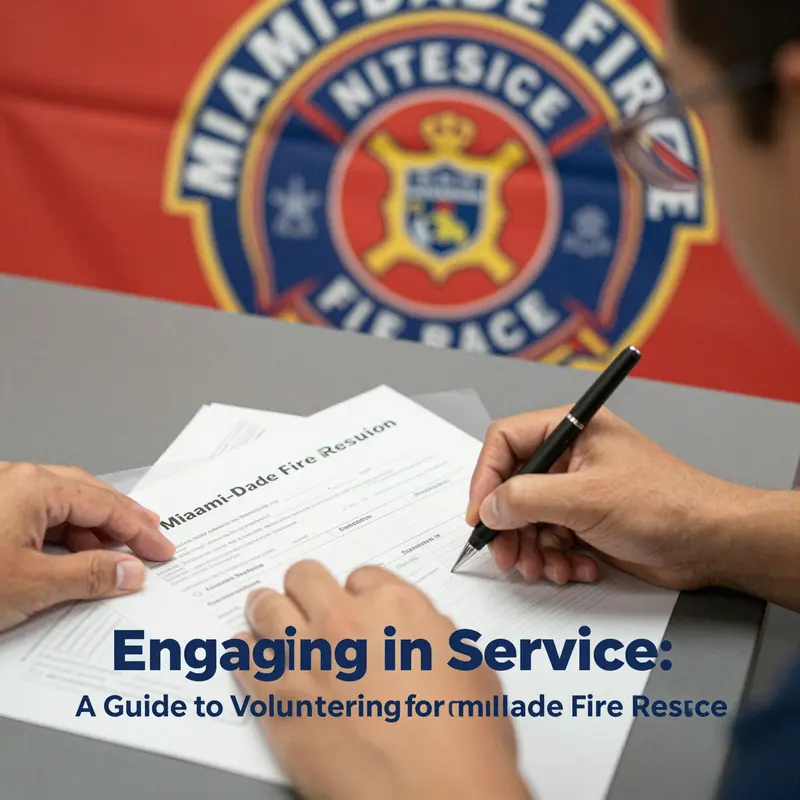
The application process itself begins on the official channel for the department’s volunteer opportunities. Prospective volunteers are encouraged to visit the official Miami-Dade Fire Rescue Department site and locate the Volunteer section, which typically sits under Community Services or Careers. There, you’ll download and complete the Volunteer Application Form, a document that captures your contact information, background disclosures, and your availability. Submission can be online or in person, depending on current guidance—an example of how procedures adapt to evolving operations while maintaining clarity for applicants. The emphasis is on accuracy and timeliness; incomplete or inaccurate forms can slow the process, while thorough, honest applications accelerate it.
Once an application is in, the process moves toward the interview phase. Applicants who meet the initial criteria are contacted for conversations with department personnel who assess fit, motivation, and alignment with the program’s values. An interview is less a screening and more a mutual exploration: what strengths do you bring, how do you handle responsibility, and how might you contribute to the department’s public-facing goals? A candidate who demonstrates reliability, empathy, and a clear understanding that volunteers do not replace firefighters or paramedics but support a wide range of non-emergency tasks stands out as a strong match.
Following a successful interview, volunteers participate in a Volunteer Orientation and Training Program. This training is the backbone of readiness and confidence. It covers fire safety and emergency response basics to establish common ground and language among volunteers and professional staff. While volunteers do not respond to emergency calls, they may gain exposure to the core principles of incident command, situational awareness, and teamwork—skills that translate to more effective outreach and support activities. First aid and CPR certification are often part of the orientation, equipping volunteers to assist in community events, school visits, and health fairs with a readiness that improves public safety outcomes.
A critical element of the training is the emphasis on teamwork and communication. Volunteers learn how to coordinate with firefighters, station personnel, and community partners so that outreach events run smoothly, supplies are correctly stored, and information is delivered accurately and respectfully. Drill exercises, including timed routines and role-play scenarios, help solidify the sense of rhythm and reliability that a public service operation requires. The culmination of training is a formal assignment to a fire station or a support unit. The assignment reflects the volunteer’s interests, abilities, and the current needs of the department, creating a mutually beneficial arrangement in which the volunteer gains meaningful experience and the department gains a trusted partner in outreach and operational support.
The duties entrusted to volunteers fall into a few broad categories, all centered on strengthening the department’s ability to serve the community beyond the immediate apparatus of emergency response. Public education and community outreach form a cornerstone: volunteers staff school visits, safety demonstrations, and community events, translating fire safety into practical, memorable messages for residents of all ages. Non-emergency support tasks are another vital function; volunteers assist with equipment maintenance, administrative duties, and the logistical backbone that keeps station operations running smoothly. In larger-scale incidents or during planned emergency preparedness initiatives, volunteers—under supervision and in coordination with trained personnel—play a crucial role in facilitating the flow of information, managing crowd safety at events, and supporting supply chains for educational materials and safety gear.
One key point that helps volunteers plan their commitments is the explicit note about the scope of duties: volunteers do not respond to emergency calls as firefighters or paramedics. This boundary helps manage expectations and clarifies the essential distinction between professional responders and volunteers who contribute in complementary capacities. In many communities, this distinction is a reminder that every role matters and that both emergency responders and volunteers rely on a shared culture of safety, accountability, and service. Volunteers often describe a sense of belonging that grows from this shared aim—a feeling that they are part of a larger, country-wide tradition of public service, grounded in practical, everyday acts that reduce risk and promote resilience.
Preparing for and managing the application process requires organization and self-awareness. Collecting documentation such as proof of residency and identification is a practical early step. Candidates should be prepared to present themselves honestly during the interview and to discuss how their personal schedule and commitments align with the department’s training events and on-call expectations. Time management becomes a character trait in itself here: the ability to attend regular trainings, participate in events, and remain visible to station leadership matters as much as any single skill. Some applicants bring prior experience in service, education, or community work, and those experiences can enrich conversations about how to connect with diverse neighborhoods and schools, explain fire safety concepts clearly, and tailor outreach to different audiences.
As part of the journey, it can be helpful to keep the broader context in view. Volunteers are not merely a workforce filler; they are ambassadors who translate the department’s mission into everyday public safety literacy. They illuminate why fire prevention matters, how emergency services operate behind the scenes, and what communities can do to prepare for disasters. The relationship between volunteers and professional staff is built on mutual respect and a shared commitment to service. When volunteers attend events at schools or senior centers, they become part of a network that helps families feel safer and more capable in times of stress. In this sense, volunteering creates a form of civic literacy, one that residents carry back into their homes and neighborhoods.
As readers consider embarking on this path, a practical note can anchor decisions: identify the pace at which you can meaningfully participate. Regular training and on-call availability are not just formalities; they are the currency of trust in this ecosystem. If your personal and professional life can accommodate a steady rhythm of education sessions, drills, and community outreach events, you will likely find the volunteer pathway to be both achievable and deeply rewarding. For those who feel drawn to sustainable, community-centered fire service culture, remember that opportunities for growth exist at every stage of the journey. The ethos is not only about learning safety protocols; it is about learning how to communicate those concepts with empathy, how to engage families in dialogue about prevention, and how to contribute to a culture where readiness becomes a shared value across the city.
In this spirit, the journey through the volunteer program is not simply a checklist. It is an invitation to become part of a living ecosystem that supports every resident—from the youngest student curious about fire safety to the grandparent who attends a safety workshop. If you want a concrete reminder of the kind of culture volunteers help foster, consider the idea of a fire station reimagined as a community hub. The concept of a “green firehouse”—a place that prioritizes sustainable design, healthy workplaces, and accessible community spaces—offers a compelling lens for volunteers to envision the broader impact of their work. The Green Firehouse concept reflects how a department can balance operational readiness with public health, environmental stewardship, and inclusive community engagement. For those curious about how these values translate into real-world practice, this exploration can provide a thoughtful point of reference as you prepare to apply and participate in the program.
In terms of navigation and accessibility, it helps to be aware that the process is iterative. If an application is delayed or if a first interview does not result in immediate placement, there are constructive steps to take. You can update your availability, pursue additional certifications that may bolster your profile, and re-engage with the volunteer program once the next opportunity window opens. The department understands that life can shift, and it seeks to accommodate readiness while preserving the integrity of the selection process. The goal is to identify dedicated individuals who are prepared to grow with the department and who bring energy, reliability, and a sincere desire to contribute to the community. The path may require patience, but the reward is a sustained, meaningful way to give back while building skills and forming relationships that endure beyond a single event.
This chapter has traced a coherent arc—from eligibility and application to training, assignment, and daily duties. It is a narrative of preparation and partnership, grounded in the daily realities of public service and the shared aspiration to strengthen community resilience. For readers who want to explore further, the journey continues through the official channels and the internal resources that support volunteers as they grow into more capable educators, organizers, and stewards of safety. The internal experience of volunteering is, at its heart, a laboratory of civic engagement, a place where personal growth becomes a tool for the public good. The choices made at the outset—being honest about capacity, committing to regular participation, and embracing a team-based mindset—shape every outcome, from the quality of outreach events to the safety of the neighborhoods that rely on informed, prepared residents.
If you’re drawn to the intersection of service, education, and community building, the Miami-Dade Fire Rescue Volunteer Program offers a well-structured, supportive pathway to contribute meaningfully. It provides a framework that respects both the seriousness of emergency response and the indispensable value of non-emergency support. The process is designed to welcome thoughtful, capable people who want to learn, grow, and serve. In that spirit, every application becomes not only a step toward volunteering but a commitment to a shared city-wide mission: to protect, educate, and empower the communities we call home. For those ready to take the first step, the pathway is clear, and the door is open to a community of volunteers who stand beside professional responders to make Miami-Dade a safer place to live, work, and raise families.
Internal link reference for further context on community-centered fire service culture: The Green Firehouse: Creating sustainable spaces for community and health.
External resource for official program details: Official information and current guidelines can be found at the Miami-Dade Fire Rescue Volunteer Program page: https://www.miamidade.gov/fire-rescue/volunteer. This link provides the latest eligibility criteria, application forms, and contact details for the volunteer program that supports the department’s mission across the county.
From Applicants to Able Helpers: Navigating the Selection and Training Path for Miami-Dade Fire Rescue Volunteers
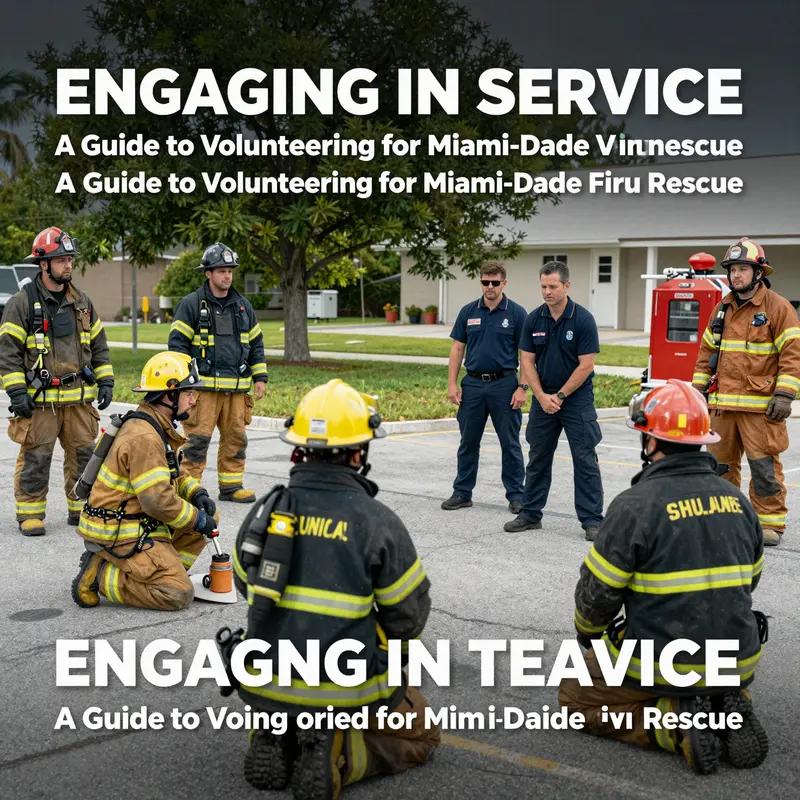
Joining the Miami-Dade Fire Rescue Volunteer Program is more than a line on a resume. It is a commitment to service, learning, and readiness. Volunteers extend the department’s reach into neighborhoods, supporting education, logistics, and community safety initiatives. They do not replace professional firefighters on the fire ground, but they play a vital role in prevention, awareness, and assistive tasks that make operations smoother for responders and safer for residents.
To begin, applicants must be at least 18 years old and be a U.S. citizen or legal resident. A valid Florida driver’s license is required to ensure mobility to events, stations, and training sites. A background check, including fingerprinting, screens for trustworthiness. Physical fitness matters; you may undergo a physical ability test. And you must be able to commit to regular training and on-call availability. These prerequisites are not mere formalities; they are the baseline that keeps volunteers aligned with the department’s standards for safety, reliability, and teamwork.
The process starts online through MDFR’s Volunteer Program site. You fill out personal information, employment history, and references. A screening interview follows for most candidates. It looks at motivation, communication, and overall suitability. Those who make it past the interview move to a formal assessment, which may include written tests, situational judgment exercises, and a physical ability test (PAT). The sequence is designed to build a foundation of competent, dependable volunteers who can operate in harmony with trained staff.
An offer of appointment arrives for those who excel in the assessment. The commitment begins as you enter a comprehensive training program designed to prepare you for your role. This isn’t a quick orientation; it is a structured path that blends classroom instruction with hands-on field exercises. The aim is to create not only technically capable volunteers but also confident communicators who can adapt to evolving community needs and emergencies.
The training itself builds from a strong foundational curriculum. Volunteers learn fire suppression fundamentals, hazardous materials awareness, EMS basics, rescue operations, and fire prevention education. Certification is a key milestone. MDFR volunteers pursue the National Fire Protection Association (NFPA) 1001 Standard for Fire Fighter I certification, a credential that marks readiness for broader duties within the department. Achieving this certification signals that a volunteer can operate with a level of autonomy while maintaining strict adherence to safety protocols and departmental procedures.
Beyond the core curriculum, additional training modules cover the incident command system, proper use of personal protective equipment, and vehicle safety. These modules are not mere formalities; they create a common language and a disciplined approach to safety, which matters when you are assisting in community events or supporting emergency operations under supervision. The training is conducted at the MDFR Training Academy and lasts several months, varying with each trainee’s progress. The pace is deliberate, allowing volunteers to integrate knowledge with muscle memory and situational awareness that only repeated practice can cultivate.
Upon successful completion of training, volunteers are sworn in and assigned to a fire station or a support unit based on operational needs. You may find yourself at a neighborhood station, a community risk-reduction unit, or an administrative support group. In all cases, your role focuses on non-emergency duties that complement the firefighting function. You’ll participate in public education and community outreach, assist with equipment maintenance, and take on administrative tasks that keep the department organized during busier periods. During large-scale incidents, you may be part of the broader support network, contributing to logistics and communications under supervision. The important point is that volunteers do not respond to emergency calls as firefighters or paramedics; rather, they enable responders to maintain focus on critical, time-sensitive tasks. This distinction matters to volunteers too, because it clarifies expectations and aligns personal strengths with department needs.
The selection process is designed to be rigorous yet fair. It seeks individuals who combine motivation with reliability, and who can work well within a team under pressure. The interview and assessment stages help the department gauge not just knowledge, but also a candidate’s communication skills, problem-solving approach, and ability to follow procedures. Prospective volunteers who pass the formal assessment receive an appointment offer and begin preparing for training. This path fosters a sense of identity and purpose, linking personal growth with community safety. The experience of being selected becomes a turning point; it signals that your commitment to service is matched by a structured opportunity to contribute meaningfully.
For applicants who want a broader view of how fire-service communities are rethinking space and health, see the-green-firehouse-creating-sustainable-spaces-for-community-and-health. This illumination of sustainable practices resonates with the volunteer ethos, where every role supports the whole system and the people it serves. The idea extends beyond the immediate duties and speaks to the long-term health of neighborhoods, which volunteers help safeguard through education, outreach, and hands-on support.
As you plan your journey, maintain attention to logistics. Keep your Florida driver’s license current. Prepare references who can speak to your character and reliability. Stay physically active, because maintaining appropriate fitness is a recurring theme throughout the program. Schedule time for training, because consistency matters. And cultivate a mindset of service that looks beyond your own needs to how you can contribute to your neighbors, schools, and local organizations in partnership with MDFR. These decisions compound over time and shape not only how you perform as a volunteer but how communities perceive and value prevention, preparedness, and mutual aid.
If you are curious about the official procedural details and want to verify requirements in real time, refer to the MDFR Volunteer Program page for the most current information and submission instructions. The site outlines how to begin your application, the criteria used during screening, and the anticipated timelines for interviews and assessments. The steps are clear, but the path demands commitment, patience, and a readiness to learn. Many volunteers recount that the formal process itself teaches habits of punctuality, documentation, and accountability that spill over into other areas of life, from school to family routines. It is not merely about filling a role; it is about adopting a craft, becoming part of a lineage of public service, and discovering a renewed sense of purpose that comes from helping others.
External context can also help frame your preparation. For those who want a broader understanding of the training landscape and how volunteer integration complements professional response, consult established guidelines and real-world examples from recognized public-safety resources. These references reinforce the idea that volunteers are essential to building safer communities, and they underscore the value of structured training in reducing risk and increasing effectiveness. You can explore official program information and related standards to gauge what lies ahead and how to prepare yourself for success. The journey may be demanding, but it is also deeply rewarding when a community member notices a safer neighborhood, a school visit that leaves a lasting impression, or a volunteer-led demonstration that turns curious kids into informed advocates for fire prevention.
External resource: Miami-Dade Fire Rescue Volunteer Program (official information) at https://www.miamidade.gov/fire-rescue/volunteer
Guardians of the Flame: The Duties and Daily Discipline of Miami-Dade Fire Rescue Volunteers
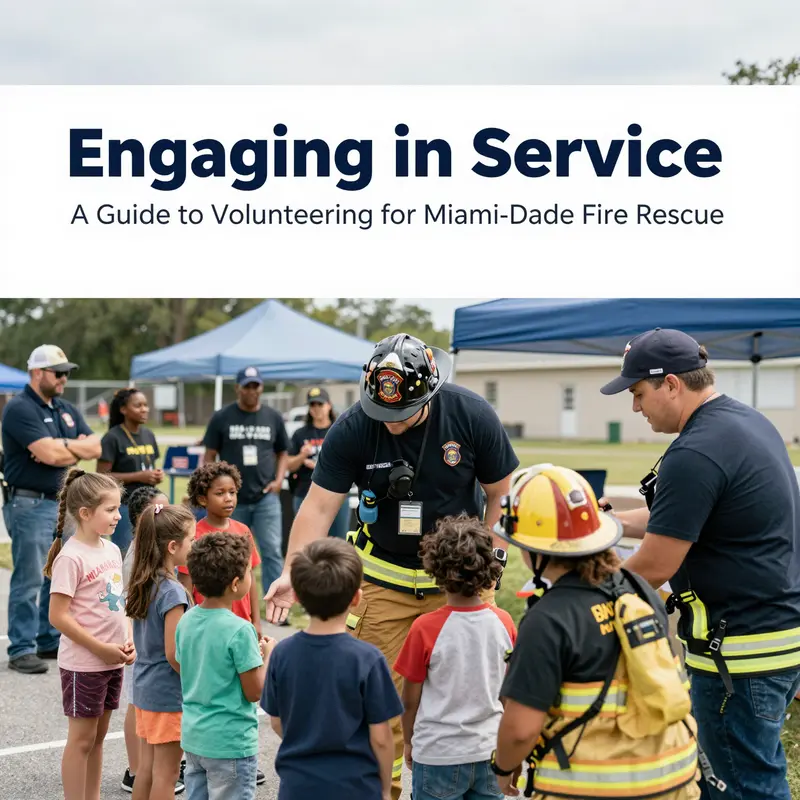
In the steady heartbeat of Miami-Dade’s emergency response system, volunteers move with a quiet, practiced discipline that often goes unseen by the public. They are not the firefighters who ride the aerials or the paramedics who sprint into a burning building, but they are an indispensable pillar of the department’s mission to protect life, property, and the environment. Their duties are designed to complement the paid personnel, to extend reach into neighborhoods, schools, and events, and to uphold the highest standards of service and safety. The path to becoming a volunteer is as much about mindset as it is about skill, because the day-to-day life of a volunteer is a mosaic of training, on-call readiness, and a perpetual commitment to learning. This chapter threads together the essential duties, the rhythm of training, and the culture that sustains Miami-Dade Fire Rescue’s volunteer program, illustrating how ordinary people become extraordinary guardians within a city that never truly sleeps.
At the core, eligibility sets the tone for the kind of volunteer who thrives in this environment. Volunteers must be at least eighteen years old and must be a U.S. citizen or legal resident. A valid Florida driver’s license is required, underscoring the practical reality that volunteers may move between stations, school events, and community venues, sometimes on short notice. The background check, including fingerprinting, is not a formality but a fundamental pledge to safety and accountability. Physical fitness matters, because even non-emergency support tasks can demand stamina, agility, and the capacity to work under stress. A commitment to regular training and on-call availability completes the triad that binds volunteers to the department’s standards. These criteria are not gatekeeping; they are a map of the responsibilities ahead and a promise to uphold the standards that protect the public during the most challenging moments.
The application process mirrors the seriousness of the role. Prospective volunteers begin by visiting the official Miami-Dade Fire Rescue website and navigating to the Volunteer section. The process requires downloading and completing the Volunteer Application Form, followed by submission either online or in person, depending on current procedures. From there, the department selects applicants for interviews, a step that allows both sides to assess fit—how a person’s skills, availability, and values align with the department’s mission. Selection leads to a Volunteer Orientation and Training Program, a structured entry into a culture built on discipline, teamwork, and continuous improvement. The orientation is more than a formality; it is where volunteers are immersed in fire safety and emergency response basics, first aid or CPR certification if required, and the essential soft skills of teamwork and communication. The physical elements of training—drills, pump operations, and equipment familiarization—pattern the body to respond swiftly and safely when it counts.
What follows training is a transition from theory to practice. Volunteers are assigned to a fire station or support unit where they integrate into daily routines and respond to real-world needs under supervision. The nature of their duties is intentionally varied, designed to leverage their diverse strengths while maintaining a coherent chain of command. One of the clearest distinctions, often clarified in training, is that volunteers do not act as firefighters or paramedics during emergency responses. They do not replace paid personnel on scene; instead, they provide critical non-emergency support, contribute to the safety and efficiency of operations, and assist with tasks that enable the department to respond more effectively when time is of the essence.
During a shift, volunteers may be called upon to support a broad spectrum of emergency operations, depending on the incident and the scene’s needs. They often contribute to scene safety, a role that requires vigilance, situational awareness, and the ability to follow established protocols under pressure. They may help with equipment setup—unloading, inspecting, and preparing gear so that the responding team can deploy quickly and with confidence. Patient care can also be part of a volunteer’s responsibilities, most often in support roles that complement professional responders. In all cases, volunteers operate under careful supervision and within the scope defined by the department’s policies. The careful delineation of duties protects volunteers from overreach while ensuring that the team can act cohesively when seconds matter.
Another major thread in the fabric of a volunteer’s duties is the ongoing commitment to training. Regular sessions and refresher courses keep volunteers current on fire suppression techniques, emergency medical response basics, hazardous materials handling, and the incident command system that structures complex operations. Certification maintenance is not optional; it is a condition of active status. The department emphasizes that staying current is a personal obligation that ensures everyone on the team can coordinate seamlessly. Beyond formal certifications, volunteers cultivate practical expertise—understanding the layout of stations, the types of equipment in use, and the routines that keep everyday operations running smoothly. This blend of formal credentialing and hands-on familiarity makes volunteers reliable, predictable, and capable even when the environment shifts quickly.
Community education and outreach emerge as a defining responsibility. Volunteers are often the face of safety for the public, participating in fire prevention campaigns, school visits, and neighborhood outreach events. They translate complex safety concepts into accessible information, teaching families to install and maintain smoke alarms, plan home escape routes, and practice fire drills. In this capacity, volunteers extend the department’s reach far beyond response times. They become trusted messengers in communities that might not regularly encounter firefighting professionals, helping to foster a culture of preparedness and resilience. The value of this work grows when it is paired with the smaller, day-to-day tasks that reinforce safety habits—equipment checks at community centers, organizing informational booths at events, and coordinating volunteer crews for large public gatherings. All of these efforts contribute to a safer environment because prevention is often the line between a minor incident and a major tragedy.
Record keeping forms another essential pillar of volunteer duties. Volunteers maintain logs of shifts, track training completion, and document equipment checks. This accountability supports transparency and resource management, ensuring the department has a clear picture of who is on duty, what training remains current, and when equipment requires maintenance or replacement. Meticulous record-keeping is not merely bureaucratic; it is a concrete expression of professionalism and reliability. It also helps volunteers reflect on their own progress, set targets for renewal, and recognize how their growing competencies contribute to the collective safety of the community.
The duties of volunteers intersect with a broader understanding of safety that includes vulnerable populations and high-risk environments. The department’s educational and community outreach efforts frequently touch on senior care facilities, schools, and housing developments where tailored safety messaging matters. In the context of evacuation planning and emergency preparedness, volunteers bring both empathy and practical skills. They listen to community concerns, adapt information for diverse audiences, and model calm leadership during public events. These tasks demand soft skills—clear communication, patience, reliability, and the ability to work with a wide range of partners. Training reinforces these competencies, helping volunteers translate technical jargon into everyday language and ensuring that audiences leave with actionable steps rather than overwhelming instructions.
A thread worth noting in the chapter of duties is the constant interplay between independence and supervision. Volunteers are trusted with meaningful responsibilities, but they operate within a carefully designed framework that protects them and the public. This balance is visible, for example, in the distinction between non-emergency support roles and the on-call response capabilities assigned to some volunteers. While volunteers may respond during their assigned shifts, the expectation is not to operate as a stand-alone firefighting team. The goal is to augment the department’s capacity, free up paid personnel for high-priority tasks, and create a broader safety net for residents and visitors. In practice, this means volunteers train to handle scene safety tasks, assist with equipment checks, and support medical or administrative duties with precision and care. The integrated approach—combining field readiness with community-facing initiatives—embodies the department’s philosophy of service: a well-prepared force that can adapt to the city’s evolving needs without compromising safety or accountability.
Of course, the path of a volunteer is not just about what happens during a shift. It also involves reflection on the big-picture impact of their work. When a volunteer visits a school to teach children about home fire safety, they witness firsthand how information can transform behavior and reduce risk. When they assist with equipment maintenance at a station, they see the tangible outcomes of disciplined routines. When they participate in a community outreach event, they observe the public’s appreciation and the trust that grows between residents and the department. These moments accumulate into a sense of purpose that sustains volunteers through long hours, difficult calls, and the emotional weight that can accompany emergencies. The department recognizes this, and its culture emphasizes support, mentorship, and the ongoing education that makes volunteers resilient and capable.
For those considering a path in which they can deeply contribute without assuming the role of a professional firefighter, the volunteer program offers a meaningful alternative that still commands respect and accountability. The duties, while diverse, share a throughline: service to others requires preparation, teamwork, and a steady commitment to personal development. If a reader envisions a life centered on community service, public education, and capable, on-call collaboration with a trusted municipal institution, the Miami-Dade Fire Rescue volunteer experience provides a compelling blueprint. Those who pursue it often describe a sense of belonging within a network of like-minded individuals who show up not for accolades but for the quiet confidence that comes from knowing they can be relied upon when it matters most.
As part of understanding the full landscape of volunteer opportunities, readers may explore resources that frame the context of evacuations and safety planning for vulnerable populations. For instance, a deeper examination of evacuation practices—especially in senior care facilities—offers important lessons about how communities prepare for emergencies and how volunteers can contribute to safer outcomes. Left Behind: The Tragic Failures of Fire Evacuations in Senior Care Facilities provides a stark, if sobering, lens on where safety plans can fail and how vigilant, informed volunteers can help prevent harm by reinforcing preparedness messages and supporting caregivers and staff. Left Behind: The Tragic Failures of Fire Evacuations in Senior Care Facilities This reference underscores the responsibility volunteers assume when engaging with populations that require extra attention and planning, reminding us that every outreach effort has real consequences for people’s lives.
The volunteer pathway also includes a formal, progressive structure that allows volunteers to grow within the program. After the orientation and initial training, volunteers are assigned to stations where they learn the rhythms of that locality—the station’s resources, its partners, and the specific needs of the community it serves. They receive ongoing mentorship from seasoned personnel, which helps bridge the gap between classroom knowledge and field application. This mentorship is more than technique; it is a transfer of culture—the discipline, the calm under pressure, and the ethical grounding that defines service in a public safety organization. The emphasis on teamwork cannot be overstated. Miami-Dade Fire Rescue is a system of people working in concert, where volunteers contribute a critical layer of support that must harmonize with the department’s established procedures, command structures, and safety protocols.
The practical takeaway for someone contemplating volunteering is clear. It starts with meeting the eligibility criteria, followed by a commitment to the structured application and training process. It continues with a willingness to participate in regular drills, to maintain certifications, and to respond to on-call needs with responsibility. It includes the ability to balance this work with personal and professional obligations, recognizing that volunteers are often juggling multiple commitments while carrying a heavy, community-centered mission. And at every step, there is a reminder of the bigger purpose: to reduce risk, to educate, and to support communities in moments of vulnerability. This is where the duties and responsibilities of Miami-Dade Fire Rescue volunteers intersect with everyday life—the quiet acts of preparation, education, and service that collectively translate into safer neighborhoods and more resilient families.
For anyone who wants to explore the concrete channels through which this work can begin, the official pathway is well defined online. The Fire Rescue Volunteer Firefighter Jobs page offers a clear overview of roles, expectations, and entry points, along with contact information for the volunteer program office. While the day-to-day experiences of volunteers vary by assignment, the shared thread is a commitment to safety, professional conduct, and a willingness to contribute to something larger than oneself. The department’s framework ensures that volunteers are prepared for the responsibilities they undertake and supported in their growth as members of a public safety team. The result is a robust, dynamic cadre of volunteers who embody service in a city that demands both courage and care from its guardians.
External resources, case studies, and community narratives all reinforce the value of the volunteer model. They illuminate how preparation, ongoing education, and meaningful engagement translate into real-world impact. The long arc of a volunteer’s journey—from applicant to active contributor—illustrates how individual dedication can augment public safety infrastructure without diluting accountability or standards. And it clarifies that while volunteers may not replace paid personnel on every emergency scene, their contributions—through education, logistics, and hands-on support—make the entire system more capable and responsive. The city’s volunteer program is a testament to how citizen involvement, when organized and governed with care, strengthens community safety and resilience for everyone who calls Miami-Dade home.
For readers seeking a starting point, the official volunteer program page remains the most authoritative resource, offering up-to-date guidance on eligibility, the application, training timelines, and the nuances of what volunteers can and cannot do on scene. The program underscores that becoming a volunteer is not a casual hobby but a serious commitment to service, safety, and personal growth. As with any public service program, the value lies in consistency and trust: people who show up prepared, stay current, and carry forward the department’s standards in every interaction, every drill, and every outreach effort. With this understanding, prospective volunteers can approach the process with clarity and purpose, ready to contribute to a city whose strength depends on the quiet, steady work of its guardians.
External resource: https://www.miamidade.gov/fire-rescue/volunteer-firefighter-jobs
Final thoughts
Volunteering with Miami-Dade Fire Rescue not only bolsters community safety but also enriches personal development through training and public service. By understanding the eligibility requirements, navigating the application process, and embracing rigorous training, individuals can effectively contribute to essential fire and rescue efforts. The dedication of volunteers is crucial to bridging the gap between emergency services and the community. As the needs of Miami-Dade evolve, so too does the opportunity for passionate individuals to step forward and play a significant role in enhancing local resilience.