
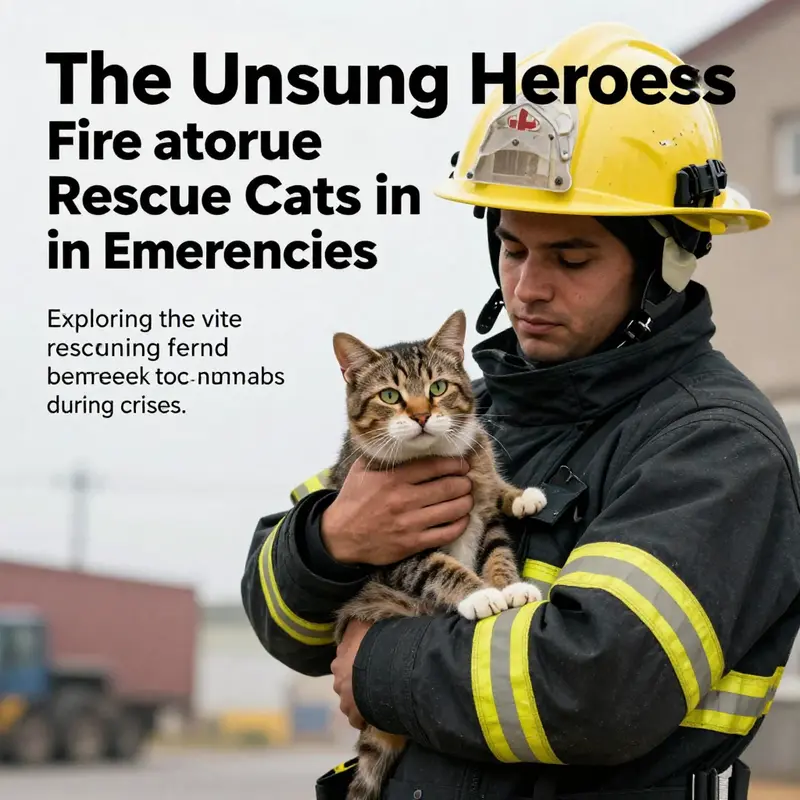
When faced with dangerous situations, fire departments are often seen rushing to save lives. But many do not realize that cats, beloved members of countless families, also benefit from these brave efforts. Fire departments are trained not only to handle human emergencies but also to respond to the plight of animals in peril. This article delves into the critical circumstances in which fire departments come to the aid of cats, highlights notable rescue cases that showcase their commitment, and addresses the ethical considerations and limitations surrounding these rescue operations. Furthermore, it will examine collaborations between fire departments and animal rescue organizations, reinforcing the message that protecting all lives is a shared responsibility. Readers will gain a comprehensive understanding of the intersection between firefighting and animal rescue, illustrating that in the heart of every courageous firefighter lies compassion for all living beings.
In the Line of Fire: How Fire Departments Rescue Cats in Real Emergencies
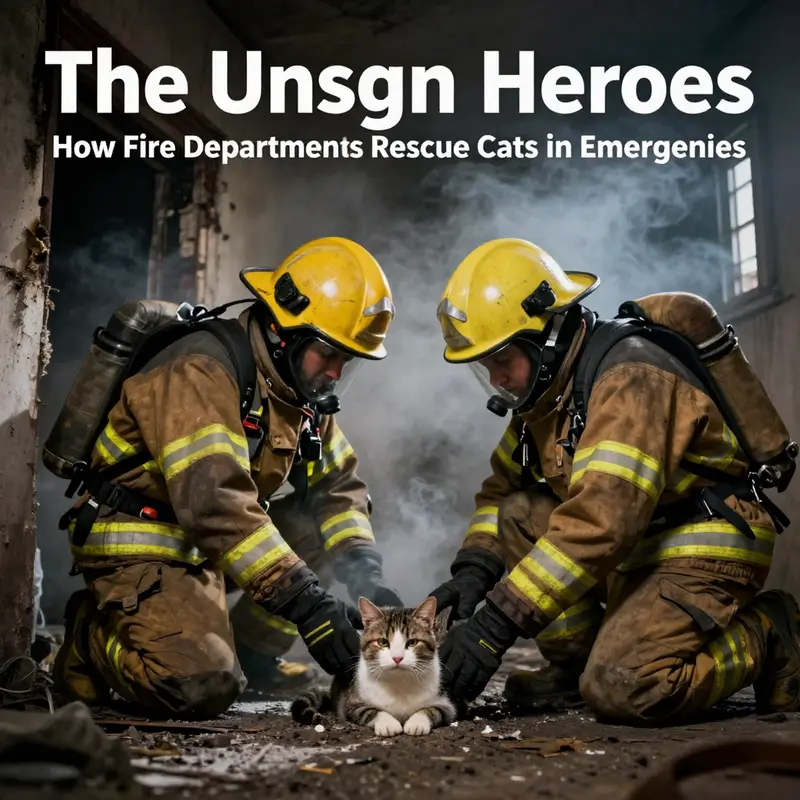
Fire departments stand at the crossroads where danger meets duty, yet their mission extends beyond human life. They are guardians of communities, trained to enter environments that test nerve and skill alike. In moments when a cat’s survival hinges on a swift, careful intervention, firefighters respond not as generalists only protecting property, but as stewards of all life within the urban fabric. The idea that a fire crew would pause for an animal rescue may surprise some, yet the record across regions and years shows that feline safety is a meaningful thread in the broader tapestry of life-saving work. When a tiny heartbeat flickers behind smoke, glass, or rubble, the same calm method and teamwork that underwrites human rescue take center stage for the smallest member of the household. The chapter that follows threads these moments together, showing not only dramatic saves but the quiet, often unsung routines that enable them to occur with integrity and care.
Across continents, fire departments are repeatedly called to situations where a cat is in imminent peril. In the haze of a residential fire in Shenzhen, a pet cat clung to a fifth-floor window frame as the building’s structure groaned with heat and strain. A firefighter reached through a curtain of smoke, cradled the animal in steady arms, and pulled it to safety moments before danger overwhelmed the corridor. The scene was captured in stills and clips that traveled quickly online, admired for the tenderness that sat alongside the urgency. It was not a one-off gesture but a reminder that rescue work encompasses all beings sharing a common space of risk. In such moments, the care extended to a cat becomes a concrete testament to the department’s pledge to protect life, irrespective of species, age, or size.
If one story abroad underscores resilience, another highlights the human side of resource management in high-stress conditions. In Hohhot, Inner Mongolia, a warehouse fire left a cat scorched, severely injured, and largely disoriented amid the rubble. Firefighters did not simply extinguish flames and catalog losses; they dug through danger to reach an animal that seemed almost beyond hope. The cat survived after veterinary care, and the rescuer’s generosity—covering treatment costs—became a teaching moment about the intimate ties between service and community. These instances echo a broader principle within firefighting: the willingness to extend life-saving instincts to animals, a reflection of a culture that prizes every living being whose life flickers in the emergency spotlight.
The year 2022 brought another stark reminder of why animal rescue belongs in the firefighting milieu. In China, a concerted team effort saved thirty-eight kittens overwhelmed by smoke, highlighting how animal rescue operations can be integrated into standard firefighting procedures rather than treated as separate missions. Those kittens, unconscious from smoke inhalation, were cared for by veterinary teams and monitored for recovery, illustrating the continuum of care from moment of rescue to ongoing recovery. The math of such rescues is simple and compelling: every life saved matters to the family, the neighborhood, and the moral economy of public safety. The scale of the act—saving dozens of small lives during a single incident—also reframes what fire departments are capable of when backed by trained personnel who understand that risk is not a property line, but a spectrum that includes animal welfare.
Beyond the headlines, there are institutional expressions of this ethos that deserve attention. A dedicated corps known colloquially as the Cat Firefighters—often referred to by the Chinese phrase He Mao Zhu, or “Live with Cats”—has built a remarkable track record since 2019. This specialized mobilization has rescued more than four thousand cats, forging partnerships with public events and establishing a recognizable niche within the broader rescue ecosystem. The forging of such teams does not imply that ordinary firefighters are expected to toggle between human and animal rescue at every call; instead, it points to a recognition that communities benefit from having ready, trained responders who can handle animal rescues when they arise and integrate these responses into larger emergency plans. The stories surrounding He Mao Zhu emphasize a social dimension of the job: animal rescues can become a visible, affectionate bridge between the public and the fire service, strengthening trust and collaboration.
Heartwarming incidents also touch everyday life in quiet but meaningful ways. In Fuzhou, a cat’s meowing with sudden urgency alerted a family member to thick smoke creeping through living spaces, enabling a timely evacuation. Such moments underscore a web of interdependence between human safety and animal behavior, reminding residents that pets are often canaries in the coal mine of home danger. Firefighters rarely meet these moments as rehearsed rituals, yet the patterns show how animal presence in a household can drive protective action that benefits everyone. The moral arc here is not only about saving a life but about honoring the familial bonds that pets represent for many people. It is a reminder that the home is a shared space where every life matters, even when danger demands swiftness and precision.
When we step back from specific rescues, the larger ethics of emergency response come into sharper focus. Firefighters are trained to carry risk with discipline, and the decision to engage in an animal rescue sits within that risk calculus. In some situations, public safety officials stress that emergency numbers should be reserved for true emergencies and that non-urgent animal rescues—such as a cat stuck in a tree or on a balcony without imminent danger—are better handled by specialized animal rescue teams or other professionals. This approach preserves critical resources for human life threats where timing is everything. It also acknowledges the practical limits of any service system, inviting communities to partner with animal welfare organizations and veterinary networks when the danger to life is not immediate. In line with this, analyses of California wildfires emergency response failures illustrate how stretched resources can complicate decision-making and demand careful triage in the most stressful moments. California wildfires emergency response failures.
The discipline behind these rescues is not glamorous in the sense of explosions and sirens dominating the skyline; it is an exercise in calm, procedural care. Firefighters practice restraint when threading through smoke and debris, using search patterns that maximize the chance of finding any living creature without duplicating risks. The gear they wear is designed not only to shield from heat but to enable precision movement in fragile space. They may not always succeed on their first attempt, but persistence, patience, and careful communication with team members—both inside the building and at the medical handoff point outside—often determine whether a small life can be saved. In this light, the rescue of a cat becomes a microcosm of the broader goal: to extend lifelines into danger zones while maintaining a disciplined, professional posture that can be trusted by the community.
Resource allocation remains a persistent challenge for fire services, especially during large-scale emergencies. The need to balance human evacuations, medical triage, and property protection with animal rescues is delicate. Stories from across the globe show that firefighters will step toward risk to save a cat when the danger is real and the rescue is feasible. When it is not, they will focus on those actions whose impact is immediate and life-saving. The central insight is not that every cat rescue is a heroic exception, but that it is a consistent, values-driven extension of the core mission: preserve life and alleviate suffering whenever possible. That mission rests on public trust, strong partnerships with animal welfare groups, and ongoing training that frames animal rescue as a legitimate, integrated form of life safety.
In the end, communities are composed of people and pets—a shared ecosystem in which daily routines, fear, and hope intersect. Fire departments, through both dramatic saves and the quiet, careful work of extraction, demonstrate a deep commitment to all forms of life under their protection. The world has learned to admire the scenes of bravery where paws emerge from smoke, but it has also learned to value the steady, professional approach that keeps people safe while offering compassionate assistance to animals in distress. As fires and disasters continue to test neighborhoods, the rescue of cats serves as a poignant reminder that life is not a binary of human or nonhuman, but a continuum in which every living being deserves a chance at survival. This understanding strengthens the public’s confidence in emergency services and encourages ongoing collaboration with animal welfare networks to ensure that all lives are considered when the sirens wail and the flames rise.
For readers seeking broader context on how communities navigate the balance of human and animal rescue during large disasters, it is instructive to consider how emergency response systems adjust when resources are stretched. The ongoing conversation about these dynamics feeds into policy discussions, training priorities, and public expectations for fire service agencies. As the conversation continues, these chapters lay the groundwork for understanding not only what fire departments do, but why they do it—how the line between danger and duty is navigated to protect every life entrusted to their care. In the end, the question is not whether fire departments rescue cats, but how the practice strengthens the fabric of safety that holds communities together. For readers who want to explore related themes on the human side of wildfire response failures and the evolving role of emergency services, see the linked discussion above and consider additional perspectives from widely respected public safety resources. For broader context, see https://www.nfpa.org/.
When Firefighters Answer the Call for Feline Life: Notable Cat Rescue Cases by Fire Departments
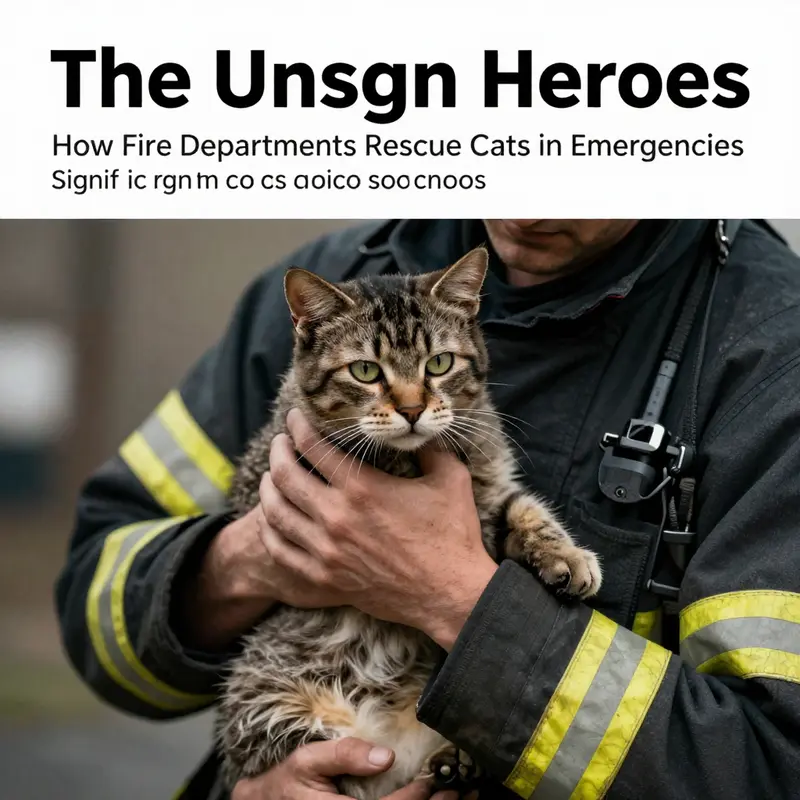
Life safety is the compass that guides every action in the fire service, but the compass often points toward a broader horizon: the protection of life in all its forms. The public image of firefighting is built on sirens, hoses, and heroic saves, yet the daily reality extends beyond flames and smoke. In many urban and rural communities, animal welfare has become a measurable aspect of public safety. Cats, dogs, and other companions frequently become part of the rescue narrative when danger threatens their homes. Fire departments that embrace this expanded mission do so not out of sentiment alone but because the rescue of a vulnerable animal can stabilize a scene, calm anxious residents, and restore a sense of safety after a chaotic incident. The argument that animal rescues drain scarce resources is answered by the practical outcome: every life saved is a sign of effective incident management and community protection. In this chapter we trace a thread through notable cases, shared protocols, and the evolving culture that binds human and animal rescue under one umbrella of life preservation.
In the swiftly unfolding moments of a residential fire in Shenzhen during 2025, a cat clung to a window frame as heat and smoke pressed in from all sides. A firefighter moved with practiced restraint, mapping a path through heat, debris, and the risk of structural collapse. The cat was retrieved and carried to safety just as the building’s balance shifted, a split-second win that underscored the precision required in animal rescues. The moment mattered not only to the pet’s guardians but to the crew, who recognized that every step in the chain of survival for a cat mirrors the same care applied to human victims. Rescue work in such settings hinges on balancing speed with technique, understanding feline distress signals, and maintaining calm to prevent further stress. It is a vivid reminder that the line between ordinary emergency response and specialized animal rescue can blur when danger is imminent and a household pet is at stake.
A different kind of rooftop drama unfolded in December 2025 in Broken Arrow, Oklahoma. Firefighters were summoned to a three-story building where a cat had become stranded on the roof. The crew did not hesitate; they deployed a climb, negotiated the building’s edges, and secured a harness that allowed them to bring the animal down without injury. The cat emerged unscathed, its domain secured, and the reunion with its owner became a small, powerful illustration of how fire teams adapt to nontraditional emergencies. This rescue underscores a core attribute of modern fire departments: flexibility. When danger and uncertainty are paired with an animal in peril, responders improvise within established safety protocols to secure the outcome. The scenario also highlights the emotional resonance of these saves, which audiences remember and share, reinforcing the idea that life preservation transcends species and circumstances.
Across the broader landscape of rescue work, not all heroic acts occur within the official umbrella of the fire service. In Chengdu, a network of volunteers has earned the nickname cat firefighters for their specialized approach to high-rise rescues. Through rope systems and patient, methodical handling, rescuers there have reportedly saved thousands of cats since 2016. The scale of this effort reveals an important dynamic: communities supplement municipal capacity with dedicated teams capable of rapid, precise work where traditional emergency units might be constrained by hierarchy or timing. The public eye often notices these acts because of dramatic balcony retrieves and the sustained attention of media outlets, yet the underlying principle remains simple: alleviate suffering when practical and safe to do so. Official fire departments may coordinate with these volunteer teams, veterinary clinics, and shelters to create a network that expands life-saving potential beyond the bounds of any single agency. This collaboration reflects a broader cultural shift, one in which animal welfare becomes an expected facet of urban safety rather than a peripheral concern.
Even as high-profile rescues capture attention, the daily work of saving animals sits within a broader operational framework. In 2022, Chinese crews demonstrated how animal welfare can be integrated into multi-team responses during a warehouse fire, when thirty-eight kittens were rescued from smoke. The event underscored the importance of coordination between firefighting units, animal care professionals, and shelter networks. It also tested protocols for triage, containment, and post-rescue care. The lessons from such incidents ripple outward, shaping how departments train, allocate resources, and communicate with the public about what constitutes an effective life-saving operation. The cat in peril becomes a test of a department’s capacity to manage risk while safeguarding vulnerable life through calm, deliberate action and supportive handoffs to veterinary teams.
The scope of rescue work sometimes extends beyond domestic pets to urban wildlife. A February 2026 incident in Hongshan, China, involved a brown fox that wandered into a home and became highly agitated. Fire rescue personnel entered with protective gear and used a careful containment approach—placing the animal in a box and securing it for transfer to wildlife authorities. The episode demonstrates that fire departments often serve as first responders to a range of nonhuman distress in crowded neighborhoods. It also illustrates the broader community role of responders as stewards of humane treatment, capable of bridging emergency response with humane relocation and rehabilitation when the situation demands it. The ability to adapt to wildlife scenarios reflects a mature, multilayered understanding of urban resilience and the diverse ways danger can threaten life in a city.
Yet even as rescues showcase adaptability, they also require disciplined judgment about when to intervene. Critics may question whether such acts divert attention from human emergencies, but most departments treat animal rescues as a legitimate component of life safety. The decision to pursue an animal rescue comes with risk calculations, scene assessment, and a clear understanding that a saved pet contributes to overall community well-being. This perspective does not erase the realities of limited resources; rather, it reframes them. When a cat’s peril is imminent, the potential benefits—reduced stress on families, quicker stabilization of a chaotic scene, and public trust in responders—often outweigh the costs. In practice, this means integrated training, careful deployment, and, when necessary, partnerships with nonprofit rescue groups that can extend care beyond the incident, ensuring the animal’s safety does not end at the fire line.
The culture surrounding animal rescues continues to evolve through ongoing dialogue among communities, responders, and animal welfare organizations. One small but telling example exists in the online space, where a starter narrative about rescue networks appears under the banner of a rescue organization. Readers and volunteers alike find a path to participation, whether through training, advocacy, or direct assistance. The presence of such networks inside a city’s safety ecosystem signals a shift toward a more holistic view of what it means to protect life. It also emphasizes that rescue work is rarely a solo act; it thrives on cooperation, shared knowledge, and the willingness of people across roles to support vulnerable animals when danger emerges. For readers who want to explore these networks further, a brief entry provides an entry point to the broader community of volunteers and responders: tpbhrescue.org/hello-world.
Taken together, these notable cases and the surrounding practice reveal a distinctive pattern. Fire departments handle an array of emergencies that test courage, skill, and judgment, and they do so in ways that reflect the communities they serve. When a cat is at risk in a burning building, on a precarious balcony, or amid the smoke of a warehouse, responders respond with a blend of technical competence and humane instinct. The stories from Shenzhen to Broken Arrow to Chengdu illustrate more than dramatic saves; they illuminate how public safety now encompasses animal welfare as a durable, measurable goal. The evolving landscape invites readers to see life safety as a spectrum rather than a fixed domain, where human and animal lives are protected through shared values, training, and collaboration. For those seeking a real-world illustration of these dynamics in action, contemporary reporting of rescue efforts offers concrete case studies that bring the abstract concept of life preservation to life in the here and now: https://www.kjrh.com/news/local/broken-arrow-firefighters-rescue-cat-stranded-on-three-story-building
null
null
Bravery Within Boundaries: The Limits of Fire Department Cat Rescues
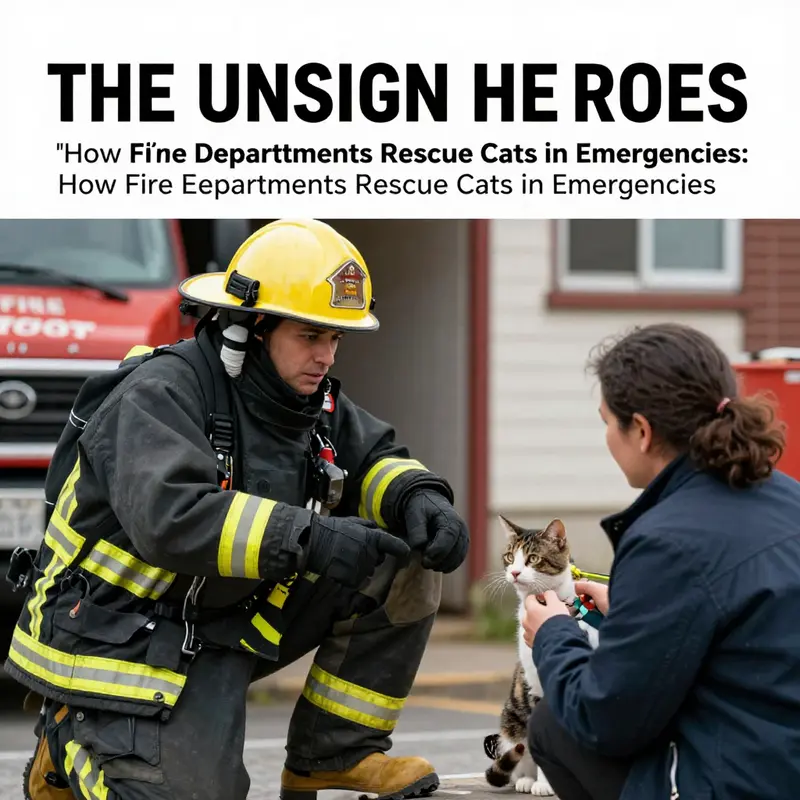
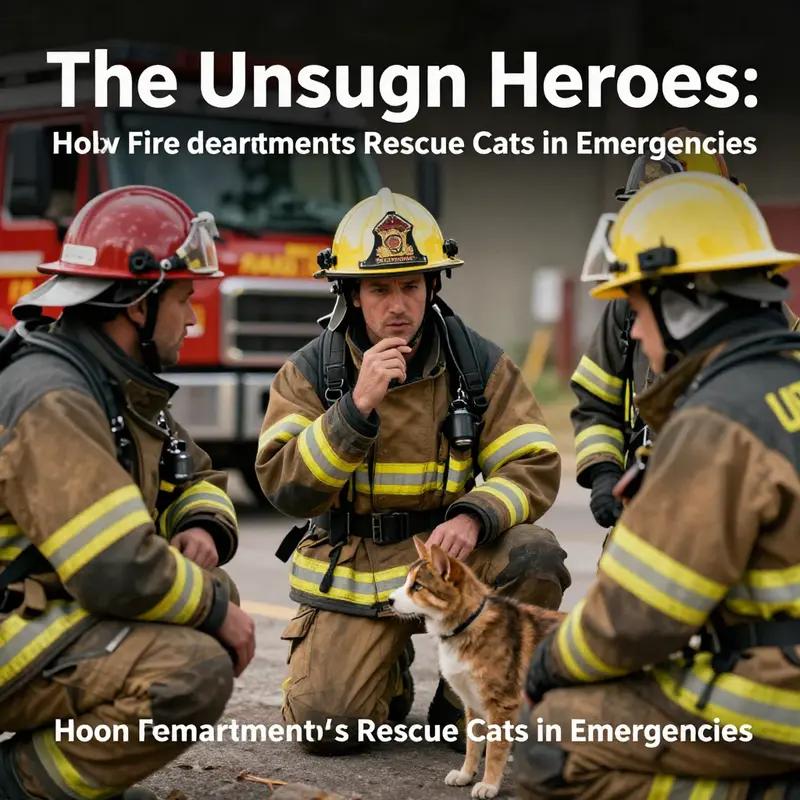
When people picture a burning building and a cat clinging to a window frame, they often imagine a swift, cinematic rescue. In reality, fire departments operate under safety protocols that prioritize human life and the overall resilience of the incident. The core framework is a three-part priority: life safety, incident stabilization, and property conservation. The rescue of an animal, while deeply valued, does not override this sequence. The boundary for animal rescues is drawn by the need to protect responders and occupants, and by the risk, timing, visibility, and structural integrity of the scene. If a cat rescue can be carried out without delaying critical actions or exposing anyone to undue danger, responders may attempt it; if not, rescue efforts focus on life safety first, and animal retrieval may occur later when the scene is safe.
In practice, this translates into a concrete order of operations: verify human life is secure; stabilize the incident by controlling the fire and ventilating as appropriate; only then address property and, where possible and safe, animals. This is a safety-driven approach, not a cold policy. Public stories of dramatic cat rescues exist, but they are exceptions that do not negate the rule that human life comes first.
Some regions have developed non-fire rescue pathways and partnerships with animal-rescue groups to handle non-emergency animal distress, without compromising the main mission. Prevention and preparedness are critical: keep pets safe in accessible spaces, ensure microchips, practice escape routes, and coordinate with local animal-rescue networks.
For readers curious about innovations in rescue, see https://tpbhrescue.org/innovation-museum-transforming-fire-services/ and https://www.nfpa.org/About-NFPA/Standards-and-Regulations/What-Are-NFPA-Standards.
When Fire Teams Meet Furry Lives: Collaborations Between Fire Departments and Animal Rescue
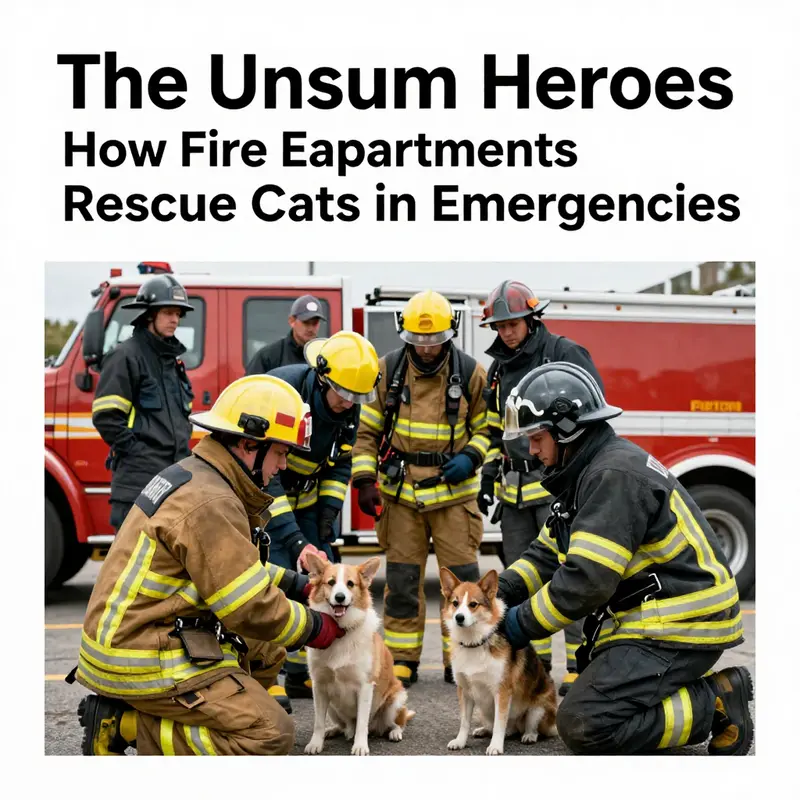
Fire departments are increasingly partnering with animal welfare groups to protect life beyond humans. In many communities, these partnerships formalize joint protocols, training, and sheltering so that pets and livestock can be evacuated safely alongside people. Animal rescue teams bring expertise in handling stressed animals, veterinary triage, and rapid transport to shelters, ensuring that life is preserved in a humane, coordinated way.
Operationally, this means defined triggers for engaging animal rescue crews, integrated command structures, and shared communication channels so that decisions about evacuations consider pets. Joint drills and data sharing improve response times and reduce chaos on scene. Pre-incident planning includes shelters and veterinarians in the readiness, with microchipping and owner reunification as part of the continuum of care.
Beyond tactics, the collaboration builds trust within communities. People see that authorities value all life, which strengthens public confidence in emergency services and encourages proactive safety measures, such as pet evacuation plans and household disaster kits that include animals.
The field continues to evolve with training innovations, cross-agency exercises, and policy frameworks that define roles and responsibilities. NGOs and shelters bridge field operations to ongoing care, offering temporary housing, medical care, and adoption pathways when rescues end. As these partnerships mature, they become a core component of resilient, humane emergency management, reflecting a worldview that life, human and animal, deserves protection in crisis.
Final thoughts
The responsibility and capability of fire departments extend well beyond human lives; they are agents of compassion, saving countless animals, including cats, from perilous situations. This exploration of the role of firefighters in cat rescues highlights the dual commitment to protecting lives, regardless of species. While these brave heroes undertake significant challenges, their efforts are complemented by partnerships with specialized animal rescue organizations that address non-emergency situations. Understanding these dynamics fosters a greater appreciation for their extensive training and ethical considerations. Through a well-coordinated approach, communities can ensure that all lives are protected, reinforcing the belief that every life is worthy of saving.