
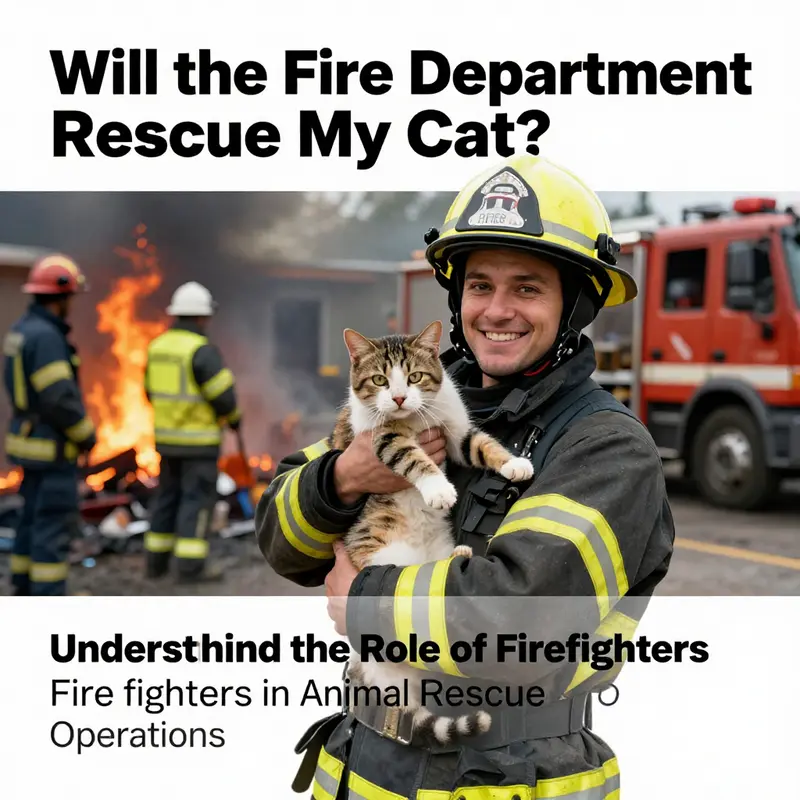
The safety and well-being of our pets is a significant concern for many pet owners, particularly in emergency situations such as fires. A common question arises: Will the fire department rescue my cat? Understanding the commitment of fire departments to animal rescue can help pet owners navigate emergencies with greater confidence. This article will explore fire department rescue protocols, discuss their involvement in emergencies, differentiate between emergency and non-emergency rescues, and provide effective prevention strategies to keep your feline companions safe. Each chapter will build upon this foundational theme, offering a comprehensive overview tailored for the general public, emergency personnel, and educators.
Between Alarm and Aid: Understanding Fire Department Protocols for Cat Rescues in Emergencies
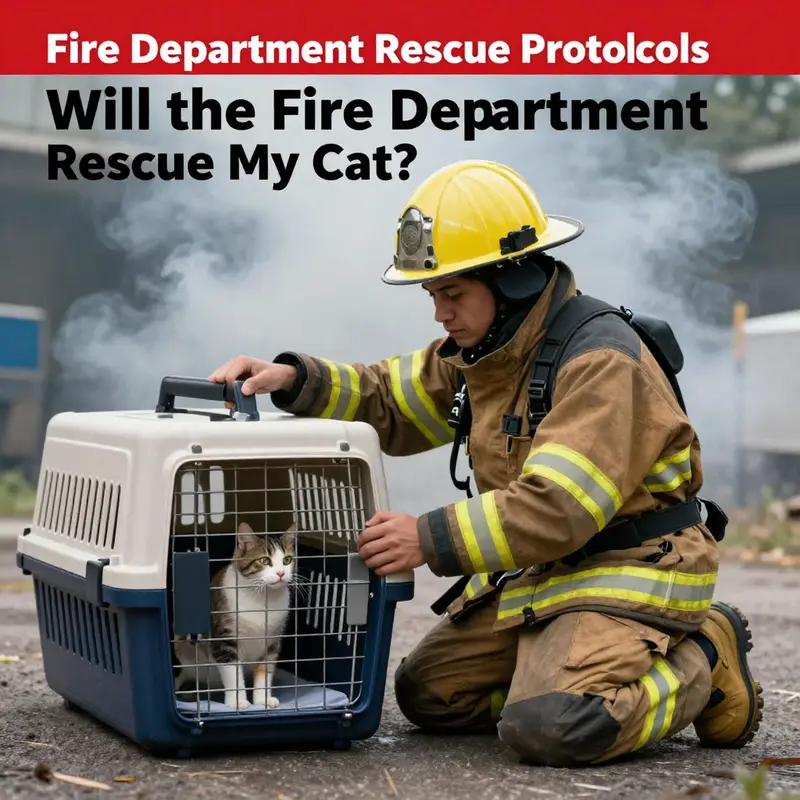
When an alarm breaks the quiet of a home or a street evening, the mind races first to the people in danger. Yet a bright, small shape may also be in peril above the smoke, somewhere a window frame or a balcony provides a precarious stage for a cat that has forgotten how to back away from danger. The question that many households ask in that moment is simple and urgent: will the fire department rescue my cat? The short answer, drawn from several jurisdictions and from the field notes collected during recent years, is nuanced. Fire departments are first and foremost tasked with saving lives that are in immediate peril. They respond to fires, medical emergencies, hazardous materials incidents, and structural collapses. Their core mission is public safety and the management of emergent threats. In this framework, animal rescue is often a secondary or limited option, activated only when the situation permits and human life is not jeopardized. The understanding of this balance matters. It shapes what you ask for, how you respond when responders arrive, and what you do in advance to reduce risk for your pets and your household.
Across many regions, the prevailing pattern is that cats and other pets receive attention when their rescue does not endanger human life. The stories of this pattern appear in the records and in on the ground reports gathered from city to city. In Chengdu, on a night when smoke rose from a high rise, ten cats found themselves trapped on the nineteenth floor. Firefighters did not hesitate to work through heat and thick air to reach them and bring them to safety. In another Chengdu and Jiujiang incident, a pet cat hung from a window during a fire emergency, and the crew acted with urgency to bring the animal to safety. In a separate but related scenario, a Scottish Fold was saved from a home during a fire break out in the Chengdu High tech Zone, a moment when a single firefighter entered the space to comfort the frightened pet as the human occupants were evacuated. Each of these cases illustrates a guiding principle that holds across many departments: animals will be rescued whenever doing so does not impede the overarching human rescue or risk the responders themselves. The narrative is not a guarantee of rescue in every instance, but it is a clear framework in which animals are treated as part of the rescue operation when conditions allow.
The operational realities behind these outcomes are not complicated in theory, but they are exacting in practice. Firefighters are trained to assess risk within seconds. Structural integrity, the amount of smoke, the likelihood of a backdraft, the possibility of collapse, and the general level of danger to the team all feed into a single decision: is it safe to pursue the animal without exposing people to unacceptable risk? In the most dangerous moments, when there is heavy smoke or potential for collapse, the priority is to secure human life first and to mitigate the hazard. The animal rescue may then be postponed or abandoned if it would require a direct entry into an area that could compromise the safety of the crew. This decision is not a judgment of the animal in pain or fear. It is a calculation about the likelihood of a successful rescue without adding new casualties or injuries to the operation. The result is that your cat may not be pulled alive from a perilous scene if the situation demands critical, time sensitive, human safety measures first.
This calculus does not imply that fire departments are indifferent to animals. It reflects the reality of emergency response where every action is weighed for its impact on human life. Some departments do maintain formal animal rescue programs or have protocols that enable a limited animal rescue within the context of a larger incident. Others operate under a more general banner of emergency response, stepping into animal rescue only when it aligns with the safety framework and human life is secured or is at imminent risk. The policy landscape can vary from one city to another, and even from one station to another within the same jurisdiction. Even when formal animal rescue programs exist, the call for help may be prioritized differently depending on the scale of the incident and the resources available. In practice, the responders who arrive at a scene assess more than the immediate danger of the fire or collapse. They read the spatial geometry of the structure, listen for the scurry of a trapped pet, and weigh the chances of successfully extracting an animal without becoming engulfed themselves. The outcome can be a rescue of the pet, a note that the pet did not survive, or a quiet postponement of the rescue until it is safer to attempt.
For readers weighing options in the moment, the practical implication is clear. Do not mistake a rescue as a guaranteed outcome. Do not assume that a fire department will rush in and fetch the family cat at once, even if the animal is visible from a window or clinging to a balcony. The reality is contingent on the danger level, the presence of smoke or active flame, the condition of the structure, and the availability of personnel and equipment to perform a rescue without compromising human safety. It is also a matter of jurisdiction. Different regions adopt different thresholds for animal rescue calls. Some stations may respond to a cat in a tree or a cat stuck on a balcony as a low priority call that still warrants attention when resources permit. Others may treat any animal in peril as an immediate consideration if it can be safely resolved alongside the human rescue. In all cases, the best course is to be candid with the dispatcher about the severity of the situation, the pet’s location, and any hazards that could affect responders. Clear, accurate information helps responders make the right call in real time, and it reflects an understanding that the cat rescue operates within the same life safety framework that governs human rescue.
The timeline of rescue also matters. In a fire, every minute can escalate risk. The longer a cat remains exposed to heat, smoke, or a precarious perch, the more dangerous the situation becomes for both the animal and anyone attempting a rescue. Yet even under pressure, responders are trained to preserve life. In some instances, a cat can be guided to safety with a careful use of existing openings, or by directing owners to aid lines, while firefighters concentrate on primary hazards. In other cases, pets may be found in places that require entry into a compromised space. When this happens, the crew follows a tight set of Standard Operating Procedures that balance pace and safety with the uncertainty of the unknown. The procedures are the product of years of training and field experience, not a single memorable story drawn from the headlines. They are designed to maximize the chance of a successful outcome while keeping the team intact and avoiding unintended consequences that could threaten residents and rescuers alike. When lines are clear and human life is secured, the scene moves toward animal extraction as a secondary but important mission.
What does this mean for you as a cat owner or a neighbor watching a rescue unfold? First, it means your most reliable safeguard is prevention. The best time to think about your cat’s safety is long before a crisis. Secure windows and balconies with sturdy fall prevention, place pet safe rooms away from hazard zones, and ensure your cat cannot slip into hazardous spaces in an emergency. Safe preparation reduces the need for a dramatic rescue, increases the likelihood of a successful one, and lowers the emotional toll on everyone involved. Pet owners should also pair their preventive measures with practical readiness. Identify a safe, accessible exit route for a cat, a comfortable carrier that the animal associates with calm, and a designated area where the cat can be confined during an emergency while human occupants are evacuated. These steps contribute to a smoother, safer operation if responders arrive and you must evacuate the residence for your own safety.
Second, recognize the limits of emergency response in a nonemergency moment. If your concern is a cat stranded on a balcony or perched on a high ledge but there is no active fire or imminent danger, it is wise to contact nonemergency animal rescue resources rather than calling the standard emergency line. Many jurisdictions have numbers or units dedicated to animal welfare that can respond without tying up the fire department for a situation that does not threaten human life. The presence of a dedicated animal rescue service can be a decisive factor in getting your pet to safety in a timely manner when the danger is real but does not meet the strict thresholds for a high risk in a fire or medical emergency. The distinction between emergency and nonemergency can be subtle but important. Firefighters are trained to manage one of the most dangerous environments imaginable. Animals, while important, may require a different kind of approach and different specialized resources. A thoughtful call that recognizes this distinction can save precious minutes and maximize the chance of a favorable outcome.
In practical terms, a caller who suspects a cat is trapped should provide a clear location and the exact nature of the danger. Is the cat on a balcony that is slick and loses grip? Is it wedged between an air vent and a wall? Is there smoke or heat present in a space where entry would be dangerously risky? The more precise the description, the better the team can weigh the risk and decide whether rescue is feasible without compromising human safety. The dispatcher may guide the caller through steps to keep the animal calm until responders arrive. They may also direct occupants to close doors to confine the area, turn off fans that could feed smoke into other rooms, and prepare a path for responders that minimizes obstacles. Even when a cat rescue is technically possible, responders will not endanger themselves or others to execute it. The result is that the cat gets saved when the conditions align with human safety imperatives, and the household remains unharmed and intact.
There is a broader lesson here about how communities approach animal safety in emergencies. Fire departments are not a universal pet rescue service in the way people might imagine from television scenes. They are human centered, grounded in public safety, and capable of animal rescue only when it aligns with the mission. This is not a deficit but a management of risk that keeps the entire operation coherent and effective. To readers, this translates into a practical mindset: be proactive, not reactive. Prepare in advance, know the resources available in your area, and understand that what you see on a dramatic news clip may represent a highly specific and serendipitous set of circumstances. The truly powerful point is the combination of prevention, proper information, and appropriate response. When used together, they create a safer environment for both people and pets and foster a shared sense of responsibility for all members of the household.
As you reflect on the question will the fire department rescue my cat, consider the layered reality that emerges from the cases and policies. The department may indeed aid your cat when danger is immediate and human life is at stake, and when the scene is safe enough to permit an animal rescue without introducing new risks. In other moments, pets may be spared the rescue because the safety calculus requires prioritizing human needs and structural integrity. The central thread that runs through this is the need for preparedness. A well planned home that embraces both human and animal safety will face emergencies with greater resilience. Install dependable fall prevention measures, designate safe rooms where your cat can be contained during a crisis, and ensure you have a calm plan for evacuation that includes your pet. Beyond this, establish a relationship with legitimate nonemergency animal rescue resources so that you can access specialized help when the situation does not require the full weight of an emergency response. The goal is not to guarantee a dramatic rescue but to maximize the odds that your cat can be saved with the least harm to all involved.
For those curious about how actual departments approach animal rescue in different regions, there is a practical takeaway. Policies vary, but the shared thread is a willingness to reduce suffering when it can be done safely. Local departments may publish their guidelines, and conversations with station officers can illuminate the factors that shape decisions on a given day. If your area has a formal animal rescue program, learn its scope and response criteria. If not, connect with local animal welfare groups that can provide guidance and, when needed, specialized rescue services. And if you witness a rescue in progress, observe as an observer rather than a secondary participant. Firefighters are trained to handle dangerous environments first and to protect the broader community, including the animals we share our cities with. Their bravery often shines through in these moments, even when the outcome is not as dramatic as a rescue on television. The true message is consistent: preparedness, understanding, and cooperation between residents, animal welfare professionals, and emergency services yields the best chance for a humane outcome when a cat finds itself in peril.
To further explore nonemergency pathways, consider a resource that specifically addresses pet welfare and rescue logistics in your area. For example, some communities provide clear information on when to call animal rescue services versus emergency responders and offer guidance on safe containment and triage while awaiting help. When emergencies occur, the overall objective remains constant: protect human life first, and then, when feasible and safe, extend that protection to our companion animals. In this spirit, it is worth noting a practical reference that outlines how such protocols unfold in a modern fire department’s rescue framework. See the official information from a large municipal fire and rescue system, which provides a detailed look at the resources and guidelines that govern their operations and sheds light on how pet rescue fits into a broader life safety approach. let-me-help-you-urna-eu-felis-dapibus.
The take home is clear: your cat can be rescued by the fire department in certain emergencies, but not all emergencies will include animal rescues. Preparation is your strongest ally. Secure windows with proper nets or barriers, ensure balconies cannot become traps, and create a safe calm space for your pet that is easy to access during a crisis. Talk with family, neighbors, and local responders about your plan. Have a backup for power outages and ensure your emergency kit includes your cat’s needs. And finally, remember that in an active fire scene, the responders will prioritize human life and structural safety. They will do what they can for your cat, but the outcome is shaped by the context, not by a promise. In this sense, the question becomes not just will the fire department rescue my cat, but how can I prepare to protect my cat in the moments before help arrives and in the moments when help is no longer needed to be a heroic, life preserving presence for both animal and human life alike.
For those who want to understand the broader operation and keep up with evolving protocols, consult technical resources and official guidelines that describe how modern fire services approach a spectrum of rescue scenarios. These materials offer insight into how life safety, incident command, and rescue operations converge in the field. They also remind readers that the best outcomes often follow from clear communication, precise information, and decisive, well coordinated action on the ground. With these ideas in mind, the question becomes less about a guaranteed outcome and more about the practical steps a household can take to protect its most vulnerable members, including the family cat. The story is ultimately about preparation, cooperation, and a community wide commitment to keeping both people and pets safe when danger arises. The chapter leaves you with a practical path forward: plan, prevent, and know when to call for help so that the response you receive, whether it comes with a dramatic rescue or a careful, limited intervention, serves its core purpose of preserving life in the most challenging moments.
External reference for readers seeking a professional policy framework can be found at the following resource that outlines how a modern fire department handles a broad range of rescue scenarios, including animal involvement. https://www.bexar.org/esd4/fire-rescue/
Between Rescue and Risk: How Fire Departments Handle Cat Rescues in Fire Emergencies
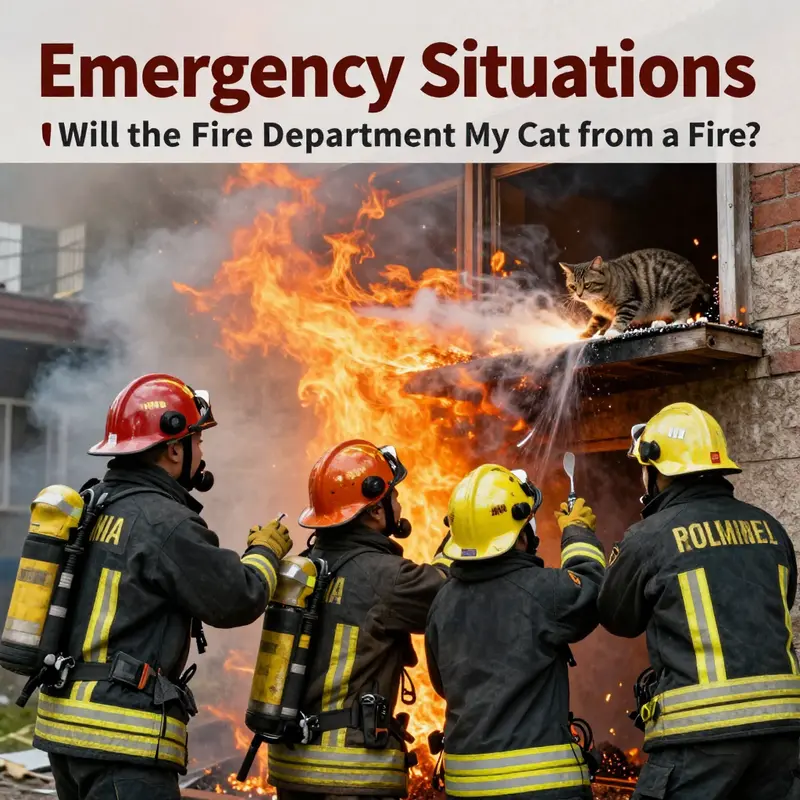
In the heat of a blaze, questions arise about whether firefighters will pull a cat from an apartment window, from a smoke-filled hallway, or from a toppled kitchen. The short answer is nuanced: fire departments will attempt pet rescues when they can do so without endangering human lives or delaying the primary mission of saving people and controlling the fire. They are not, as a rule, dispatched to perform animal rescues at the expense of human safety. Yet the stories of brave cats carried out of smoke and heat are not mere folk legends; they sometimes happen when the situation is stable enough for safe intervention. The tension between compassion for animals and the overriding duty to protect humans creates a dynamic that every pet owner should understand before a siren wails at their street corner.
In emergency fire responses, the operating doctrine is clear and purposefully strict. Fire departments exist primarily to preserve human life, to extinguish the flames, and to limit the damage to property. This framework—human life first, then fire control, then property protection—puts animal rescues in a secondary but not completely excluded position. Firefighters train to move swiftly and decisively under conditions that can include intense heat, toxic smoke, and unstable structures. A split-second decision may be the difference between a successful human rescue and a catastrophe for those who rely on the firefighters’ expertise. Within this framework, rescuing a cat is not prohibited, but it is not the central objective during the active phase of a fire. If entering a burning building would delay essential work or jeopardize a team’s safety, the mission may proceed without entering for animal rescue. This is a sober truth that helps explain why pet rescue cannot be guaranteed in every fire scenario, even though there are always valiant attempts when circumstances permit.
The real-world texture of this question becomes clearer when we look at concrete cases. In late 2025, a high-rise blaze in Chengdu trapped ten cats on the 19th floor amid smoke and scalding heat. Firefighters pressed forward to extract the felines, navigating stairways and narrow corridors with the same gravity they bring to human victims. At another moment in the same year, crews in Chengdu and Jiujiang spotted a cat hanging from a window and moved to secure it with a swift, careful grab as the fire crews did their work outside. Earlier still, in early 2024, a firefighter in the Chengdu High-tech Zone saved a Scottish Fold that sought comfort in the arms of the rescuer during a home fire. These episodes are not merely sensational anecdotes; they underscore a practical pattern: when it is safe, when there is a window of opportunity, and when human lives are not at immediate risk, rescuing pets becomes a genuine, if not guaranteed, element of the response. They also show how much depends on the specific geometry of the scene, the speed of entry, the level of heat and smoke, and the presence of stable supports like stairwells and exits that can be used by both people and animals.
The descriptive arc of these events matters because it helps cat owners calibrate expectations. The fire department’s priority remains human safety. If you are in a blaze and your cat is trapped, your first instinct should be to alert responders and follow their directions. If you are able to retreat with your cat to a designated safe location—near an exit or a clear egress path—this can greatly increase the odds that your pet is accounted for when crews begin to mop up and assess areas that may still be dangerous. It is also important to recognize a reality that recurring news footage and official statements reflect: even when a cat is rescued, the success hinges on whether a safe entry point exists, whether visibility and air quality permit safe handling, and whether the animal can be guided to an exit without panicking or becoming disoriented.
Beyond the immediate incidence of fire itself, there is a broader cultural and procedural context. Fire departments in many countries do not routinely enter burning structures solely to rescue animals. They focus on human safety first and may only assist with animal rescue after the fire is under control, or if the animal rescue can be accomplished without compromising on any of the ongoing priorities. This is not to diminish the compassion that firefighters hold for animals; it is to acknowledge the operational reality that emergencies demand speed, discipline, and a prioritization of life-saving actions where the stakes are highest. In some jurisdictions, partnerships with animal welfare organizations exist to provide specialized rescue services that operate alongside municipal fire services. In others, if no immediate danger to humans exists and the animal is accessible, firefighters may assist with an animal rescue as part of the after-action phase. In any case, the policy is shaped by safety, feasibility, and the overarching aim of preventing further harm.
For people who want a grounded sense of what to do when a fire threatens a cat, practical steps are essential. First, secure your pets in a safe, accessible location. The most reliable strategy is to keep cats near an exit or in a room you can quickly reach or re-enter and lead them toward a safe egress. A door that can be opened quickly, a window that is not a trap but a direct path to the outside, and a clear route away from the fire are the kinds of details that influence outcomes. Second, prepare pet-specific safety gear before a fire occurs. A pet-safe detector near areas where your cat spends most of its time can wake you or a family member earlier. An emergency pet carrier should be kept within easy reach, not buried in a closet. The carrier serves as a familiar, contained space that can reduce a cat’s fear when movement or evacuation becomes necessary. Third, make sure your cat is identifiable. A microchip and a collar with up-to-date ID tags dramatically increase the likelihood of a successful reunion if a pet is separated from its owner in a chaotic evacuation. Fourth, take preventive steps within the home: install fall-prevention nets or screened windows in places where cats are known to spend time, especially balconies. These measures reduce the risk of a cat becoming trapped or injured even before a fire begins.
The emotional dimension is real too. Owners who have experienced or observed a cat rescue in action describe moments of relief, tempered by lingering fear about what might have happened if responders could not reach their pet in time. The heart of the matter is that responders are not indifferent to animals. They understand how deeply a pet can matter to a family. However, the emphasis remains on life safety—human life first, the fire under control second, then the rest. Acknowledging this truth is not pessimism; it is a practical framework that helps families plan. If a home has a cat that tends to hide under furniture or scales high places during stressful events, training it to respond to familiar cues—like a specific door or a specific chair—can save seconds when time is critical. Training is not a substitute for professional rescue, but it can improve the odds of a quick, calm escape for a frightened animal.
It is also helpful to recognize how this topic translates across different regions and cultures. Fire service protocols vary, but the core principle holds. In many places, emergency services use a standard approach to triage: save lives first, contain the hazard, then manage the environment. The broader lesson for a cat owner is straightforward: preparation, prioritization, and clear communication with responders. When you dial the emergency number, you are requesting a coordinated response designed to protect lives, and you should follow the dispatcher’s instructions precisely. If you are not in a situation where a cat is in immediate danger, there may still be a window to coordinate with animal rescue professionals who operate separately from fire services. Handling that distinction calmly can prevent delays and confusion at a critical moment.
For readers who want to deepen their understanding of how communities manage rescue situations and communications during emergencies, a concise primer on these topics can be found at the internal resource titled hello-world. hello-world
In addition to the core discussion about whether the fire department will rescue a cat, it is worth recognizing that prevention and preparedness often outpace dramatic rescues in terms of real-life outcomes. The proactive steps—securing the cat near an exit, installing pet-safe detectors, microchipping, securing windows, and practicing with a family plan—are the most reliable buffers against tragedy. They reduce the dependency on a dramatic rescue and increase the likelihood that, when a fire occurs, a human and a pet can leave the building together, or at least do so in a controlled, safer manner. The most compelling takeaway is not that cat rescues never happen, but that they are more likely when owners have integrated safety into daily life, when they understand the limits and strengths of the fire department’s mission, and when they can distinguish between urgent and non-urgent situations in which specialized animal rescue services might be called upon.
The conversation around this topic also invites a practical, no-nonsense checklist you can carry into a real emergency. Practice an evacuation plan that features a clearly identified cat-friendly route, a trusted escape point, and a safe haven that you can guide your pet toward under stress. Keep the pet carrier visible and accessible, with the door secured but easy to open. Ensure your cat wears identification and has a microchip linked to your contact information. Confirm the location of your exit routes in advance, especially in multi-story homes or apartment buildings. Make sure your smoke detectors are functioning and test them regularly, replacing batteries as needed. If a fire does occur, call the emergency number immediately and provide precise information about your location, the nature of the fire, and the likely location of your pet. Follow the dispatcher’s instructions precisely, and avoid re-entering a burning structure. These steps, while not guaranteeing a pet rescue, dramatically increase the chance that both you and your cat will survive and recover.
As we consider the broader arc of this topic, we should also acknowledge the heartbeat behind the numbers: the stories of rescues in which the bond between humans and their pets becomes a bridge that firefighters cross with care. Yet this admiration should never overshadow the practical realities. Firefighters must balance countless variables in the moment, and a successful animal rescue is most likely when it aligns with other life-saving priorities rather than competing against them. The goal remains clear: to protect lives, to quell the danger, and to restore safety to homes and communities to the greatest extent possible.
In closing, if you find yourself facing a potential fire in a home with a cat, imagine the scene not as a certainty of a heroic carry-out, but as a complex negotiation of safety, timing, and skill. You can influence the odds by preparing in advance, reducing the chances your cat will be trapped in a dangerous spot, and understanding the operational realities responders face. Should you ever be in such a crisis, stay calm, listen to instructions, and support the responders by having a clear plan that prioritizes human safety while still preserving your pet’s well-being. The occasional dramatic rescue will feel uplifting, but the quiet, consistent practice of safety and preparedness is what saves lives day after day.
For those seeking further official guidance and safety frameworks, the National Fire Protection Association’s pet safety resources offer a comprehensive overview of best practices for pets and fire safety. This external reference complements the discussion here by laying out standardized recommendations and statistics that help families plan with confidence. https://www.nfpa.org/News-and-Research/Fire-statistics-and-research/Prevention-resources/Pets-and-Fire-Safety
Between Smoke and Whiskers: How Fire Departments Handle Cat Rescues in Emergencies and When to Call Animal Helpers
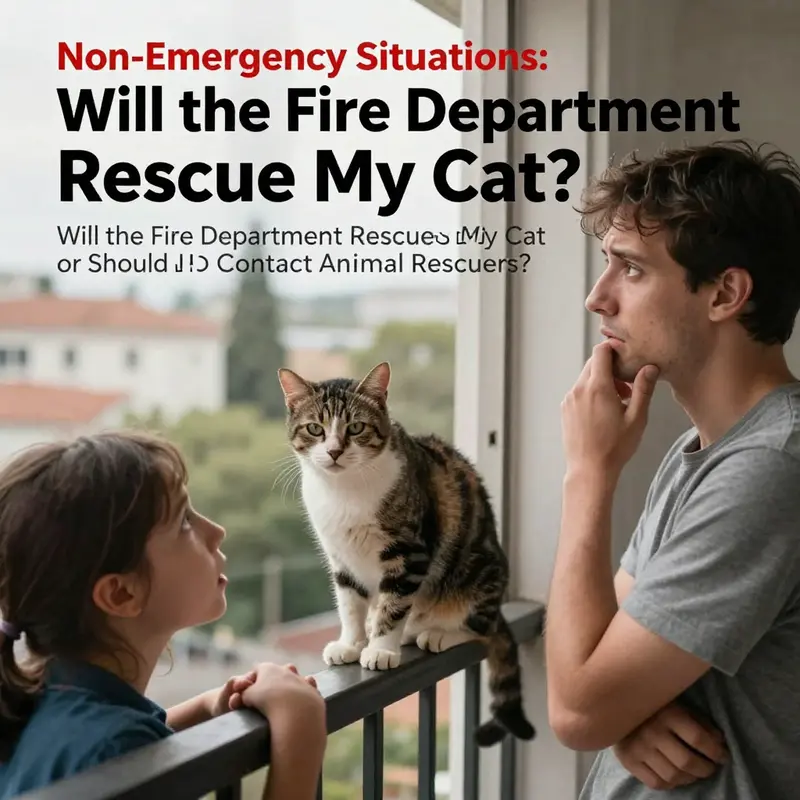
When a cat is perched on a balcony railing, or a fluffy silhouette is seen huddled in a smoke-willed hallway, the instinct to reach out and rescue the animal is strong. Yet the reality of rescue work is layered and bounded by safety, timing, and the capacity of the responders. This chapter focuses on the non-emergency question that many cat owners ask as a counterpoint to dramatic fire-scene rescues: will the fire department come to rescue my cat in a non-urgent situation, and when should I call animal rescue teams instead? The answer rests on a simple principle that governs most emergency services everywhere: human safety comes first. Fire departments are trained to manage fire hazards, protect lives, and stabilize dangerous environments. They are also prepared to respond to animal welfare during a crisis, but their availability for non-urgent animal rescues is limited by resources, time, and risk assessments. In other words, fire crews can and do help with pets when the situation is truly dangerous and could threaten life, but they are not a general-purpose animal rescue service for routine pet dislodgments.
In an emergency, such as a fire, the firefighters’ priority is to locate and evacuate every occupant, prioritize vulnerable people, and prevent the fire from spreading. To the cat owner watching a cat slip toward a fall or become trapped in a smoke-filled space, the impulse is urgent and personal. The research and field reports from across different regions consistently show that, in life-threatening scenarios, firefighters will attempt to rescue trapped animals if doing so does not endanger human lives. This is not a promise of a guaranteed animal rescue in every crisis, but rather a policy of maximizing human safety first while recognizing the reality that many pets rely on their human guardians for protection and decision-making in the heat of a crisis. When a building is unstable, or when smoke and heat obscure a decisive path to the animal, firefighters may prioritize human evacuation and fire suppression over animal extraction. The reality is a balance of risk, time, and the specific spatial constraints of the scene.
Consider a skyline of emergencies that have occurred in similar contexts. In a residential high-rise, a cat trapped on a floor above the fire zone might be seen by occupants and responders as a secondary but urgent concern. Firefighters, trained to perform rapid triage in complex environments, will weigh whether there is a safe path to reach the animal, whether entering would compromise anyone’s safety, and whether alternate approaches could secure the animal without increasing risk. In many cases, the presence of heavy smoke, poor visibility, or a collapsing structure constitutes a red line that prevents even experienced teams from entering without additional measures. The practical upshot is that a cat in a burning building can be rescued, but not at the expense of the human rescuers or the stability of the structure. The decision is not personal or capricious; it is a calculated risk assessment that aims to save lives first and then animals where feasible.
What, then, about non-emergency situations where a cat seems to be stuck but there is no active threat? This is where the distinction between emergency response and non-emergency animal rescue becomes most important. Fire departments typically do not offer routine cat rescues when there is no imminent danger to the animal’s life, or when the animal can be retrieved safely by other means. In many jurisdictions, non-emergency rescues are outside the standard remit of fire services, which are organized to manage fires, hazardous materials, vehicle extrications, and other high-risk incidents that threaten human life. The logic behind this separation is straightforward: fire departments operate with limited personnel and equipment, and allocating those resources to routine pet rescues could leave critical safety gaps for true emergencies.
When a cat is merely stuck on a balcony, entangled in a gutter, or perched on a roof with no immediate threat to life, the best course is to contact animal control or a specialized rescue organization. These groups are better equipped for non-urgent animal handling. They bring to bear the tools that are tailored for animal welfare: specialized climbing gear, quiet handling techniques to minimize stress for frightened pets, and trained personnel who can work with animals without escalating fear or injury. They can assess escape routes, use humane capture methods, and ensure the animal’s welfare with minimal harm and maximum safety. In many communities, animal rescues have developed protocols and partnerships with local authorities so that a cat in a non-emergency situation can be attended to promptly without tying up fire crews who need to focus on urgent fire suppression or rescue tasks.
This is not to trivialize the distress of a cat owner facing a stuck pet. The moment you realize your cat is stranded on a high perch or in a tricky spot, you may feel a mix of fear, guilt, and urgency. The core message to remember is straightforward: prioritize human safety and contact the appropriate responders. If there is any danger to you, your family, or anyone nearby, call your local emergency number immediately. If the situation is contained and there is no immediate threat to life, it is prudent to call animal rescue services first. Firefighters frequently encounter pets during disasters and may assist when feasible, but they are not the default option for every pet-related incident outside of danger zones.
To help caregivers navigate these choices, practical steps can guide the decision-making process. First, assess the scene with a calm, clear eye. If the cat is on a balcony and there is a chance you can secure a safe, non-confrontational way to lower it back inside, stay with the animal and keep doors or escape routes open for a quick retreat. Do not attempt risky lurches or climbs that could lead to your own injury or create a dangerous standoff. Cats may react unpredictably when startled by unfamiliar noise, smoke, or the approach of a rescue team. A pet that is unexpectedly cornered can bolt or leap in a way that increases injury risk for both the cat and the rescuer. Second, do not wait to seek help if there is any potential for danger. If you see flames, rising heat, or thick smoke blocking egress, call emergency services immediately. The responders will determine whether a cat rescue is safe to attempt and will proceed accordingly. Third, if you suspect the cat is in a non-life-threatening but difficult position, call your local animal control or a humane society. They often provide a rapid response service and have tools designed specifically for pet retrieval. If you are unsure where to start, contact a general animal welfare hotline or consult a local directory; a widely recommended starting point is to locate animal rescue services through recognized national organizations that maintain local directories.
In public discussions of rescue work, a common misunderstanding is that fire departments will always be the animal rescue service of last resort. In reality, the division of labor among emergency responders reflects the balancing act described above. Fire departments may end up rescuing animals under certain conditions, but they do not routinely take on all non-emergency animal retrievals. Their training, gear, and operational priorities are optimized for dangerous, life-threatening events. This is not a suggestion to ignore your animal’s welfare; it is a reminder to route non-urgent rescues through the appropriate channels that are specifically equipped to handle such tasks with care and efficiency. The aim is to ensure that every rescue—human or animal—occurs in a setting that maximizes the chances of a successful outcome with the least risk to all involved.
For readers who want to understand how modern rescue services think about animal welfare, there is value in looking at the broader framework of how fire services adapt to evolving call types. The field has evolved to include structured plans for non-emergency calls that may involve animals. This evolution is partially driven by public demand, insurance considerations, and a growing appreciation for animal welfare as part of community safety. It also reflects a recognition that animal welfare should not be treated as an afterthought when a city’s emergency response system is designed to prioritize people first. In many places, this has led to collaborative arrangements where animal control, humane societies, and volunteer rescue groups work alongside fire departments, sharing information, training, and response protocols. The result is a more efficient and humane network of responders who can deliver the right kind of help at the right time.
If you are curious about how these collaborations take shape in practice, you can explore further how modern fire services are evolving to accommodate diverse rescue needs. For instance, some regions have adopted a model that integrates animal welfare within the broader emergency response framework, showing how a city can maintain readiness for fires and structural hazards while also ensuring rapid, specialized assistance for pets in distress. This balance is not theoretical; it underpins real-world decisions during calls and determines how quickly a cat can be retrieved without compromising the safety of rescuers or the animal. The discussion of these evolving models helps readers understand why a non-emergency cat rescue might be directed toward animal rescuers rather than a fire department, even though both are part of the same public safety ecosystem.
For readers who want to learn more about how fire services adapt to animal welfare and other unusual calls, there are resources that highlight the broader context of rescue work and service design. One useful entry point is to explore how the field of rescue services reimagines its approach to animal welfare, including the integration of specialized equipment, training, and protocols that support safe handling of frightened pets without escalating stress or injury. These insights illuminate why non-emergency rescues are often steered toward organizations with dedicated animal handling expertise, while fire departments remain available for urgent, life-threatening situations.
As you think about your own cat’s safety, remember that prevention remains the strongest line of defense. Keeping windows secured, installing sturdy fall-prevention nets, and supervising curious cats in areas of potential danger can dramatically reduce the risk of a fall or entrapment. Regularly checking balcony furniture and window screens for wear can also prevent accidents before they occur. Small steps taken today can prevent crises that would require any rescue at all, whether by animal services or by fire crews in a worst-case scenario. Prevention, preparation, and knowing whom to call in different circumstances together form a practical plan for pet safety as part of overall household safety.
For those who want to explore the broader topic of how rescue services are adapting and evolving, there is a useful avenue to consider. The concept of an ongoing evolution in firefighting and rescue approaches is discussed in broader industry conversations and can be glimpsed through resources that describe how innovations in service delivery are shaping emergency response. These discussions emphasize that public safety is not a fixed script but a dynamic process that changes with new challenges, new technologies, and new understandings of animal welfare. If you want a concise entry point to this broader discourse, you can examine discussions about how rescue services are transforming to meet diverse community needs and how this affects the assignment of non-emergency animal rescues. The relevant literature and case studies highlight that collaborations between fire services and animal welfare organizations can be an effective model for protecting both human and animal lives.
In sum, the answer to whether the fire department will rescue a cat in non-emergency situations is nuanced. Fire departments will indeed respond to life-threatening animal rescue needs when it is safe to do so, but they are not typically responsible for routine animal rescues. For non-urgent situations, turn to animal control, humane societies, or specialized rescue groups that are trained and equipped to handle such tasks with the appropriate care and gentleness. This approach preserves precious fire-responder resources for truly dangerous scenarios while ensuring that pets receive timely, competent help from those best prepared to provide it. For readers who want to learn more about the broader context of how rescue services are evolving, you can explore the concept of innovation within fire services and how it informs practice at the structural level. innovation museum transforming fire services.
If you are seeking a starting point for locating reputable animal rescue services, a trusted national resource is the ASPCA, which maintains directories and guidance for finding local help. Their directory can be found at https://www.aspca.org. This external resource provides a practical way to identify nearby animal control, humane societies, or rescue groups that can respond quickly to non-emergency situations and ensure your cat receives the proper care with minimal stress. While the details of each jurisdiction vary, the overarching principle remains consistent: reach out to the right specialists who are trained to handle pet rescues, protect the animal’s well-being, and minimize risk to you and your family. In all cases, acting promptly and calmly, with a clear plan for what to do next, will yield the best outcomes for both humans and their feline companions.
null
null
Final thoughts
In conclusion, it is clear that fire departments often take on the heroic role of rescuing animals, including cats, during emergencies. While their priority will always be human safety, they are dedicated to ensuring the safety of pets when possible. Understanding the protocols and circumstances under which these rescues occur can empower pet owners to make informed decisions. Additionally, implementing prevention strategies can minimize the likelihood of needing such rescues. Being proactive ensures a safer environment for our beloved pets and strengthens the bond between humans and emergency service providers.