
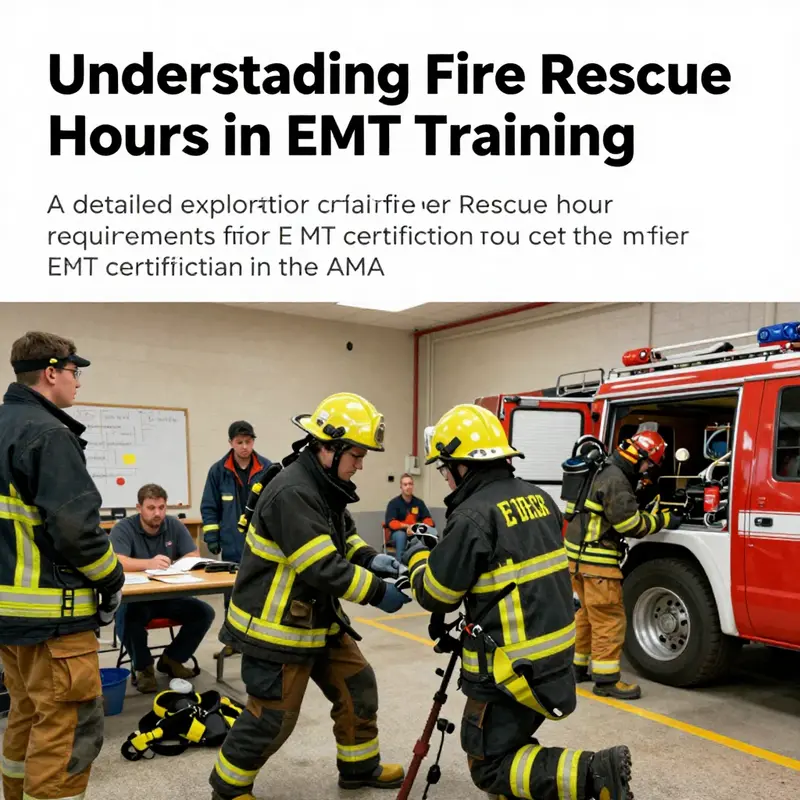
Emergency Medical Technicians (EMTs) are essential first responders in times of crisis, and understanding the training they undergo is crucial for community residents, educators, and emergency personnel alike. This article delves into how many fire rescue hours are integral to EMT training programs, particularly in the context of the American Medical Association (AMA). While the AMA does not provide EMT training directly, its guidelines and the requirements set by the National Registry of Emergency Medical Technicians (NREMT) shape the landscape of EMT education. Each chapter will explore the relevance of fire rescue hours within these regulatory frameworks, differences in state requirements, and the impact of such hours on EMT certification and skill development. Join us as we unravel the complexities of fire rescue training hours, fostering a deeper understanding of the qualifications necessary to ensure our community’s safety.
null
null
The Hour Timeline for EMT Training: How Many Hours Really Matter
When you map out an EMT journey, one question often arises: how many hours will I need, and who sets the pace? The short answer is that the AMA does not administer EMT training nor publish a universal hour requirement. Hour counts are shaped by state EMS offices, state EMS agencies, and the National Registry of Emergency Medical Technicians (NREMT). Fire-rescue hours may appear when a program sits at the intersection of fire service and emergency medical care, but they complement rather than replace medical instruction. The result is a landscape that can feel uneven to newcomers, but is actually a structured mosaic designed to reflect local needs, clinical expectations, and the realities of field work.
In practical terms, most Basic EMT programs in the United States fall within roughly 150 to 200 hours of total instruction and clinical experience. This is not a single universal ceiling or floor but a common corridor used as a baseline. The majority of this time is split between didactics—foundational knowledge about patient assessment, vital signs, airway management, pharmacology—and hands-on practice in supervised settings. The clinical or field elements are where theory meets real patients, with CPR, airway control, bleeding management, trauma care, and other skills tested in realistic scenarios and supervised environments.
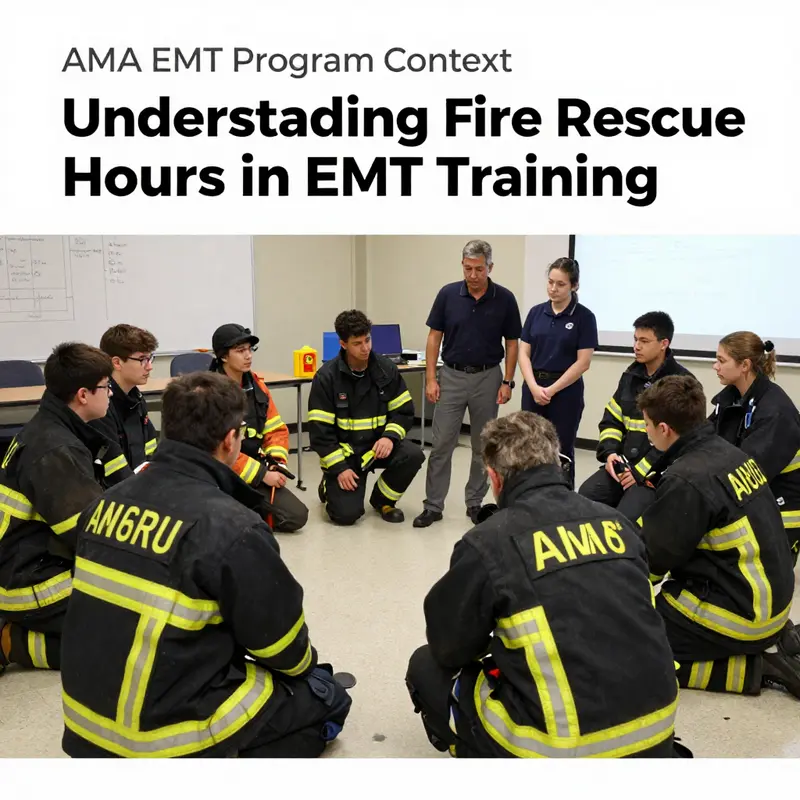
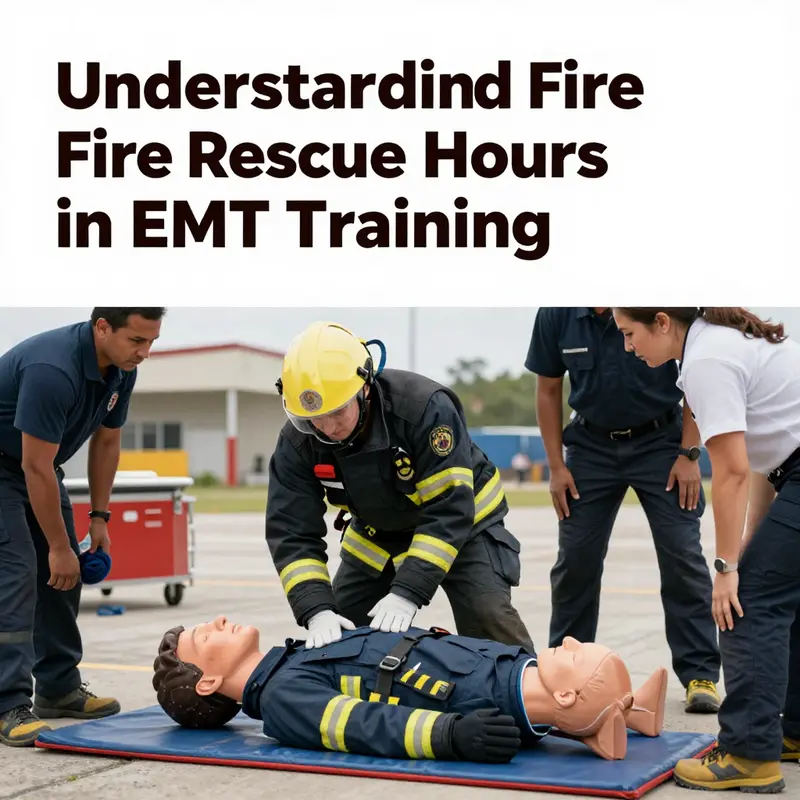
But the 150–200 hour figure is not carved in stone. Programs vary, and several factors push some courses toward more hours. For example, programs affiliated with a fire department or integrated into a fire academy may weave additional content emphasizing fire suppression, rescue techniques, extrication, and other skills that overlap with on-scene operations. These additions are often aligned with staffing realities where EMS and fire responses share scenes, equipment, and a team culture. In this sense, fire-rescue hours become a meaningful category within EMT training, not as a replacement for medical hours but as a valuable extension that broadens readiness for a multi-hazard, multi-agency environment.
How should prospective students determine what they actually need to study and how many hours they must complete? The most reliable route is to consult the state EMS office or the regulatory agency that governs EMT training in your area. Each state can publish its own regulations, including the EMT-Basic hour requirement, mandatory clinical experiences, and what counts as an acceptable field internship. The National Highway Traffic Safety Administration (NHTSA) also offers a national perspective on training, outlining the kinds of competencies and educational experiences expected at the minimum level. This national lens helps explain why hour counts may look similar across programs even when state specifics differ. It reinforces that the hour count is a vehicle for ensuring core skills and patient care standards, not a badge of honor by itself.
What about the role of the NREMT? The NREMT does not run EMT training programs; it administers testing and certification that verifies a provider’s readiness to deliver care at the EMT level. Completing an accredited EMT program that aligns with state standards is a prerequisite to sitting for the national exam. For aspiring EMTs, the precise number of hours is less important than whether the program meets required competencies. Programs that emphasize a broad spectrum of medical, trauma, pediatric care, pharmacology, and meaningful, supervised field time tend to prepare students best for both the practical exam and street realities.
This distinction—hours versus competencies—is worth holding on to as you plan your training. A program’s clock can feel like a hard line, but curricula often converge on essential domains: patient assessment, airway management, CPR and resuscitation, medical emergencies, trauma care, and the ability to operate within the EMS team under medical oversight. If a program includes fire-rescue elements, view them as a value-added dimension that broadens readiness for scenes where EMS and firefighting intersect. The key is ensuring that the time spent translates into measurable competencies and confidence in the field, not merely more seats in a classroom.
For students choosing between a medically focused EMT track and one that leans into fire-rescue techniques, the decision should reflect both your career path and the environments in which you want to work. If you see yourself in jurisdictions where EMS and fire services share response footprints, or if you plan to pursue a firefighter-paramedic track, seek programs that incorporate integrated exposure to rescue techniques and incident command. If your primary aim is rapid medical care and transport, a strong medical curriculum within the standard 150–200 hour window may be the most efficient path.
Beyond the baseline hours, practical considerations matter too. Program length, location, tuition, and the ability to accommodate work or school can shape how many hours you can commit. Some students pursue part-time tracks that extend beyond nominal hours, while others opt for accelerated formats. In all cases, the emphasis remains on achieving the core competencies required by state boards and the NREMT, even if the calendar looks different on paper. A well-designed program—whether segmented into weeks or months—should deliver durable skills, confidence, and the ability to perform under pressure in unpredictable environments.
When evaluating options, examine the syllabus for the balance of medical versus rescue content. If you expect a fire department track, request a detailed schedule showing hours allocated to medical coursework, clinical practice, and rescue training. Consider how the program aligns with your long-term goals. If you hope to pursue paramedic study or a career in a fire department that values integrated EMS-fire experience, extra rescue components may be worth additional hours or a longer commitment. Verify the proof you will receive of completed hours; documentation should be clear, verifiable, and transferable to future licensing bodies. Even small differences in hours can reflect meaningful differences in exposure, confidence, and readiness.
The national thread across the EMS ecosystem remains constant: patient care matters, and training must prepare you for real-world demands. The NHTSA site on EMT training requirements offers a national snapshot of competencies and the diversity of programs that prepare students to meet those standards. The hour count may vary, but the objective is consistent: a trained professional who can assess, treat, and transport with competence and who can work as part of a broader emergency-response team. In practical terms, this means clarity about where to invest time and how to measure progress as you move through classroom learning, clinical exposure, and field experiences.
In a field where speed and accuracy save lives, the number of hours you log is a means to an end—a narrative about readiness, responsibility, and resilience. The interplay between medical training and fire-rescue content means some programs emphasize rescue skills, vehicle extrication, scene safety, and teamwork across agencies, while others prioritize a strong medical framework with limited but meaningful exposure to rescue techniques. Either path can lead to a successful certification and fulfilling career, provided the program aligns with your goals and builds proven competencies.
Decoding Fire Rescue Hours: How State Rules, National Standards, and Practical Realities Shape EMT Training
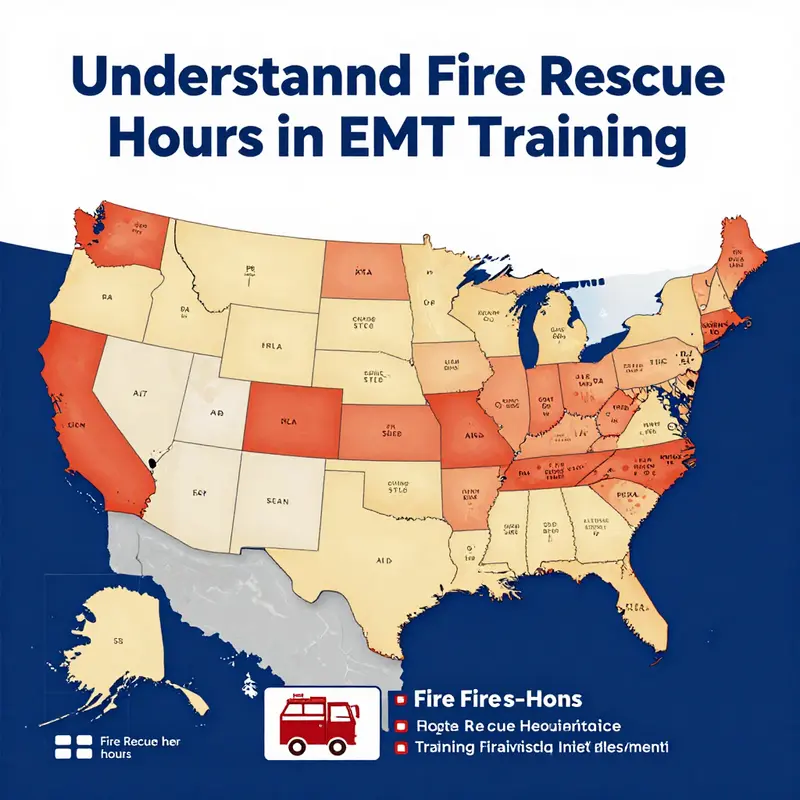
Many would-be EMTs come to the question with a simple assumption: there is a universal clock for fire rescue hours that leads to a certificate. In truth, no single organization sets a nationwide hour count for EMT training that applies everywhere. The landscape is shaped by two forces working in tandem: state regulatory rules and the national certification framework that governs EMT standards. The result is a mosaic in which hours can vary, sometimes modestly and sometimes dramatically, from one jurisdiction to the next. What remains consistent is the basic arc of how training is structured and what a learner can expect along the path from candidate to credentialed professional. Understanding that arc requires distinguishing what is fixed by the national framework from what is determined at the state level and by the learning context in which a program is delivered. It also requires recognizing where a common story ends and regional variations begin. The most reliable starting point is the assertion that the American Medical Association itself does not operate an EMT training program and does not prescribe training hour requirements for EMT certification. This aspect is often misunderstood, given the prominence of AMA in medical education broadly, but the EMT credentialing process sits outside AMA’s direct purview. The practical influence on hours comes instead from state EMS offices and the national certification process overseen by the national certification body that sets the competencies and validates the credentialing pathway. In practice, the hours a student spends in an EMT program are shaped by two integrative components: the standard frame for EMT-Basic training and the regional or state adaptations that attach to that frame. The standard frame, which most programs align with, typically ranges from roughly 150 to 200 hours. This is not a universal law etched in stone across all programs, but a widely accepted benchmark that encompasses both didactic instruction and hands-on practice. The breakdown often includes classroom time where core medical knowledge is imparted, skills labs where techniques are practiced, and clinical or field components where students observe and participate in real or simulated patient care. Within that broad span, the emphasis can tilt toward different emphases. Some programs distribute more hours toward patient assessment, airway management, and medical emergencies. Others might place greater emphasis on trauma care, bleeding control, or the mechanics of urgent transport. In many regions, a program will reflect a balance: foundational medical content and rapid interpretation under pressure, paired with practical competencies like CPR, patient lifting and moving, extrication, and basic life support operations. When a program is affiliated with a fire department or a combined EMS-fire academy, it is not unusual to see additional hours devoted to fire-rescue topics. Fire suppression, vehicle extrication, incident command basics, and rescue techniques may be integrated or layered on top of the EMT curriculum. The intent is clear: in communities where emergency responses require close coordination between EMS and fire personnel, the training is designed to cultivate not only medical proficiency but also the ability to navigate the dynamics of a complex, high-stakes incident scene. Yet even with this alignment, regional realities shape the hour count. Some jurisdictions value extended practical hours to ensure field-ready readiness, while others may emphasize more classroom time, particularly if the program targets additional competencies beyond core EMT-B skills. These differences are not merely academic; they influence the pace at which a student completes the program, the opportunities to log clinical time, and the readiness for the licensure examination that follows. The national certification process, while not prescribing the exact number of hours in every case, defines the core competencies and the pathway to certification that every EMT must follow. To qualify for the certification exam, a candidate generally must demonstrate both theoretical knowledge and practical skills through a combination of online or self-study coursework and an approved hands-on skills course delivered in a recognized training center or program. The emphasis here is on mastery of essential competencies such as patient assessment, airway management, barrier precautions, medication administration where allowed, and the ability to perform under pressure in diverse settings. Although the source materials available in this context do not provide region-by-region hour breakdowns, they do underscore a crucial point: the hour count is not arbitrary. It is anchored in a framework that ensures equivalence of competency across states, even as the exact number of hours may vary to reflect local needs. For someone planning a path into firefighting and emergency medical response, the practical implication is that hours are a means to an outcome, not an end in themselves. The real objective is to reach a level of competence that can be demonstrated in testing and in the field. This is why prospective students are advised to consult their state’s EMS office or health department for the specific requirements in their jurisdiction. Those offices provide the official, current details about how many hours must be completed, what combinations of EMS and fire-related content are permissible, and what the recertification or reeducation pathways look like. It is also worth noting that the modern EMT educator landscape increasingly includes blended formats that combine online didactics with in-person labs and field experiences. The online components can offer flexible pacing, essential for students balancing work, family, or other commitments. Yet the hands-on portion remains critical. The practical skills demonstrations, patient-care scenarios, and clinical ride-alongs form the experiential backbone of the program. In many programs, the simulation environment becomes a bridge between classroom knowledge and real-world performance. The goal is not merely to accumulate hours but to translate hours into demonstrable competence: crisp patient assessment, correct application of life-saving interventions, efficient teamwork on a dynamic scene, and the ability to adapt to evolving conditions. Because the actual hours can vary, a learner should approach program selection with a clear set of questions in mind. How many hours does this specific program require, and how are those hours allocated between didactics, skills labs, and clinical or field practice? How much time is allocated to fire-rescue-related topics, if any, and how does that overlap with emergency medical content? What are the prerequisites, including any prior healthcare experience or certifications, that could influence the total hour count or the pace of progression? How does the program support preparation for the licensure examination, and what are the state requirements for licensure in the learner’s jurisdiction? These questions guide a practical, outcomes-focused evaluation, helping students avoid the trap of chasing a longer wall clock if the ultimate goal is competent practice and credentialing in their region. In addition to program-specific considerations, there is value in understanding the broader ecosystem of certification and continuing education. After completing the initial EMT program and successfully passing the certification exam, practitioners often undertake ongoing education to maintain their credential. The continuing education hours required for recertification help ensure that skills stay current and aligned with evolving medical guidelines and rescue techniques. This ongoing process reinforces the principle that competency is a sustained practice, not a one-time achievement. The cross-cutting theme across these reflections is that while there is a familiar rhythm to EMT training, the exact hours one must invest are not universally fixed. They are shaped by the jurisdiction, the training environment, and the intended scope of practice. For students who want to map a precise timeline, the most reliable approach is a dialogue with the local EMS regulator and with the program directly. The regulator confirms the statutory requirements and any recent amendments, while the program confirms how those requirements are operationalized in course design, sequencing, and scheduling. This two-pronged check helps ensure that hours spent in training translate into a valid, transferable credential that is recognized when the time comes to apply for certification and eventually for licensure. In a broader sense, the question of fire rescue hours invites a deeper reflection on what makes an EMT program truly effective. It is not simply the number of hours poured into a calendar. It is the integration of medical knowledge, hands-on skill, scene awareness, and teamwork under simulated stress. It is the capacity to switch from classroom theory to the split-second demands of a live incident, where every decision can alter outcomes. It is also about how the training context recognizes that many responders operate in settings where EMS and fire services intersect, requiring a mutual understanding of each domain’s strengths and limitations. When a program includes fire-rescue elements, it invites participants to appreciate the synergy between extinguishing threats and preserving life through medical care. This synergy can yield an educational experience that is richer and more durable, provided the hours are thoughtfully allocated to build both technical competence and collaborative fluency. For learners eager to pursue this integrated path, a practical tip is to seek out learning environments that offer structured ride-alongs or field experiences with mentors who model deliberate, patient-centered practice. Those experiences can illuminate how the theoretical components learned in lectures translate into effective action at the scene, where time pressure, ambiguity, and risk converge. They also help students gauge whether their local hour requirements align with their personal learning pace and career goals. In closing, the landscape of EMT training hours is best understood as a composite of fixed competencies and regionally tailored delivery. The numbers you may hear—often cited as a 150 to 200 hour range—represent a well-worn benchmark that captures what many programs consider sufficient for foundational EMT-B skills. Yet regional variations do exist, and the most accurate, up-to-date guidance comes from direct consultation with state EMS authorities and the official certification body behind the credentialing process. The absence of a universal hour count does not signify chaos; it signals a system designed to adapt to local needs while preserving a consistent foundation of skills and knowledge. For a broader perspective on how fire services are evolving to prioritize health, resilience, and sustainability, readers can explore related discussions in the Green Firehouse piece. This reference point offers a complementary lens on how communities are rethinking the interface between firefighting, emergency medical response, and public health goals. Green Firehouse. Official standards are published by the national certification organization, and those standards guide how hours are allocated and how competency is demonstrated. To learn more about the formal framework, consult the official resources available from the national certification body at https://www.nremt.org.
null
null
Final thoughts
Understanding fire rescue hour requirements is essential for EMT training and certification. These hours not only comply with state regulations but also significantly influence the quality of emergency response skills developed in trainees. By recognizing the variations in training across regions and their impacts on EMT qualifications, community residents, educators, and emergency personnel can better appreciate the efforts behind the scenes that ensure effective emergency medical services. Knowledge of these training requirements empowers us all to support and advocate for well-trained EMTs who are at the forefront of our emergency response system.