
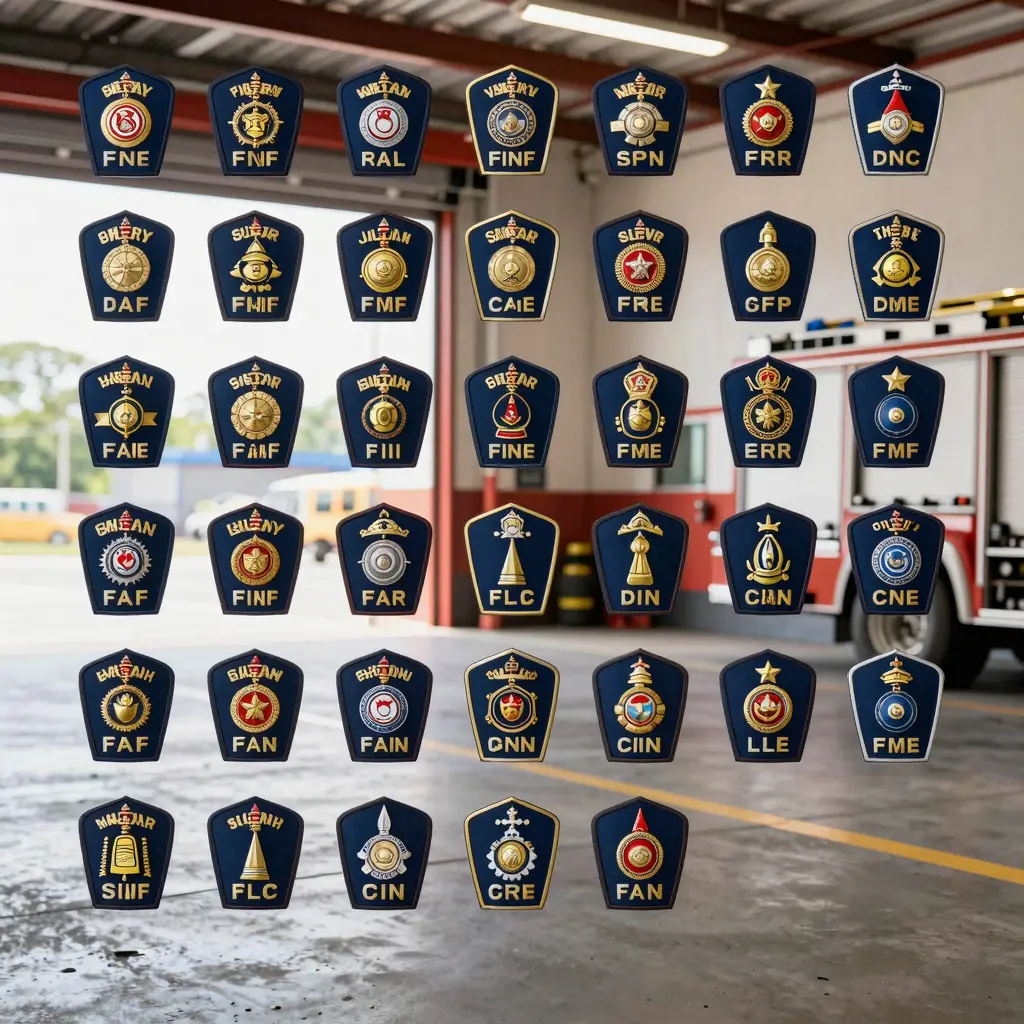
Introduction to Firefighter Ranks and Their Importance
Firefighting is not just a profession; it is a noble calling that embodies courage, commitment, and community service. Each firefighter plays a crucial role in safeguarding lives and protecting property from the relentless threat of fires and emergencies. However, the effectiveness of a fire department hinges significantly on its organizational structure, which is defined by various firefighter ranks. Understanding these ranks is paramount for both the public and those aspiring to join this vital field.
Firefighter ranks are not merely titles; they represent a system of command that ensures safety, efficiency, and accountability within fire services. From the entry-level firefighter to the chief officer, each rank holds specific responsibilities and expectations that contribute to the overall mission of the fire department. This hierarchy allows for clear communication, effective decision-making, and swift responses during emergencies, which are essential for maximizing public safety and minimizing disaster impact.
Establishing a solid foundation of knowledge about these ranks not only helps educate the community about the professionals serving them but also inspires respect and trust in the firefighting force. In an age where emergencies can arise at any moment, understanding the complexities of fire department ranks can bolster collaboration between the public and firefighters, ultimately enhancing the effectiveness of emergency responses. Through this article, we will delve into the various ranks within the firefighting profession, shedding light on their unique roles, responsibilities, and significance in the broader landscape of public safety. Join us as we explore the vital hierarchies that uphold our safety and security in times of crisis.
Understanding Firefighter Ranks
The fire service relies on a structured rank hierarchy to ensure efficient operations, clear communication, and effective leadership. Each rank comes with distinct responsibilities, requirements, and expectations that contribute to the overall effectiveness of emergency response. Below, we will outline the primary firefighter ranks, including their duties, prerequisites, and training commitments.
1. Firefighter
Responsibilities:
Firefighters are the first responders who handle emergency situations involving fires, medical emergencies, and rescue operations. Their core duties include:
- Extinguishing fires and protecting life and property.
- Performing rescue operations, including searching for victims in hazardous scenarios.
- Assisting with public education on fire safety.
Requirements:
To become a firefighter, individuals must meet the following criteria:
- A high school diploma or equivalent.
- Emergency Medical Technician (EMT) certification, which may require additional coursework.
- A rigorous physical fitness assessment to ensure they can handle the demanding nature of the job.
Training and Certifications:
New firefighters undergo fundamental training programs, often including:
- Firefighter I and II certifications.
- Continuous professional development in firefighting techniques and equipment handling.
2. Lieutenant
Responsibilities:
Lieutenants serve as supervisors for firefighters and play a vital role in managing incidents. Their tasks include:
- Overseeing fire scene operations and coordinating firefighting strategies.
- Implementing training for junior firefighters and ensuring adherence to safety protocols.
- Acting as a bridge between firefighters and higher command.
Requirements:
To become a lieutenant, candidates must have:
- A significant amount of experience as a firefighter, usually between 3 to 5 years.
- Demonstrated leadership capabilities and effective communication skills.
Training and Certifications:
Additional training programs include:
- Fire Officer I certification focusing on leadership principles and incident command.
3. Captain
Responsibilities:
Captains oversee entire fire companies and are responsible for strategic operational planning. Their duties encompass:
- Directing firefighting operations during emergencies and managing resources.
- Training crew members and providing mentorship to lieutenants.
- Maintaining equipment and ensuring compliance with safety regulations.
Requirements:
Becoming a captain typically requires:
- Experience as a lieutenant or comparable rank, often 5 or more years in service.
- Advanced knowledge of fire behavior, suppression tactics, and emergency management.
Training and Certifications:
Captains must complete:
- Fire Officer II certification, which involves more advanced leadership and operational training.
4. Battalion Chief
Responsibilities:
Battalion chiefs oversee multiple fire companies and manage larger scale operations. Key responsibilities include:
- Coordinating firefighting efforts during significant incidents.
- Developing training programs and operational procedures.
- Representing the department during public events and community outreach.
Requirements:
Candidates usually need:
- Extensive experience as a captain, generally around 5 years.
- Strong leadership qualities and strategic thinking capabilities.
Training and Certifications:
A battalion chief will require:
- Fire Officer III certification, focusing on advanced incident management and specialized leadership.
5. Chief
Responsibilities:
The chief is the highest ranking official in a fire department, responsible for overall leadership. Responsibilities include:
- Directing all departmental operations, including budgeting and administrative duties.
- Establishing policies and procedures that govern department practices.
- Collaborating with local government and community stakeholders on fire prevention and emergency response plans.
Requirements:
To become a chief, candidates need:
- Extensive experience in firefighting and leadership, often involving 15-20 years of service.
- Proven track record of high-level management and strategic planning.
Training and Certifications:
The highest ranks require:
- Executive Fire Officer certification, along with advanced executive management training to effectively lead and manage department challenges.
Summary Table
| Rank | Responsibilities | Requirements | Training and Certifications |
|---|---|---|---|
| Firefighter | Respond to emergencies, perform rescue operations, extinguish fires | High school diploma; EMT certification; physical fitness | Firefighter I & II certifications; ongoing training in firefighting techniques |
| Lieutenant | Supervise firefighters, manage fire scenes, training implementation | Experience as a firefighter; leadership skills | Additional training in leadership; Fire Officer I certification |
| Captain | Oversee operations of fire companies, strategic planning | Experience as a lieutenant; incident command training | Fire Officer II certification; advanced leadership training |
| Battalion Chief | Manage multiple fire companies, represent fire department at events | Experience as a captain; advanced incident management | Fire Officer III certification; specialized training in emergency management |
| Chief | Direct all operations of the fire department, budget management | Extensive experience in firefighting; strong leadership skills | Executive Fire Officer certification; executive management training |
For further insights regarding firefighting operations and officer responsibilities, consider exploring additional resources about teamwork in emergency situations or firefighter career requirements.
Firefighter Ranks Comparison Table
This table outlines the various firefighter ranks, their responsibilities, and typical qualifications, providing a visual representation that aids in comprehension.
| Rank | Responsibilities | Qualifications |
|---|---|---|
| Firefighter | Responding to fires, performing rescue operations, providing emergency medical services | High school diploma, completion of training programs |
| Lieutenant | Acts as a supervisor, coordinating operations on the scene | Prior experience as a firefighter, completion of leadership training |
| Captain | Manages a fire company, ensuring effective firefighting operations | Service as a lieutenant, additional management training |
| Battalion Chief | Oversees multiple fire companies, responsible for strategic operations and personnel management | Prior experience, coursework in fire science and leadership |
| Chief | Top executive in the fire department, responsible for overall operations and budget | Extensive experience, advanced educational qualifications in fire science or public administration |
For more information about firefighting strategies and resources, learn about our customizable fire truck solutions.
Training and Education for Advancing Through Firefighter Ranks
Firefighting is a noble profession that comes with significant responsibilities, requiring both rigorous training and a commitment to continuous education. To advance through the ranks of firefighters, individuals must engage in a combination of formal education and specialized training programs tailored to meet the demands of higher responsibilities within the fire service.
Initially, aspiring firefighters typically need to complete a high school diploma or equivalent; however, many departments prefer candidates with an associate or bachelor’s degree in fire science or a related field. Essential training often begins with a basic firefighter recruit academy, where candidates receive hands-on training in firefighting tactics, emergency medical response, hazardous materials handling, and fire safety regulations. After initial training, prospective firefighters must obtain certifications such as EMT (Emergency Medical Technician) or paramedic, as many fire departments require their personnel to be proficient in medical emergency response.
As firefighters gain experience, they are encouraged to pursue additional certifications and training that align with their career goals. Programs like NFPA 1001 Firefighter I and II certification outline the skills necessary for a professional firefighter, which includes advanced firefighting techniques, incident management, and leadership. Those aiming for supervisory or managerial roles may seek courses in fire administration, incident command, and public safety management.
Moreover, the importance of continuous professional development cannot be overstated. Firefighters are required to undergo ongoing training to keep up with the latest technologies and firefighting strategies. This includes attending workshops, conferences, and training sessions offered by fire departments and fire academies. Continuous learning not only enhances skills but also positions firefighters for promotions to higher ranks such as Engineer, Captain, Battalion Chief, and beyond. Given the dynamic nature of emergency services, staying current with new methodologies and innovations in firefighting is vital for career advancement.
In conclusion, the journey through firefighter ranks is a structured path filled with opportunities for higher education and specialized training. The commitment to lifelong learning and professional development is what empowers firefighters to successfully serve their communities and advance in their careers. For more detailed insights on training and certification, you can explore this guide and learn about becoming a firefighter.

“In the end, it’s all about teamwork. No one person can do this job alone; it requires a united front, dedication, and an unwavering commitment to one another.”
- Chief Alan Brunacini
This quote reinforces the message about the critical importance of collaboration and leadership within the ranks of firefighting, highlighting how essential it is for firefighters to work together to protect and serve their communities effectively.
Essential Skills and Qualities for Firefighter Ranks
1. Firefighter (Entry Level)
- Technical Proficiency:
- Basic firefighting techniques, including handling equipment and apparatus effectively.
- Emergency Medical Technician (EMT) certification for essential medical emergencies.
- Physical Fitness:
- Strong physical condition to perform demanding tasks, ensuring readiness for physical challenges.
- Teamwork:
- Ability to work cohesively within a diverse team under high-stress situations.
2. Lieutenant
- Leadership Skills:
- Ability to motivate and guide teams, ensuring effective execution of firefighting and rescue operations.
- Communication:
- Proficient in conveying information clearly and effectively, ensuring all team members understand their roles.
- Operational Knowledge:
- Enhanced understanding of operational tactics and strategies in emergency situations.
3. Captain
- Management Skills:
- Ability to manage schedules, resources, and personnel effectively.
- Decision-Making:
- Strong critical thinking skills to assess situations quickly and make informed decisions.
- Training and Development:
- Invest in mentoring and training new firefighters, sharing knowledge and fostering professional growth.
4. Battalion Chief
- Strategic Planning:
- Proficient at developing incident action plans and coordinating multiple firefighting units.
- Crisis Management:
- Expertise in handling emergencies at a higher command level, coordinating between various agencies if necessary.
- Resource Allocation:
- Skills in effectively distributing resources and personnel to meet operational demands.
5. Assistant Chief
- Organizational Skills:
- Expertise in managing departmental training, budgeting, and safety protocols.
- Policy Implementation:
- Knowledgeable in enforcing policies and procedures within the firefighting unit.
- Community Relations:
- Capable of engaging with the community and building relationships to foster trust and support for the fire department.
6. Fire Chief
- Leadership Vision:
- Provide overarching direction and vision for the department, focusing on operational excellence and community safety.
- Public Relations:
- Represent the department publicly, involving in community outreach and advocacy.
- Budgetary Oversight:
- Skills in managing the department’s budget and ensuring fiscal responsibility, which impacts resources and training.
These competencies increase in complexity and responsibility at each rank, reflecting the escalating demands placed on firefighting personnel as they progress in their careers. Continuous training and education are essential for all ranks to adapt to new challenges in firefighting and emergency response.
For further insights on the skills and challenges faced by firefighters, you may learn more about firefighting responsibilities or explore how to become a firefighter with guidance from experienced professionals on their step-by-step tips.
This compilation not only serves as an informative guide for understanding firefighter ranks but also emphasizes the significance of developing key skills as individuals progress in this noble profession.
Career Advancement Process in Firefighting
The journey through the ranks of firefighting is not only a testament to a firefighter’s dedication but also one that is structured around various pathways for advancement. To better understand this process, let’s delve into the essential elements that contribute to career advancement in firefighting, including promotions, assessments, and the acquisition of additional qualifications.
Steps for Advancement
- Experience and Competence:
- A foundational aspect of career progression involves accruing hands-on experience. New firefighters typically start as recruits and advance to positions like firefighter/EMT. With time, they gain practical knowledge and demonstrate competency in various essential firefighting skills.
- Education:
- Many fire departments now require candidates for promotion to have specific educational backgrounds. For instance, acquiring a degree in fire science or public administration can enhance prospects for advancement, especially for higher ranks like battalion chief. A Master of Public Administration with a focus on fire and emergency services is recommended for further specialization (Anna Maria College).
- Certifications and Specialized Training:
- Certification in specialized areas such as hazardous materials response, technical rescue, or emergency management operations can also enhance a firefighter’s promotion prospects. Each state or locality may have different certification requirements, which are essential for career progression (Virginia Department of Fire Programs).
- Promotional Exams:
- The majority of fire departments require aspirants for promotion to pass a series of formal assessments. These assessments often include written exams, physical agility tests, and oral interviews to evaluate leadership skills and operational knowledge. Participating in training programs linked to these assessments helps in bridging skill gaps and preparing for upcoming challenges (Firefighter Nation).
- Demonstrating Leadership Qualities:
- As firefighters rise to ranks such as lieutenant or captain, they are often required to exhibit strong leadership qualities. This includes ensuring proper crew management, making strategic decisions during emergencies, and fostering a positive work environment. Fire departments value individuals who can mentor and inspire others in their teams.
- Networking and Mentorship:
- Building a robust professional network through mentoring and community engagement can significantly aid in career advancement. Learning from experienced firefighters and leaders not only provides valuable insights into the job but also opens doors to new opportunities.
Summary
Advancing in the firefighter ranks is a structured process influenced by experience, assessments, continuous education, and demonstrable leadership capabilities. By pursuing relevant qualifications and actively engaging in professional development, firefighters can navigate their careers effectively, contributing to their personal goals while enhancing the efficacy of their departments.
This structured pathway empowers firefighters to not only grow professionally but to enhance the safety and preparedness of their communities at large.
Firefighter Hierarchy Chart
The following chart illustrates the hierarchy within firefighting ranks:
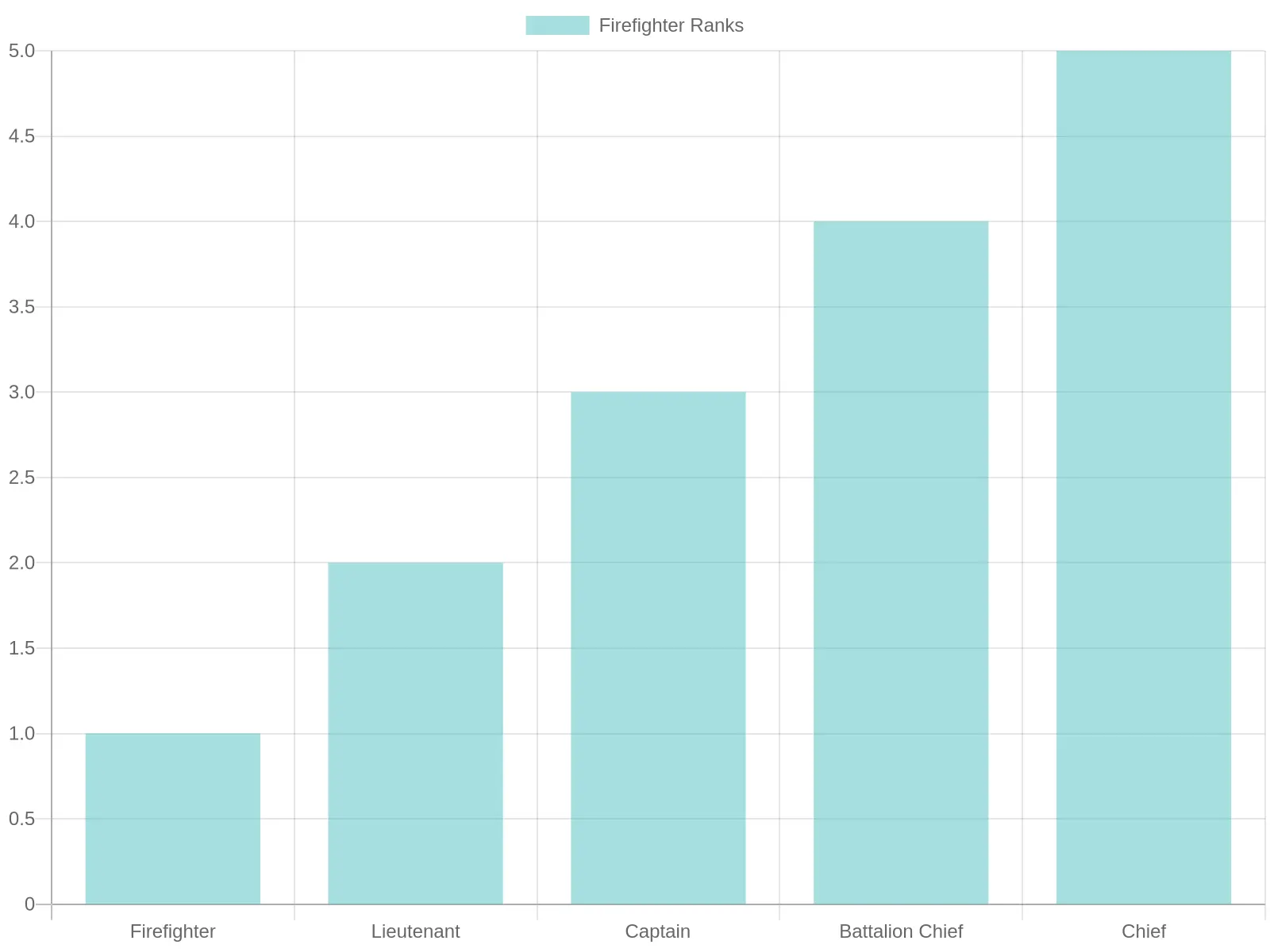
The ranks include:
- Firefighter: First responders trained in public safety and emergency response.
- Lieutenant: Supervises firefighters and leads emergency response efforts.
- Captain: Manages a fire station and oversees firefighting operations.
- Battalion Chief: Responsible for multiple stations and coordinated responses.
- Chief: Highest-ranking officer in the fire department, overseeing operations and strategy.
For more information about fire safety and related topics, you can check out how to become a firefighter.
Conclusion
Understanding the ranks within firefighting is essential for grasping how emergency services operate effectively during crises. Each rank, from firefighter to chief, plays a critical role in establishing a chain of command that facilitates efficient decision-making and operational effectiveness. This hierarchy ensures that first responders can act swiftly and cohesively, leading to a more organized and effective emergency response.
Firefighters are often the frontline heroes, facing hazardous conditions with courage and skill. Their dedicated training and expertise allow them to navigate complex emergencies, making their ranks vital in not just putting out fires, but also in saving lives and protecting property. The importance of having a well-structured rank system cannot be overstated; it enhances communication, coordination, and accountability. For communities to thrive, it is essential to support the fire services that protect us.
As community residents, you can play an active role in advocating for fire safety initiatives, funding for local fire stations, and supporting volunteer firefighter recruitment efforts. Engaging further with your local firefighting community not only promotes awareness but fosters a sense of partnership in safety practices that can save lives. Together, we can ensure that our firefighters have the resources, support, and respect they deserve.
To explore more about how innovative solutions are being implemented in firefighting and emergency response, you might want to learn more about customizable fire truck solutions tailored to diverse firefighting needs. Stay informed by checking out ongoing initiatives that focus on enhancing emergency management and response systems in our communities.
By understanding the critical role of firefighter ranks, we can better appreciate their commitment and service while encouraging ongoing dialogue and support for our fire services. Let’s continue to prioritize fire safety and work together to build resilient communities.