
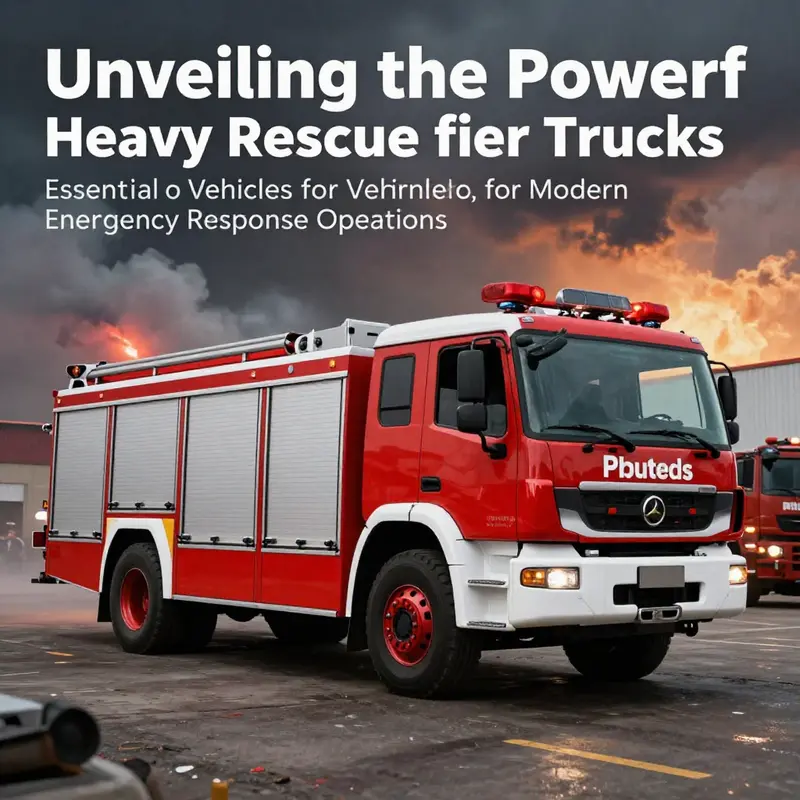
Heavy rescue fire trucks are pivotal components in the intricate framework of emergency response, providing unparalleled support in situations that demand specialized capabilities. Their ability to manage complex scenarios—ranging from major traffic accidents to hazardous material spills—underscores their significance. This article explores the multi-faceted role of heavy rescue fire trucks in emergency operations, delving into their technical specifications and the innovative design elements that enable them to meet the evolving demands of rescue missions. Each chapter will illuminate these vital aspects, offering insights into how heavy rescue fire trucks enhance emergency preparedness and response across communities.
Heavy Rescue Fire Trucks: Mobile Command Posts and Lifelines in Complex Emergencies
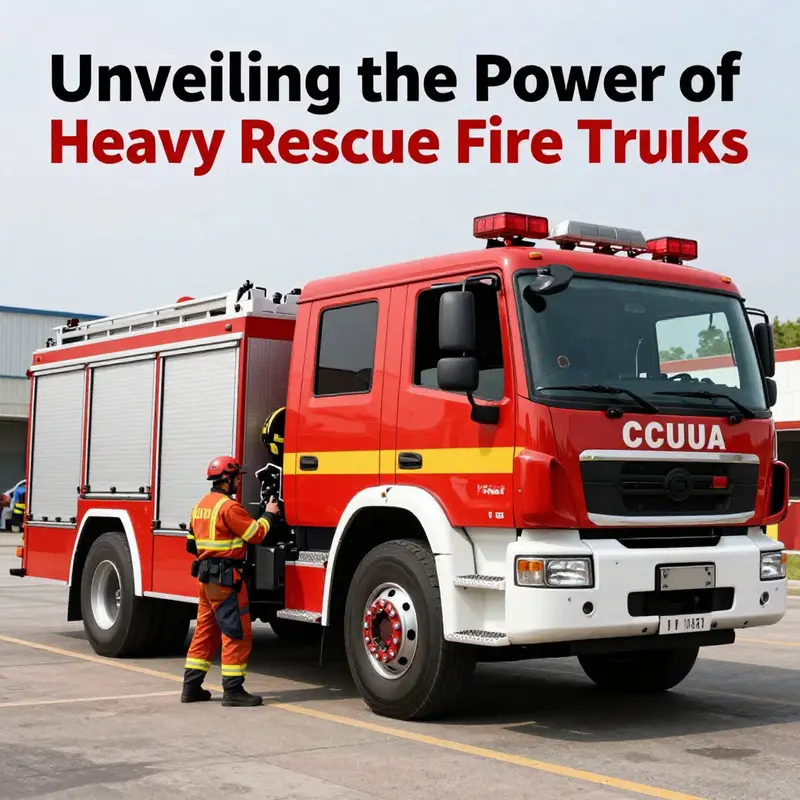
When the sirens cut through a city’s noise and the smoke thickens, the most decisive instrument is not always the nearest standard fire engine. In the spectrum of modern emergency response, heavy rescue fire trucks function as multi-tool platforms that extend far beyond firefighting alone. They are designed to operate at the intersection of risk, time, and uncertainty, where rapid access to specialized equipment, stable command, and sustained support can mean the difference between containment and catastrophe. These vehicles emerge from the edge of conventional rescue capability and become that crucial bridge between initial incident stabilization and extended, multi-agency response. They carry within their compact footprints a portable, resilient ecosystem—an integrated suite of lifting power, cutting and prying tools, power generation, illumination, life-support systems, and sophisticated communications—that enables responders to address structural collapse, vehicle extrication, hazardous material incidents, and complex disaster scenes with a single, purpose-built platform. The essence of a heavy rescue truck is not just its hardware, but its ability to orchestrate a coordinated, flexible operation in environments that would otherwise overwhelm a standard response. In that sense, the vehicle becomes a mobile command post, a technical toolkit, and a lifeline rolled into one heavy-duty asset.
To understand why this class of vehicle is indispensable, one must first appreciate the scale and diversity of the tasks it is asked to perform. A major collision can trap occupants in metal and glass, while a tunnel collapse might require stabilizing debris, shoring up compromised walls, and creating safe passage for both victims and rescuers. A mass casualty incident or a hazardous materials release stretches the capabilities of a traditional fire engine to the breaking point. Heavy rescue trucks are engineered to absorb that pressure by offering high lifting and towing capacity, a robust set of hydraulic and mechanical rescue tools, and an on-board infrastructure that powers the rest of the operation. They act as a converging point for resources, a staging area that can be deployed directly at the scene, and a bridge to the broader emergency architecture that includes EMS, law enforcement, and civilian agencies.
A central feature of these trucks is their heavy lifting and towing capability. The crane, winches, and stabilizing devices are designed to manipulate or remove heavy debris, lift trapped vehicles, or stabilize damaged structures, all while keeping responders and victims safe. This lifting capacity is a deliberate countermeasure to the reality that many incidents present no easy, tell-tale path to access. Debris may be wedged into unstable angles, or a vehicle may be crumpled in a way that requires careful, controlled removal rather than brute force. The crane and related equipment enable responders to create openings, suspend precarious loads, and lower or guide heavy sections away from potential secondary collapses. In practice, this means that what starts as a rescue operation can quickly morph into a complex engineering task. The heavy rescue truck is built to adapt to that evolution, offering the stabilization platforms and lifting accuracy needed to ensure that subsequent steps—extrication, clearing debris, or delivering medical care—are performed under controlled conditions.
Equally critical is the onboard power and lighting system that keeps a scene illuminated and energized when the surrounding environment is hostile or dark. Generators housed within the vehicle provide a reliable source of electricity for scene lighting, ventilation, power tools, medical equipment, and satellite or field communications. This capability matters just as much in long-duration incidents as in the first few minutes after arrival. Night operations, power outages, or operations inside tunnels require lighting that is not only bright but strategically directed to reduce glare, illuminate edge hazards, and support precise tool work. A heavy rescue truck’s lighting system, often complemented by portable floodlights deployed around the scene, transforms what could be a dangerous, dim workspace into a navigable, organized operations area. The added power infrastructure also supports advanced communications hubs, which may rely on stabilized, continuous power for radio relays and data links among responders across agencies.
The tools for cutting and prying represent another pillar of capability. Hydraulic spreaders, cutters, and rams—commonly referred to as the rescue tools—are designed to cut through steel, pry apart welded or jumbled debris, and gently force openings without causing further harm to trapped individuals. The speed at which a responder can access a victim in a wreck or a collapsed structure directly translates into life-saving opportunities. The heavy rescue platform makes it possible to bring those tools immediately to the scene, organized in modular, quickly deployable configurations so crews can switch between cutting through a vehicle frame to prying a doorway or thousands-of-pounds of debris. The emphasis is not simply on raw power but on reliability and precision under stress, so that every action reduces risk for both victims and rescuers.
Modularity is equally essential to the effectiveness of these vehicles. The toolbox layout on a heavy rescue truck is designed for rapid reconfiguration to match the unique demands of an incident. Movable, modular tool boxes can be rearranged to prioritize the gear most needed for an assigned mission, whether that means more access-cutting tools for a vehicle extrication or a larger set of stabilization jacks for a collapsed structure. The modular approach ensures that responders are not forced into long delays while searching for equipment; instead, they can extract precisely what is required, within seconds of arriving on scene. This flexibility also supports extended incidents where equipment needs evolve as conditions change. The same vehicle that can free a trapped driver may, hours later, support a field hospital, supply depot, or temporary shelter for displaced civilians.
Advanced communication systems within the heavy rescue truck create a resilient information backbone for complex scenes. Integrated radios, data terminals, and command-and-control software enable real-time coordination with multiple agencies and units. In large-scale incidents, where several fire departments, EMS teams, and law enforcement agencies must operate as a cohesive unit, the truck’s on-board communications hub helps maintain situational awareness. Some configurations include satellite connectivity or broadband links that preserve critical channels even when local infrastructure is compromised. With this capability, the heavy rescue vehicle becomes more than a transportation asset; it becomes a portable, interoperable nerve center that consolidates incident data, resource status, and strategic orders for all involved parties.
Beyond tools and power, the vehicle’s life-support and safety features are central to its mission. Onboard air filtration and positive-pressure breathing systems extend responder endurance in smoke or chemical environments. Integrated 360-degree camera systems, infrared thermal imaging, and gas detection sensors provide the crew with a safer, more complete understanding of the scene. The thermal imaging helps locate heat signatures that may indicate human presence through smoke, while gas sensors alert teams to hazardous leaks or flammable atmospheres. This blend of sensing technology and protective equipment is essential for preserving life while reducing exposure to toxic agents. When combined with robust ventilation options and PPE compatibility, these features allow teams to operate more aggressively and for longer periods in otherwise prohibitive conditions.
The mobility and durability of heavy rescue trucks further reinforce their indispensability in environments where standard engines struggle. Modern heavy rescue platforms are designed to traverse challenging terrain—rubble, mud, uneven surfaces, and debris-laden paths—while maintaining stability on slopes. They often rely on reinforced chassis and robust suspension systems, with designs capable of negotiating difficult angles and uneven ground that would immobilize lighter apparatus. This mobility is crucial for urban search and rescue (USAR) missions, tunnel emergencies, and industrial incidents that demand rapid reach and repeated repositioning of crew and equipment. By combining high ground clearance, rugged tires or tracks, and a ready-to-deploy stabilization system, these vehicles maintain access where conventional fire engines cannot, enabling responders to bring critical capabilities directly to the most dangerous parts of the site.
The role of the heavy rescue truck as a multi-functional platform cannot be overstated. In long-duration incidents, it can transition from a rescue-centric focus to a broader mission profile. It may store large water tanks and pumps for cooling or containment tasks, provide lighting and power for field hospitals or temporary shelters, and serve as a mobile supply depot for food, hydration, and medical supplies. In some configurations, the vehicle even carries specialized sheltering equipment or rapid-erecting medical stations to support survivors on site until more permanent facilities are established. This breadth of function ensures a more resilient response, reducing the time and logistics burden that would otherwise fall on other units or external agencies.
The integration of these capabilities is not happenstance. It reflects a deliberate approach to emergency management that recognizes the need for rapid, decisive, and sustained action in the most demanding settings. Heavy rescue trucks embody the principle that complex incidents require an integrated toolkit and an equally integrated command structure. The vehicle’s design anticipates not just the immediate rescue but the entire arc of a response: access to victims, stabilization of the scene, safe extraction, provision of life support, and efficient coordination among multiple responders. By bringing the most essential tools and capabilities into a single mobility platform, responders can shorten the time from arrival to relief, reduce the risk of secondary incidents, and support multi-agency operations in a coherent, scalable fashion.
This approach also speaks to broader considerations around preparedness and capacity building. In urbanizing regions or developing contexts, heavy rescue trucks can be adapted to meet diverse rescue needs while balancing cost and reliability. The modular philosophy allows departments to tailor configurations to local hazards, whether those hazards include high-occupancy structures, highway congestion, or large-scale infrastructure projects. The emphasis on modularity, durability, and all-weather readiness is a practical response to the variability of real-world emergencies. When communities invest in these capabilities, they gain a platform that can be repurposed as needs evolve, ensuring that scarce resources yield maximum return in the face of unpredictable threats.
Practically, the efficacy of heavy rescue trucks rests on more than hardware. It hinges on training, maintenance, and a culture of continuous improvement. Responders must be proficient not only with the tools but with the choreography of a complex operation. They need drills that emphasize rapid assessment, tool deployment, and safe, effective victim extraction in the presence of hazards like shifting debris or compromised structural integrity. Regular maintenance is essential to keep the onboard systems reliable in harsh environments, where vibration, dust, heat, and moisture can degrade performance. In this context, the heavy rescue platform becomes a catalyst for a disciplined, collaborative response—an engineering asset that requires skilled human operators who can translate its capabilities into life-saving outcomes under pressure.
Moreover, these vehicles sit within a broader emergency-management ecosystem. They are most effective when integrated with pre-incident planning, mutual-aid agreements, and interoperable communication standards. They depend on a well-defined incident command structure, a clear allocation of tasks, and a shared vocabulary across agencies. In the field, such alignment translates into faster decisions, fewer redundancies, and a more coherent, safer response for both victims and responders. In this sense, the heavy rescue truck helps operationalize the principle that capability without coordination has limited value. It is the convergence of tools, power, intelligence, and organization that turns a good response into a lifesaving intervention.
For readers seeking a practical sense of how these capabilities play out in real-world contexts, consider how a community might leverage configurations described in comprehensive customized fire-truck solutions for developing countries diverse firefighting needs efficiently. This kind of adaptable platform underscores the balance between rugged reliability and flexible design, illustrating how a single vehicle can serve as a frontline rescue asset, a portable command post, and a temporary support hub for civilians in distress. It also invites reflection on how emergency services can scale their response to accommodate urban growth, aging infrastructure, and evolving hazard profiles without sacrificing the immediacy and precision that an expert crew brings to the scene.
The significance of heavy rescue trucks thus rests not only in their capacity to perform extraordinary feats of mechanical leverage or power generation. It lies in their ability to bind together a suite of functions that once required multiple vehicles and separate teams. When the scene demands rapid extrication, swift stabilization, and continuous coordination across responders, a heavy rescue platform offers a cohesive, resilient, and scalable answer. It embodies the pragmatic fusion of engineering and operations that modern emergency management requires, turning complex, high-risk incidents into structured, survivable challenges.
In the end, the heavy rescue truck is more than a specialized apparatus. It represents a philosophy of readiness—an acknowledgment that the most perilous emergencies demand a nimble, multi-dimensional, and durable response. It is a vehicle that can arrive as a rescue unit and evolve into a scene-wide backbone of power, light, safety, and communication. It can free a trapped occupant and, hours later, provide a sheltered space for responders to coordinate a broader relief effort. It can cut through steel and then cut through the fog of confusion that often accompanies disasters. In a world where risk is uneven and time is relentlessly finite, the heavy rescue truck stands as a crucial instrument in transforming chaos into an organized arc of rescue and recovery.
External resources and standards continue to shape how these vehicles are built and employed. For those who want to explore the standards and real-world usage that guide emergency response vehicles, the National Fire Protection Association offers extensive references on incident response vehicles, including design considerations, performance expectations, and deployment practices. See the NFPA resource for a broader framework that complements the operational perspective presented here: https://www.nfpa.org/News-and-Research/Reports-and-statistics/Fire-Department-Operations/Incident-Response-Vehicles
Powerhouse on the Front Line: The Technical Blueprint of Heavy Rescue Fire Trucks
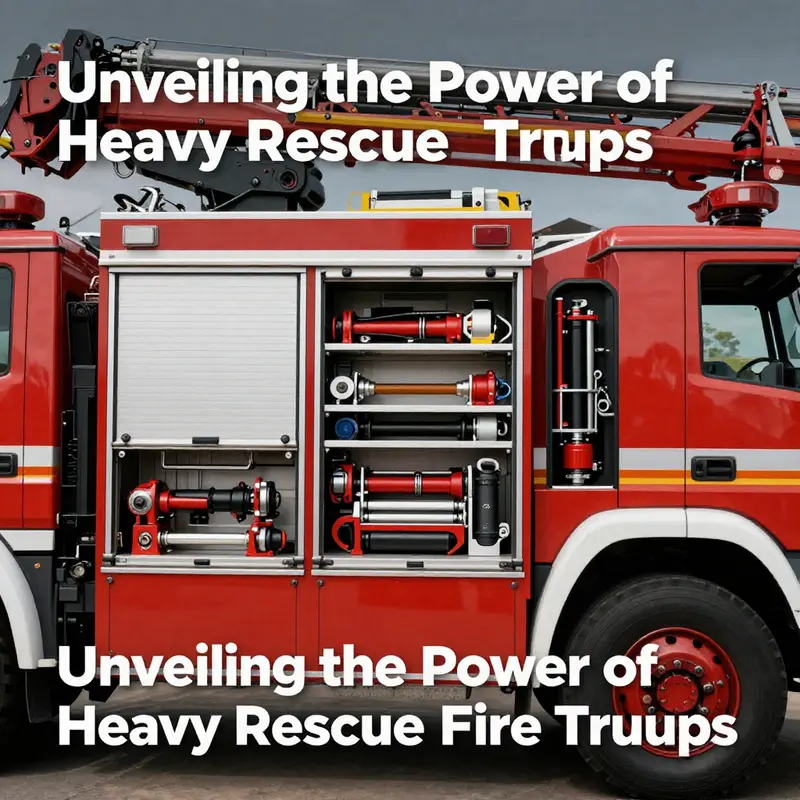
When a city calls for more than a blaze, it calls for a type of vehicle that looks almost like a mobile workshop and a command center fused into steel and hydraulics. A heavy rescue fire truck is that hybrid, designed not merely to fight fire but to go into the heart of disaster and repair the path to safety for those trapped, injured, or engulfed by events far more complex than a routine alarm. The chapter of a heavy rescue begins long before the sirens waill. It starts with a philosophy: resilience, adaptability, and sustained capability. These vehicles must be ready to operate at a scale and in a tempo that standard fire apparatus simply cannot sustain. The urban landscape, with its towers, tunnels, and crowded streets, demands a platform that can reach, reinforce, and recover in conditions that expose crews to a web of risks—unstable structures, hazardous atmospheres, obstructed access, and the need to coordinate multiple teams at once. In this sense, the heavy rescue truck is a versatile instrument of reconnaissance and recovery, a moving hub that brings light, power, tools, and leadership into the middle of a critical incident. It is not the spark that starts a rescue, but the quiet, stubborn engine that holds the line while others work to rebuild a pathway to safety.
From the first moment of activation, the truck signals its purpose with more than speed. It is a platform built to endure the physical strain of heavy operations and to preserve the safety of the people performing the work. Heavy rescue vehicles are mounted on robust chassis designed for rough treatment and long duty cycles. They carry four-wheel drive capabilities and high ground clearance to tackle uneven ground, rubble, or unfinished roads that often appear in the wake of earthquakes, collapses, or industrial incidents. The chassis itself becomes the foundation for a suite of systems that work together: stabilization, lifting, lighting, power, and communication. The powertrain is tuned not just for forward momentum but for the endurance required when crews must work for hours with limited access to external resources. This is a vehicle built to stay on scene and to remain productive through the night and into the early hours of dim dawn when rescue tasks press on.
The hydraulic heart of the heavy rescue truck is its rescue tools. At the core sits hydraulic cutting and spreading equipment with the capacity to pry apart wreckage and cut through metal and composite materials that ordinary tools cannot penetrate. These tools operate on high-pressure hydraulic circuits that can deliver forces well into the tens of thousands of psi, enabling responders to breach jams and entrapments that might otherwise trap victims for longer. The tools are designed to be modular and adaptable; crews select different tips and attachments depending on whether they are working through steel beams, car frames, or reinforced concrete. The emphasis is not on brute force alone but on controlled, precise manipulation of debris to create safe access paths, protect trapped victims, and avoid aggravating injuries during extraction. The tension between force and control defines the user experience: operators must balance speed with safety, using the tools to carve a living corridor through wreckage while shoring and stabilizing the surroundings to prevent sudden shifts that could imperil both victims and rescuers.
A second, equally crucial component is the heavy-lifting and shoring suite. The ability to lift, move, or stabilize heavy loads transforms a chaotic scene into a manageable workspace. The truck bears a crane capable of significant lift capacity, along with a collection of stabilization devices such as air bags, hydraulic rams, and metal props. These elements work in concert to support or elevate collapsed structures, create vertical or horizontal access paths, and distribute weight without introducing further danger. Shoring becomes a safety language in which geometry and physics are translated into a stable field of operation. In a collapsed building scenario, one misstep can lead to another collapse. The vehicle’s lifting and shoring capabilities give teams the leverage to create pockets of space where medical teams can reach victims or where engineers can assess structural integrity with a measure of certainty. The systems are designed to be deployed quickly, with pre-planned sequences that responders can execute while other crew members perform cutting, lifting, or lifting and stabilization tasks in parallel. This parallel approach is essential; it turns what could be a bottleneck into a multi-threaded operation that advances on several fronts at once.
Power and illumination emerge as a third pillar of capability. The heavy rescue truck is self-contained in the sense that it carries its own power generation and lighting arrays. Generators provide electricity for heavy tools, medical equipment, communication consoles, and life-saving devices, independent of the electrical grid. The lighting system must be bright, reliable, and versatile, with floodlights that can cover wide areas and focused strobes to illuminate narrow corridors or stairwells. In the unpredictable environment of a disaster, power outages and reduced visibility are common. A self-sustained energy and lighting plan ensures that responders can work through the night, maintain lines of communication, and keep the rescue area organized. The design also considers the acoustic environment: alarms, radios, and sensor systems must be audible and readable in environments where smoke, debris, and sirens may drown ordinary communication.
Tools and equipment storage on a heavy rescue truck is itself a crafted system. Rather than a single box full of gear, it is a modular storage concept that allows teams to configure the vehicle for a specific mission profile. Movable tool boxes, standardized layout, labeled compartments, and quick-release mounting points reduce the time needed to locate and deploy equipment. This modularity matters when the scene shifts from a vehicle extrication to a structural stabilization operation, or when a hospital-grade device must be hauled into a tunnel and used in a smoky, difficult-to-navigate space. The storage design also enhances safety: organizers reduce the risk of tools shifting during transit, limit the chance that personnel trip over scattered gear, and enable rapid sorting and retrieval under pressure. In practice, responders can seal a vehicle with a minimal load of essential devices for a road collision and, when the situation demands, expand the loadout to include heavier, more specialized equipment.
Equally important is the communications hub that travels along with the rest of the response package. In large incidents, dozens of agencies converge, each with its own radios, frequencies, and command structures. The heavy rescue truck functions as a mobile command post, bringing together situational awareness, incident command software, and reliable broadcast capabilities. The onboard systems provide a shared mental model for everyone on scene—who is being treated, what structural concerns exist, how long a given maneuver will take, and where the next supply run should come from. The goal is not to supersede incident command but to amplify it, letting leaders coordinate multi-agency efforts with confidence rather than improvisation. In practice, this means radio interfaces, data connections, and display panels that can be operated with gloves on, while the scene remains dynamic and uncertain.
Beyond the obvious tools and systems, the medical stack on a heavy rescue truck deserves close attention. Disaster response is as much about triage and stabilization as it is about removal. The onboard medical kits are comprehensive, including trauma supplies and automated external defibrillators, designed to bridge the gap between field care and hospital treatment. While a hospital is the destination, every minute matters on the path there. The integrated approach to medical support ensures that first responders can begin life-saving interventions in place and preserve vital signs until the patient reaches an operating room. The vehicle thus straddles two identities: a rescue platform and a mobile clinic. This dual function requires careful workflow design so that medical teams can work in tandem with extraction and stabilization tasks without creating conflicts or bottlenecks on the scene.
The heavy rescue truck’s durability and readiness do not come from a single innovation but from a deliberate, holistic approach to design. The chassis is rugged and configured to handle the rough realities of urban search and rescue (USAR), tunnel emergencies, and large-scale industrial fires. It is built to endure repeated deployments, withstand rough terrain, and protect its crew from the physical stresses of heavy rescue work. Real-world operations demand a vehicle that can traverse rubble-strewn ground, access compromised corridors, and deliver consistent performance across long shifts. This durability is not merely about strength; it is about predictability. Engineers design to fail safely, with redundant systems and protective features that minimize downtime and keep teams moving forward when every second counts.
Yet even the most capable heavy rescue truck has limits. Size and weight can constrain maneuverability in congested urban cores and narrow street networks. Access to some sites may require alternative equipment or smaller support units to accompany the heavy rescue team. Maintenance is another critical factor: the very capabilities that enable extraordinary feats at night or in hazardous atmospheres demand rigorous upkeep, preventive maintenance, and specialized technician support. Each component—from hydraulic pumps to generators and lighting arrays—requires a maintenance regime that anticipates degradation, monitors performance, and schedules replacements before critical failure occurs. The realities of deployment mean crews must be trained not only in how to operate the tools but in how to recognize early signs of wear, how to adapt to evolving scene conditions, and how to integrate new tools into well-rehearsed procedures without losing speed.
In terms of operation, the heavy rescue truck functions as a force multiplier. It does not simply bring more tools to the scene; it centralizes capabilities that previously required multiple separate apparatuses. The integration of lifting systems, cutting tools, stabilization devices, power, lighting, medical supplies, and communications creates a single, cohesive platform. For incident commanders, this translates into clearer lines of action and more efficient use of human resources. Teams can stage, extract, and treat in parallel, reducing the time from detection to definitive care. In environments such as urban search-and-rescue missions, where every minute can alter outcomes, the value of a versatile, all-in-one platform becomes tangible. The vehicle’s design embodies a philosophy that complex situations require complex support structures—systems that are simultaneously robust, modular, and easy to deploy.
For those studying or planning emergency response capabilities, the lesson is not merely about what tools exist but how they are orchestrated. A heavy rescue truck is a narrative device in a larger response architecture. It shows how the right combination of cutting-edge equipment, careful planning, and skilled personnel can convert an unpredictable crisis into a sequence of controlled, recoverable steps. The vehicle does not replace the need for other apparatus and trained specialists; it complements them by serving as a forceful, adaptable backbone that can pivot as the incident evolves. When the scene demands rapid extrication, the crew uses the Jaws of Life-like hydraulic cutters to open vehicle compartments, while a worker on the crane begins to stabilize a shifting deck above the trapped individual. The same crew can then pivot to delivering an on-scene medical intervention in a nearby alcove, using the vehicle’s lighting to create a safe, accessible treatment area. The chain of actions is not linear but fluid, with personnel shifting between roles as the incident requires.
Integrated training is the anchor that keeps such a complex system reliable. Operators must be proficient not just in the mechanics of their tools but in the choreography of a multi-team response. This requires regular drills that simulate the most challenging scenarios—from tunnel entrapment to structural collapse—so that every crew member understands how to communicate, where to stage, and how to protect both themselves and the public. The equipment becomes a language when crews practice together, and the vehicle’s modular design supports evolving training needs. As new rescue techniques emerge, the truck’s configuration can be updated so that responders continue to work within a familiar, intuitive framework rather than starting from scratch with every new tool.
The broader implications of this technical blueprint extend beyond the immediate scene. Heavy rescue trucks influence how first responders approach urban planning, building codes, and hazard mitigation. They inform the real-world calculus of where to allocate capital, how to design road networks for rapid access, and how to coordinate cross-agency responses in emergencies that cross jurisdictional lines. In cities with growing populations and more complex infrastructures, these vehicles become a crucial asset in maintaining resilience. They demonstrate a commitment to preparedness that is embodied not only in a shiny piece of equipment but in the meticulous systems, training, and partnerships that keep it ready for action.
For readers who want to explore this topic further through a regional lens and see how such platforms are adapted to diverse contexts, a comprehensive approach to understanding these configurations can be found in dedicated resources that examine customizable fire truck solutions for developing countries. This body of work highlights how modular design, reliable performance, and adaptable configurations support varied terrain, climates, and budget cycles, ensuring that life-saving capabilities reach communities with differing needs. Comprehensive customizable fire trucks for developing countries: reliable, cost-effective, and responsive solutions. https://tpbhrescue.org/comprehensive-customizable-fire-trucks-for-developing-countries-reliable-cost-effective-and-responsive-solutions/
The chapter closes not with a single feature but with a recognition: heavy rescue isn’t a single tool or a single function. It is a disciplined, integrated approach to saving lives under conditions where every decision matters. The truck’s technical blueprint—its hydraulic core, its lifting and shoring systems, its self-contained power and lighting, its modular storage, and its robust communications and medical provisions—coalesces into a platform that can turn a collapsing corridor into a rescue corridor. It is a testament to the way modern emergency response has evolved: from a collection of gadgets to a cohesive, responsive ecosystem that can adapt to whatever a disaster asks of it. In this sense, the heavy rescue truck embodies not just the capability to confront danger but the capacity to shape outcomes, to direct a scene from chaos toward safety, and to sustain that effort until the last victim is accounted for.
External reference for a broader technical perspective on field capabilities and vehicle design can be found in the detailed guide published by a leading resource on rescue fire trucks. https://www.madisonhilltrucks.com/rescue-fire-trucks-explained/
Between Power and Precision: The Role of Heavy Rescue Trucks
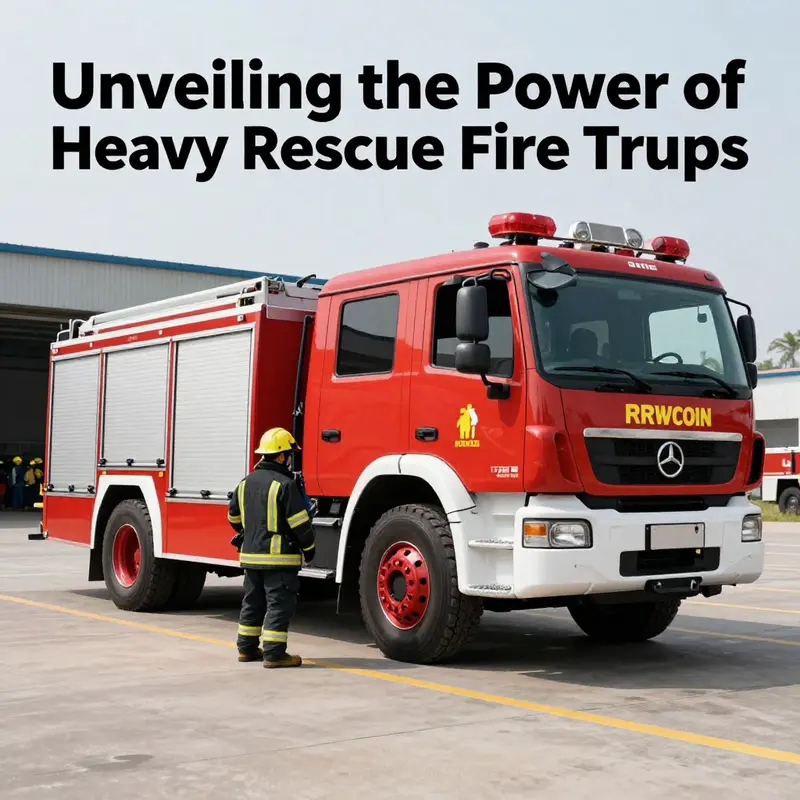
Heavy rescue fire trucks are not simply larger engines. They serve as mobile command posts and multi-tool platforms that can lift, cut, light, power, and coordinate operations in complex emergencies. Their design emphasizes reach, stability, and resilience, enabling responders to stabilize collapses, access trapped victims, and manage long-duration incidents where every minute matters. The result is a scalable, adaptable asset that extends the first response and enhances safety for both responders and communities.
Final thoughts
Heavy rescue fire trucks stand as essential assets within the emergency response landscape. Their sophisticated design, combined with robust technical capabilities, empowers first responders to tackle high-stakes situations with precision and efficiency. Understanding their role not only enhances appreciation for these vehicles but also underscores the need for continued innovation in rescue technologies. As communities evolve and face new challenges, heavy rescue fire trucks will remain pivotal in safeguarding lives and property.